

She sends food to the dinner table, instead of the trash can; how one social venture is saving family mealtime with would-be waste
January 19, 2023 | Matthew Gwin
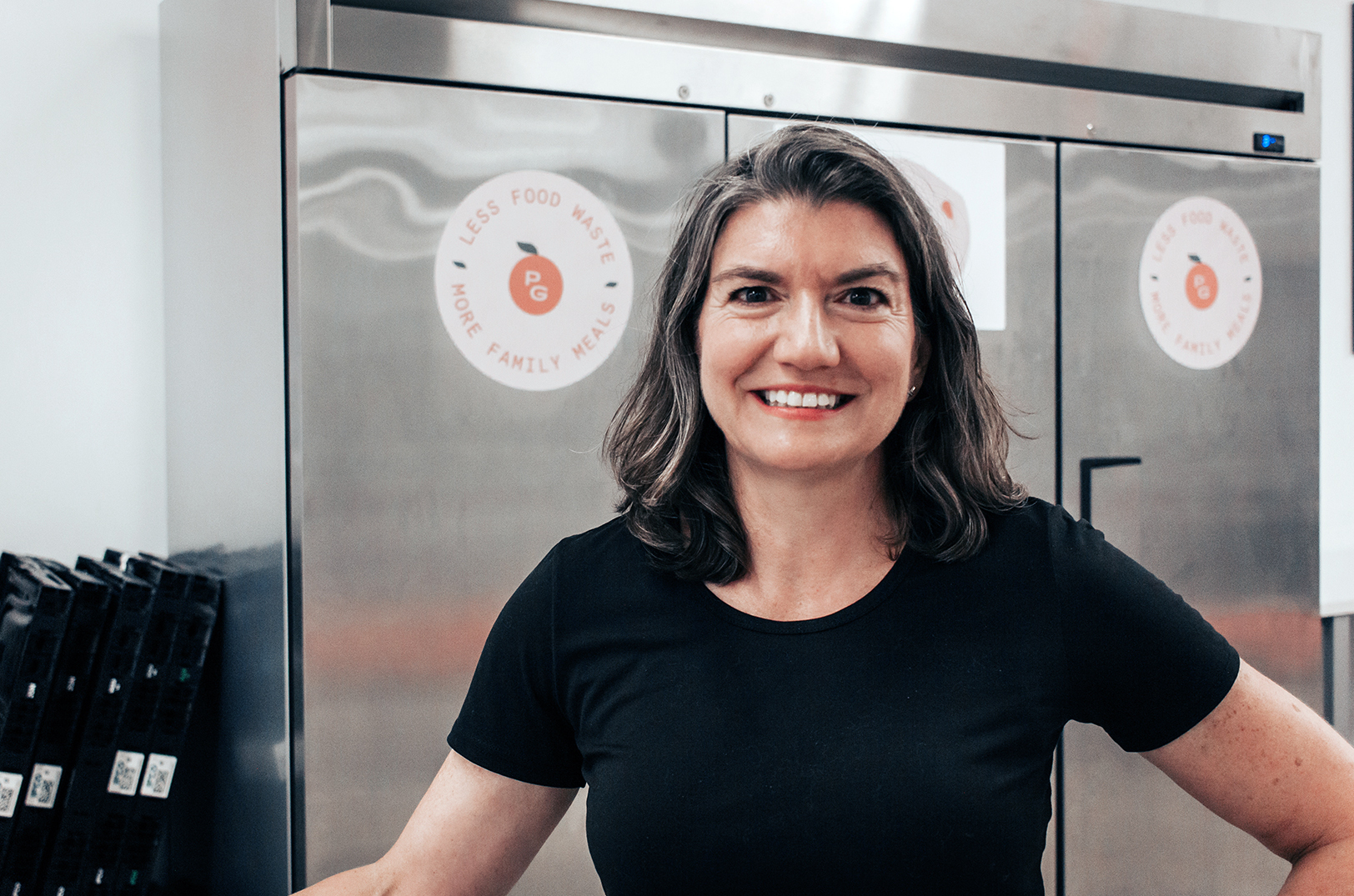
A Kansas City nonprofit’s innovative approach is reducing food waste, fighting food insecurity, and restoring family mealtime.
Pete’s Garden, founded in 2019 by Tamara Weber, partners with caterers, restaurants, and food service organizations to save unserved, prepared food that would otherwise be thrown out.
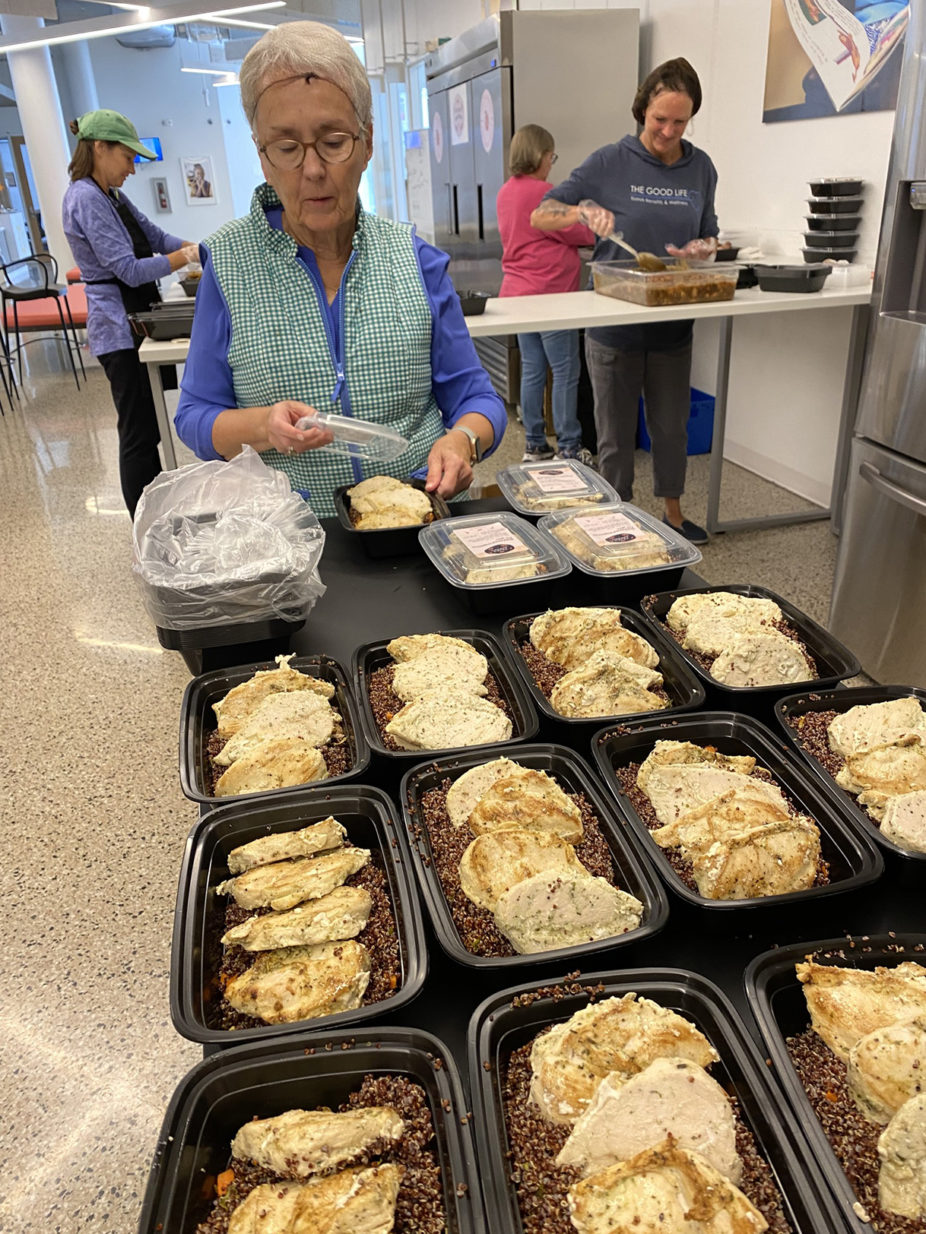
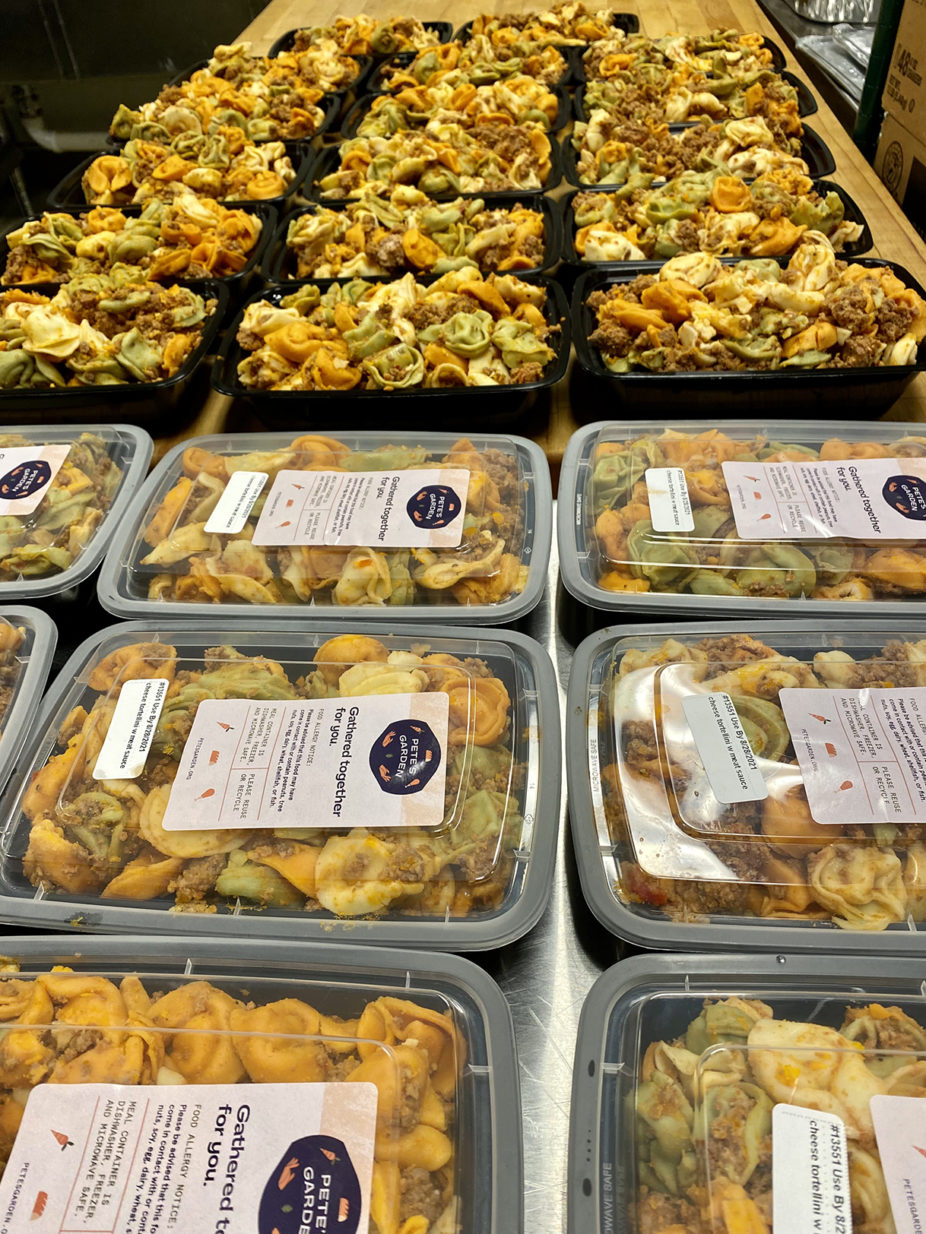
Weber and a team of volunteers portion and package that food into easy, ready-to-eat meals. Those healthy meals then get delivered to social service organizations that distribute them to families in need three days each week.
“This is food that is perfectly good to eat,” Weber said. “It’s prepared a lot of times in bulk by caterers or food service operations that are serving a lot of people at one time. If there is surplus, there wasn’t really any easy and safe way in Kansas City to redirect that surplus food to people who need it.”
Weber intentionally chose to focus on prepared meals — such as meats, proteins, vegetables, and other side dishes — for a couple reasons, she said.
First, because food pantries already offer breads, packaged goods, desserts, and produce. Secondly, because her endgame is to allow families to enjoy mealtime together.
“Food recovery is just a means to an end for me, and the end goal is really enabling family mealtime,” Weber said. “I grew up in a household where we had family dinner every day. When I think about it now, it’s almost quaint.”
“The idea for me is that Pete’s Garden makes it easier for other families, especially single moms and working parents, to be able to take home a meal so they can have family mealtime, and it’s easy,” she added.
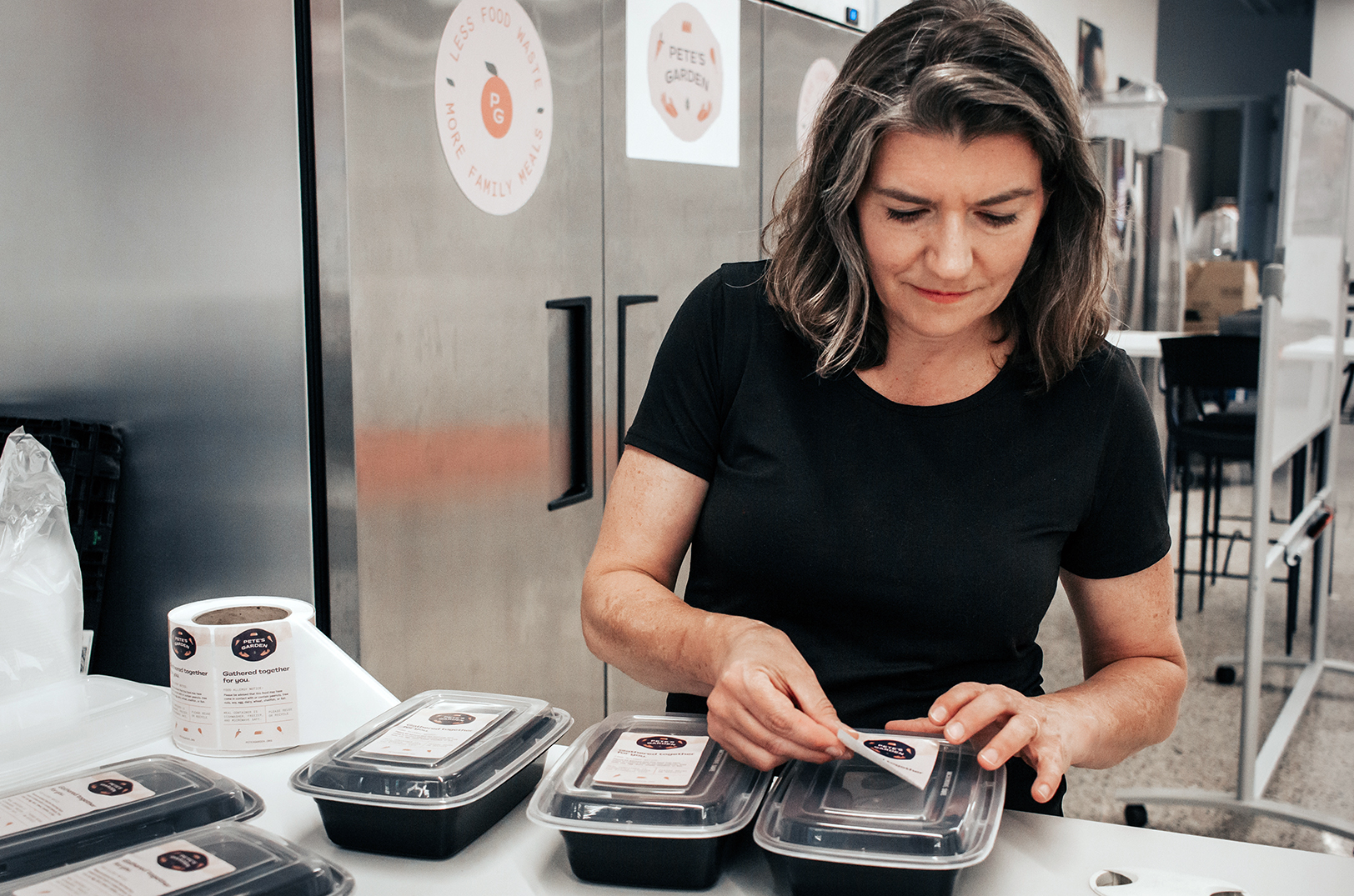
Tamara Weber, Pete’s Garden
Served with sobering statistics
By her own admission, Weber never intended to start a nonprofit. But after watching Anthony Bourdain’s documentary “Wasted! The Story of Food Waste” with her daughter as part of a school project, she felt compelled to act.
“That documentary was really eye opening for me, because I hadn’t known what a big issue it was environmentally, and then I just didn’t realize how much food gets wasted,” Weber said.
U.S. restaurants waste more than $25 billion of food each year, and only 20 percent donate their surplus unserved food, according to statistics on the Pete’s Garden website.
In Kansas City alone, restaurants could provide up to 1 million meals, and 1 in 6 children are food insecure.
“I just thought, ‘Well, this is a problem that seems like it’s just a matter of getting it from people who have excess food to people who need it,’” Weber said.
Initially, Weber researched organizations where she and her daughter could volunteer, but quickly realized that the gaps locally were larger than she had imagined.
“I was surprised someone wasn’t doing something to address the food waste issue in Kansas City,” Weber wrote in a LinkedIn post from March 2020. “Then one morning in May [2019] I woke up early, convinced that the ‘someone’ was me.”
Shortly after, Weber left her job at Hallmark and began strategically planning how she could minimize food waste in Kansas City.
By August, she was pitching her concept to Operation Breakthrough, which was so interested that Pete’s Garden immediately partnered with the organization and began distributing meals to families in November.
“It was pretty obvious this was going to work,” Weber said. “There was food available, it really wasn’t that hard to repackage it, and working with an organization like Operation Breakthrough, the families were right there coming to pick up their kids. It was just a matter of having the meals ready for them when they come.”
Rooted in family
In many ways, Weber’s desire to salvage food waste and promote family mealtime can be traced to her own upbringing outside Scranton, Pennsylvania.
“I grew up in a household where food was really important, and it’s not something that we wasted, and we used it as a way to connect our family,” Weber said.
Her father, Pete Sluk, loved growing produce in his backyard garden for their family to eat and share with neighbors, Weber said, which is why she chose the name Pete’s Garden.
“Our family meals had vegetables from my dad’s garden pretty much every day, so it just seemed natural to me that I would name the organization Pete’s Garden as a way to pay tribute to what he did,” Weber said.
Her father was a factory worker who hadn’t graduated high school, so the family didn’t have a lot of money, she said. Now that she can afford to help out others, Weber feels like this is her way to “pay it forward.”
“I have the wherewithal and means now to be able to do something with the education, the skills, and the resources that I have to be able to give back to other families in the community,” she said.
In 2022, Pete’s Garden distributed 65,000 meals to families in Kansas City, and Weber said that could “easily” climb as high as 125,000 meals in 2023.
No more wasted time
Part of that projected growth is a result of Pete’s Garden moving into a larger kitchen at Grace and Holy Trinity Cathedral — the organization had previously been sharing space at Operation Breakthrough.
The new location should allow Pete’s Garden to add more food donors, Weber said.
Partner organizations must work out of a health department-inspected kitchen and commit to donating a minimum of 40 pounds of food per week, although Weber added that she would be happy to work with smaller organizations to help redirect their surplus food elsewhere.
“I just don’t want any good prepared food in Kansas City getting wasted,” she said.
Weber could envision a future program involving surplus ingredients where she and volunteers cook meals in-house, but said that she wants to stay focused on the “core” of the mission for now.
As Pete’s Garden grows, so too does the need for volunteers, Weber said, who package meals every Monday through Saturday from 11 a.m. to 1 p.m.
“I think everyone has something they can do to make things better,” Weber said. “Instead of sitting around and complaining about how this doesn’t work or that doesn’t work, do something. If I can inspire people to think about what they can do to make their little corner of the world a better place, that would be great.”


2023 Startups to Watch
stats here
Related Posts on Startland News

How an animal health leader’s $130M investment in KC will boost its fight against canine parovirus
ELWOOD, Kansas — A $130 million investment from global animal health leader Elanco is a testament to Kansas’ pro-business economy, said Laura Kelly, lauding this week’s expansion announcement and its plans to bring 70 new jobs to the region’s animal health corridor over the next two years. “Elanco’s expansion not only is creating new job…

Staying transaction-ready in uncertain market conditions
Editor’s note: The perspectives expressed in this commentary are the author’s alone. The following is a paid thought leadership piece from The Ferguson Smith Cohen Group at Morgan Stanley. In the face of market uncertainty, one thing private companies can control is their “transaction-readiness” for an IPO or secondary offering. Discover three things a company…

Zee underscores artists’ need for positive venues; creative powerhouse opens pocket of support
Zahra Briggs developed her creative voice in Kansas City; now she’s setting the stage for fellow independent artists who struggle to find venues that match their vibe — and often have to pay to perform. She’s even creating a version of herself in the metaverse to open access further. A singer and songwriter herself, Briggs — who…

MyAnIML earns NSF funding, patent; now facing new phase of growth with industry validation
Thanks to a recent federal grant — along with a newly secured patent on its first-of-its-kind, proprietary facial recognition tech for cows — MyAnIML is proving its place as a leader within a herd of ag innovation, Shekhar Gupta said. The Overland Park startup received a 250,000 Phase I grant from the National Science Foundation…