

Mushroom lover finds the perfect spot to hunt: Her own warehouse in North Kansas City
October 20, 2022 | Nikki Overfelt Chifalu
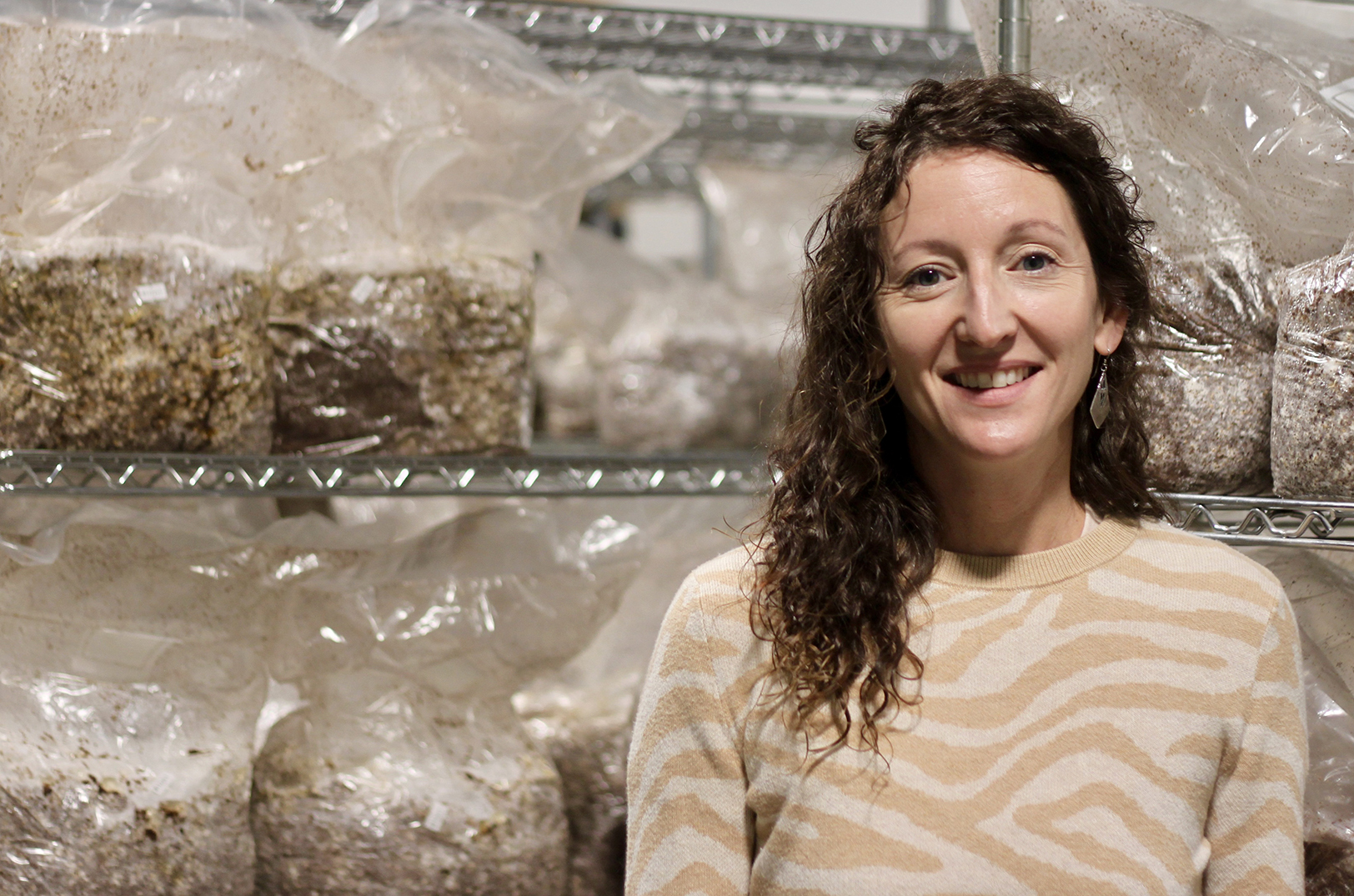
Robin Moore loves to cook with mushrooms, but she couldn’t always find the variety — like Lion’s Mane — she wanted at Kansas City stores. So she started growing them herself; ultimately turning the surplus into her own small business.
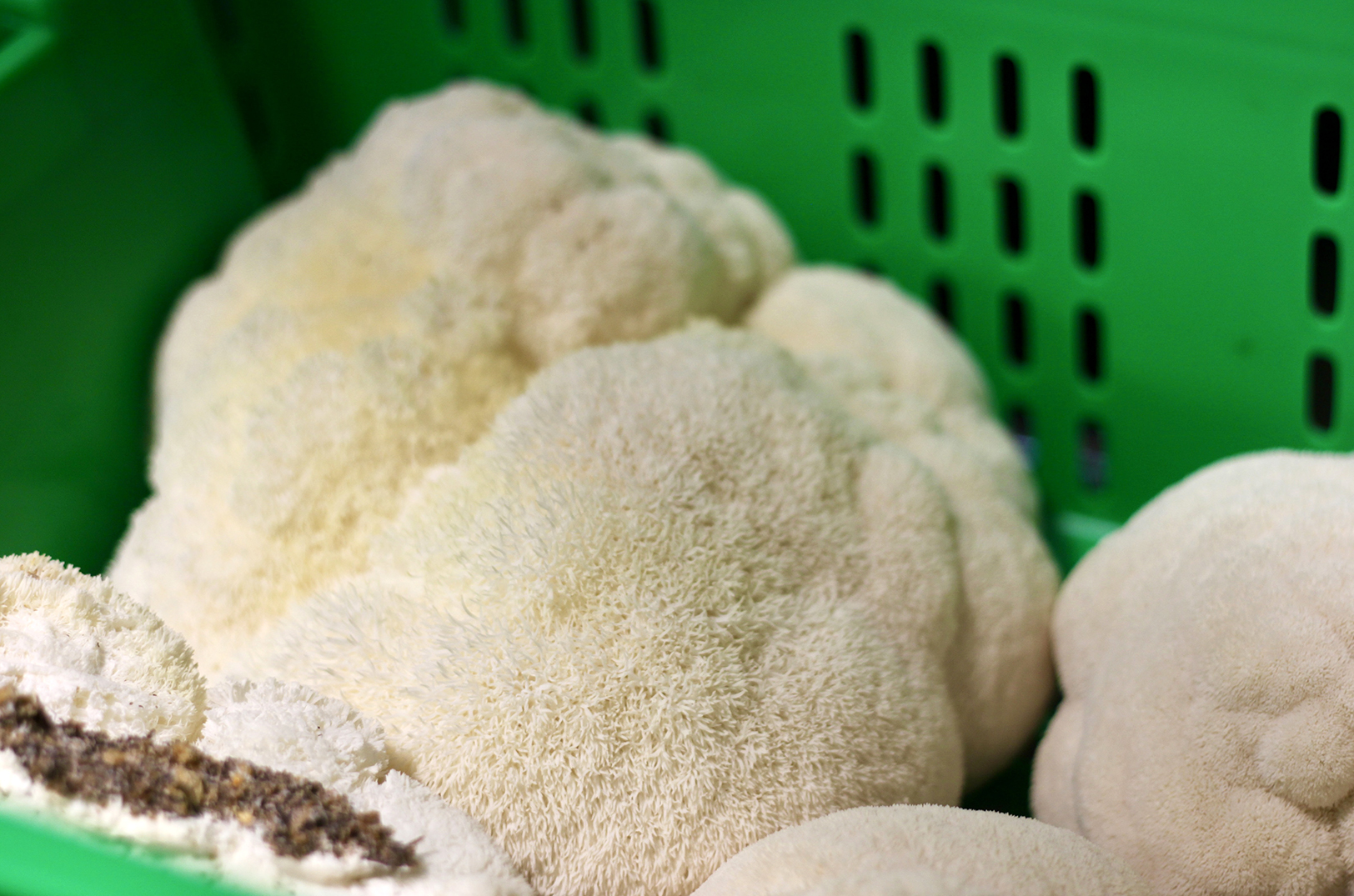
MyCo Planet Lions Mane mushrooms
“I’ve researched and kind of taught myself,” said the founder of MyCo Planet, who initially only aimed to feed her household. “And then I was growing more than we could use, so I gave it to friends and family. And then even beyond that, I was like, ‘Well, maybe I could go to the farmers’ market on Saturdays and I could sell those.’ It would be like a side thing and then it kind of took off from there.”
She still sells at the City Market and Parkville Farmers’ Market and hopes to add more next year. But now she’s also providing her mushrooms to more than 20 local restaurants — including the Majestic Steakhouse, the Russell, and Axios Bistro — and several local markets like Local Pig Green Acres, and Nature’s Own.
“I enjoy doing it more than anything else,” said Moore, who has bootstrapped her business. “So I kind of took a risk and I quit my full-time job and decided to focus on mushrooms full time.”
She started growing them in her basement about three and a half years ago. But as of January, she expanded into a warehouse space in North Kansas City, where she is soon planning to open a storefront and looking to expand even more.
“I love North Kansas City,” she noted. “I always have. To be able to be in one of these old warehouse buildings is really great.”
Click here to explore the fresh gourmet mushrooms from MyCo Planet.
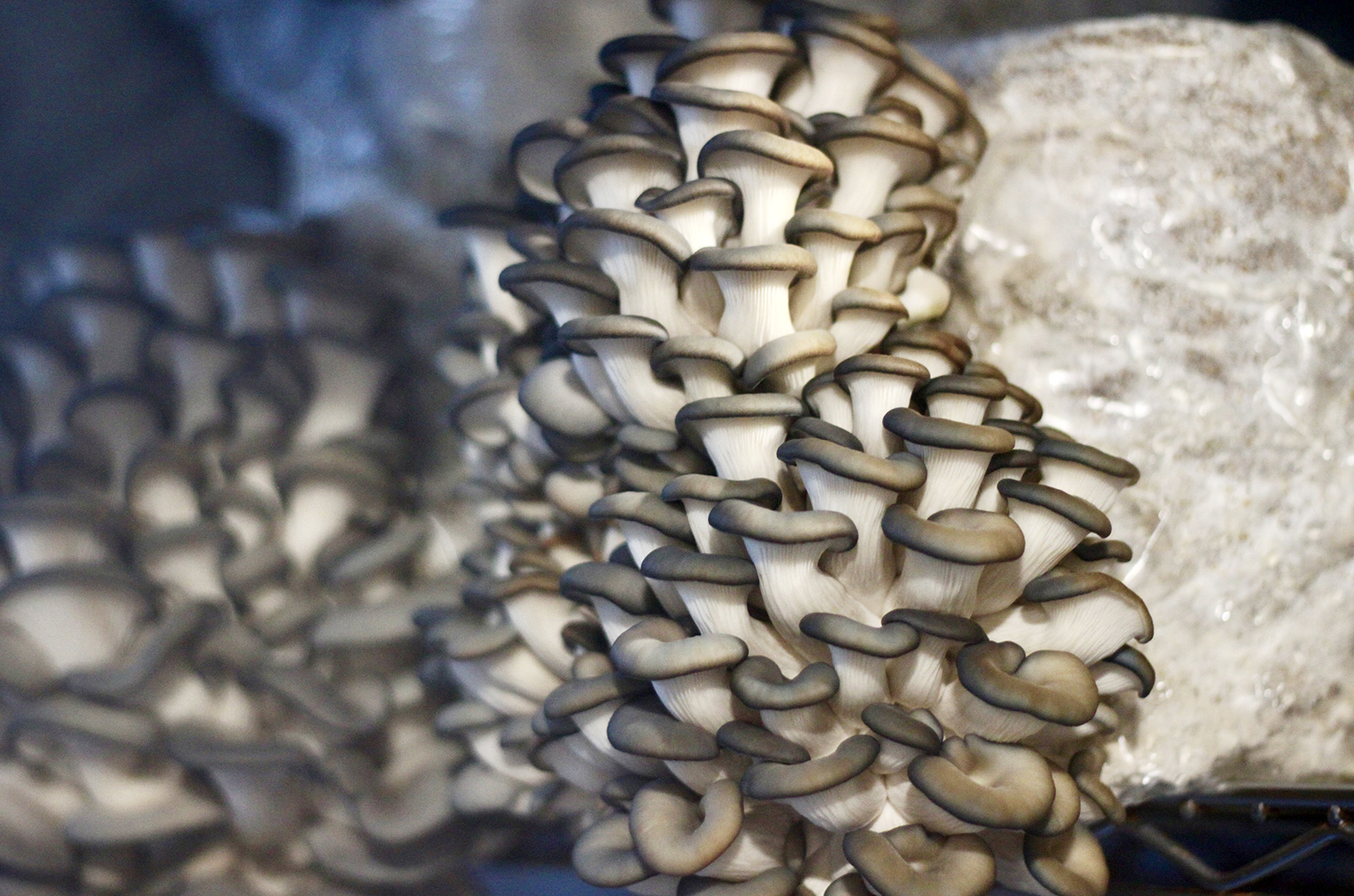
MyCo Planet Blue Oyster mushrooms
MyCo Planet produces about 350 pounds of mushrooms per week in six varieties — Blue Oyster, Italian Oyster, Lion’s Mane, Black Pearl, Chestnut, and Shiitake, Moore said.
“Blue Oyster is the most popular as far as restaurants and cooking,” she added. “But as far as our customers at the markets and things like that, it’s the Lion’s Mane. Because you hear more and more about that and the medicinal properties that it has. So that’s popular for market customers.”
Her favorite mushroom is maitake but she has to have that flown in for customers to try.
“They’re extremely hard to grow,” she said. “But it’s on my list.”
Moore has a background in science — though not in mycology, but biology, geology, and paleontology — which still has helped her out in learning how to grow them.
“I’ve worked in labs (and) worked as a chemist,” she explained. “There’s an element with mushroom farming that is lab work with sterile technique and so I was familiar with that. It wasn’t scary to do that.”



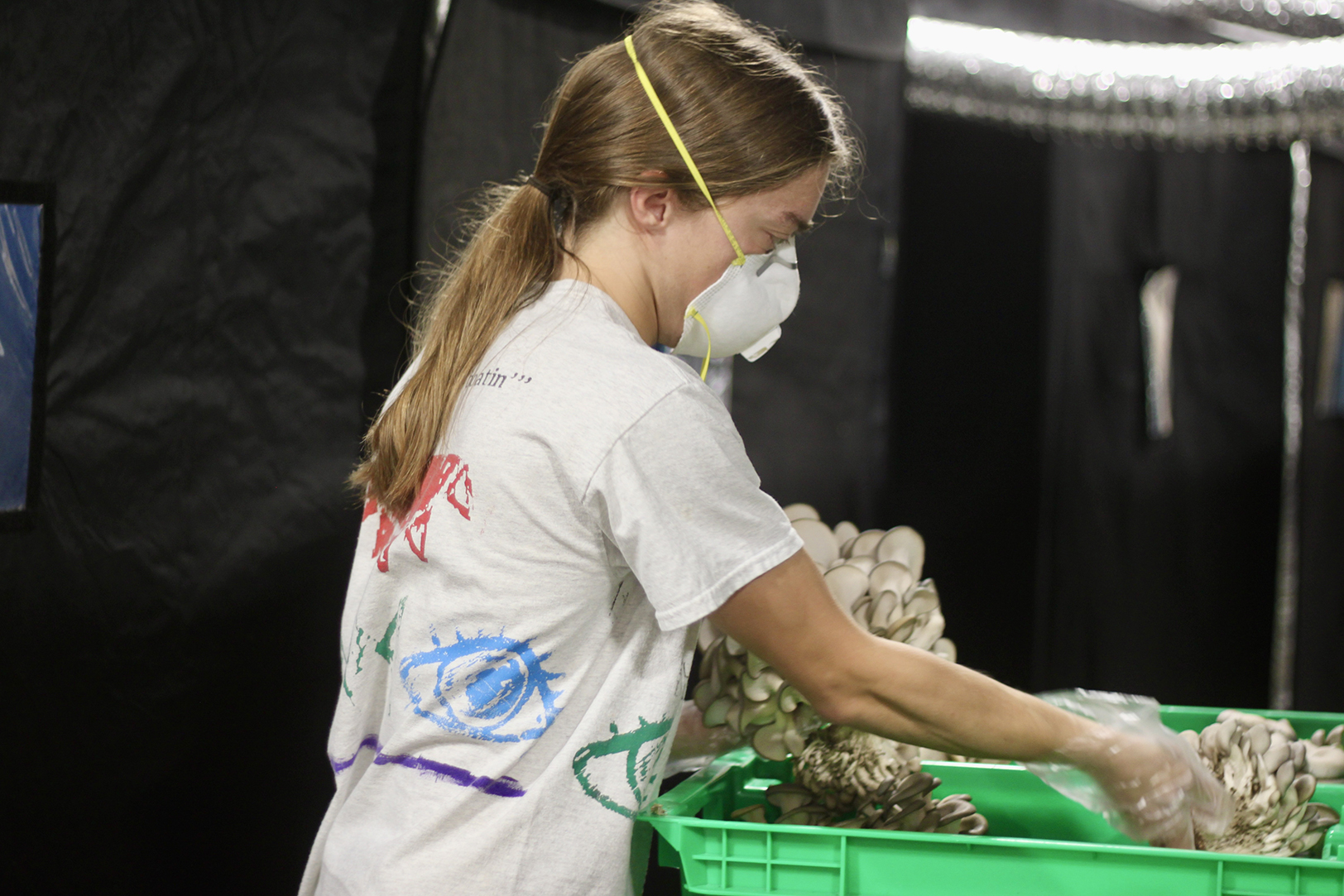
Scaling vertically
In the urban farming process, she noted, the mushrooms are first started in bagged blocks and then transferred to insulated and sterilized pods in the warehouse. The growing process is all organic and she is currently working on getting her organic certification.
“I’m indoor, where we can grow all year round and I can control all the environmental conditions I need for mushrooms,” she continued. “I have as many things automated as I possibly can to be more efficient. We’re also very conscious of what resources we are using and how we can be more sustainable and be more efficient.”
She uses hydroponic grow equipment with custom modifications for mushrooms. She has two full-time and two seasonal employees who help her out.
“We do vertical farming, so that way I can grow a large amount of food in a small space,” she added. “Because I think it’s very important — and it’s going to be important for the future — for growing more and more fresh local food in urban areas.”
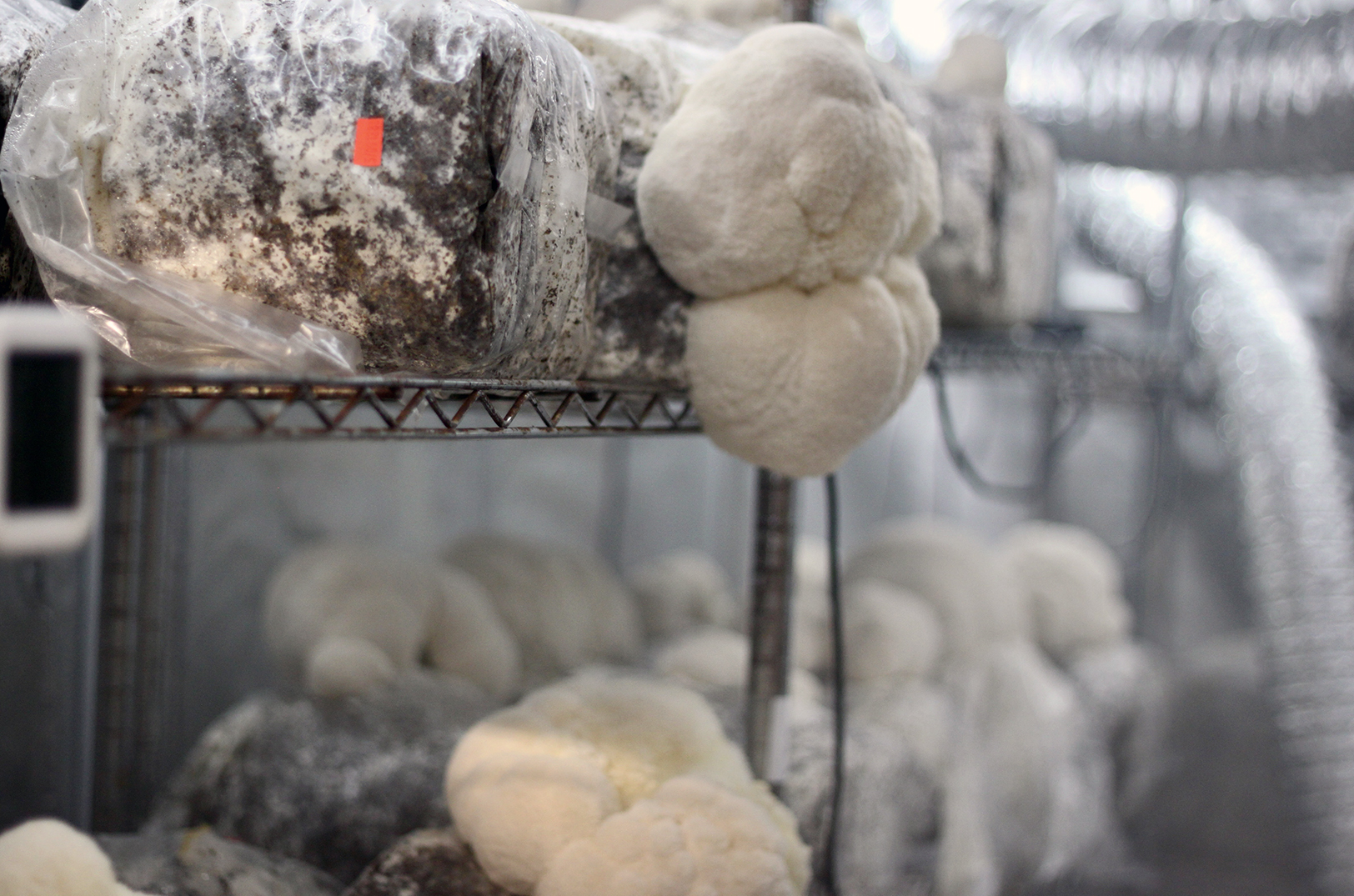
MyCo Planet Lions Mane mushrooms
Moore loves that mushroom farming is a sustainable business, she said.
“What they grow on is a byproduct or a waste product of other industries,” she explained. “So I take sawdust from milling and I take soy hulls — the byproducts of soybean production. And I can take that and reuse it, keep it out of the landfill, and grow food on it for my community, which I think is amazing to start with.”
But that’s just the beginning of the sustainable process, she noted.
“When I’m done with the mushroom blocks, it’s great organic matter,” she continued. “I can give it to local urban farms or farmers — I have worm farmers and pumpkin farmers — they come and get the material from me and they spread it back into their fields.”
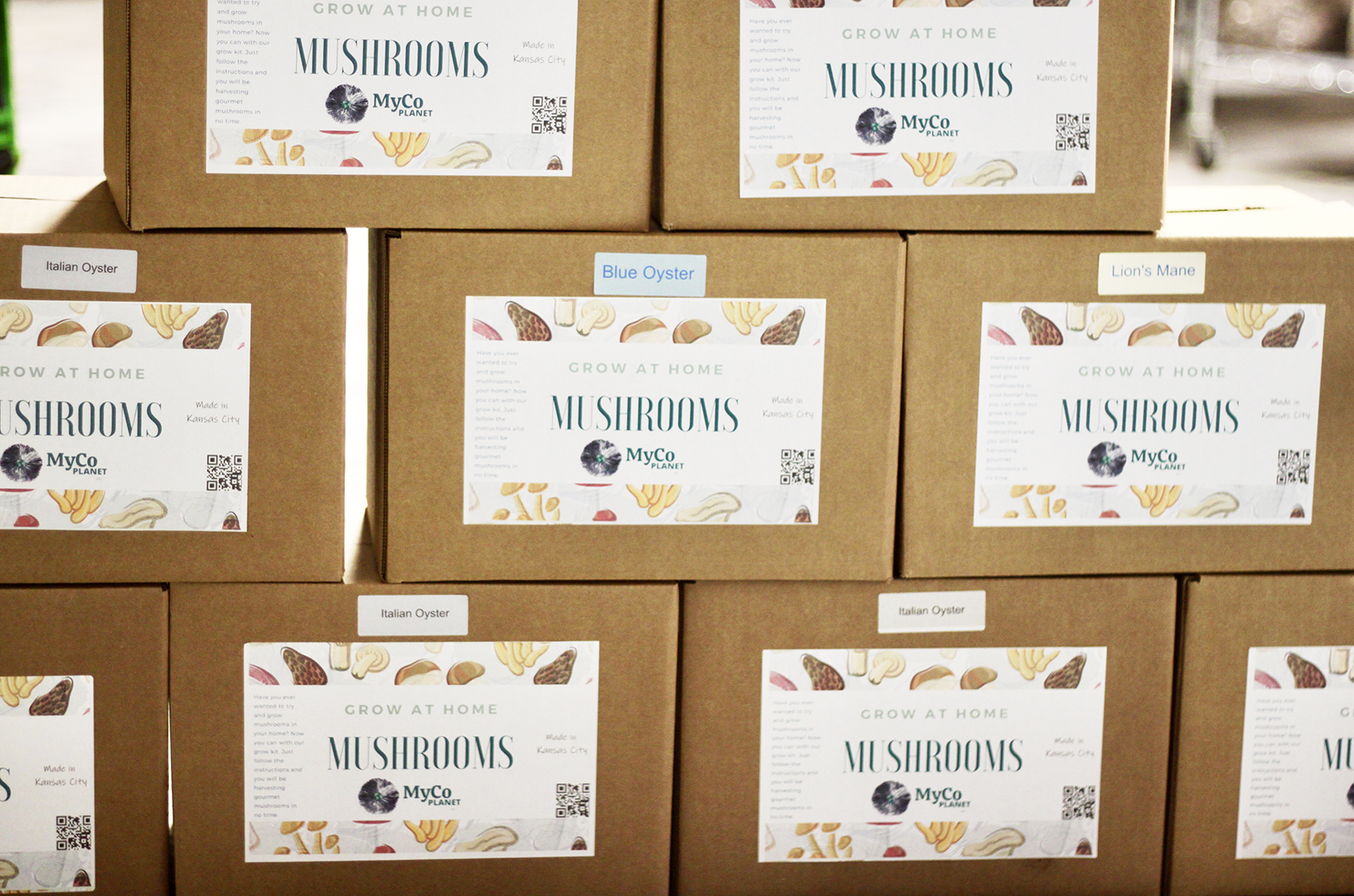
MyCo Planet mushroom grow kits
MyCo Planet also offers grow kits — which can be purchased at the Grass Pad and West Bottoms Plant Company — for people who are interested in trying their hand at mushrooms. Moore said they’ve done the hard part for the customers, so it’s possible to start harvesting mushrooms in a week in their own kitchen. She’s also working on developing more products to offer.
“It’s important for me to educate people about mushrooms and growing mushrooms,” she added. “So providing tools for them to grow mushrooms at home was important for us.”

This story is possible thanks to support from the Ewing Marion Kauffman Foundation, a private, nonpartisan foundation that works together with communities in education and entrepreneurship to create uncommon solutions and empower people to shape their futures and be successful.
For more information, visit www.kauffman.org and connect at www.twitter.com/kauffmanfdn and www.facebook.com/kauffmanfdn


2022 Startups to Watch
stats here
Related Posts on Startland News

Looking for the right exit? Driven founders first must know their startup’s destination
Setting an exit goal early is crucial when founding a startup, shared Robert Zhou, a Kansas City serial entrepreneur-turned-angel investor. “Every startup I mentor, I ask the founder this from Day 1: ‘What’s your goal?’” he explained. “‘Are you trying to build a business that you ultimately sell for $10 million? Is it $1 million?…

Digital Health KC awarded $311K grant with goal to add 70+ jobs, $6M+ in wages across region
Newly announced funding from the Missouri Technology Corporation is expected to boost a regional initiative that aims to open greater access to critical capital and partnerships for Kansas City area companies in a rapidly emerging industry. BioNexus KC — a catalyst for innovation in animal and human health — has received a $311,000 MOBEC (Missouri…

MTC grant puts ‘cherry on top’ for KC startup closing its seed round; two more local companies earn MO funding
A trio of Kansas City tech startups are among seven Missouri companies splitting $2.2 million in equity-based investments from the State of Missouri — a funding milestone that not only reflects momentum, but amplifies it, one grant-winning founder said. The Missouri Technology Corporation on Tuesday announced the awards from its IDEA Fund, with investments slated for…

Nearly $500K in renewed MTC funding for LaunchKC expected to empower early-stage tech startups for years
A popular entrepreneur support program is getting fresh funding from the State of Missouri to continue its competition for non-dilutive grants, along with offering winning companies office space, educational programs, and access to mentors. LaunchKC, the non-profit initiative founded by the Economic Development Corporation of Kansas City, Missouri, (EDCKC) and Downtown Council is set to…