

Mushroom lover finds the perfect spot to hunt: Her own warehouse in North Kansas City
October 20, 2022 | Nikki Overfelt Chifalu
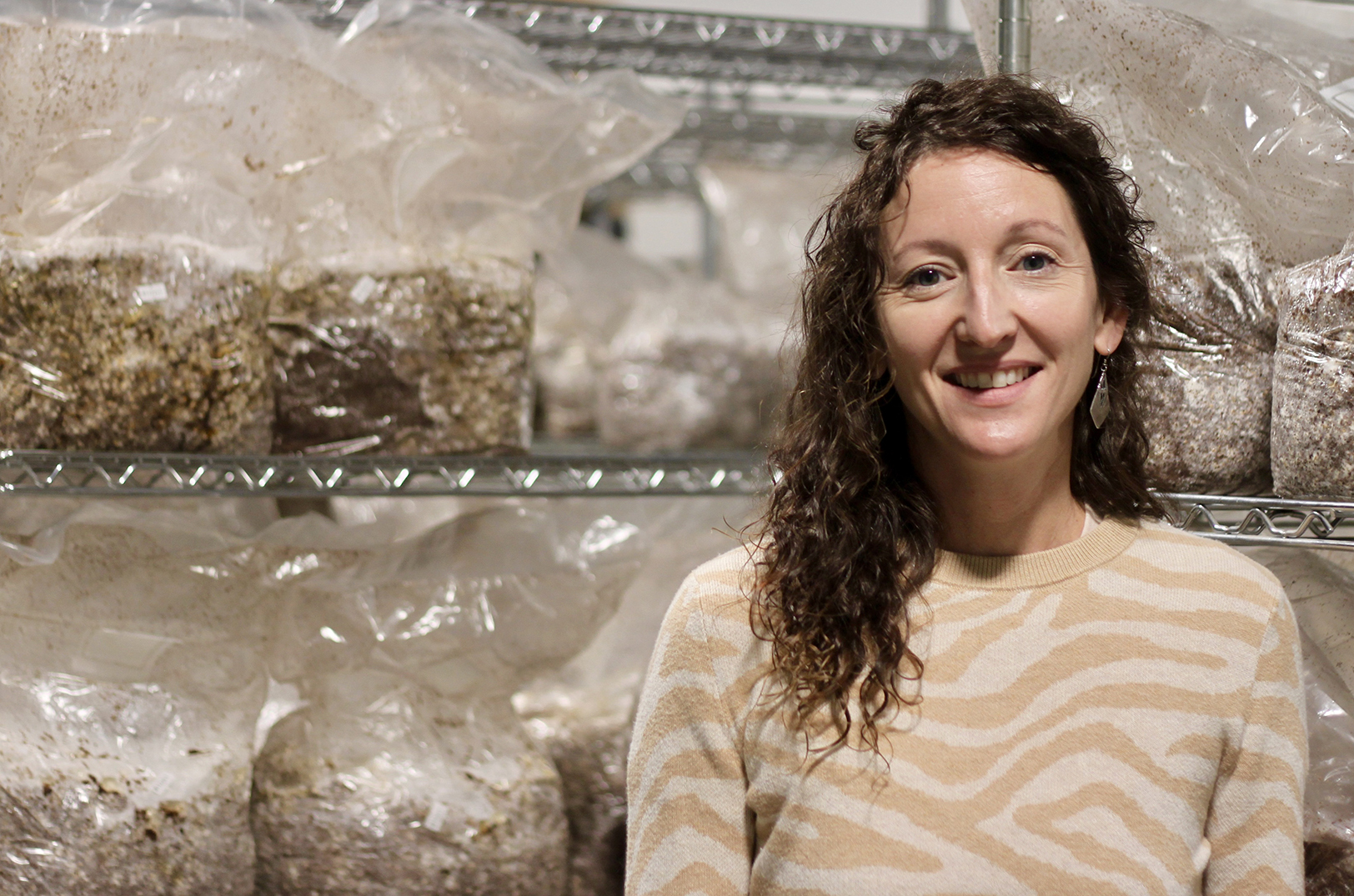
Robin Moore loves to cook with mushrooms, but she couldn’t always find the variety — like Lion’s Mane — she wanted at Kansas City stores. So she started growing them herself; ultimately turning the surplus into her own small business.
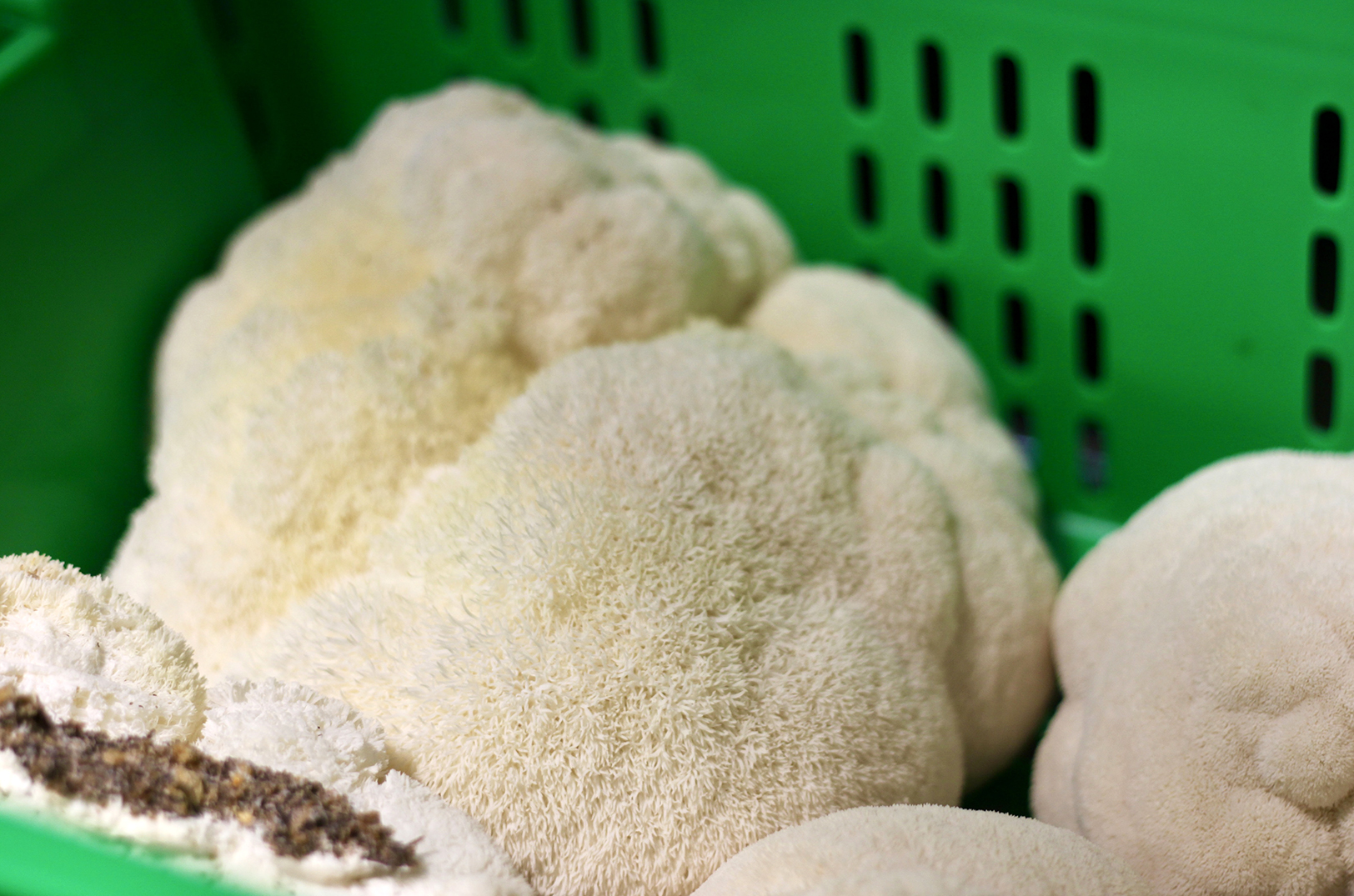
MyCo Planet Lions Mane mushrooms
“I’ve researched and kind of taught myself,” said the founder of MyCo Planet, who initially only aimed to feed her household. “And then I was growing more than we could use, so I gave it to friends and family. And then even beyond that, I was like, ‘Well, maybe I could go to the farmers’ market on Saturdays and I could sell those.’ It would be like a side thing and then it kind of took off from there.”
She still sells at the City Market and Parkville Farmers’ Market and hopes to add more next year. But now she’s also providing her mushrooms to more than 20 local restaurants — including the Majestic Steakhouse, the Russell, and Axios Bistro — and several local markets like Local Pig Green Acres, and Nature’s Own.
“I enjoy doing it more than anything else,” said Moore, who has bootstrapped her business. “So I kind of took a risk and I quit my full-time job and decided to focus on mushrooms full time.”
She started growing them in her basement about three and a half years ago. But as of January, she expanded into a warehouse space in North Kansas City, where she is soon planning to open a storefront and looking to expand even more.
“I love North Kansas City,” she noted. “I always have. To be able to be in one of these old warehouse buildings is really great.”
Click here to explore the fresh gourmet mushrooms from MyCo Planet.
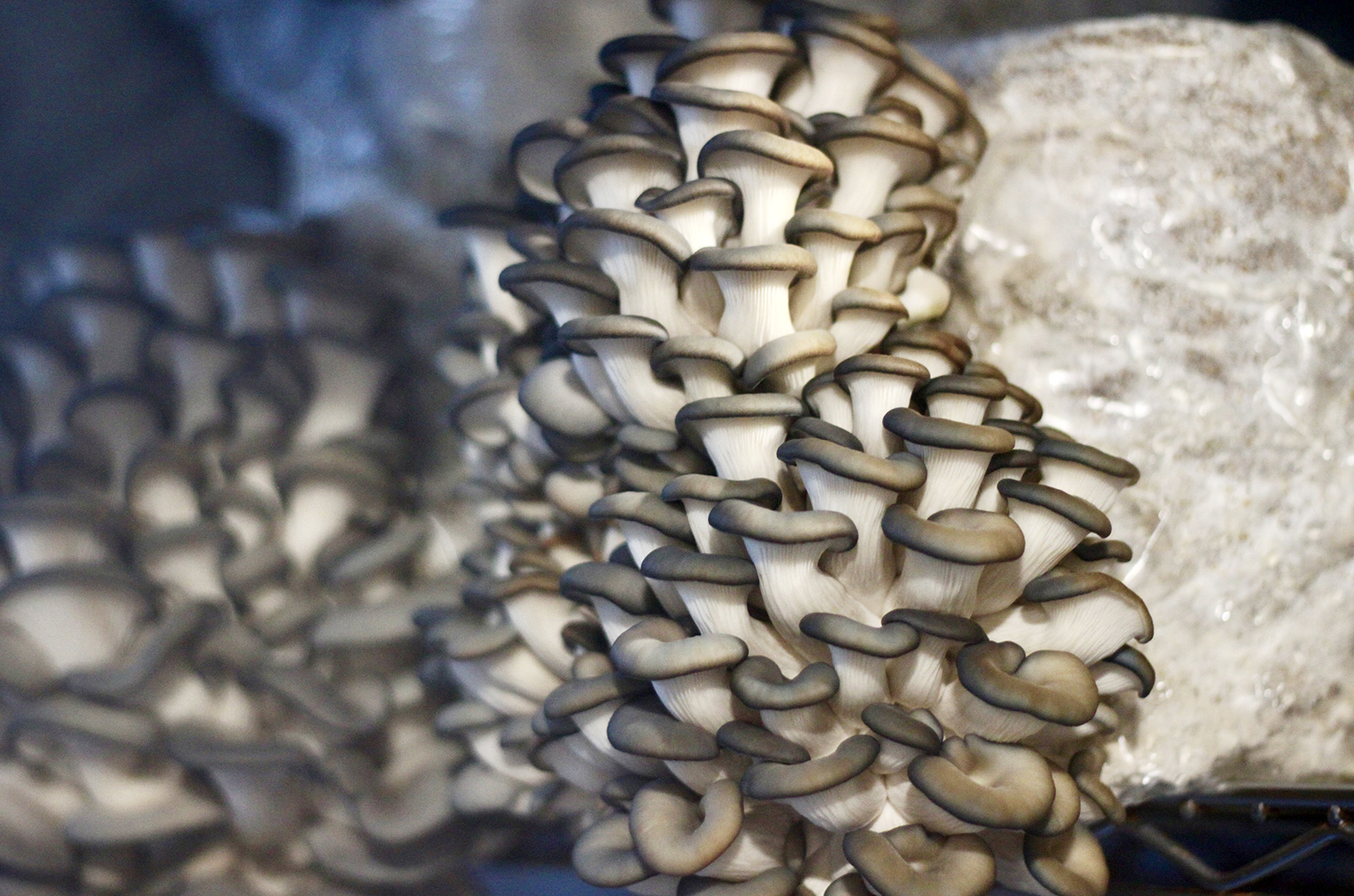
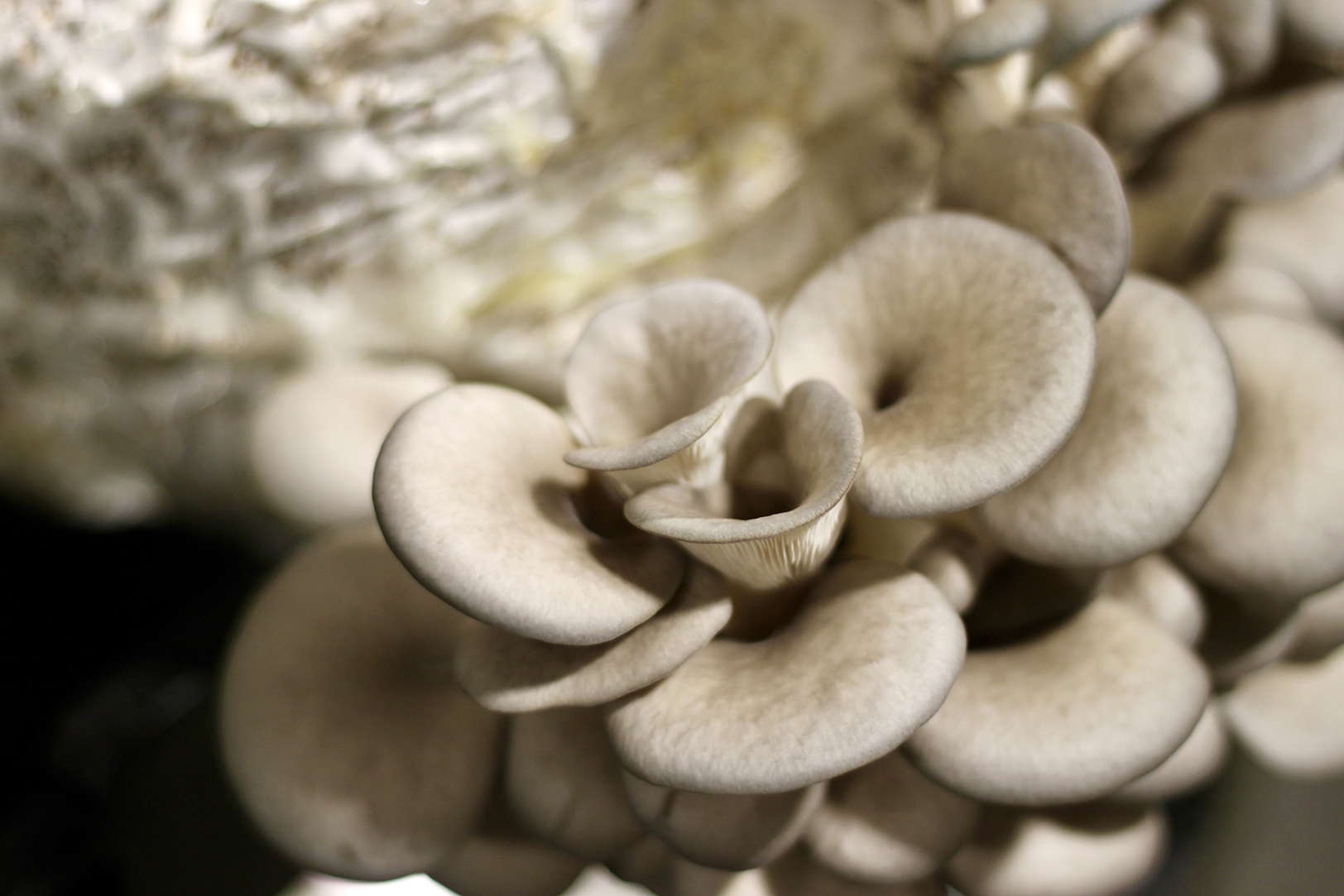
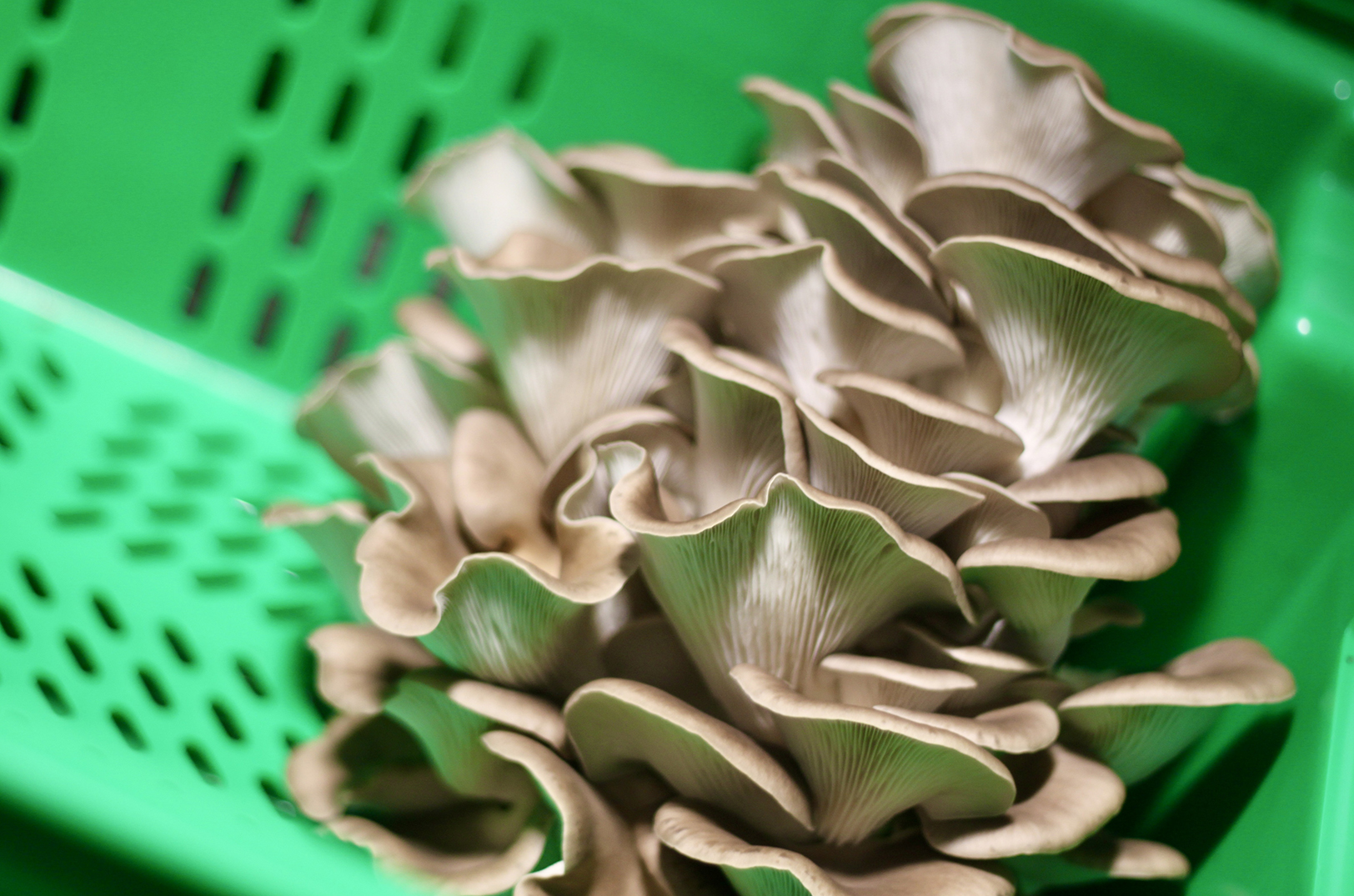
MyCo Planet Blue Oyster mushrooms
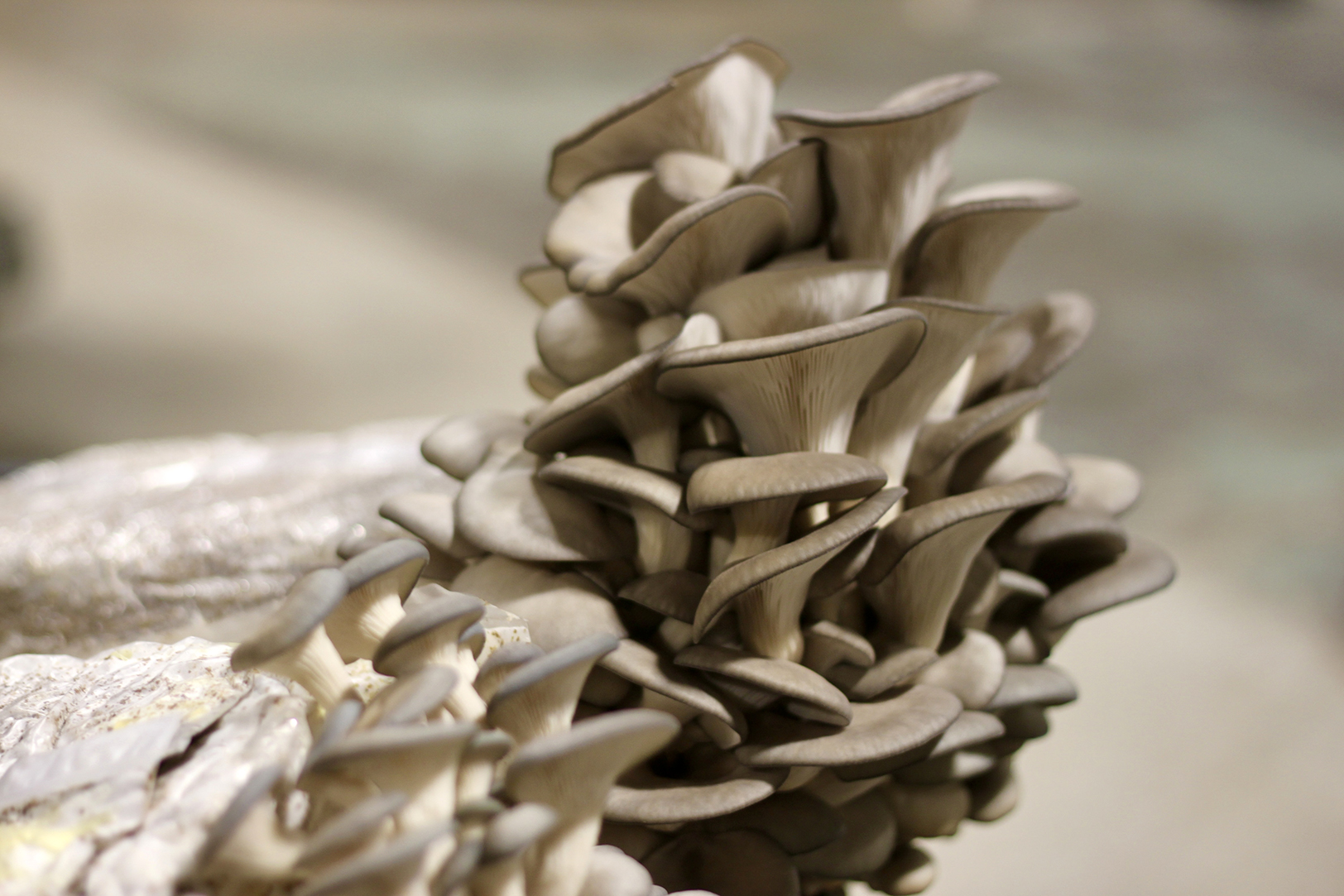
MyCo Planet produces about 350 pounds of mushrooms per week in six varieties — Blue Oyster, Italian Oyster, Lion’s Mane, Black Pearl, Chestnut, and Shiitake, Moore said.
“Blue Oyster is the most popular as far as restaurants and cooking,” she added. “But as far as our customers at the markets and things like that, it’s the Lion’s Mane. Because you hear more and more about that and the medicinal properties that it has. So that’s popular for market customers.”
Her favorite mushroom is maitake but she has to have that flown in for customers to try.
“They’re extremely hard to grow,” she said. “But it’s on my list.”
Moore has a background in science — though not in mycology, but biology, geology, and paleontology — which still has helped her out in learning how to grow them.
“I’ve worked in labs (and) worked as a chemist,” she explained. “There’s an element with mushroom farming that is lab work with sterile technique and so I was familiar with that. It wasn’t scary to do that.”
Scaling vertically
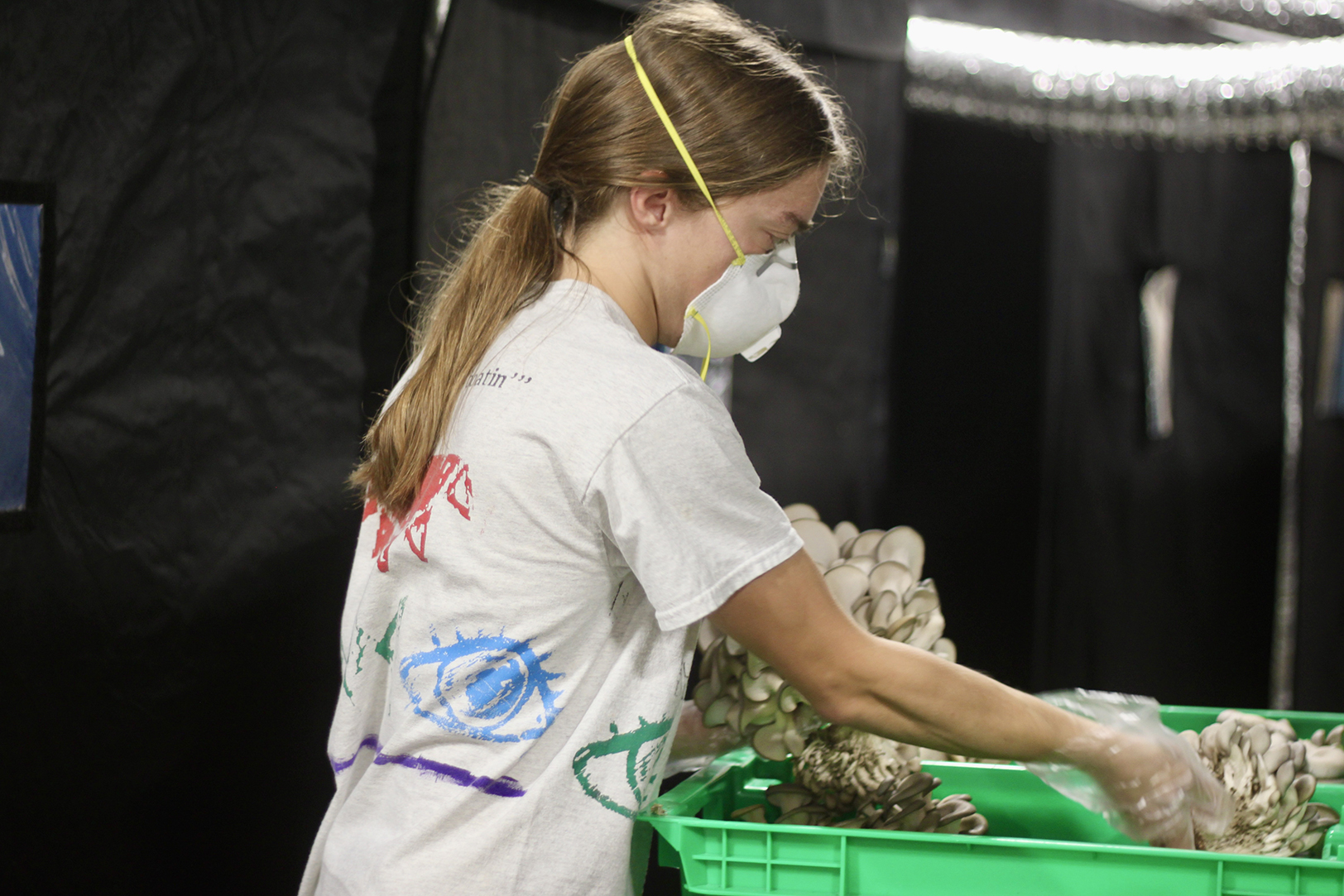
In the urban farming process, she noted, the mushrooms are first started in bagged blocks and then transferred to insulated and sterilized pods in the warehouse. The growing process is all organic and she is currently working on getting her organic certification.
“I’m indoor, where we can grow all year round and I can control all the environmental conditions I need for mushrooms,” she continued. “I have as many things automated as I possibly can to be more efficient. We’re also very conscious of what resources we are using and how we can be more sustainable and be more efficient.”
She uses hydroponic grow equipment with custom modifications for mushrooms. She has two full-time and two seasonal employees who help her out.
“We do vertical farming, so that way I can grow a large amount of food in a small space,” she added. “Because I think it’s very important — and it’s going to be important for the future — for growing more and more fresh local food in urban areas.”
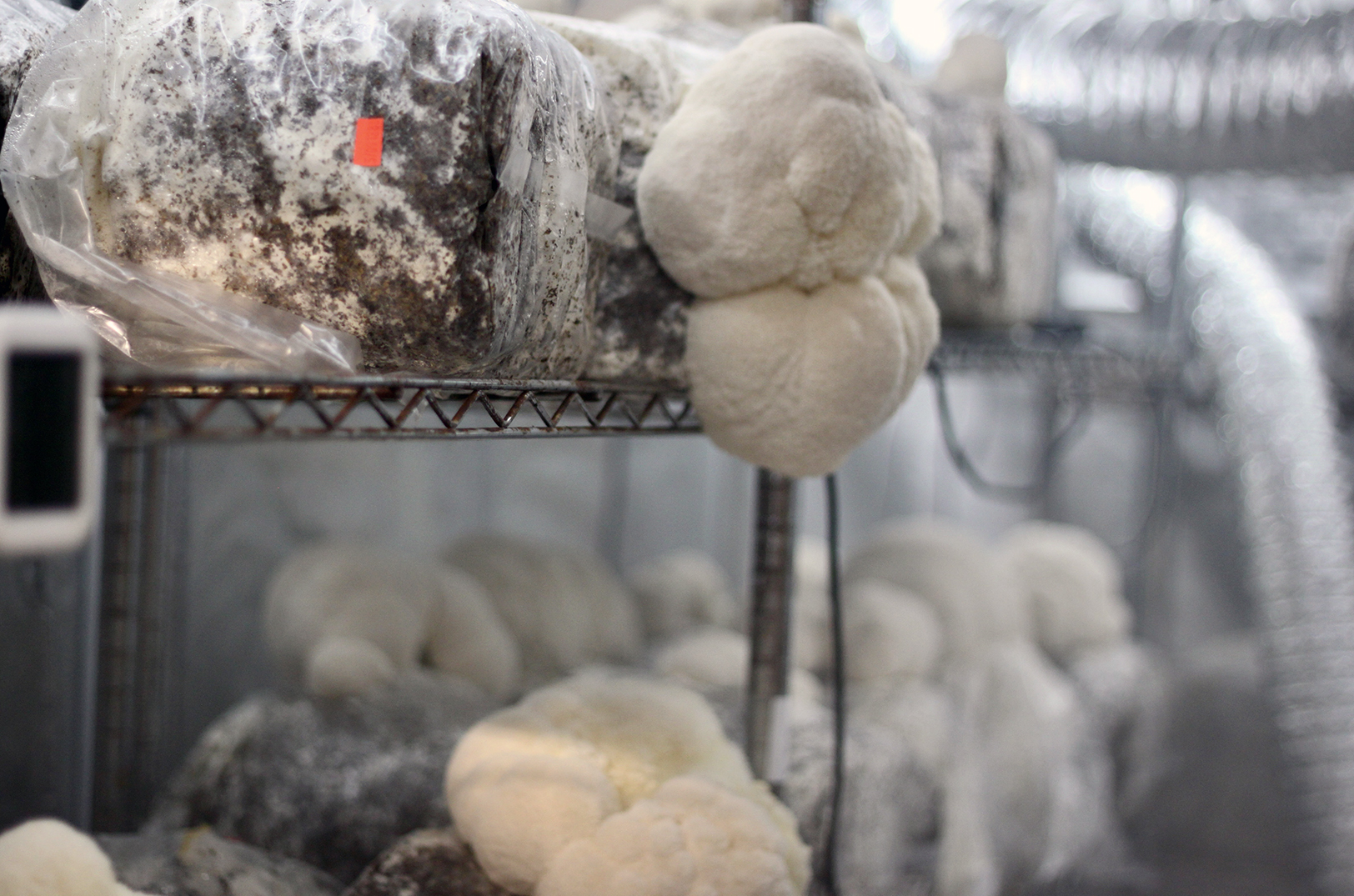
MyCo Planet Lions Mane mushrooms
Moore loves that mushroom farming is a sustainable business, she said.
“What they grow on is a byproduct or a waste product of other industries,” she explained. “So I take sawdust from milling and I take soy hulls — the byproducts of soybean production. And I can take that and reuse it, keep it out of the landfill, and grow food on it for my community, which I think is amazing to start with.”
But that’s just the beginning of the sustainable process, she noted.
“When I’m done with the mushroom blocks, it’s great organic matter,” she continued. “I can give it to local urban farms or farmers — I have worm farmers and pumpkin farmers — they come and get the material from me and they spread it back into their fields.”
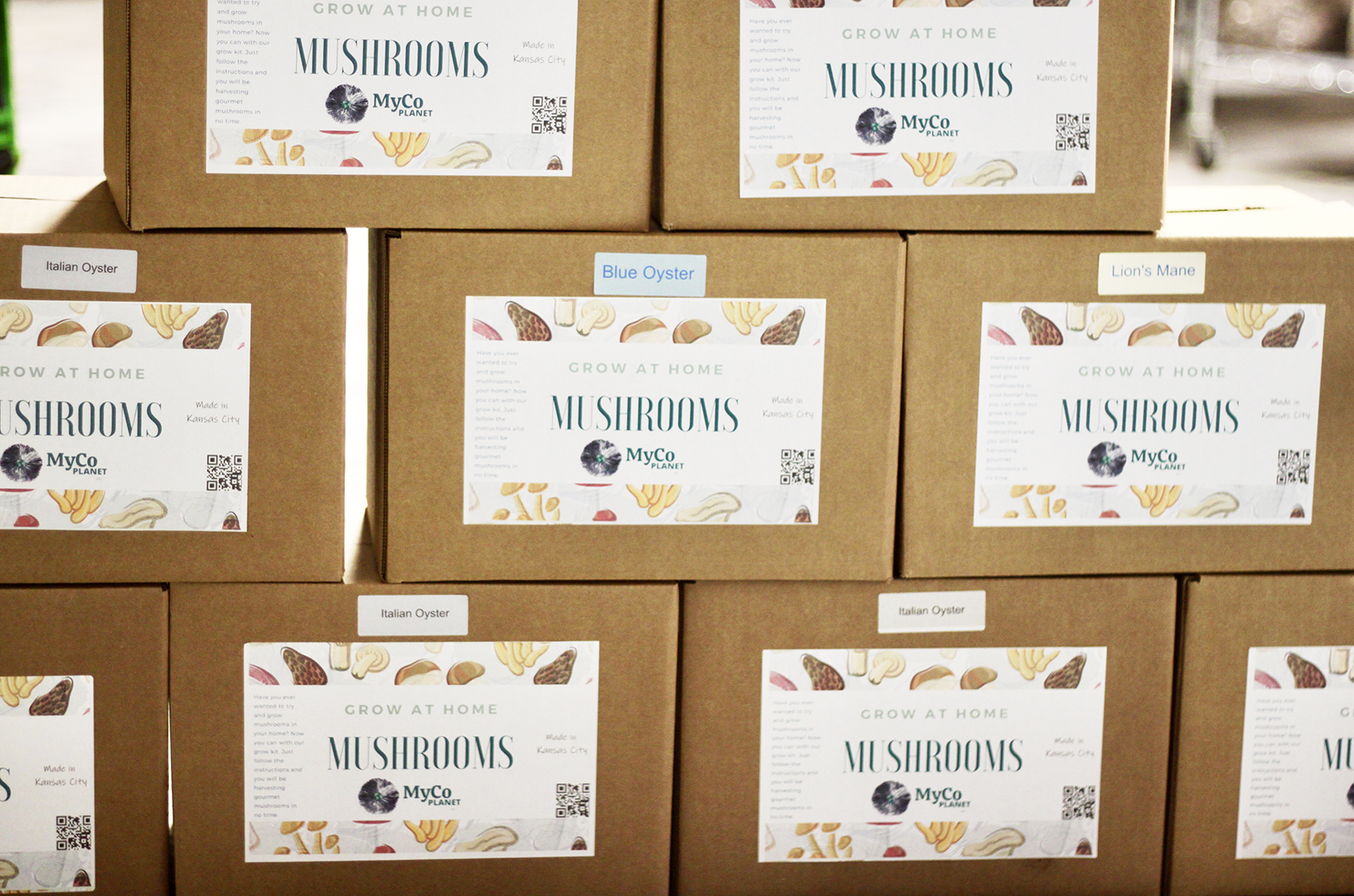
MyCo Planet mushroom grow kits
MyCo Planet also offers grow kits — which can be purchased at the Grass Pad and West Bottoms Plant Company — for people who are interested in trying their hand at mushrooms. Moore said they’ve done the hard part for the customers, so it’s possible to start harvesting mushrooms in a week in their own kitchen. She’s also working on developing more products to offer.
“It’s important for me to educate people about mushrooms and growing mushrooms,” she added. “So providing tools for them to grow mushrooms at home was important for us.”

This story is possible thanks to support from the Ewing Marion Kauffman Foundation, a private, nonpartisan foundation that works together with communities in education and entrepreneurship to create uncommon solutions and empower people to shape their futures and be successful.
For more information, visit www.kauffman.org and connect at www.twitter.com/kauffmanfdn and www.facebook.com/kauffmanfdn


2022 Startups to Watch
stats here
Related Posts on Startland News

Bill Nye: We’re all born scientists — most people just get distracted; here’s how the ‘Science Guy’ thinks critical thinking can make the world better
Startland News’ Startup Road Trip series explores innovative and uncommon ideas finding success in rural America and Midwestern startup hubs outside the Kansas City metro. WICHITA, Kansas — Even with a looming (and divisive) election within weeks, the impacts of severe weather becoming more clear, and an increasingly uncertain future written within online algorithms, now…

Travois receives $35M in tax credits to boost economic development in Native communities
A fresh tranche of new markets tax credits is expected to help Crossroads-based Travois support the funding of projects in Native spaces, like school facilities and health clinics, said Phil Glynn. “New markets tax credits are an essential tool for filling funding gaps for projects in places with the greatest need,” said Glynn, president of…
Chef Ryan Edwards’ flame rises with new BBQ concept (in a familiar Lenexa space)
A new BBQ hotspot opened this week on Lackman Road, bringing a seasoned restauranteur’s latest concept — and the taste of distinctly Kansas City barbecue — back to his old grilling grounds. Sierra BBQ, a casual dining concept from chef-owner Ryan Edwards, debuted Tuesday in the former Johnson County space occupied by Edwards’ acclaimed Sierra…

Here’s how Kauffman’s five just-hired directors fit into the Foundation’s new impact- and research-heavy focus
A handful of newly announced directors at the Ewing Marion Kauffman Foundation are expected to help drive forward the influential philanthropic organization’s updated priorities and grantmaking strategy, said Dr. DeAngela Burns-Wallace, emphasizing an underlying theme for their work: prosperity for all. “These five new director positions welcome a combination of talent and commitment to our…