

Build Trybe outgrows incubator mode, taking over Maker Village KC to train at-risk youth in trades
October 11, 2022 | Nikki Overfelt Chifalu
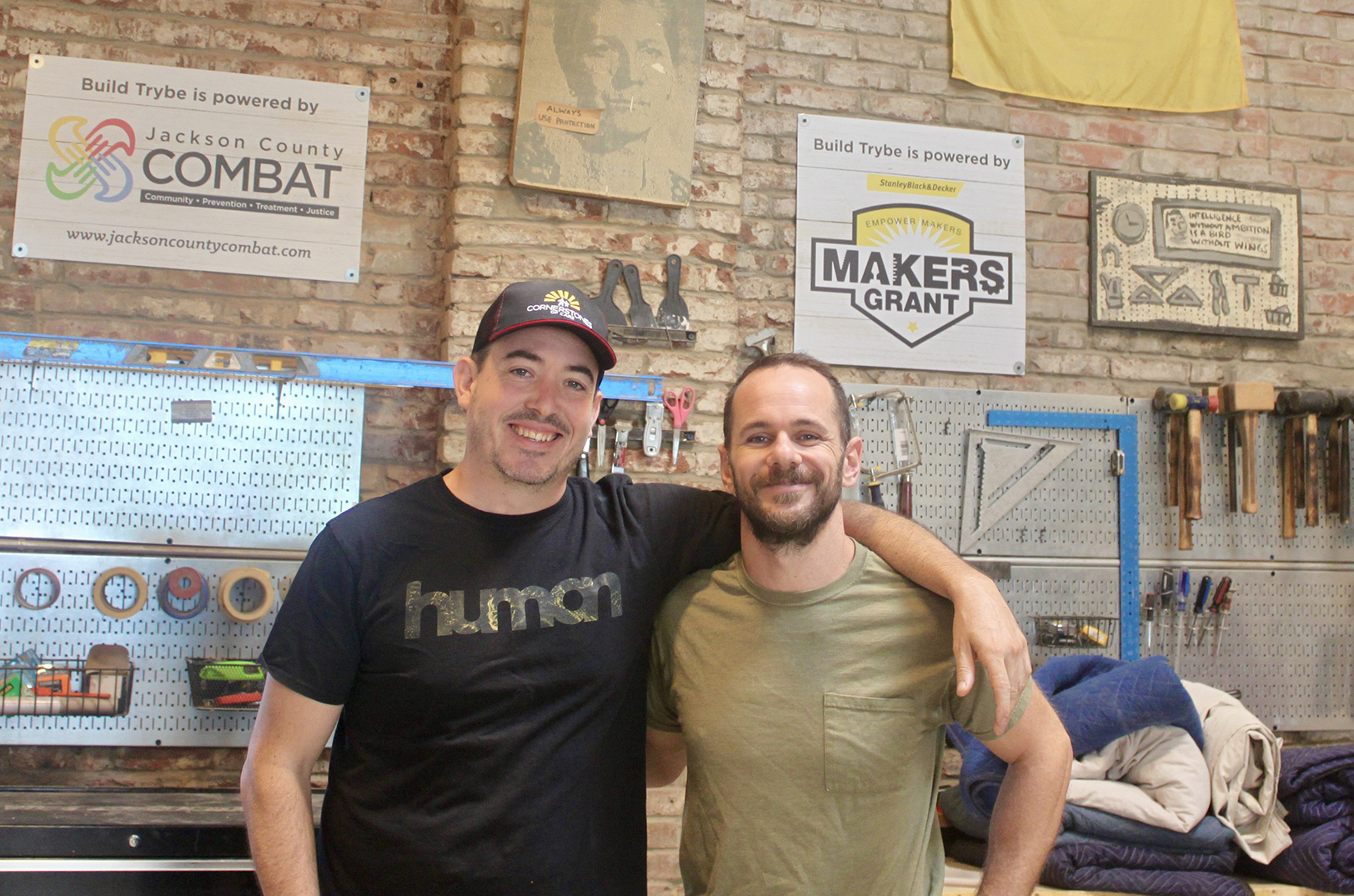
When Nick Ward-Bopp launched Maker Village KC more than five years ago near Martini Corner, he never dreamed the maker space would incubate a program for at-risk youth that ultimately would build beyond it.
Set up in a once-vacant Midtown building he rehabbed with co-founder and longtime friend Sam Green, the space started as a metal and wood shop focused on building community through workshops. Later, Build Trybe — which provides vocational training to youth in foster care through construction, culinary, and horticulture programs — started using the space a few days a week for classes.
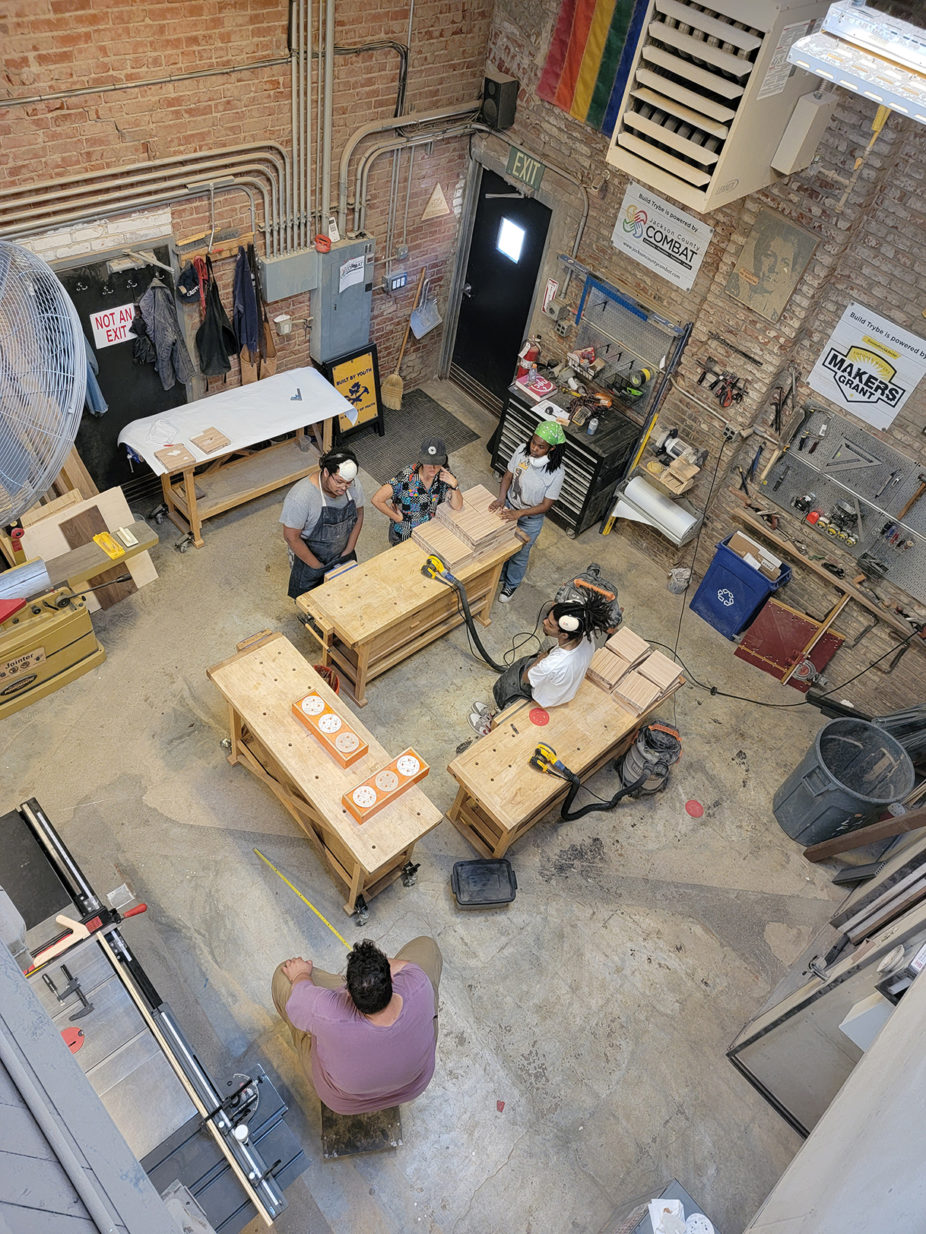
Build Trybe in Midtown
In July, the Build Trybe building trades program, an initiative of Cornerstones of Care, officially took over the space.
“Honestly, if you’d have told me we would build this shop and ultimately be able to help foster youth learn building trades, I would be like, ‘You’re insane,’” said Ward-Bopp. “It’s been really special to just be a small part of Build Trybe’s growth and the impact on the kids.”
An Empower Makers grant from Stanley Black and Decker — plus the timing of changes in Ward-Bopp’s and Green’s lives — made the transition possible.
Build Trybe was one of 86 organizations across the United States to receive the grant, which is designed to shrink the demand for skilled construction workers. The grant pushed the organization over the finish line by covering its first year of rent expenses in the space, said Theo Bunch, director of Build Trybe.
“That grant was pivotal as we began talking with Nick and Sam about the opportunity of taking over this space and having the primary focus be helping these youth that otherwise just don’t get access to this,” he said.
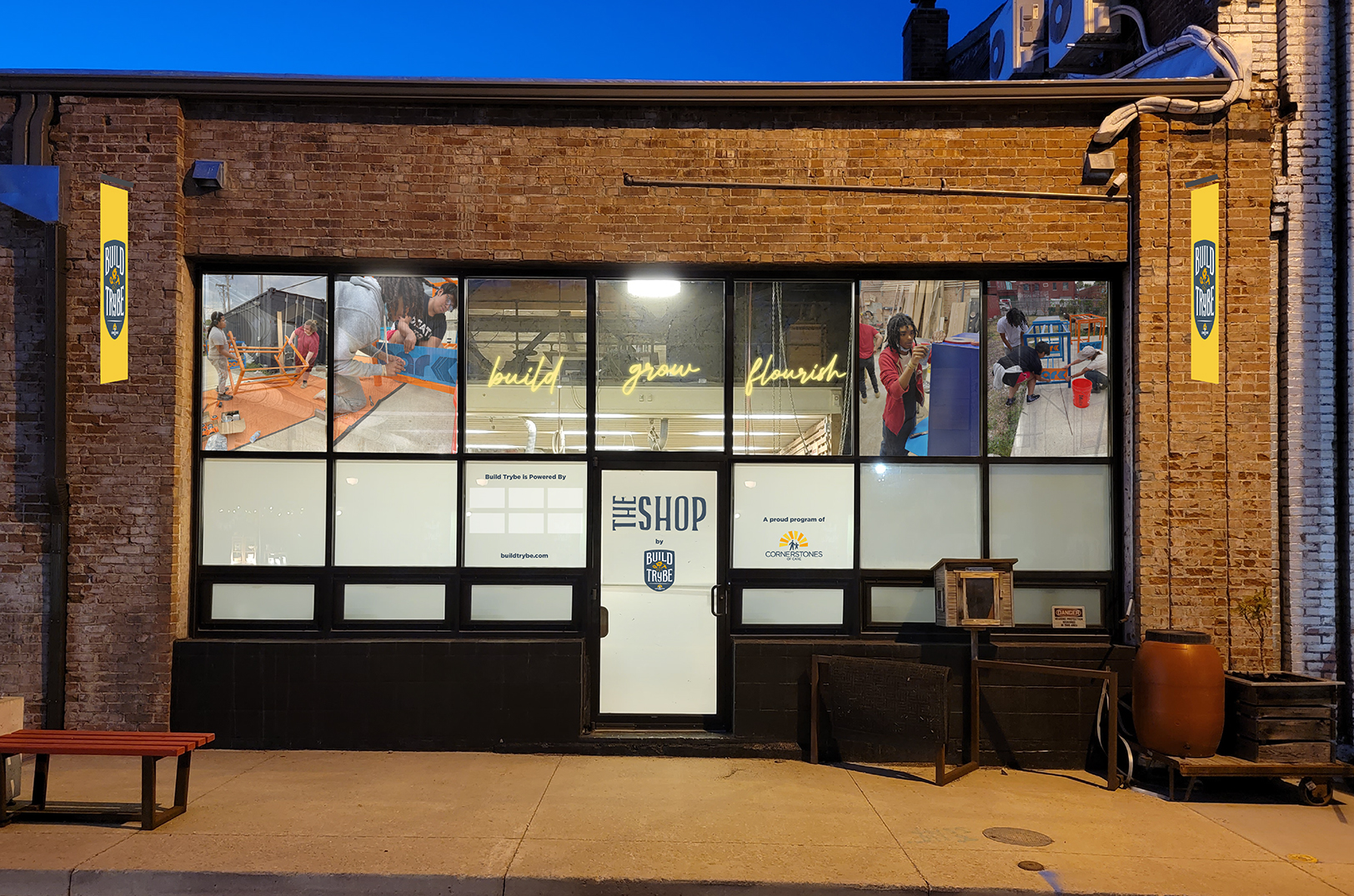
Build Trybe in Midtown
The students in the program don’t have shop classes in their schools like counterparts in many suburban schools, Bunch noted.
“My kids don’t have that; they don’t get to touch that; they don’t even know what that looks like,” he continued. “So to be able to have those youth come in here is really cool. This is a shop that anybody would be envious of. It’s a really special space. So to be able to have it be for them, I think is a really beautiful action and a really beautiful moment. (For Nick and Sam) to make something that they’ve put so much work and sweat and love into a space for these kids — by really incubating our program — was incredible.”
Ward-Bopp, who is also a facilitator at the MakerSpace at the Johnson County Library, said the timing is right for Build Trybe to take over as both his and Green’s families are growing.
“I was the person here teaching all the classes, running the shop, maintenancing the equipment, communicating with everybody, fixing stuff,” he explained. “I think the writing was on the wall that I just don’t have the capacity to do that any more. [Build Trybe was], at the time, really wanting to expand and so that was just a perfect transition.”
The program is seeing explosive growth right now in its building trades program, Bunch said, noting high demand and impressive results.
“We are a city, a state, and a nation that is looking for solutions when it comes to these kids,” he continued. “And I think when they start seeing something work, people perk up. We are very blessed.”
Build, grow, flourish
Cornerstones of Care started Build Trybe three years ago to address a crisis in the world of foster care, according to Bunch.
“It’s been a problem we’ve been having for a very long time, which is that you have all these young men and women and they’re growing up in the system and the system fails,” he continued. “It might feed them and clothe them and might provide them with therapies — and that’s all very important — but it fails to prepare them for the adult world. These young people are statistically incredibly at risk of homelessness, incarceration, drug use, suicide. You go across the board — it’s almost every bad outcome — they are the highest at-risk population.”
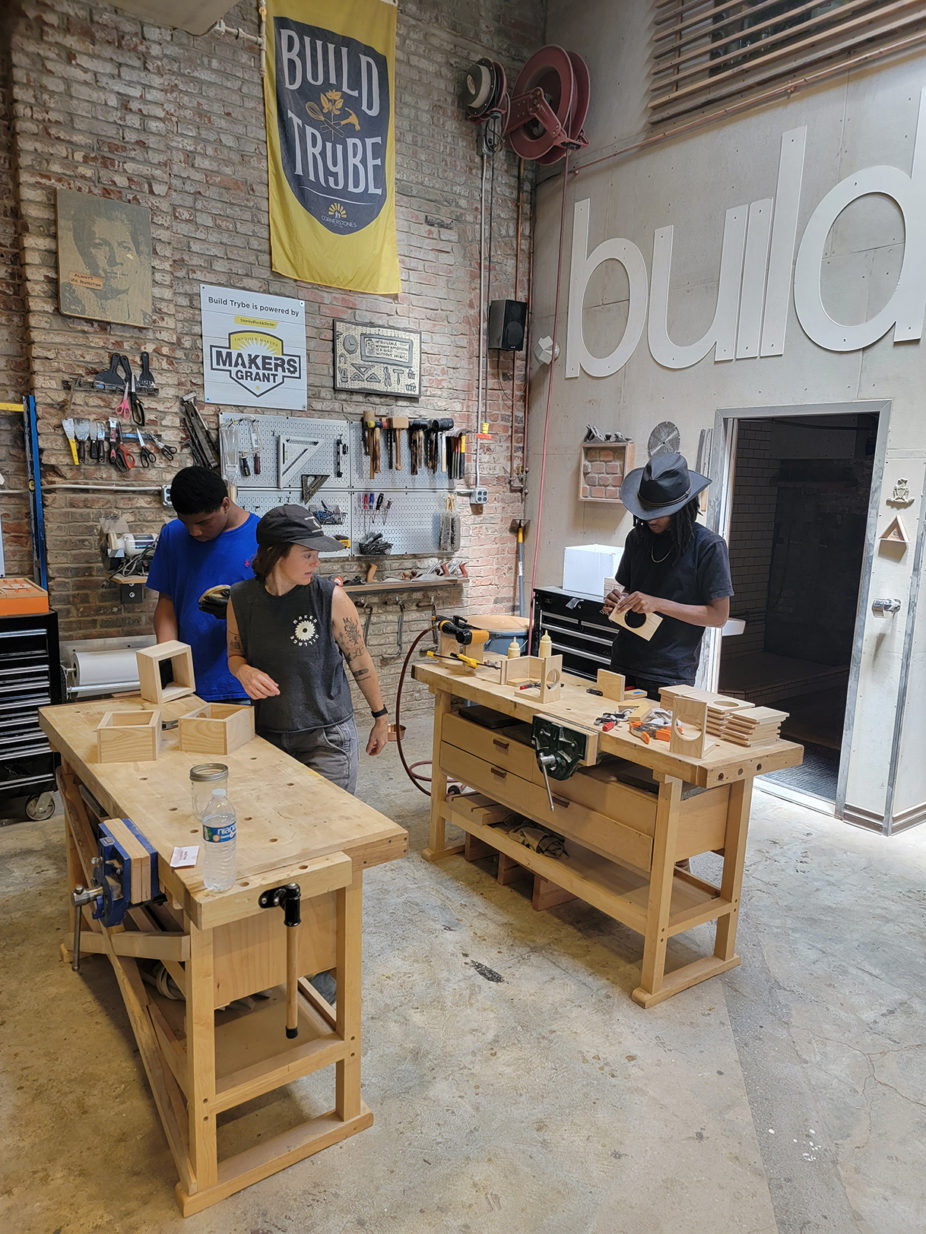
Build Trybe in Midtown
It’s up to the community to rally around these young adults and find strong solutions to help them find paths to success, Bunch said.
“Part of that is the vocational training — connecting them with skill sets and with knowledge — so that they can find living-wage jobs and sustain as adults,” he explained. “But then also working with the community to help build those jobs and help work with companies to figure out how they can be successful with these young adults as employees. So the work goes way beyond vocational training. It also goes to community building and helping companies find success with these young men and women.”
Ward-Bopp called the initiative a startup within a nonprofit.
The young adults are paid and the programs — which help about 200 youth each year — are run like a business, Bunch added.
“If you want youth to succeed in our world of businesses, have them operate in as real a world environment as you can create,” he said. “So if we run it like a business and they have to work with us like employees in a business, there’s going to be a much greater chance of success when they transition to working for someone.”
Right now, the programs are for youth that are in the Cornerstones of Care residential facility and Pathways transitional living program. But Bunch is hoping to expand the programs to foster families.
“What I really want to start doing is growing the program where we’re providing support to foster care parents, who have done the monumental step and really good work of becoming part of these kids’ lives,” he explained. “It’s not easy at all to be a foster parent. What I want to do is start doing more after-school and weekend programming.”
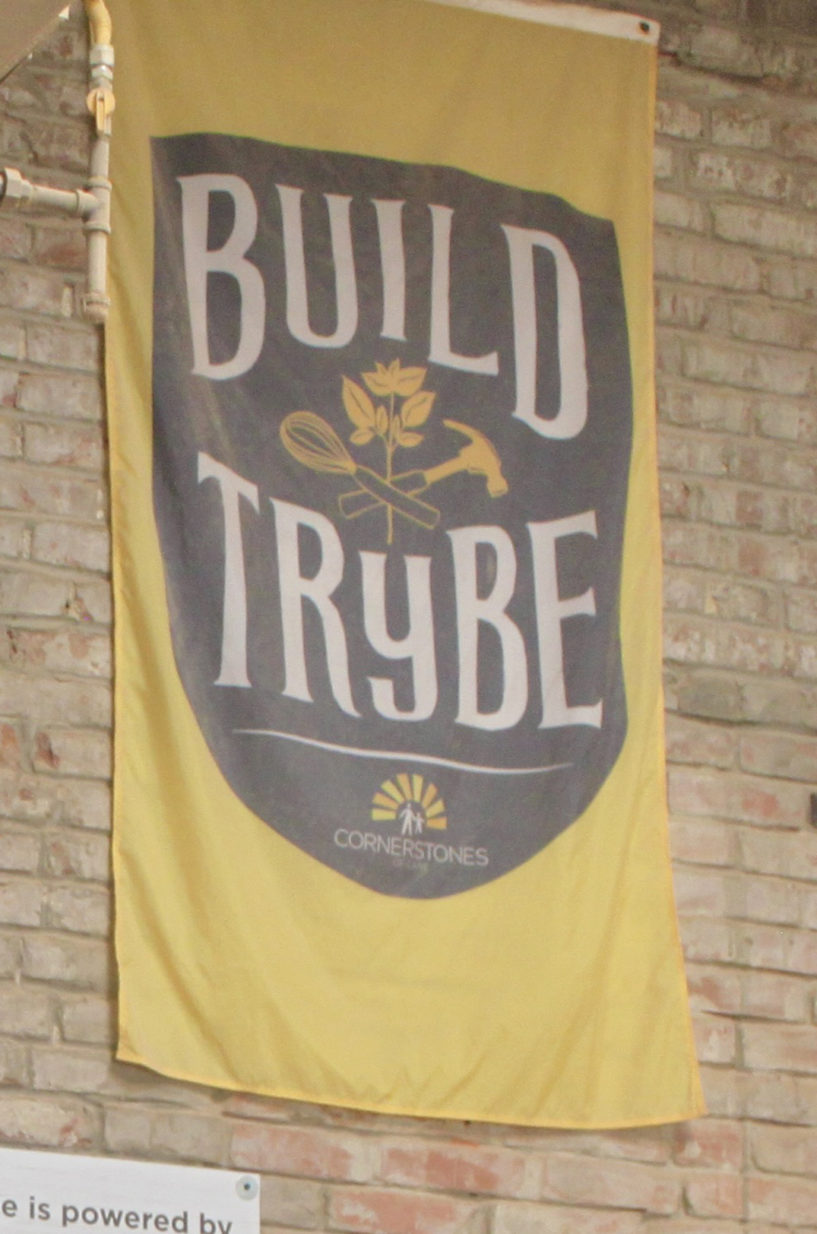
Build Trybe’s flag in the former Build Maker Village KC space
In addition to the building trades program, Build Trybe has culinary and horticulture/landscaping programs — illustrated by the hammer, whisk, and branch on their shield emblem. For the culinary program, youth learn to cook and food safety in two industrial kitchens on the Cornerstones of Care campuses. Plus they get to try foods they’ve never had the chance to before, Bunch noted.
The horticulture program features two outdoor education centers where the youth learn skills in landscaping, growing vegetables, and — soon — animal husbandry. It also partners with the Heartland Conservation Alliance for a conservation landscaping program where the youth can learn about preserving natural habitats.
“Those areas were picked because of real opportunity, market demand, and a variety of ways that youth can continue to get into those fields,” Bunch added. “So it’s not just, ‘Oh, you’ve got to go to a four-year college.’ You can pursue higher education in those three fields. You can go right to work with an apprenticeship. Or you can go to a vocational school and trades program. That variety of ways to find success in those fields is really important because our kiddos all have different strengths. They all come from different places. So we need fields where there’s a variety of ways that they can engage.”
Crafting the future
In the building trades program, young adults learn custom fabrication, word working, metal working, finish work, and using hand tools. They make everything from cutting boards and end tables that they sell online and at pop-up markets to larger custom pieces for businesses and homeowners.
Build Trybe has partnered with Bar K to make patio tables at the KC location and all the tables at the St. Louis and upcoming Oklahoma City locations, said Bunch. They have also worked with Benson Method Interior Design to make custom pieces for customers.
The organization loves doing projects for nonprofits, he added. It is now working on an indoor play structure for Newhouse, a domestic violence shelter, and doing work for MO Hives KC, an urban bee farm.
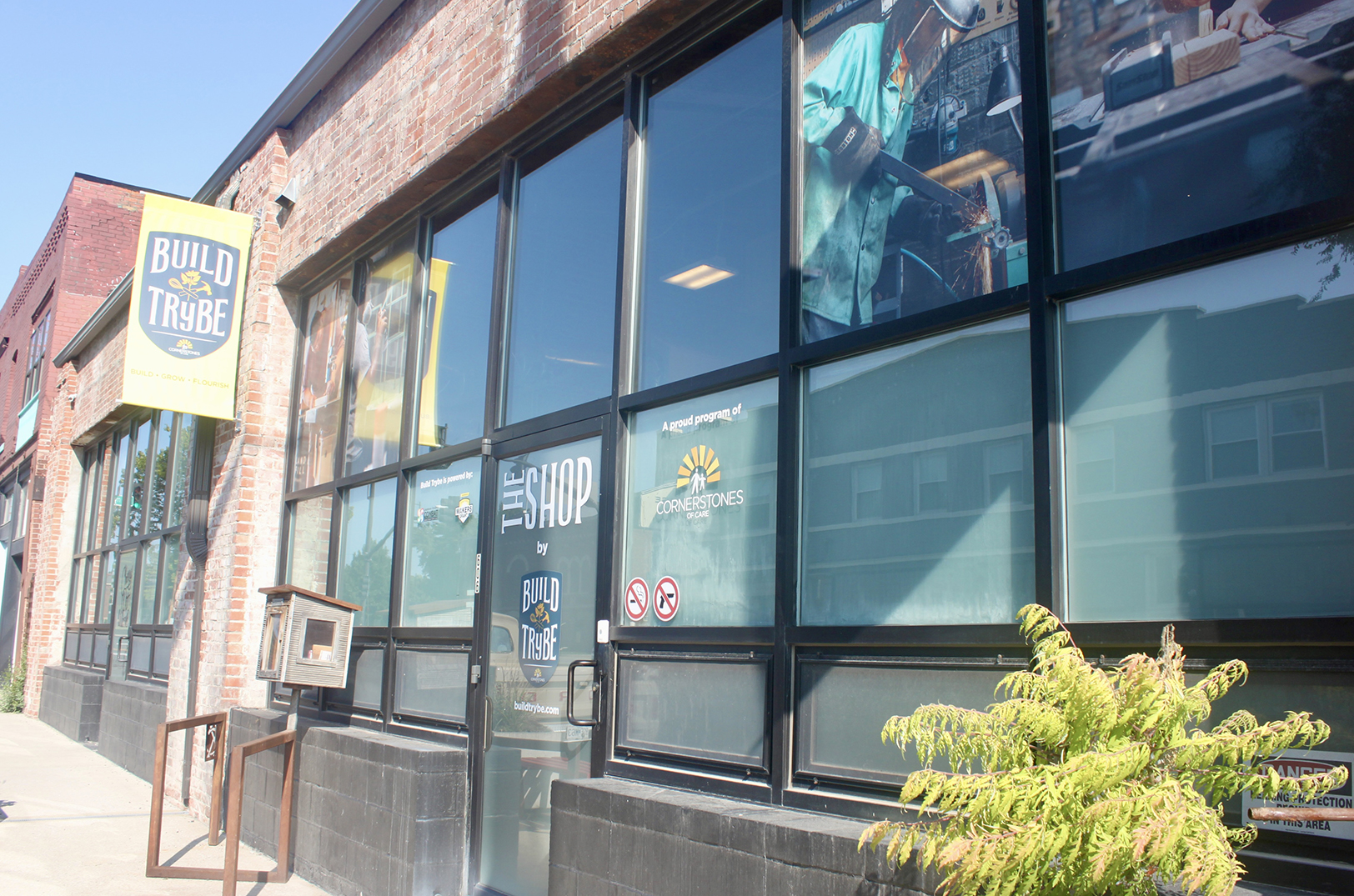
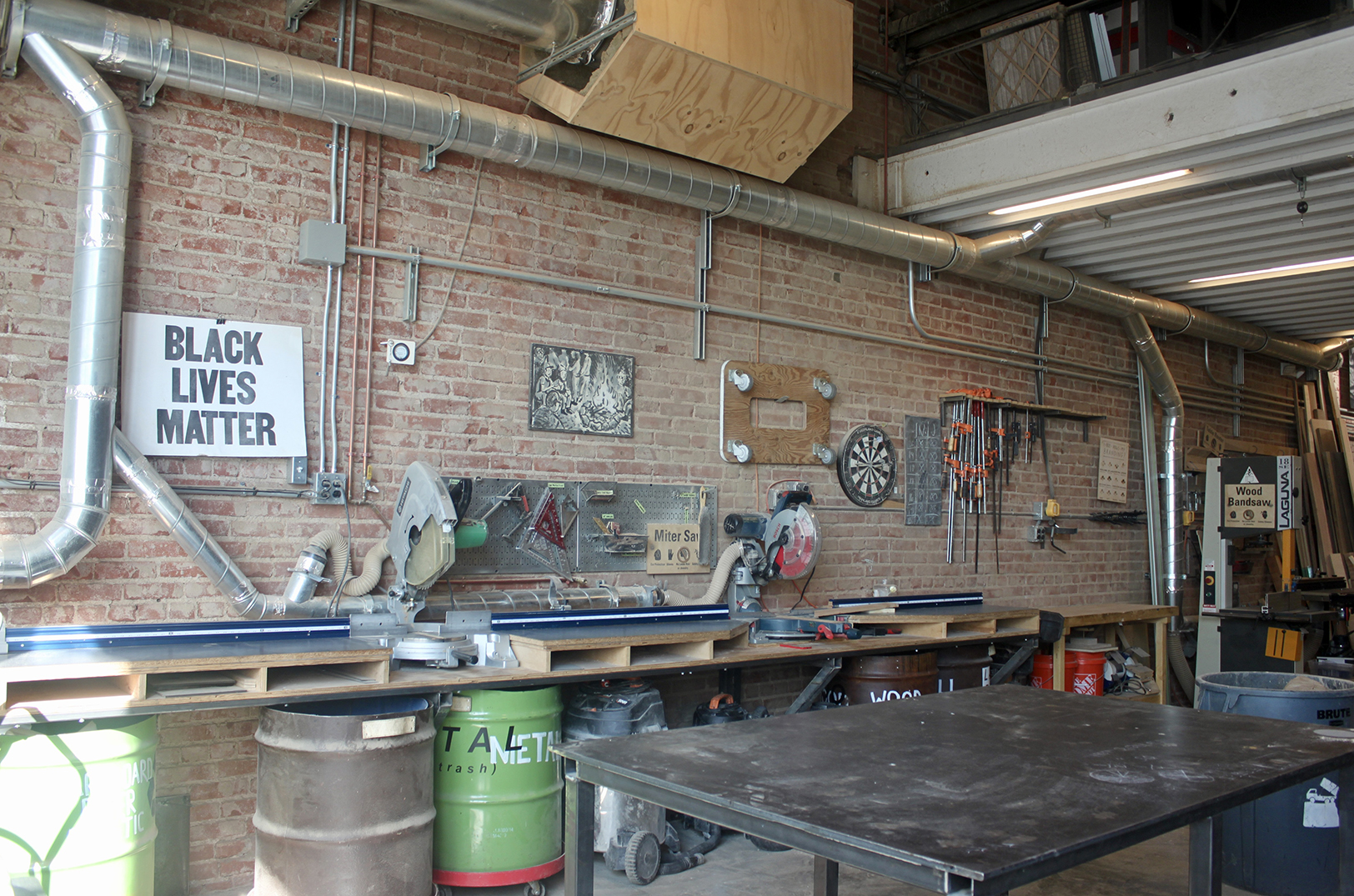
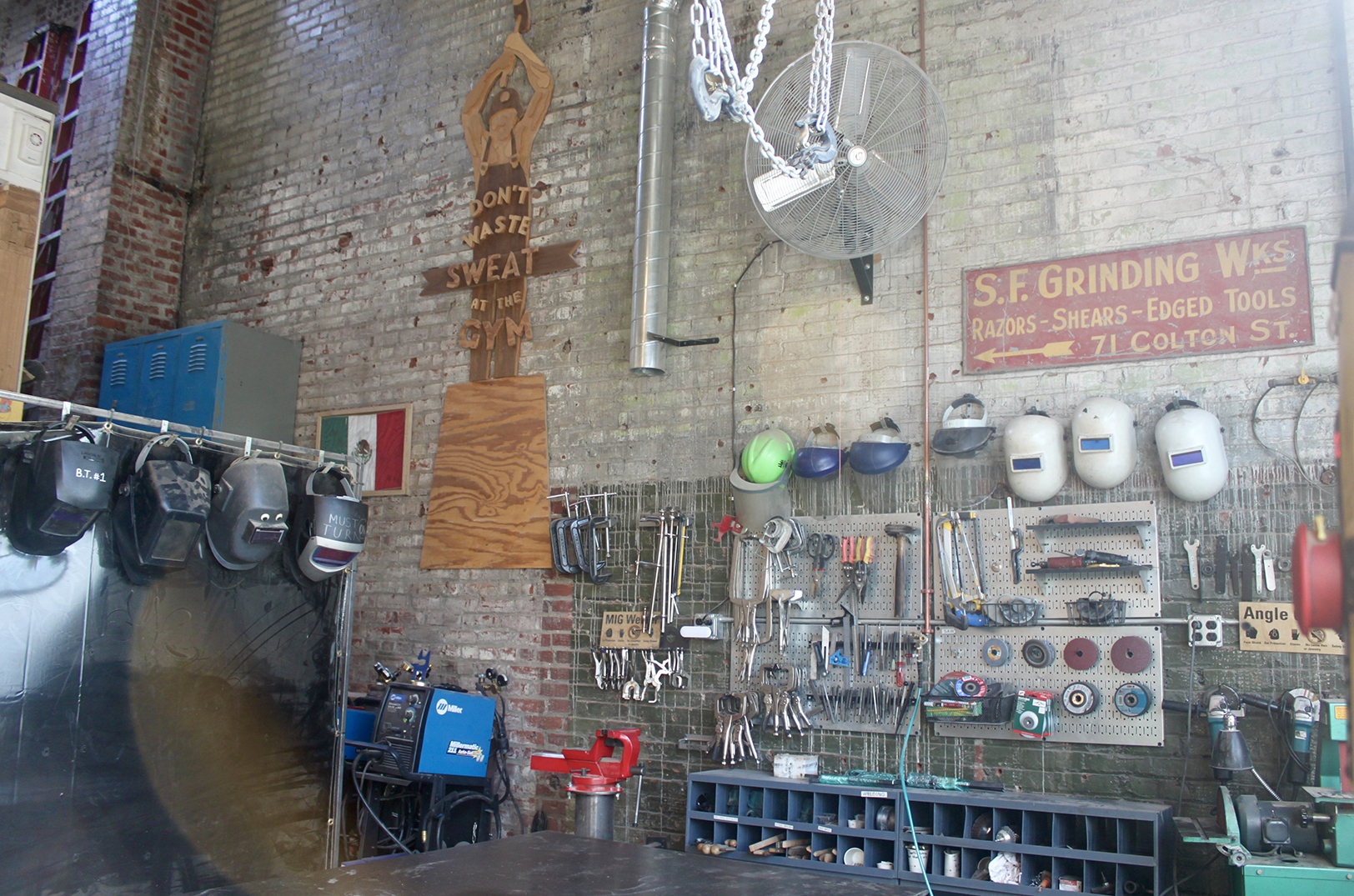
Like Makers Village did before it, Build Trybe leaders also plan to start classes for groups of community members.
Leading the program is Kendell Harbin, who — like all the instructors, according to Bunch — is a social architect finding real solutions for serious problems.
“(She) is a successful practitioner, who could go and work in any of the major construction companies or fabrication shops (with) no issue,” he said. “But has instead come here and dedicated her time and talents to helping these youth be able to go and get those opportunities.”
“I think that is one of the key factors when we look at how we’re going to shift these negative trends with foster care and homeless youth,” Bunch continued. “We really need to bring in rock stars. We need to bring in the kind of talent that can inspire these kids, engage these kids, and teach them things that really are meaningful.”
The Makers Village workshop space also provides built-in community and mentors. We Open Shop — a shop community for women, trans and non-binary makers — uses the space on Saturday mornings and Cherry Pit Collective — communal studio space for women and non-binary artists, makers and creatives — shares the neighboring space.
“The young women that I have entering into the trades through our program have a wealth of resources in these older women that are makers and builders and creators and can really speak to them about what it is to enter into these fields,” Bunch said. “So this space is important because it was designed, built, and grown as a place for community, which is one of the primary things that my kids need.”

Featured Business

2022 Startups to Watch
stats here
Related Posts on Startland News

J. Rieger spices up its strategy with KC culinary star; new tastes already hitting destination distillery’s menu
Deep fried and doubling down, the minds behind J. Rieger and Co. are distilling a new era that’s expected to make the local tourist destination one of Kansas City’s best places to work — and to grab one of its most legendary spicy chicken sandwiches. “If you didn’t already know, you quickly come in here and…
Crush it, live hard and honor the 13 folds: Trio of KC gyms join intense challenge, salute sacrifice
Most Americans don’t know the true weight of these American flags — folded 13 times into a triangle and presented to a fallen service member or veteran’s next of kin, said Josie Buford. To better communicate the heavy burden they represent, she organized a physical challenge that’s uniting three Kansas City businesses. The 13 Folds…

Inclusivity succeeds when founders are held accountable, says winner of Chamber’s equity award
Fahteema Parrish doesn’t mind putting forward extra work to make sure her employees feel included, she shared, embracing an environment that supports individuals of all backgrounds. “Parrish & Sons Construction is an example of what intentional execution of equitable work within an organization actually looks like. Equality and inclusivity are key focal points as my…

KC scores 2026 World Cup for Arrowhead; games expected to mean big business for region’s economy
Fans rallied in near-triple-digit heat Thursday in the heart of Kansas City as the region scored a longtime goal: earning a spot on the roster of 16 host cities for the coming 2026 FIFA World Cup. “To be named a host city for not only the biggest single sport event in history, but as part…