

DHS grant boosts more than federal agents’ safety — backing Kenzen’s high-growth expansion
September 6, 2022 | Claire Burke
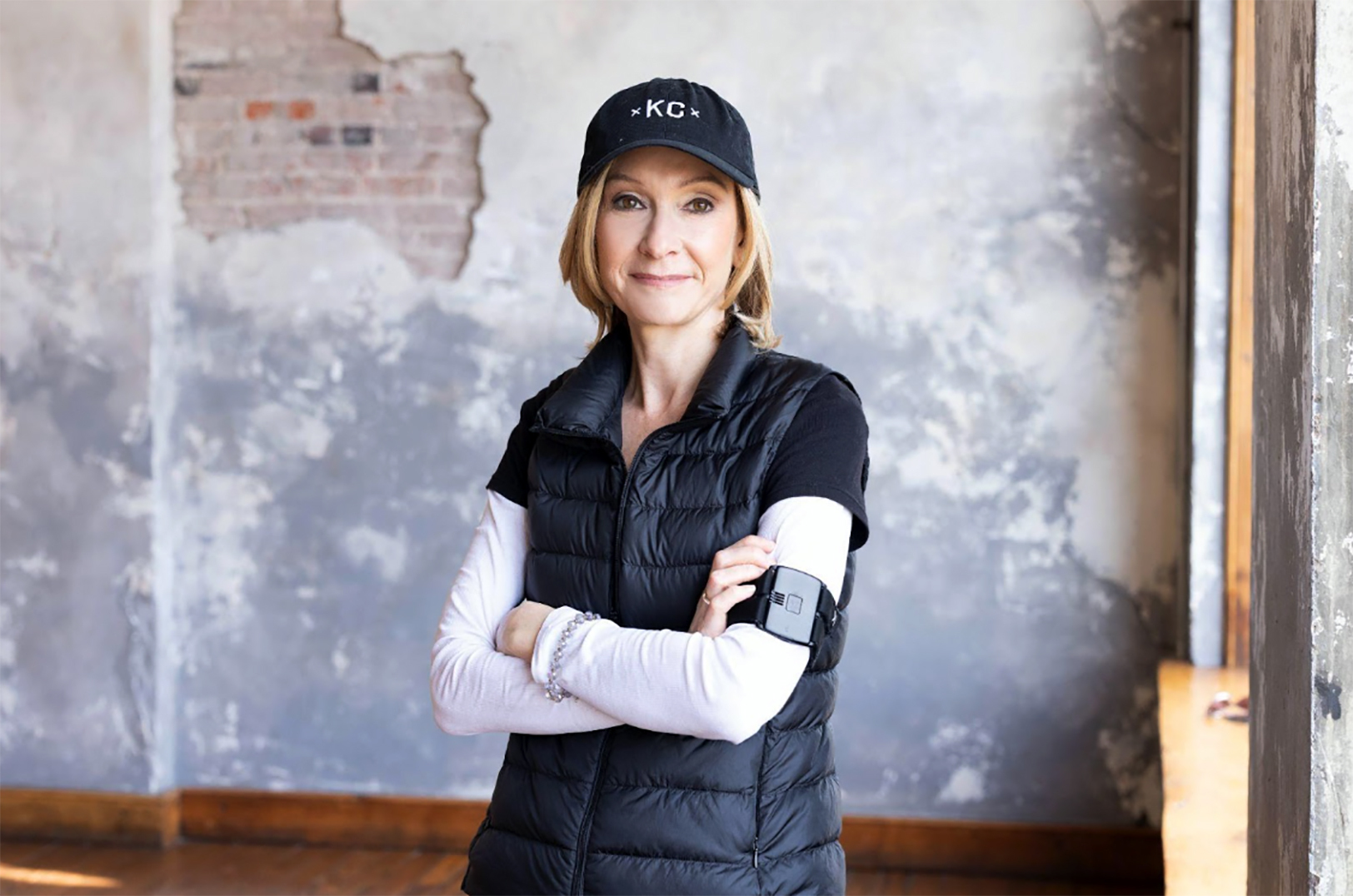
A federal grant program dedicated to innovating new solutions to prevent crisis-level scenarios was a timely fit for Kenzen’s wearable, heat-sensing safety tech, said CEO Heidi Lehmann, detailing the Kansas City startup’s recent funding award and move into “high-growth mode.”

Elevator pitch: Kenzen’s mission is to harness the power of physiology data to predict and prevent industrial workforce injuries and improve productivity.
- Founders: Heidi Lehmann, Nora Levinson
- Amount raised to date: $12.4 million
Kenzen this summer received a $161,600 grant through the Department of Homeland Security’s Silicon Valley Innovation Program, which targets wellness and resilience solutions for members of DHS agencies like U.S. Customs and Border Protection.
As a worker safety-focused startup at the intersection of multiple tech verticals — including climate tech — Kenzen offered a life-saving assist on one of the most unmitigated dangers for border agents: heat.
Kenzen’s heat-stress tech is expected to provide agents with monitoring of their vitals; helping DHS minimize risk to employees in extreme heat environments.
Click here to read more about Kenzen, which was named one of Startland News’ Kansas City Startups to Watch in 2022.
Expanding Kenzen into the governmental arm of the safety sector was a logical move, said Lehmann, co-founder of the startup.
“We’re very focused on protecting vulnerable workforces. A lot of times that means mining, construction, and manufacturing but an adjunct market for [Kenzen] is certainly the government and military,” she said. Oftentimes, these individuals are in incredibly hot conditions, and as heat frequently compromises health, so it’s an industry we wanted to serve. A grant felt like a good entry point into this market.”
The DHS grant adds to the startup’s existing investment support. Kenzen ranks among the businesses featured in Startland News’ 2022 Kansas City Venture Capital-Backed Companies Report with $12.4 million raised. Institutional funds, like government grants, are counted toward funding totals for some of the companies detailed in the report.
Click here to learn more about the report.
While Kenzen expands domestically with such projects like the border patrol safety effort, Lehmann and her team continue emphasizing and expanding an international reach, she said.
“Working with the government is national,” Lehmann noted, “but we’re definitely an international company. Kenzen has always had an international footprint. Heat-safety and safety culture in places like Australia, Japan, and the Middle East are extremely high. The problem we’re addressing impacts billions of workers globally.”
The DHS grant allows Kenzen to continue securing its place in a growing climate and safety-tech culture; a strategy for which being Kansas City-based has been instrumental, she added.
“The company officially moved to KC in 2021,” said Lehmann. “[The move] positioned Kenzen right in the heart of the industrial Midwest, alongside companies such as Garmin and Cerner.” The move also resulted in the company locating most of its hiring base in the KC area.
Kenzen’s business model emphasizes a business-to-business form of growth, something to which the ecosystem in Kansas City has been vital, especially as Kenzen looks to enter a new phase of high-growth.
The Greater Kansas City Area Chamber of Commerce has been critical, said Lehmann, noting that joining the organization helped the startup “dig into the business community [in Kansas City] on all levels. The chamber not only allowed networking and resource-sharing across the city but had connections helpful in setting up international offices.”
The chamber recognized Kenzen in June with the KC Chamber International Small Business Award, an honor that recognizes Kenzen’s growth as a small company, and the international footprint that contributes to that success.
The award was presented by Honeywell Federal Manufacturing & Technologies, which Lehmann felt was perfect for the company, she said.

This story is possible thanks to support from the Ewing Marion Kauffman Foundation, a private, nonpartisan foundation that works together with communities in education and entrepreneurship to create uncommon solutions and empower people to shape their futures and be successful.
For more information, visit www.kauffman.org and connect at www.twitter.com/kauffmanfdn and www.facebook.com/kauffmanfdn


2022 Startups to Watch
stats here
Related Posts on Startland News
Keystone Award forecasts potential job growth thanks to soon-to-open iWerx-Gladstone
A still-in-the-works coworking space already is inspiring economic development north of the river, said Bob Martin, partner at iWerx, bolstered this week by a Keystone Award for business impact. “Before even opening our doors in Gladstone, we had commitments for nearly 30 percent of the more than 75 offices,” Martin said ahead of the entrepreneurial…

Experience unlocked: Aussie pop-up racing into KC in early 2019 with Mushroom Rally
Mushroom Rally — a real life Mario Kart race experience with roots in Australia — is expected to swerve into the Kansas City scene in early 2019, said James Harrison. “[Mushroom Rally] will hit 16 cities [next year], with Kansas City being one of them,” said Harrison, a race organizer for the experience pop-up. “We…
Nickel & Suede couple create their hook with style, influence and fast-selling leather earrings
Feeling is believing, said Kilee Nickels, the fashion inspiration behind Nickel & Suede. “You may not remember you’re wearing our earrings until someone compliments you,” she said of the light-weight, leather statement accessories that earned the business she co-founded a top spot on Inc. 5000’s 2018 fastest-growing companies list. Based in Liberty, the company boasted…
Culture Lab to Fountain City Fintech startups: Before you hire, define your culture
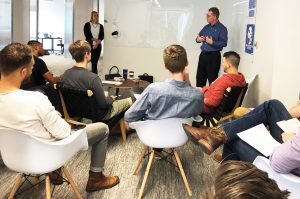
Bringing Culture Lab programming to the Fountain City Fintech accelerator’s inaugural cohort is part of a deeper effort to call attention to workplace culture in Kansas City, said Frank Keck. “We’ve been able to help each of these six cohort companies really define who they are, why are they doing what they’re doing, and help…