

KC team developing tool to get low-income entrepreneurs online (and it just got a $240K boost)
September 17, 2022 | Matthew Gwin
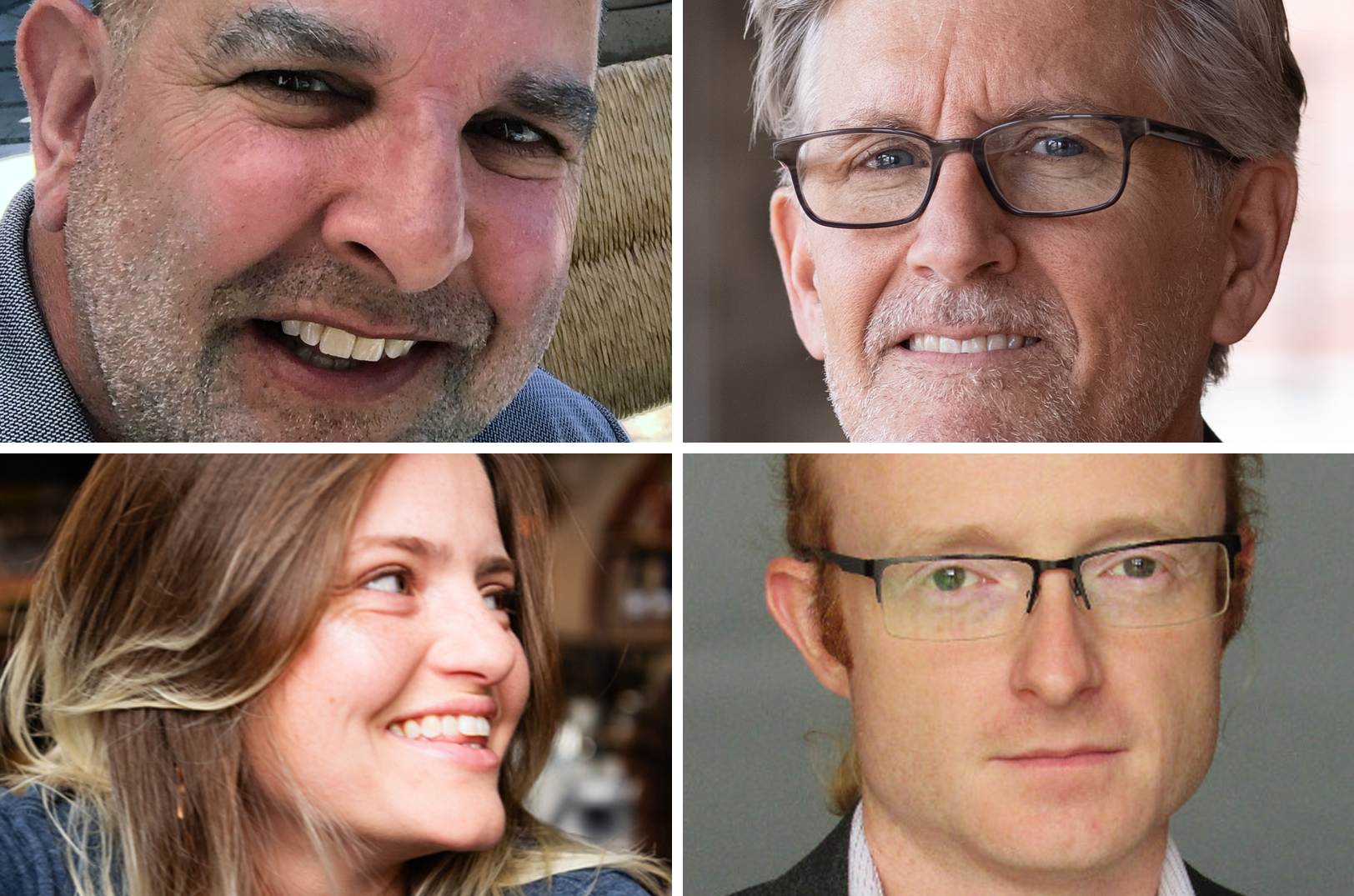
A collaborative project to “bridge the gap” in Kansas City’s digital divide secured one of the 2022 Heartland Challenge grants from the Ewing Marion Kauffman Foundation.
PCs for People Kansas City (formerly Connecting for Good), in partnership with The Usher Garage and No-Where Consultants, will receive $240,000 in funding to be used over two years for the development of a new Digital Readiness Assessment Tool.
In addition to the assessment tool, the group is expected to provide qualifying entrepreneurs with, at minimum: a laptop, desktop, hotspot device, and one year of free Internet access.
The team’s goal is to connect low-income entrepreneurs to the digital resources needed to successfully run and scale their businesses, according to Tom Esselman, executive director of PCs for People Kansas City.
“There’s kind of this ecosystem of support resources that entrepreneurs who have access to tech have always been able to understand and access, whether it’s banks or financing, consultants, financial advisors, HR people, marketing people,” Esselman said.
“Basically, there’s been no bridge to that ecosystem if you lack technology,” he continued. “So the end goal for us is to get so-called informal entrepreneurs into that ecosystem.”
Esselman described PCs for People Kansas City’s philosophy as a “three-legged stool,” focused on providing Internet access, devices, and technology training.
“[These are] people who have lived their whole lives without access to things that most people take for granted,” Esselman said. “We can see just by sitting down and talking to these individuals, families, or small organizations how transformative it can be once you have those basic tech tools under your belt.”
Connection to support
When Rick Usher saw that this year’s Heartland Challenge was open for applications, he reached out to Esselman, as well as the leadership team at No-Where Consultants, to propose the idea of uniting forces.
Usher, president and CEO of The Usher Garage and former assistant city manager of Kansas City, knew Esselman well through their work in creating the Kansas City Coalition for Digital Inclusion.
“We’re creating this program to provide them with the access they need, but most importantly, the connection to this vibrant Kansas City entrepreneur-support community.”
— Rick Usher, The Usher Garage
“We’re creating this program to provide them with the access they need, but most importantly, the connection to this vibrant Kansas City entrepreneur-support community,” Usher said.
PCs for People will supply the devices through its recycling and refurbishment model. Critically, it is the only nonprofit among the three companies. Heartland Challenge grants are only awarded to nonprofit organizations in Missouri, Iowa, Nebraska, and Kansas.
No-Where Consultants — a B corp-certified digital strategy agency led by Larissa Uredi, CEO, and Aaron Crabb, founder and CTO — will provide the technical expertise to develop the Digital Readiness Assessment Tool.
The team is still figuring out what exactly the Digital Readiness Assessment Tool will look like as they speak with and learn more about the entrepreneurs who the tool is intended to serve, Crabb said.
“The people who will be served by this tool, what are the problems that they really face in their lives and their journey to digital readiness?” Crabb said. “What sort of hurdles do they run into when they try to access these other resources?”
Usher added that the team is approaching the project using the design thinking process, and currently wants to “get rid of the ‘unknown unknowns.’”
The assessment tool will likely involve a survey or questionnaire to better understand the specific problems faced by entrepreneurs.
Uredi said the team will seek out 100 entrepreneurs to take the assessment once it’s completed, with a goal that at least 75 will be eligible for the deliverables of the grant.
The team will also be “intentionally” focused on BIPOC entrepreneurs, Usher added, noting study after study has shown how eliminating the digital divide is crucial in closing the racial wealth gap.
The two-year period for the grant began in July, and the team will have a checkpoint with the Kauffman foundation next May, said Esselman.
Exposed by COVID
For Usher, Esselman, Uredi, and Crabb, combating the digital divide is equal parts a professional project and personal passion.
Usher and Esselman noted that while the pandemic made the digital divide “front-page news,” the issue is nothing new, and something that the Kansas City Coalition for Digital Inclusion was trying to bring attention to well before the pandemic began.
“Rick and I and several others have worked together [on this issue] over the past seven years, and this started pre-COVID, when nobody really cared about low-income people lacking the Internet or computers,” Esselman said. “By the time COVID hit, it was like, ‘Oh my god. All these people need Internet and computers.’”
“When you step outside of your own privilege for a minute, you realize that there were a whole lot of businesses where the air got sucked out of the room [by the impacts of the COVID-19 pandemic] and they didn’t have anywhere to turn. I think a lot of us forget that.”
— Larissa Uredi, No-Where Consultants
The pandemic exacerbated the struggles faced by many low-income entrepreneurs and small businesses, as many lacked the resources and knowledge to create options like online ordering and curbside pickup, he added.
Usher believes access to high-quality, affordable Internet is basic infrastructure and should be considered a utility, much like water, electricity, and gas, he said.
“Clearly [Internet is necessary] in learning, in health care, and just managing your household: using online banking, doing your shopping,” Usher said. “This is a quote from Congressman [Emanuel] Cleaver: ‘If you’re not online, you’re in decline.’”
Crabb noted that small businesses and entrepreneurs may not be able to find the best candidates if they can’t post job openings online, and Uredi referenced how the link between education and economic opportunity makes digital literacy and access even more critical as virtual learning becomes increasingly prevalent.
“You’re gonna be expected to do that using the Internet,” Uredi said. “If you don’t know how or don’t have access, then you’re not going to be able to lift yourself up out of that economic depression.”
Uredi also recalled her own experience in transforming much of No-Where Consultants’ business into a digital format at the beginning of the pandemic.
“It felt like all the air got sucked out of the room when COVID began,” Uredi said. “I remember the speed with which I just launched into action. . . to make sure that we had tools so my team could work remotely. It was just second nature.”
“When you step outside of your own privilege for a minute, you realize that there were a whole lot of businesses where the air got sucked out of the room and they didn’t have anywhere to turn. I think a lot of us forget that.”
Divided access
Although the team has some expectations and parameters for what tools will be supplied to each qualifying entrepreneur, Esselman said, they will work on a case-by-case basis.
“In the context of these unserved and underserved areas, these are people who are just trying to survive. They have to do a business just to survive, and it really pinpoints the bitterness of the digital divide.”
— Tom Esselman, PCs for People Kansas City
“This isn’t set up to just be a transaction,” he said. “‘Oh, good. You took the assessment. You qualified. Here’s your stuff. Good luck.’ That’s not what we’re talking about. We want to make sure that we’re making that bridge as interactively as possible.”
Entrepreneurism in low-income areas is not always as glamorous or “sexy” as people might typically assume because of inequitable access to resources, he added.
“In the context of these unserved and underserved areas, these are people who are just trying to survive,” Esselman said. “They have to do a business just to survive, and it really pinpoints the bitterness of the digital divide.”
Usher pointed out the irony that many people living in affluent areas on the other side of the digital divide often feel too connected to the Internet.
“A lot of the reason the digital divide is so persistent in these neighborhoods is because folks in affluent neighborhoods don’t even think about it,” Usher said. “Actually, a lot of times they feel like they’re way too connected to the Internet, so it’s not been top of mind.”
Folks at all levels of economic opportunity and digital accessibility need to be involved in closing the gap, Esselman added.
“We all need to have a stake in helping people have the tools they need to have a decent life,” he said. “Because them having a decent life makes it easier for everyone to have a decent life.”

This story is possible thanks to support from the Ewing Marion Kauffman Foundation, a private, nonpartisan foundation that works together with communities in education and entrepreneurship to create uncommon solutions and empower people to shape their futures and be successful.
For more information, visit www.kauffman.org and connect at www.twitter.com/kauffmanfdn and www.facebook.com/kauffmanfdn

Featured Business

2022 Startups to Watch
stats here
Related Posts on Startland News
PayIt hires former Uber disruptive marketing leader as KC govtech startup’s first CMO
Kansas City-based govtech startup PayIt is downloading executive expertise from the West Coast, John Thomson said Tuesday, announcing PayIt’s first chief marketing officer — a former leader at Uber. Based in San Francisco, Alexandru Otrezov will lead PayIt’s marketing organization and continue to accelerate the company’s brand and growth efforts, said Thomson, co-founder and CEO…

Victor Hwang leaving Kauffman VP role; entrepreneurship becomes national priority ahead of 2020 political cycle
Ecosystem building has risen to the national conversation — marking the right moment for Victor Hwang to exit the Ewing Marion Kauffman Foundation and its vision-rich entrepreneurship team, he said. “A few years ago, people would talk about supporting entrepreneurs as if they were disconnected individuals … helping one entrepreneur at a time or maybe…

BacklotCars taking over full floor of new Lightwell building following $25M funding round
A 20,000-square-foot space in one of Kansas City’s most recently remodeled downtown office buildings will allow BacklotCars room to continue expanding its team, while also impressing high-level targets, said Josh Parsons. “The location, design and amenities of the project are exactly what is needed to attract the top tech talent to Kansas City,” said Parsons,…

RFP360 doubles in size since December; team back under one roof with move to new space
RFP360 is coming full circle, said Stuart Ludlow, as the software company he co-founded with David Hulsen in the Kansas City Startup Village once again levels up to accommodate a swelling team and increasing market demand. “We’re moving into a place — scale and scope — that Dave and I envisioned,” said Ludlow, who also…