

Google’s $100K ‘stamp of approval’ for PlaBook reads like validation for KC-built edtech startup
September 16, 2022 | Nikki Overfelt Chifalu
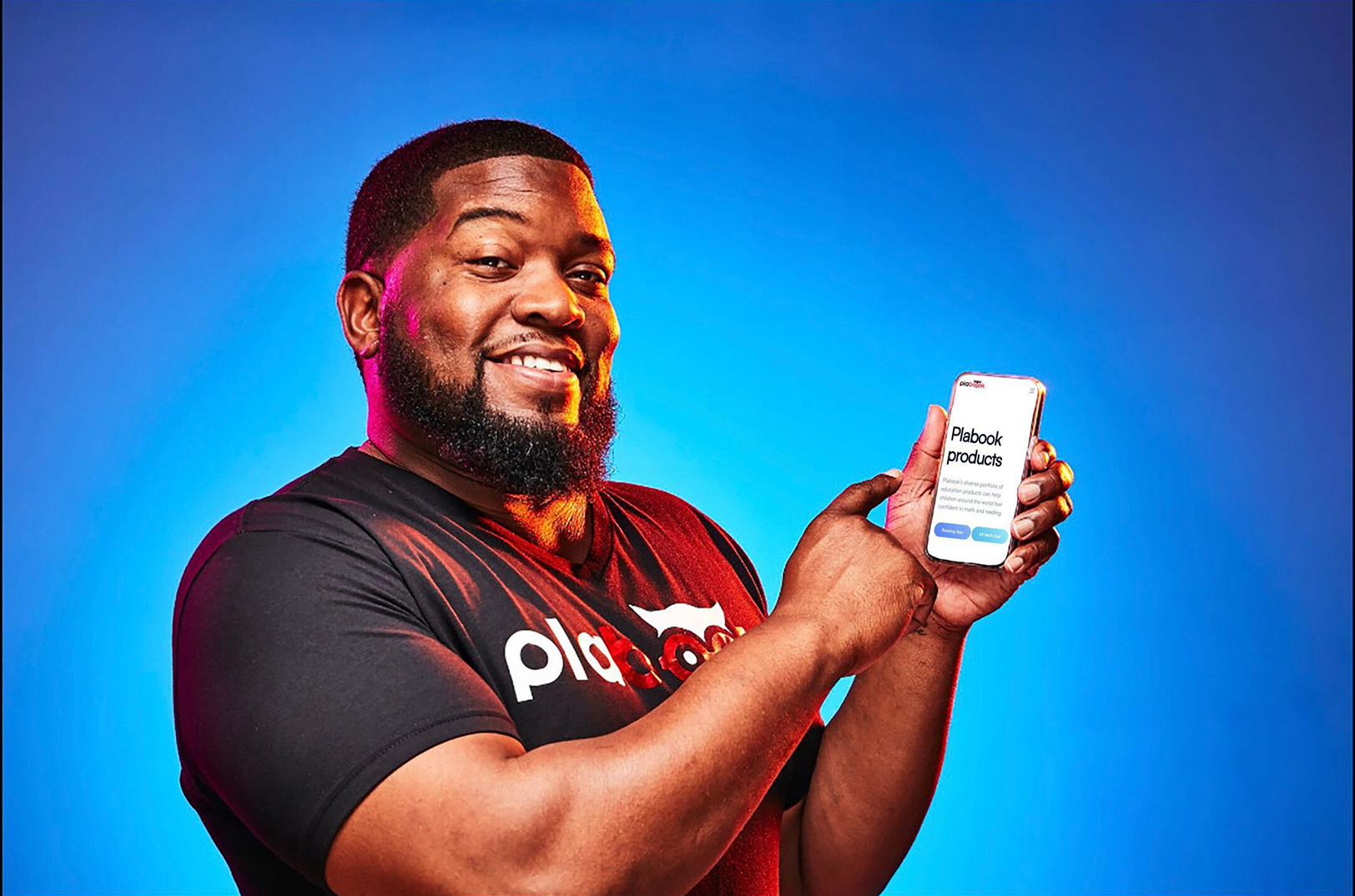
Kansas City expatriate PlaBook is set to receive $100,000 from Google’s initiative to provide funding to Black-led startups. But for Philip Hickman, it’s not just about the funding, he said. It’s also a credibility boost.
“We were happy to receive an investment from Google,” the edtech startup founder said. “It’s a stamp of approval to really validate our tool. We’ve won other awards like (being a semifinalist at the GSV Cup). But this was a validation. This was Google.”

Although Hickman moved PlaBook to St. Louis in 2021 to take advantage of the Arch Grants program, he previously was a mainstay of the Kansas City tech scene. He is a 2022 member of the elite Pipeline Entrepreneurs fellowship and a veteran of Techstars Kansas City, Digital Sandbox KC, and LaunchKC.
PlaBook uses artificial intelligence, natural language processing, speech recognition, and gamification to help children learn how to read.
Click here to explore PlaBook’s reading and mathematics tech.
When creating its products, according to Hickman, PlaBook didn’t use a third party tool but developed its own speech engine. Unlike Google’s speech engine, which uses an adult data set, PlaBook employs a child speech data set, plus it takes into account accents and regional dialects.
“So it was a little bit more difficult to develop our proprietary technology around that because children’s voices change so fast,” he explained. “One minute, they’re squeaking. One minute, they’re dropping and getting deep and cracking. Then the next minute, they have front teeth, and the next second, they don’t have front teeth.”
Without such technology, he said, reading assessments are done by having a child read a paragraph and answer some multiple choice questions. Or younger children might be asked to do tasks like, for example, dragging and dropping a picture of an apple under the letter A.
“For the first time, we’re not only able to hear a child read, (but) use AI to analyze their readings and tell you exactly reading level error, accuracy, oral reading proficiency — all those things — comprehension,” he continued. “But we’re also able to hear all the way down to the phonemic level — we’re holding some patents around that — to where we’re able to hear the very unit of speech. … We’re able to give them a profile of the student recommendation engine to be able to tell you exactly what barriers that the child has.”
The technology is designed to work with teachers, according to Hickman, and be an informative assessment that still functions in a noisy classroom environment.
“We inform and help the teacher use data to drive their instruction and also to personalize learning for kids,” he said. “We do that through our gamification, where we add fun games — but academic games — that take the place of worksheets (and) really help the students grow. It’s personalized, so every time the child is on the platform, it actually wraps around the DNA of that student and it works with the student.”
PlaBook is now being used in the Florissant and Ferguson, Missouri, school districts in the St. Louis area, plus in schools in Texas, Mississippi, Michigan, and New York. The startup is also exploring partnerships with a couple of Kansas City area schools, Hickman said.
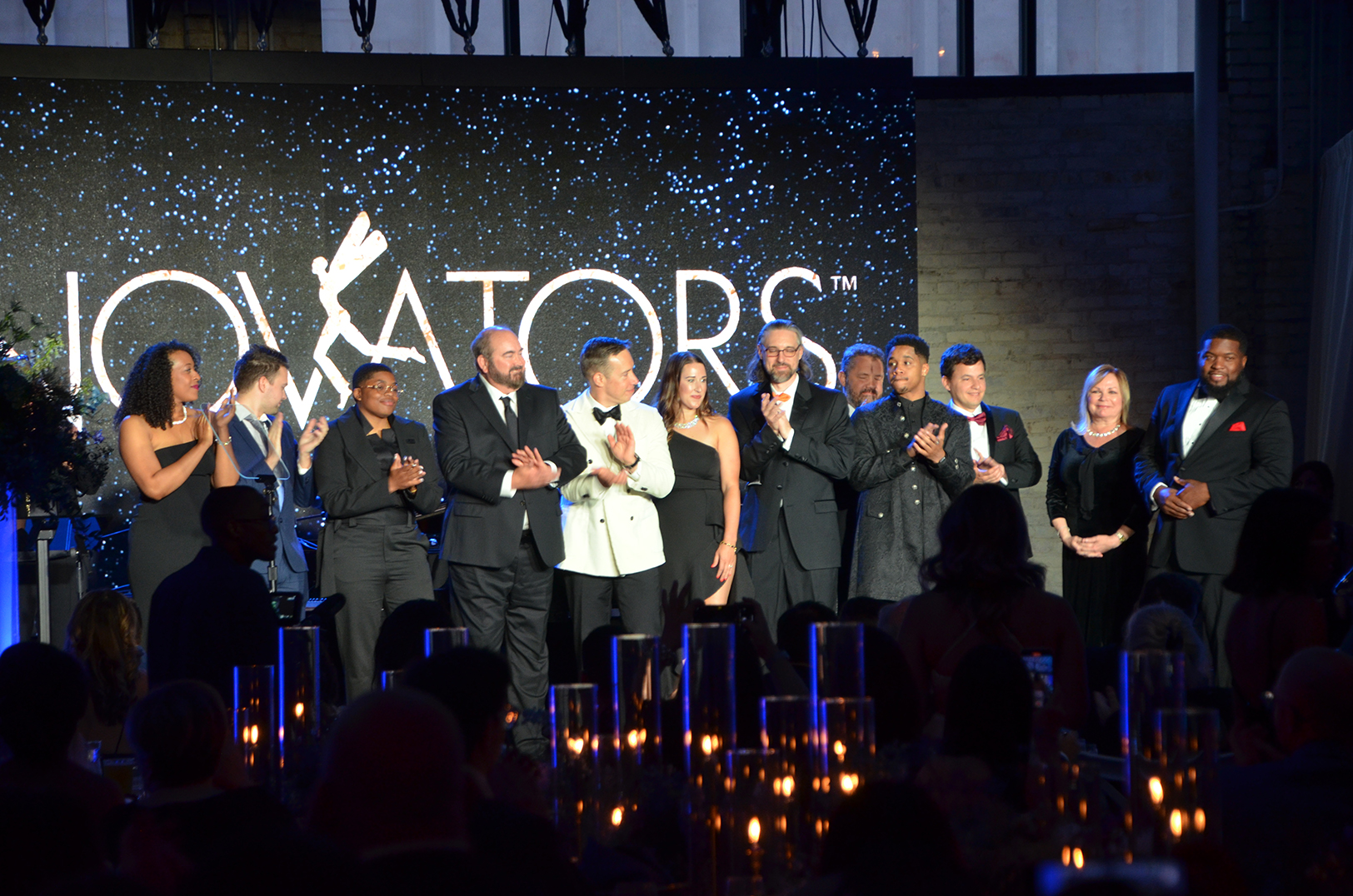
Philip Hickman takes the stage, far right, alongside Pipeline’s 2022 fellowship class at the Pipeline Innovators Gala in May 2022
Rewriting the PlaBook
Before joining the startup scene, Hickman was fully immersed in the education world. With his doctorate and five graduate degrees under his belt, he’s worked as a special education teacher in Columbia, a school psychologist in the St. Louis area, an assistant principal in Belleville, Illinois, a principal in the Chicago area, and a superintendent in Houston and Mississippi. Plus he founded the Genesis Charter School in Kansas City.
So he knows first-hand the reading disparities that exist in school districts around the country, he said. Seventy-five percent of students in the U.S. read below grade level; from a minority standpoint, 65 percent of African American students read below basic; and only 18 percent of African American eighth grade students are proficient, Hickman said.
“You have that dichotomy and then you also have 73 percent of crime created in the United States is created by high school dropouts and about 82 percent of prison inmates have a reading impairment that just hasn’t been corrected,” he explained. “You go from a national pandemic (that set fourth grade reading levels back) to somewhat of a civil rights issue – in a sense – that you have a large majority of minorities who are not able to read on grade level, as well. So that was a problem we wanted to take on and look at, why is it a pervasive problem?”
In addition to the $100,000 in non-dilutive funding — which means the funding is not given in exchange for equity in the company — Google will also provide PlaBook with $100,000 in Google Cloud credits, hands-on support from Google employees, and free access to business coaching and mental health services.
Google launched the initiative, officially called the Google for Startups Black Founders Fund, in 2020 as a way to boost economic opportunity in Black communities. In the United States, less than one percent of venture capital goes to Black founders.
Hickman says they plan to use the funding for marketing.
“(We need to) develop a strong sales team, so we can gain market share,” he added. “Our only issue is just getting in front of people’s faces to let them see the platform. Once they see it, they get it and they understand it.”
This story is possible thanks to support from the Ewing Marion Kauffman Foundation, a private, nonpartisan foundation that works together with communities in education and entrepreneurship to create uncommon solutions and empower people to shape their futures and be successful.
For more information, visit www.kauffman.org and connect at www.twitter.com/kauffmanfdn and www.facebook.com/kauffmanfdn

Featured Business

2022 Startups to Watch
stats here
Related Posts on Startland News

Fans packed Chiefs rally, one didn’t come home; citywide trauma from shooting won’t heal quickly, grief expert says
Trauma and grief come in waves, said Mindy Corporon, foreshadowing a long road ahead for those impacted — directly and indirectly — by Wednesday’s shooting near the Kansas City Chiefs’ Super Bowl victory rally. Like many across the region, Corporon, co-founder of the Merriam-based nonprofit SevenDays foundation, was watching the Chiefs parade on TV when…

Black leaders need to earn a ‘thriving wage’ before they can help others; an Evergy-backed cohort could help them ascend
A new program backed by entrepreneur support groups and Evergy aims to raise household income by at least 30 percent for participating Black professionals, nonprofit founders, and entrepreneurs, said Craig Moore II. “The ultimate goal is making sure you’re a leader who can do more than show up and talk about community — you have the…

Last to know, first to go: ‘Out of touch’ ballpark plan leaves Crossroads small biz owners feeling betrayed
Unlike many of her Crossroads neighbors — hoping to draw in crowds of football fans still riding high from Kansas City’s Super Bowl win — Jill Cockson’s business wasn’t open during Wednesday’s Chiefs victory parade. Candidly, jersey-clad sports enthusiasts aren’t really within her typical customer profile, the James Beard-nominated owner of Chartreuse Saloon said, and…

Royals want Crossroads ballpark open by 2028, calling up ‘generational’ impact on newly linked arts district, downtown
A late-to-the-game East Crossroads site is expected to take shape as the new home of the Kansas City Royals if voters approve the extension of a stadium sales tax that would help support the $2 billion downtown ballpark project. Ending months of speculation, majority owner John Sherman and team officials announced on Tuesday the ball…