

Service took Yinka Faleti from Kuwait to Ferguson; now this VC’s pushing social change from a $25M fund
July 15, 2022 | Channa Steinmetz
Startland News’ Startup Road Trip series explores innovative and uncommon ideas finding success in rural America and Midwestern startup hubs outside the Kansas City metro. This series is possible thanks to the Ewing Marion Kauffman Foundation, which leads a collaborative, nationwide effort to identify and remove large and small barriers to new business creation.
ST. LOUIS — How many present-day problems could have been solved if venture capital firms had invested in underserved founders sooner, Yinka Faleti questioned.
“So many brilliant founders and brilliant companies founded by women, people of color, immigrants and LGBTQIA+ identifiers have been excluded from venture capital,” said Faleti, a partner in Ascend Venture Capital — a micro venture capital firm based out of St. Louis.
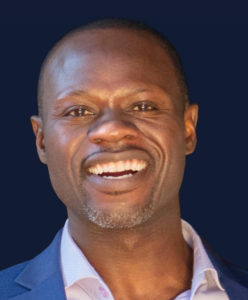
Yinka Faleti, Ascend Venture Capital
“Venture capital is a leading way to move our country forward, so we need to not close the door on half of our society. Inclusivity is what pushes progress.”
Ascend Venture Capital specializes in data-centric tech companies that either are first movers in their industry or they have the potential to create a brand new industry altogether, Faleti explained. The firm takes an idea-first approach where investors are founder blind until the end of the process.
“It’s important to know who the founder is, and we do that due diligence to ensure they are a good leader — but this approach reduces the opportunity for implicit bias,” Yinka said, noting that VC trends have historically shown white men, who control a vast majority of venture capital, investing in others who look like them.
In Ascend Venture Capital’s current portfolio, seven of the 18 companies are founded by women, people of color, immigrants and individuals who identify as LGBTQIA+, Faleti noted.
“Investing in diverse founders is not only about inequity, but it’s a business multiplier,” he said. “Research has shown that companies founded by diverse teams can outperform up to 63 percent better than companies that are not. … When we began to look at our own portfolio, we realized that the seven who are killing it have diverse founders.”
To double down on the momentum Ascend is seeing in these founders, Yinka and his team have launched a $25 million fund. A portion of that funding will go toward the seven diverse founders already in the Ascend Venture Capital profile; another portion will be reserved for companies the firm has not yet met.
Although Ascend Venture Capital is based in St. Louis, the firm invests across the country, Yinka said. He encouraged diverse founders who believe their company is a first mover to reach out on Ascend Venture Capital’s website.
Yinka Faleti’s personal journey
Entering his professional career, Faleti didn’t have venture capital as an end goal; rather, he has always desired to serve others and fight inequities, he shared.
Born in Lagos, Nigeria, Faleti emigrated to the United States when he was 7 years old. Growing up in mostly Florida and Texas, his life took a major turn when he was accepted into West Point and then commissioned as an officer in the U.S. Army, he recalled.

Yinka Faleti
“I served six years active duty — stationed in Kuwait to keep Saddam Hussein from invading Kuwait again,” Faleti said. “We had a great mission and didn’t lose a single soldier. We got back to Fort Hood in August of 2001 thinking we would never go back to Kuwait again, but we were soon deployed after 9/11.”
Fast forward to 2004, Faleti decided to leave the U.S. Army and attend law school at Washington University in St. Louis. Soon after graduating, Faleti was offered a position as a mitigation attorney doing commercial and product liability litigation.
“After a few years of doing that work, I really missed service,” he admitted. “I had come back from this larger-than-life mission in the Army and knew I needed to get back to service. So I went to the state prosecutor circuit attorney office in St. Louis helping people who had been assaulted, burglarized or abused.”
Faleti got addicted to the work, he said, and began to realize that the individuals he was prosecuting looked a lot like him.
“I was on the back end, and I needed to get to the front,” he said. “I looked to the front, and saw United Way of Greater St. Louis.”
Leading the fundraising division, Faleti and his team raised $300 million over four annual campaigns — outraising United Way branches in much larger cities like New York City and Dallas. Yet, Faleti still felt like he needed to get to the root of what was causing homelessness, lack of education and violence in the first place, he shared.
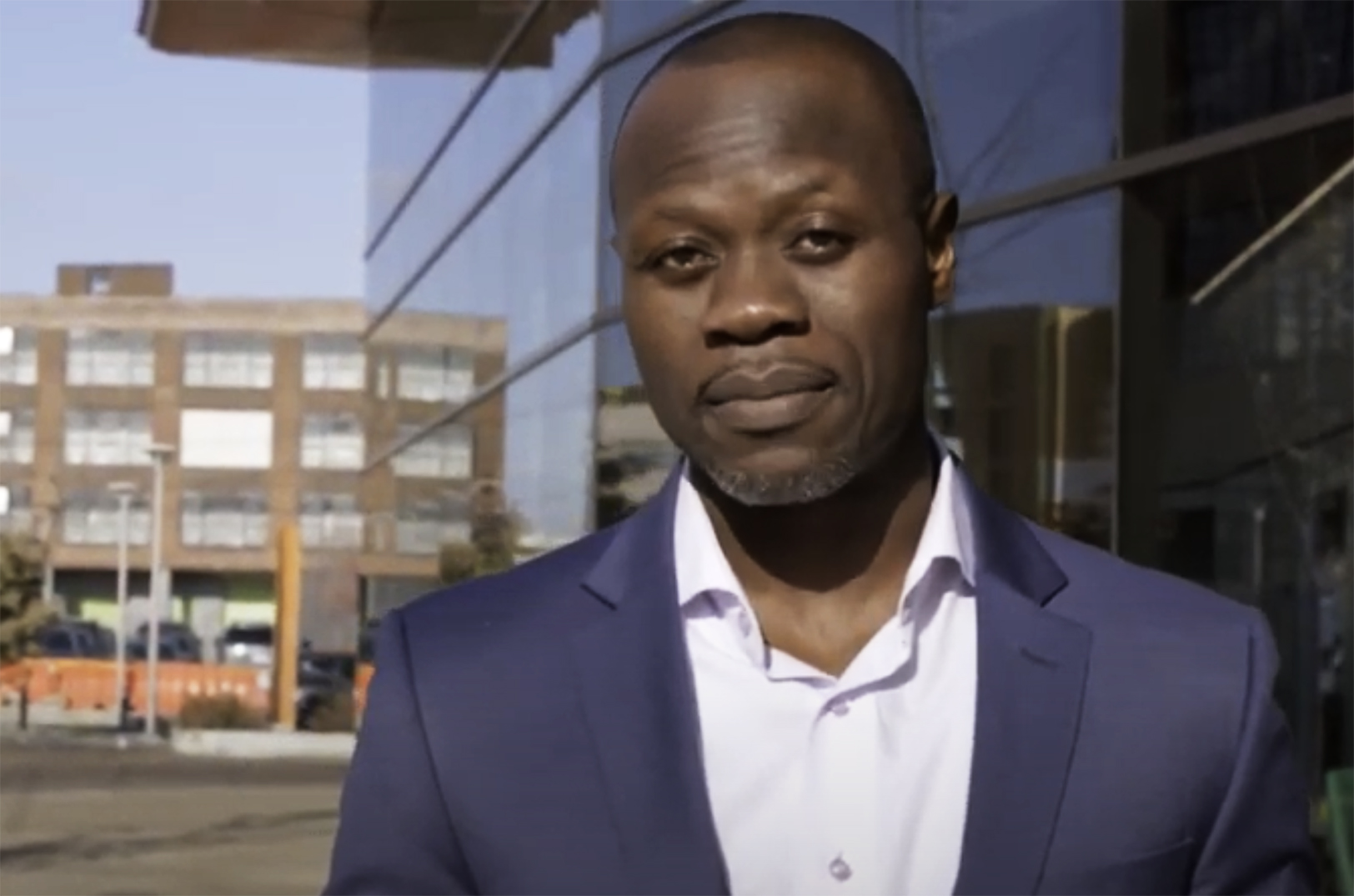
Yinka Faleti, Ascend Venture Capital
In 2014, a law enforcement officer shot and killed Michael Brown, an unarmed Black teenager, in Ferguson, Missouri, a suburb of St. Louis. From that, the Ferguson Commission founded a nonprofit organization to work to racial equity. Faleti led that nonprofit.
“I’ve been blessed to have had the opportunity to do a lot of hard things — I’ve repelled off cliffs, jumped off tanks, but this was some of the hardest work I’ve ever done,” Faleti said. “Because how do you undo generations of systemic inequity in education, health care, criminal justice and so on? You cannot undo it in a year or five or 10. It’s long-term generational work.”
With many of Faleti’s challenges leading back to the Missouri capitol, his next step was to get to Jefferson City. Faleti launched his campaign in 2019 for Missouri Secretary of State — receiving an endorsement from Kansas City Mayor Quinton Lucus.
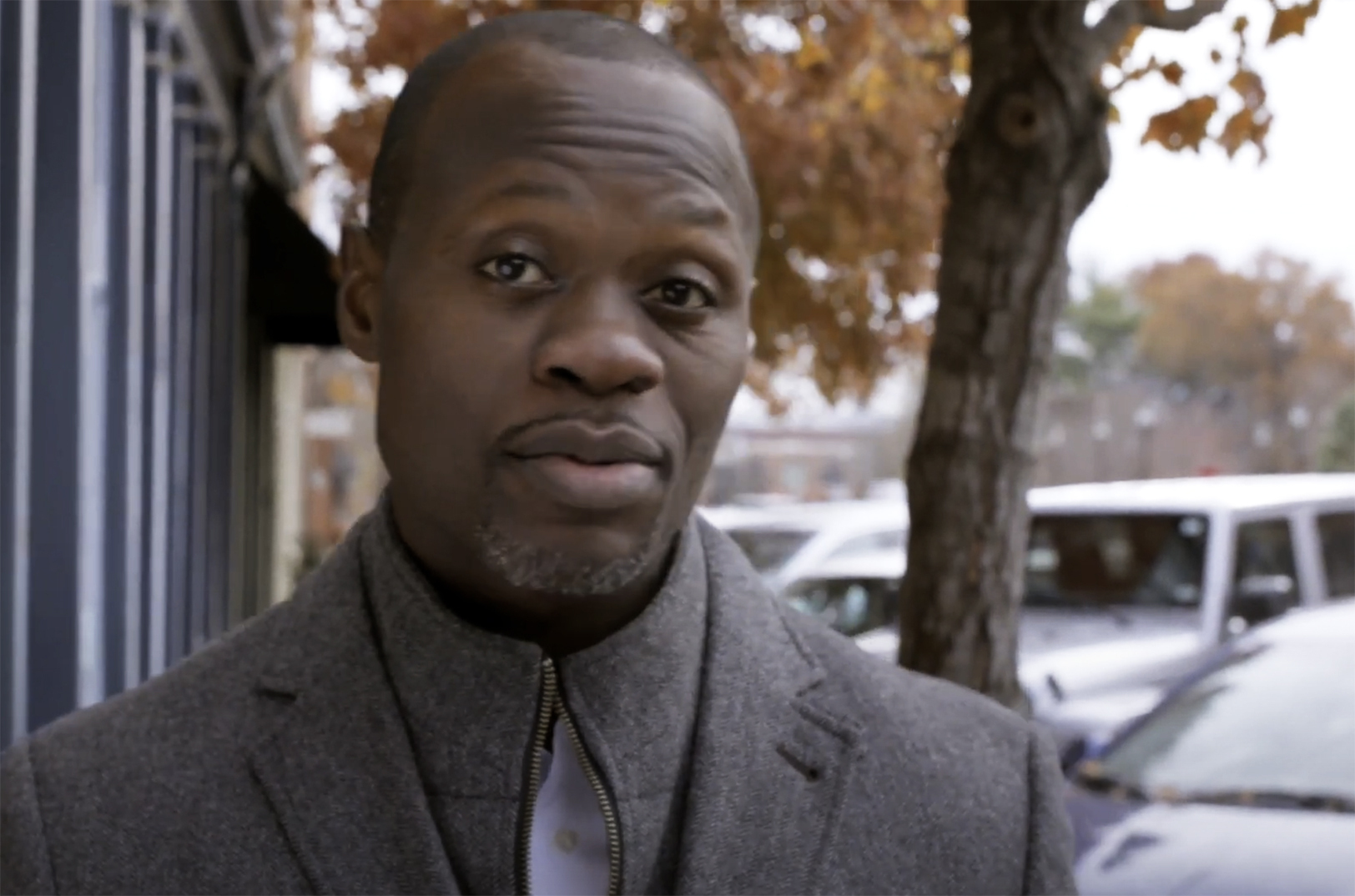
Watch Yinka Faleti share his story as he campaigned for Missouri Secretary of State, then scroll to keep reading.
“It was a phenomenal experience that led me to interact with individuals from across the state,” he said. “… While I sit here, you know that I am not Missouri Secretary of State, so as we were wrapping up the campaign, I thought, ‘What do I do with this new network and all I’ve gained from this journey?’”
Faleti’s answer: go into venture capital.
“I began to see the intersectionality — venture capital is simply a tool that generates wealth for founders, for employees and for the communities in which those companies are grounded,” Faleti said. “I began to see how venture capital can be leveraged to make impact at scale.
“The first 250 years of this country have been marked by gross economic inequity. It’s pretty obvious when you look at the folks who are white compared to folks who are African American or Latinx,” he continued. “Venture capital has the power to make the next 250 years much more economically equitable. That’s why I joined Ascend Venture Capital.”

This story is possible thanks to support from the Ewing Marion Kauffman Foundation, a private, nonpartisan foundation that works together with communities in education and entrepreneurship to create uncommon solutions and empower people to shape their futures and be successful.
For more information, visit www.kauffman.org and connect at www.twitter.com/kauffmanfdn and www.facebook.com/kauffmanfdn


2022 Startups to Watch
stats here
Related Posts on Startland News
Cultura con carácter: How JEFES inks DINKC’s hometown team with drops of KC Latino hustle
Laedan “DINKC” Galicia draws a fine line between his creative mediums: skin, pen, fabric, and paint — now from a artists hub in Kansas City’s Columbus Park neighborhood. From his signature tattoo style to his JEFES clothing line, DINKC’s bold perspective is leaving a mark on Kansas City culture (and the Super Bowl). “With JEFES, I…
BKS Artisan Ales plans Crossroads nanobrewery, tapping additional location closer to KC’s hub of activity
BKS Artisan Ales — dubbed a “little beer heaven” by industry insiders — is bringing its award-winning operation to the Crossroads, adding a second, smaller brewery location near what founders Brian and Mary Rooney see as a downtown tourism market that also is easily accessible to some of their business’ biggest local fans. The space…

Pipeline doubles-down on diverse voices: Meet its new class of Pathfinder entrepreneurs
Programs built to support emerging founders who are primed to break through — despite entering entrepreneurship from a different starting point — have never been more needed, said Melissa Vincent, announcing the newest class of Pipeline Pathfinders. “In today’s climate, programs like Pathfinder are not just valuable — they’re essential,” said Vincent, CEO of Pipeline…

Pipeline adds top founders to its network: Meet 14 fellows tasked with building the Midwest together
The newest class of Pipeline fellows embodies the elite Midwest network’s founder-first focus on industry-agnostic collaboration and support, said Melissa Vincent, noting the power of tapping barrier-breaking perspectives to solve problems and build world-class companies side by side. “We have an incredible depth of entrepreneurs who are all focused on building high-growth, scalable businesses, but…