

It starts with wool on 125-year-old looms; story of Pancho’s Blanket weaves KC into family mission
July 30, 2022 | Nikki Overfelt Chifalu
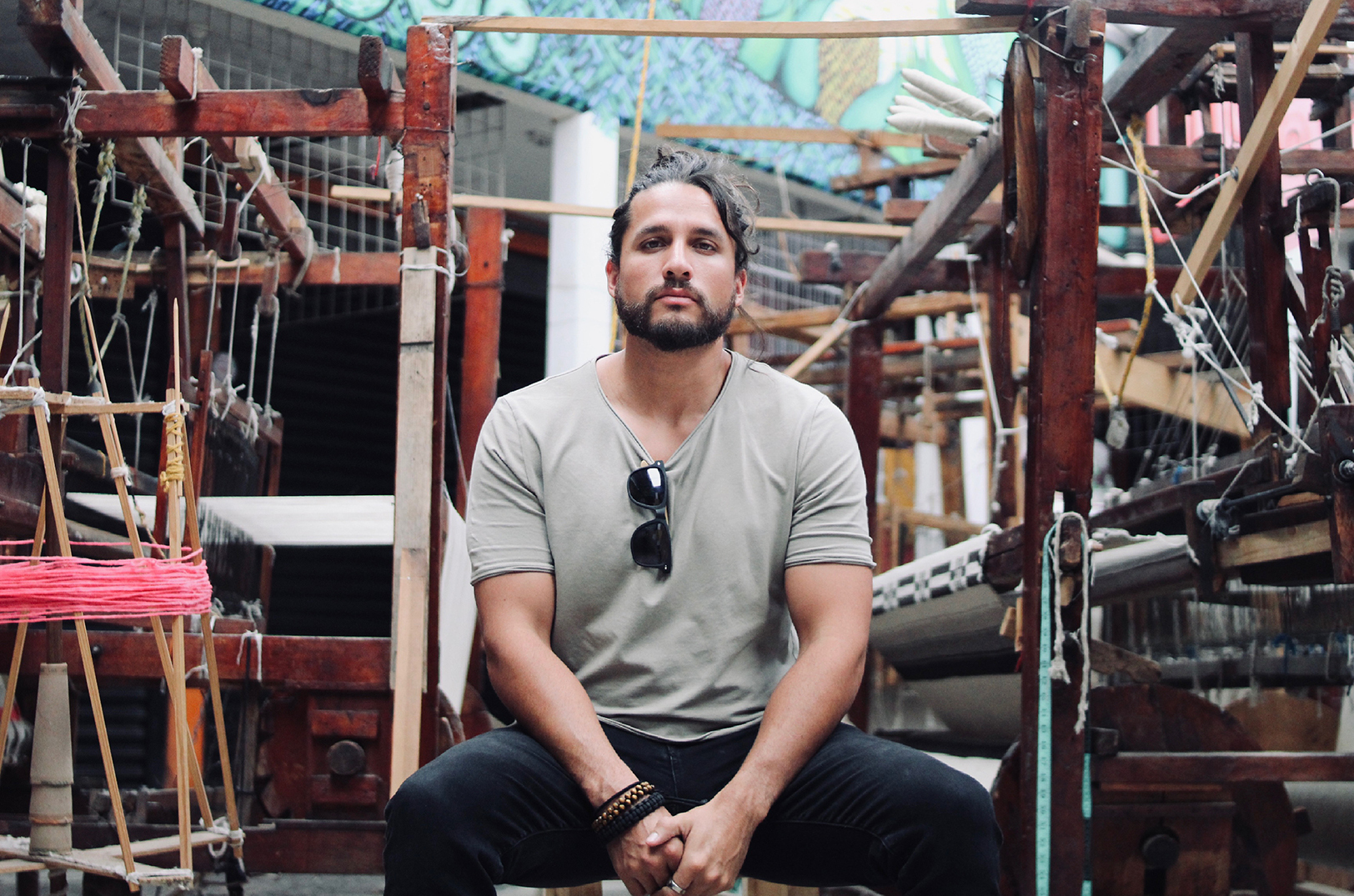
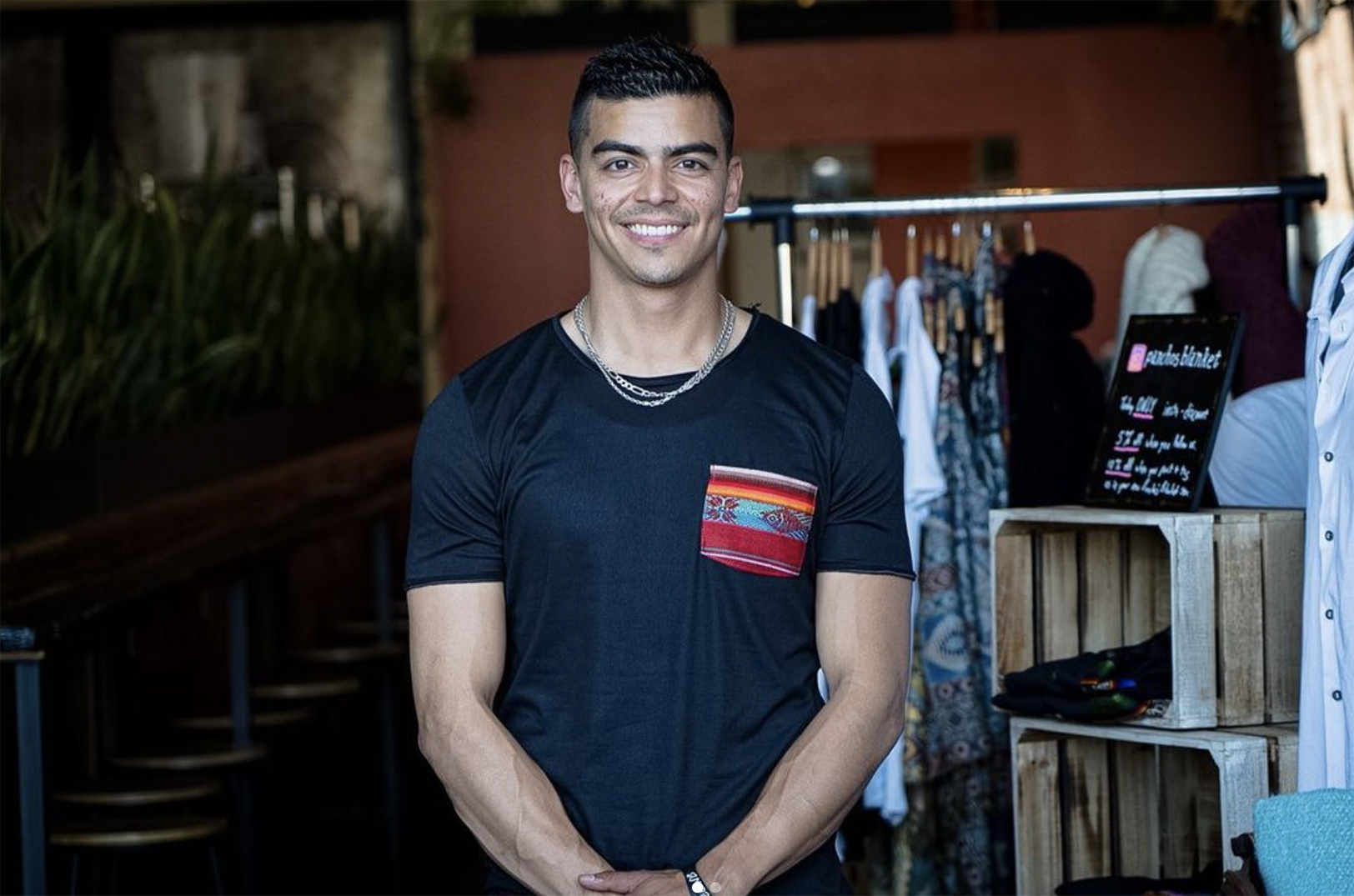
The popularity of Jonathan Garvey’s favorite wool jacket from Mexico eventually would weave a story of entrepreneurship connecting Kansas City to his family’s home and artisans in Latin America.

Jonathan Garvey, Pancho’s Blanket, in the Original Saco
It took the COVID-19 pandemic and a desire to help impoverished communities in Mexico to propel that plan into action. About a year and a half ago, Garvey — a University of Missouri-Kansas City business school grad — co-founded Pancho’s Blanket with his brother, Joseph. His favorite jacket was the inspiration for the company’s Original Saco.
“I would wear it with everything,” he said. “I wear it in the snow and wear it in the rain. I wear it with my suits or with ripped jeans. It didn’t matter. And everybody would compliment me on it. … I was like, ‘I’m definitely going to one day sell these coats because this thing is fire.’”
Click here to shop Sacos from Pancho’s Blanket.
Pancho’s Blanket partners with artisans in Tlaxcala, Mexico, to design and make wool jackets, blankets, and sweaters, which are made on foot pedal looms that are more than 125 years old.
“Our products are really cool,” Garvey explained. “(They are) 100-percent wool. We pay the artists well. It’s totally ethical. And it’s unique because you won’t get (these designs anywhere else) in Mexico. You can only get it from us.”
Click here to shop available blankets.
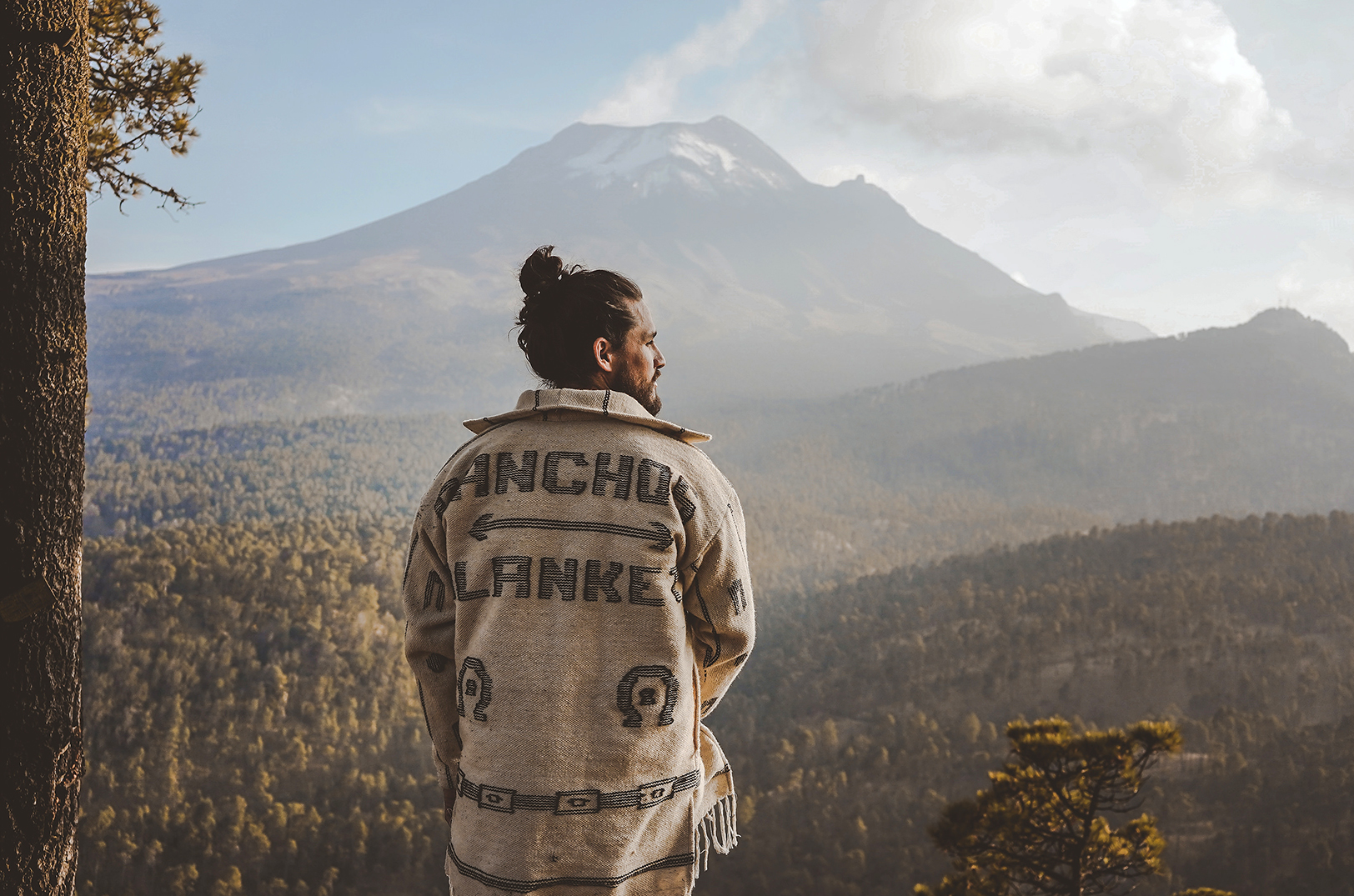
Jonathan Garvey, Pancho’s Blanket
The brothers grew up as missionary kids in Tlaxcala, which is about two hours southeast of Mexico City. Garvey’s parents and brother still live there and he spends about half of his time in Kansas City and the other half in Mexico.
But supporting Mexican artisans and stimulating the local economy is only part of the goal for the company. A portion of the proceeds go to Feed a Family — the nonprofit he recently started with his family — which provides food and clothing to families in the Tlaxcala community.
Garvey’s family is known in the local Mexican community for stepping into action when needed, he said. Years ago, when there were treacherous mudslides in Puebla that wiped out villages, the family led the charge in helping families that were cut off from provisions.
“The government wouldn’t even go there because they couldn’t,” Garvey explained. “They had no way to get their trucks there to help the people. So we filled up our bags full of food and we walked for miles to these villages that had no food, no resources, no nothing. And we’re able to help feed them in that way. So it’s really interesting how it’s come full circle.”
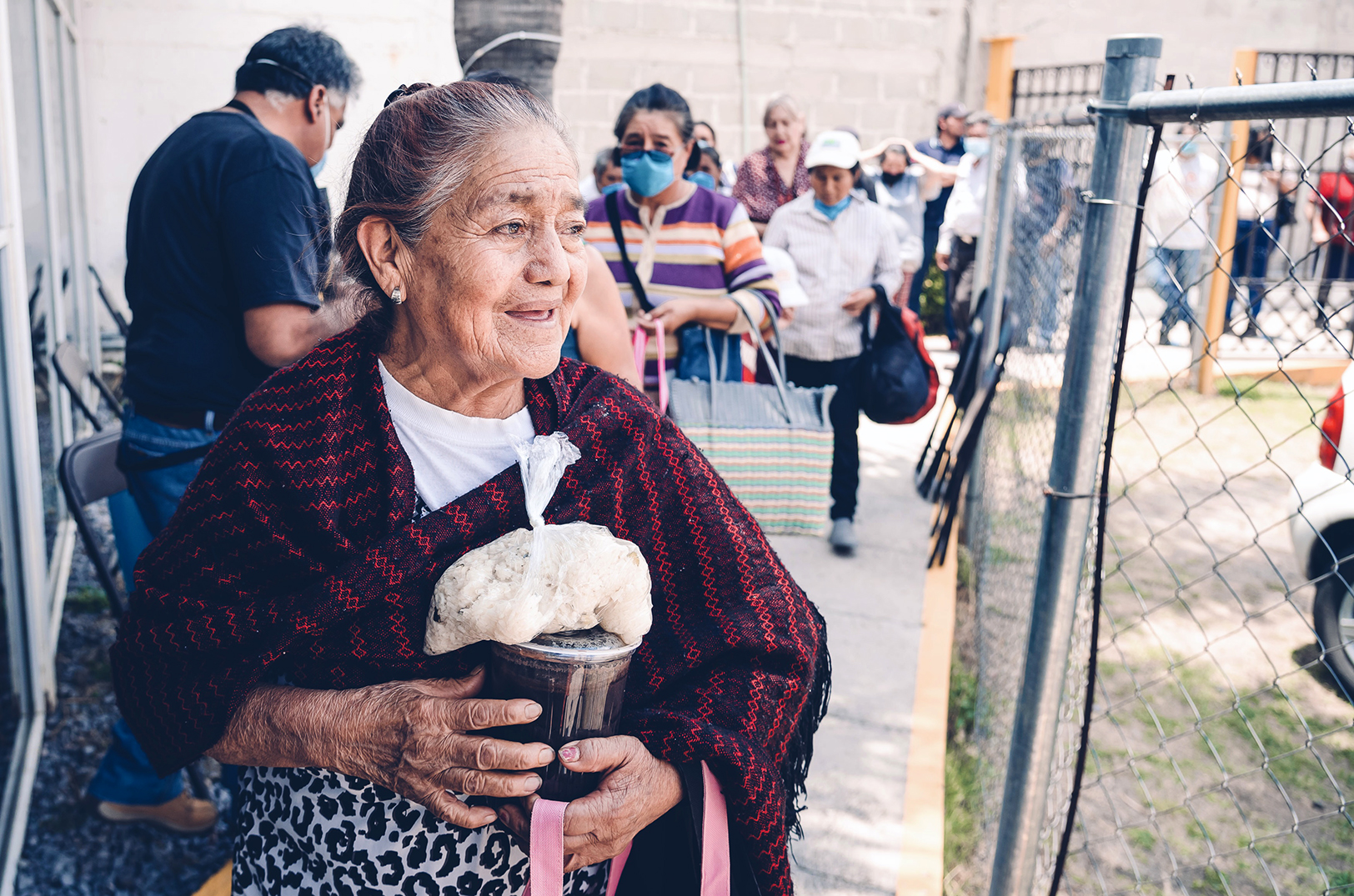
Photo courtesy of Pancho’s Blanket
So when the pandemic hit, the family stepped into action again. According to Garvey, everything shut down — including the government-run food kitchen — and locals were going hungry. So his parents’ church opened up a community kitchen, providing families a meal once a week.
“My mom told me this story that really triggered me to start a 501C3 (nonprofit) to raise support for this mission,” he explained. “She told me about a single mom that had like three or four kids and they would walk over five miles — like seven miles — or something. Just with her little kids.
“Just to get that one meal for the whole week because they had no resources. Everything was closed down. So after I heard that I was like, ‘Well, people need to know about these things and we need to raise some money to support you guys.’”
Garvey and his brother decided to make the leap to start Pancho’s Blanket shortly after to help support Feed a Family. The nonprofit has already provided more than 50,000 meals since its start. Pancho’s Blanket also gives out sweaters to local families.
“I’ve always been an entrepreneur at heart,” he said. “I really like the idea of financial freedom and helping others. I wanted to create a business model that would give back in as many ways as possible.”
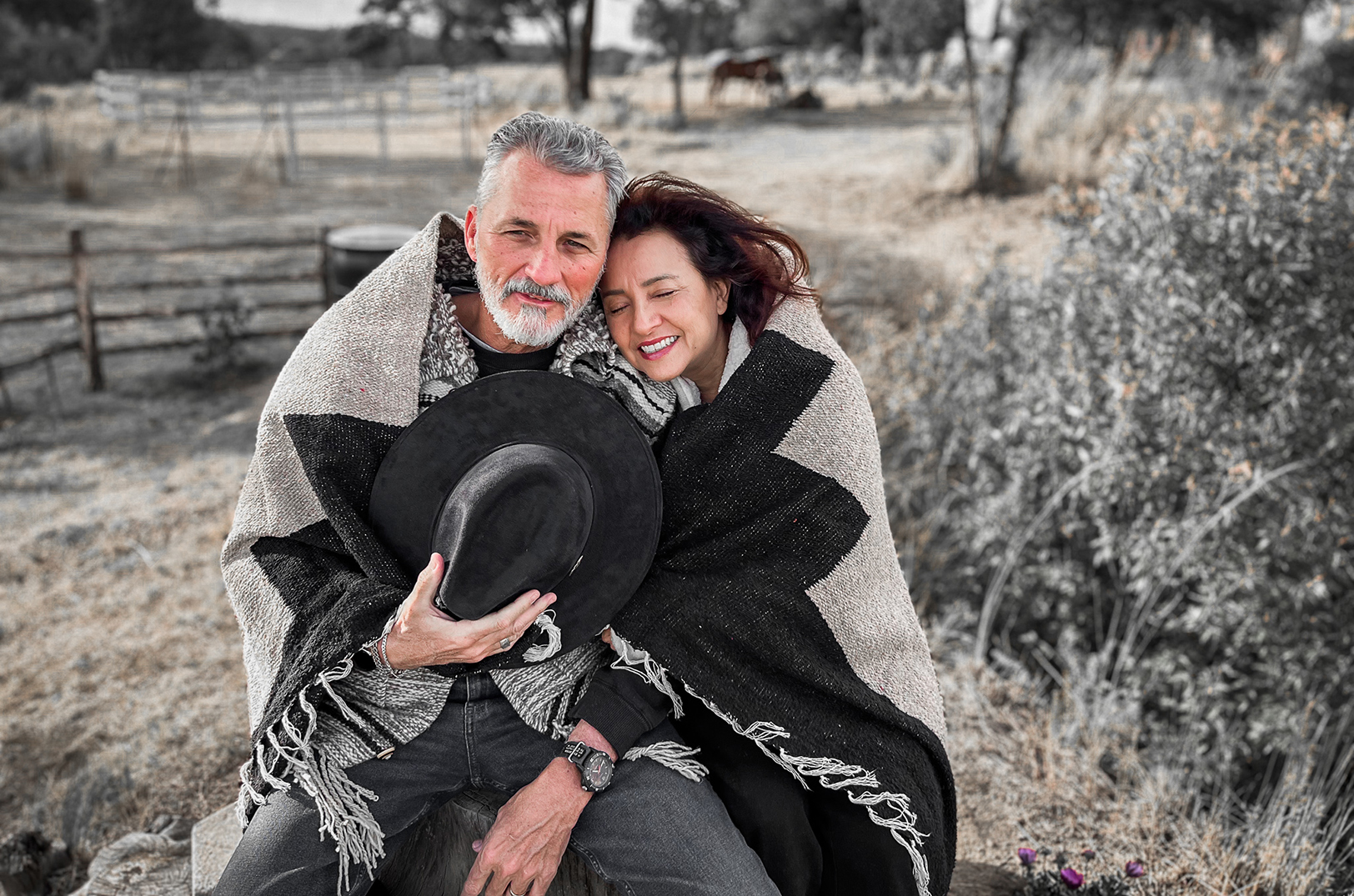
Pancho’s Blanket
Once Garvey and his brother decided to start their business, they headed to Contla, the home of the serape — a traditional, colorful Mexican blanket — to find artisans. Not knowing who to talk to, he said, they just asked a couple of guys walking down the street.
“We pull over and we’re like, ‘Hey, do you guys know where we can find people who make these sweaters or these blankets?’” he continued. “And they’re like, ‘I make them.’”
This was the beginning of connections that led to their idea becoming a reality. The artisans invited them back to their homes, where they work, and they began talking about product designs and making deals, Garvey said.
“This was during COVID, so they had no work,” he noted. “And so they’re like, ‘Yeah, please.”
They also visited small stores with other artisan products to make more connections. If someone they talked to couldn’t make what they were asking for, Garvey said, they put them in contact with another maker. The brothers worked with the artisans to take the jackets and blankets that they know and love and tweaked the designs to make them their own.
“We put a little modern twist on our stuff,” he added.
View this post on Instagram
Although the designs are contemporary, the production method is not. Most of the products are made by the artisans on traditional foot pedal looms.
“The method is what makes it super cool,” he said. “The methods they are using are 500-year- old methods. It’s the same methods that the Spaniards brought over.”
Click here to learn more about the process behind Pancho’s Blanket.
The artisans also make upcycled sweaters for the company.
“That’s another cool thing about Pancho’s Blanket: We make sweaters and stuff from repurposed materials,” he continued. “So if you’re not getting it from a loom, you’re getting recycled things. It’s just neat.”
Click here to explore Pancho’s Blanket’s Oso Blankets.
Pancho’s Blanket
Besides the wool jackets, blankets and sweaters, the company also just released a new collection of shirts, which feature naturally-dyed fabric made by artists in Nicaragua.
“I would eventually like to have some expressions of artisans from all over Latin America,” he added.
Click here to see the new line of shirts from Pancho’s Blanket.
But for Garvey, he said, it’s more about selling the story than selling the products.
“We ethically source our products,” he explained. “We have all of our stuff handmade. We pay everybody. We don’t get it from sweatshops in China or sweatshops from anywhere. … We feed and clothe underprivileged communities. So I think we put our money where our mouth is in a big fashion for such a small brand, compared to all these other large companies that love to act like they’re socially conscious, but in my opinion, they’re not.”

This story is possible thanks to support from the Ewing Marion Kauffman Foundation, a private, nonpartisan foundation that works together with communities in education and entrepreneurship to create uncommon solutions and empower people to shape their futures and be successful.
For more information, visit www.kauffman.org and connect at www.twitter.com/kauffmanfdn and www.facebook.com/kauffmanfdn


2022 Startups to Watch
stats here
Related Posts on Startland News
Kauffman Foundation’s Erin Jenkins bounces between contrasting cultures, startup life
Editor’s note: This content was sponsored by the Ewing Marion Kauffman Foundation but independently produced by Startland News. Curiosity took Erin Jenkins to Japan. Curiosity brought her home. In between, she embedded herself in the worlds of intercultural entrepreneurism and startup life — her journey aligning itself with an opportunity to serve as a program officer…
Pride outside: How the outdoor industry is missing out with a $1 trillion LGBTQ+ blind spot
“You can’t be what you can’t see,” said adventurer and speaker Mikah Meyer, quoting activist Marian Wright Edelman last week in Kansas City. Representation of LGBTQ+ consumers and entrepreneurs formed a thematic trail throughout the recent Mid-America Gay & Lesbian Chamber of Commerce awards luncheon where Meyer made keynote remarks. His borrowed quote also reflected…

nbkc launches Entrepreneur in Residence incubator: ‘I have a whole company behind me’
Less than a year after its inaugural Fountain City Fintech accelerator debuted, nbkc bank has launched a new incubator program designed to tackle common banking industry problems with start-up-style ideation, problem solving, and tenacity, said Megan Darnell. The goal: building new companies along the way, the nbkc program manager said. “Kansas City has every single…

Investors, students find potential and power in High School eSports League
Benjie Lewis saw potential in eSports from the beginning — first as a mentor, then an investor, he said. Rapidly evolving from recreational pastime to official leagues and high school sports programs, the competitive multiplayer gaming concept has created a new space for startup opportunity, he said. “When I was growing up … they weren’t…