

Healthtech app bridges care access gap: Recovery takes time, but patients need mobility today
July 28, 2022 | Nikki Overfelt Chifalu
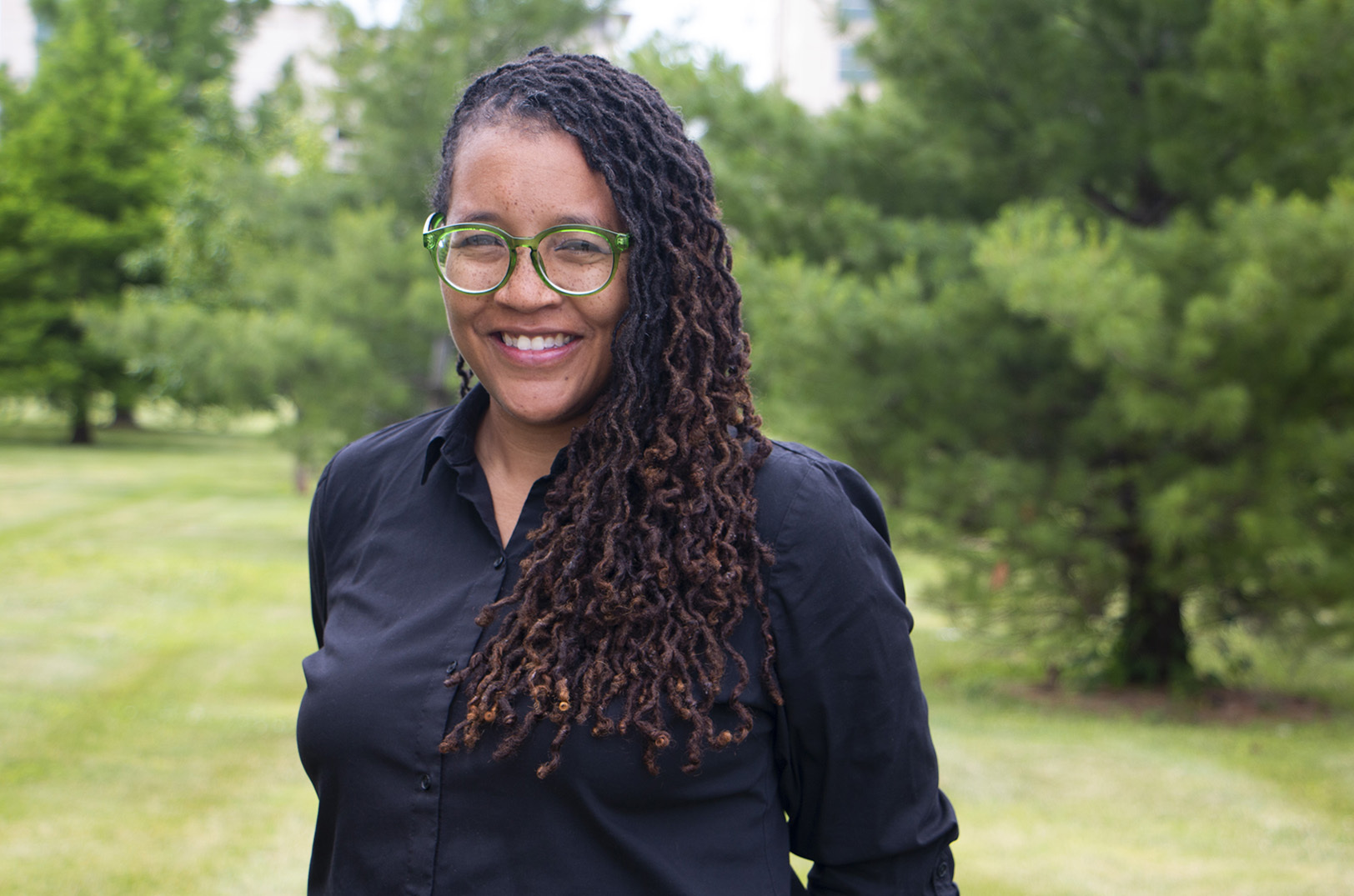
As an occupational therapist for the past 15 years, Dr. Brandy Archie noticed a hole in the healthcare system, she said.
“Your medical insurance covers things that accommodate your body, but doesn’t cover things that accommodate your environment,” she explained.
That observation led Archie in 2017 to found AccessAble Living in Kansas City — now expanding its reach with the AskSAMIE app. She began developing the app in January and recently received $20,000 in funding toward it from Digital Sandbox KC.

Archie spent the majority of her time as an occupational therapist working with older adults and people in their homes, she explained.
“And what I noticed was that there are a lot of disconnects between getting help from a clinician in the hospital or in a facility and then actually translating that into function at home,” she said.
For example, if your leg is amputated, Archie said, insurance will cover the prosthetic and wheelchair, but not a ramp for your home.
“Rehab is about fixing your bodies, but there’s a lot of conditions that don’t get fixed,” she said. “So as an OT, it’s my job to help make sure people can be as independent as possible. If we have that situation where we can’t really fix your body or maybe it’ll take a long time to do so, you’ve got to get dressed today. You’ve got to get to the bathroom now. And so I found myself using a lot of adaptive equipment, but most of it is not covered by insurance.”
Although she tried to connect her patients to the equipment resources they needed, she said it was outside her workflow and she wasn’t getting paid for it. So she started and has had success with AccessAble Living.
“We send an occupational therapist to the house, figure out what is needed in order to stay there or to come home from the hospital, and then we help them get that stuff,” she explained. “So there are plenty of OTs who can tell you great ideas about what to do, but they’re not really allowed to sell you that equipment or bring it or exchange money. So you’re kind of left to your own devices to find it. So we’re pulling all that together in one thing.”
The goal of the AskSAMIE (Solving Accessibility with Mobile Innovative Equipment) app is to expand that access beyond the KC metro area. Instead of having someone come into a client’s home, family caregivers and discharge planners can answer questions and they will recommend the right equipment for that person’s physical needs and environmental setup and get them connected to ordering it.
Click here to learn more about AskSAMIE.
“Accessibility should be everywhere,” Archie said. “It’s a right and [shouldn’t be considered] a privilege. So it’s really about information and access. I’ve got the information in my head and we can access things online like we never could before. So why not put those two things together. So to me, that’s the purpose for doing AskSAMIE.”
In one instance, a friend approached Archie about getting a wheelchair for her mother-in-law, who lives in another county and didn’t have access to one. So, Archie said, she was able to help the friend order the right wheelchair, so she could take it along when traveling to see her mother-in-law.
“She literally said it was life changing,” Archie continued. “I hadn’t even thought about the fact that, while I complain about the American healthcare system, it is still way different than many other places that have zero access to simple stuff to help make life easier. So AskSAMIE lets us reach everybody.”
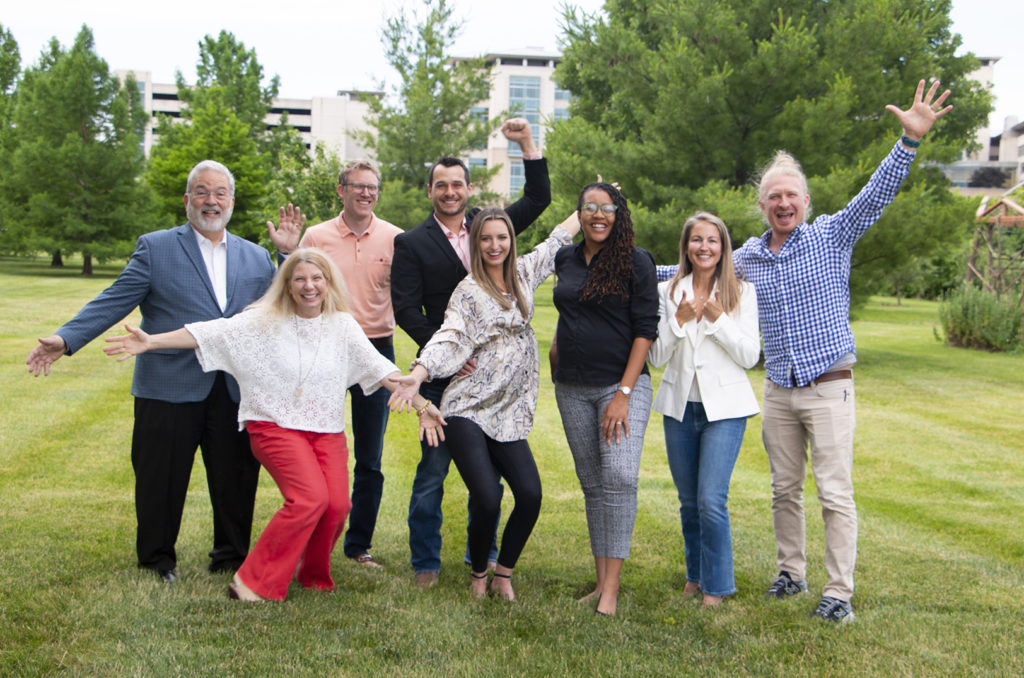
Digital Sandbox KC awardees with Jill Meyer and Chris Rehkamp, Technology Venture Studio
Forward momentum
Archie hopes to begin beta testing for AskSAMIE in the next couple of months. Anyone interested in joining the test can sign up for updates on its website to be the first to know when the app is launched, she added.
Earlier this month, the tech startup received $20,000 in funding from Digital Sandbox KC, which Archie said will help her get the app built out. She was able to get connected to Digital Sandbox through the UMKC Innovation Center’s Technology Venture Studio.
“I’ve used a lot of services from them,” she added.
As someone coming from healthcare into the tech world, Archie took advantage of a tech venture class through the center, as well as getting connected with other business owners and a business coach.
“People pay lots of money for a business coach,” she said, “and they’re just giving me access to one for free, who has his own connections and things. That stuff is kind of invaluable, actually.”
Leaders at Technology Venture Studio encouraged her to apply for the funding, Archie added.
“In my head, I was not going to apply for it for a while,” she continued. “And they were actually like, ‘You’re ready to do that now. Go ahead and do that now, so you have the funding to get that going.’ So that was pivotal.”
Now is a good time to start a business, Archie noted.
“There are actually a lot of grants and resources out there,” she explained. “ I’ve been encouraged by seeing that, especially for people of color and women. And I just want to encourage people: if they have an idea, they should do it because the world needs it.”

This story is possible thanks to support from the Ewing Marion Kauffman Foundation, a private, nonpartisan foundation that works together with communities in education and entrepreneurship to create uncommon solutions and empower people to shape their futures and be successful.
For more information, visit www.kauffman.org and connect at www.twitter.com/kauffmanfdn and www.facebook.com/kauffmanfdn


2022 Startups to Watch
stats here
Related Posts on Startland News

Voodoo Volleyball bounces back in OP: Father-daughter duo doubles as new venture’s setters
Quinn Austin put several sports to the test as a preteen — racing from basketball practice to softball to volleyball. But she latched on to just one. “Volleyball. It was my sport. Everyone was having a good time,” she said. “We just loved the cheers — a cheer when we got a hit, a cheer…

Black farmers are losing ground in the fight to feed their communities, advocates say
More than a century of systemic land dispossession and discriminatory practices has left Black farmers with less than 0.6 percent of U.S. farmland — less than a third of the 16 million acres they operated in 1910, according to local urban farming advocates. They gathered Tuesday at Independence Boulevard Christian Church to confront this history…

Cracking egg-flation: How farmers, substitute ingredients help restaurants mitigate price spike
Editor’s note: This story was originally published by Kansas City PBS/Flatland, a member of the Kansas City Media Collective, which also includes Startland News, KCUR 89.3, American Public Square, The Kansas City Beacon, and Missouri Business Alert. Click here to read the original story. Whether ordering an omelet, French toast, chicken n’ biscuits, chilaquiles, corned beef hash…

Soccer tennis comes to KC ahead of World Cup; here’s how a weekend street festival is kicking it across the map
Ryogoku Soccer Academy — with the help of local businesses like MADE MOBB, Café Ollama, and Café Cà Phê — is taking soccer from the pitch to the streets of Kansas City’s historic Northeast, Brad Leonard shared. As the metro gears up for hosting World Cup games in 2026, the neighborhood-based international school and soccer…