

Passion project set in stone: 2000 Vine Street’s ‘cultural inheritance’ is 150 years in the making
July 20, 2022 | Matthew Gwin
Editor’s note: This story is the first in a series from Startland News highlighting entrepreneurs, businesses, and creators leading revitalization and redevelopment efforts in and around the historic 18th and Vine Jazz District. Click here to read additional stories from this series.
The revitalization of the two oldest public works buildings in Kansas City, abandoned since 1978, is nearly complete, according to the leaders of the 2000 Vine Street project.
Once construction is finished, they expect the two neighboring buildings at 20th and Vine to become a “destination” that expands the cultural corridor of the historic 18th and Vine Jazz District.
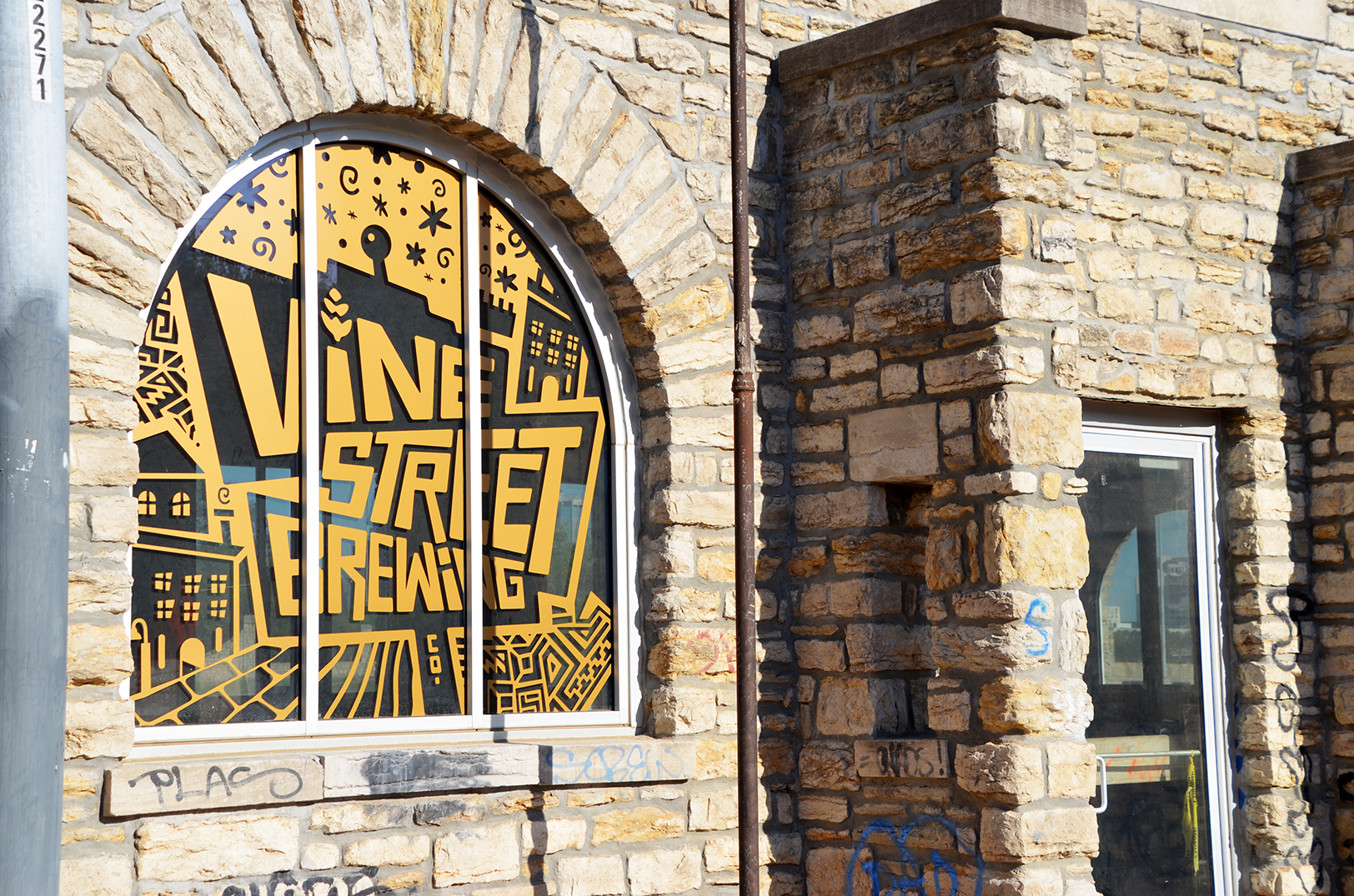
2000 Vine Street, July 2022
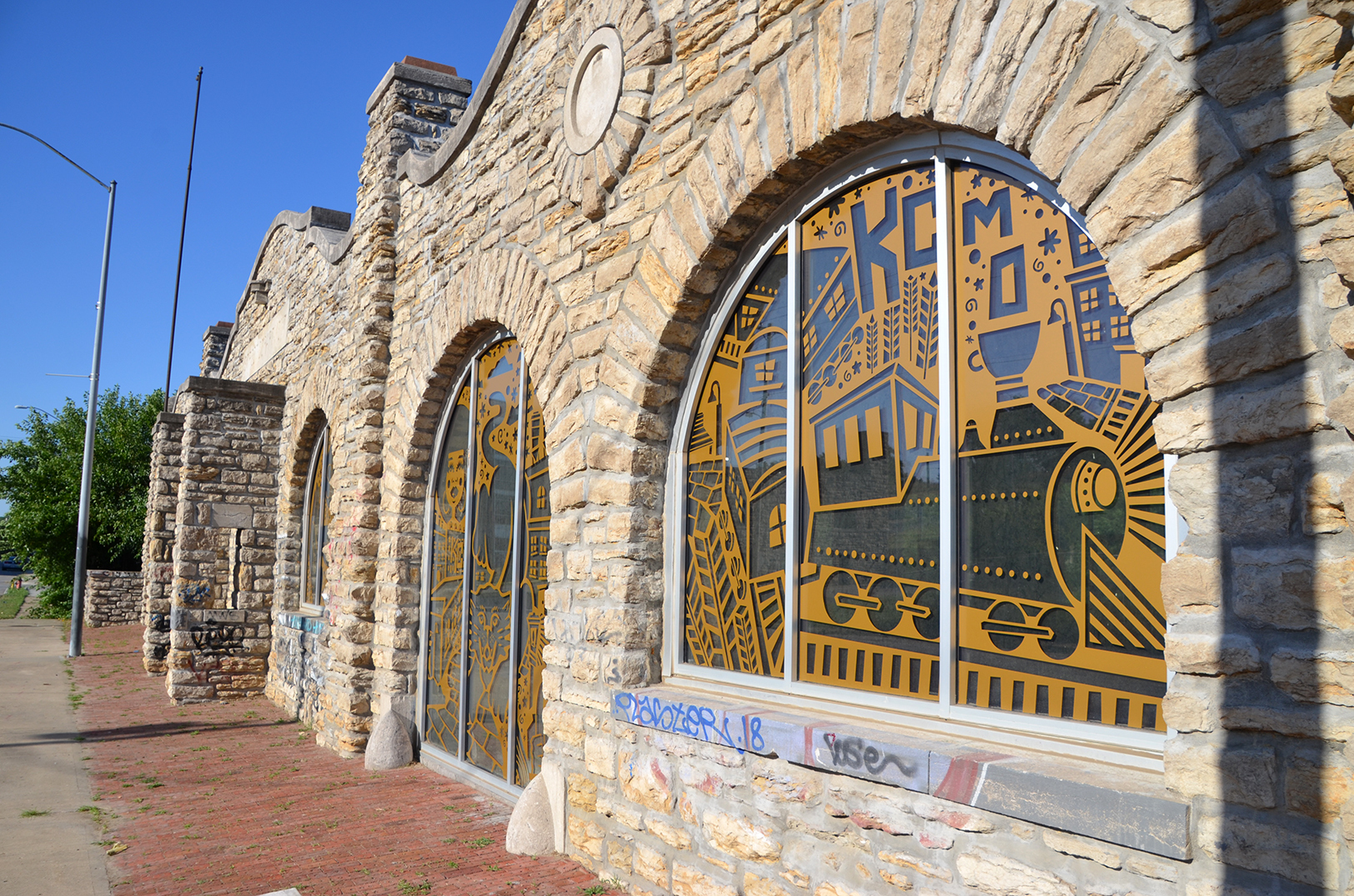
The spaces are dominated by large windows with cascading natural light, original artwork by Kansas City’s Warren Harvey, graffiti reminders of the buildings’ abandoned days, and contemporary furniture mixed with 2000 Vine’s uniquely vintage architecture. Shimmering gold designs on the exterior of the south building tease the headline-grabbing ventures to come.
Three local business owners joined forces to spearhead the project: Tim Duggan, principal owner of the urban planning and design firm Phronesis; Shomari Benton, real estate attorney and partner at Benton, Lloyd & Chung LLP; and Jason Parson, president and CEO of the public relations firm Parson + Associates.
“My motivation, once Tim brought us to the project, was seeing Vine Street thrive,” Benton said. “Then in the broader perspective, knowing that if Vine Street thrives, that’s best for the city of Kansas City. Ultimately, Kansas City can’t be at its best if Vine’s not at its best.”
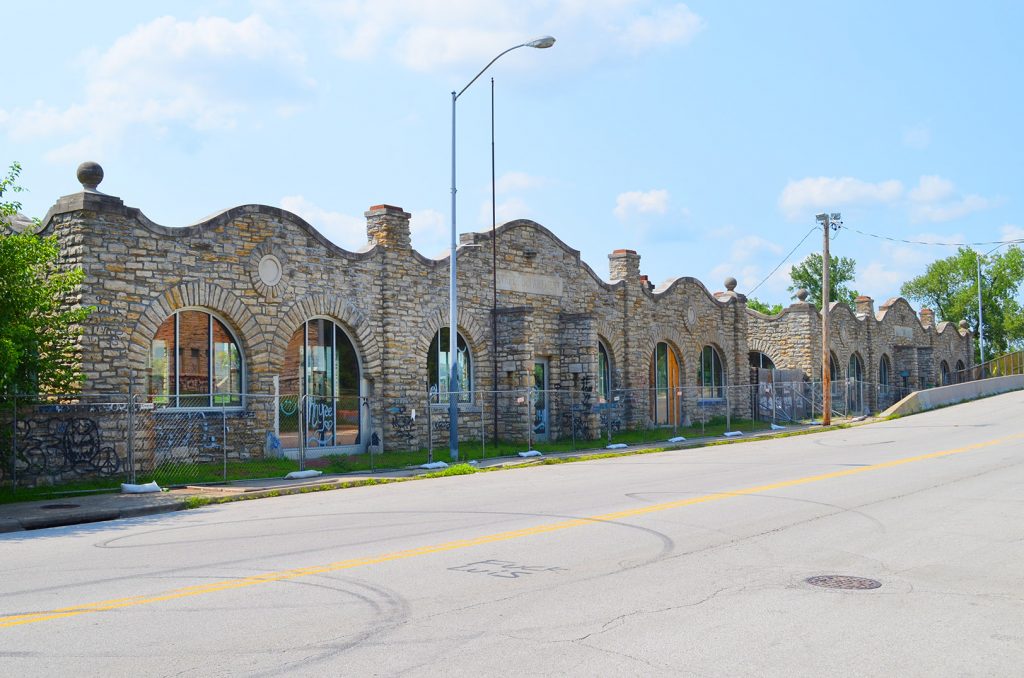
2000 Vine Street project, July 2021
Duggan and Benton met initially as neighbors in the Beacon Hill neighborhood after Duggan moved back to Kansas City several years ago.
Duggan pitched Benton and Parson, who he had known for years, on the idea of purchasing the buildings at 2000 Vine from the city and transforming them into a mixed-use development.
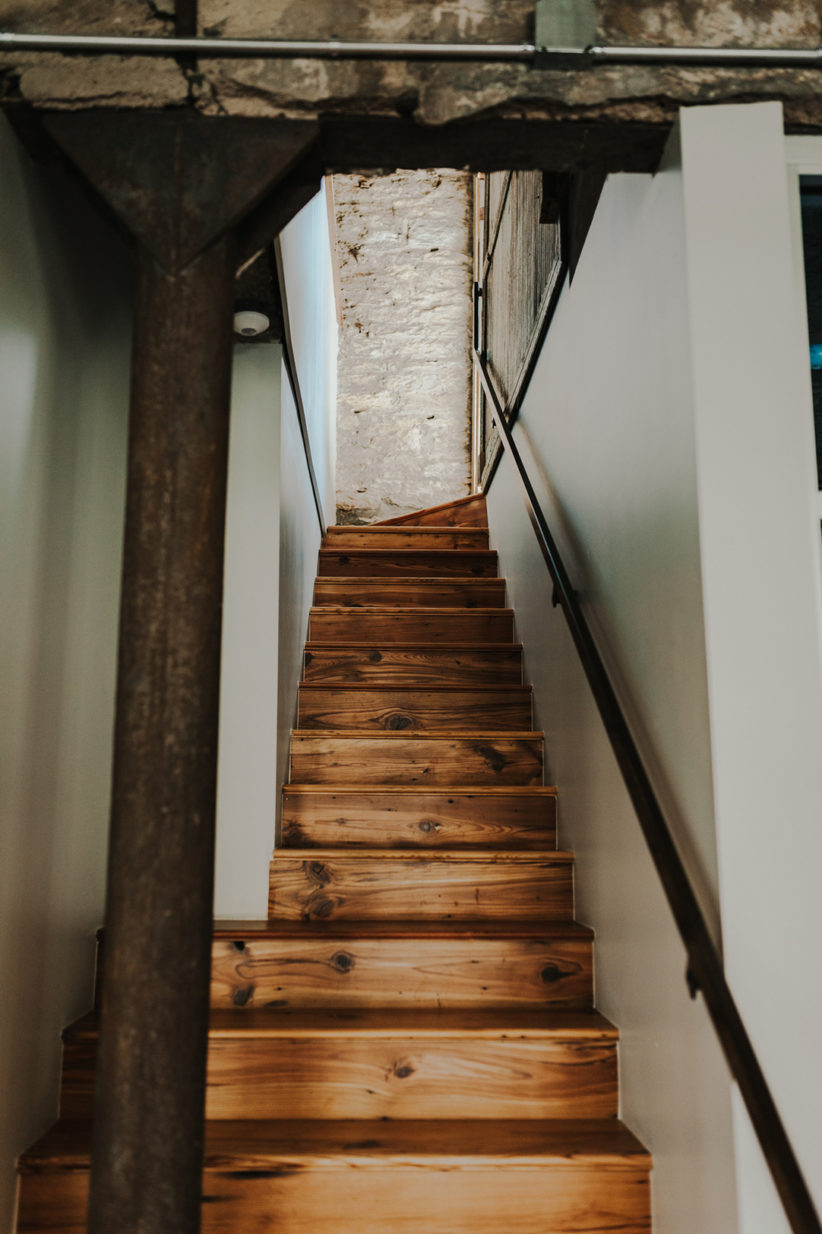
2000 Vine Street north building interior; photo by Syndey Siemens
“When the city caught wind that there was someone interested in these buildings, I think they were interested in divesting in those,” Duggan said.
Construction began on the two stone buildings in 1872 and was completed in 1878. For the next 100 years, they housed the departments of water and street, which was later split into public works and parks and recreation. 2000 Vine was officially decommissioned in 1978 and sat unoccupied for four decades.
Fortunately, the group’s mix of skill sets allowed them to self-perform many elements of the overhaul for two buildings in desperate need of renovation.
“We all just made the sacrifice,” Benton said. “It’s a passion project. It’s not for the faint of heart.”
The north building — emblazoned with “Water Department” atop its front doors — is fully leased, Duggan said. Tenants include KC-based digital marketing agency Lillian James Creative, the Warren Harvey Art Gallery, and tattoo artist Keno G Ink, in addition to offices for Benton, Lloyd & Chung LLP and Phronesis.
Check out a photo gallery below from the north building at 2000 Vine Street, shot by Startland News’ YEPKC intern Sydney Siemens, then keep reading.
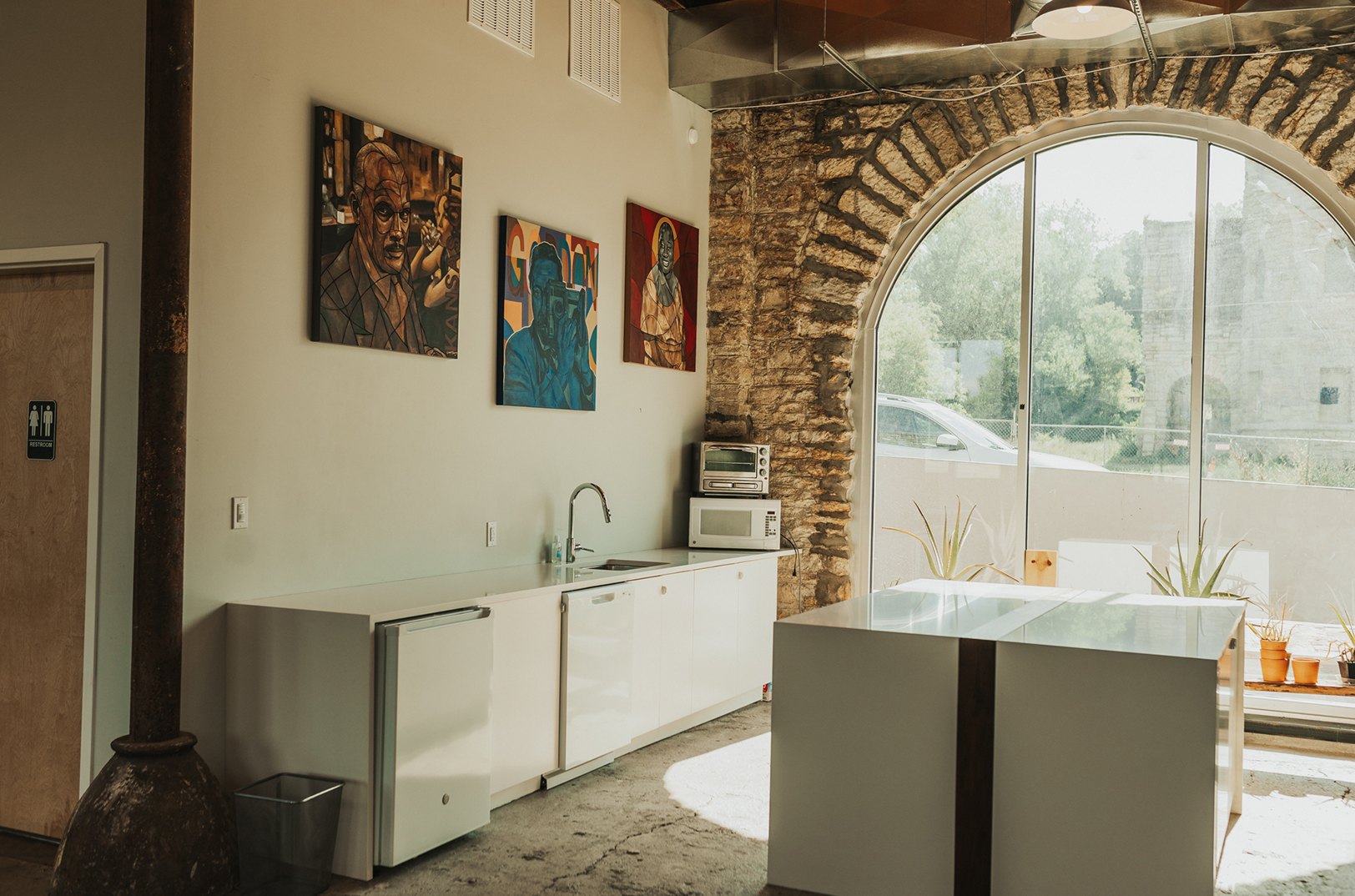
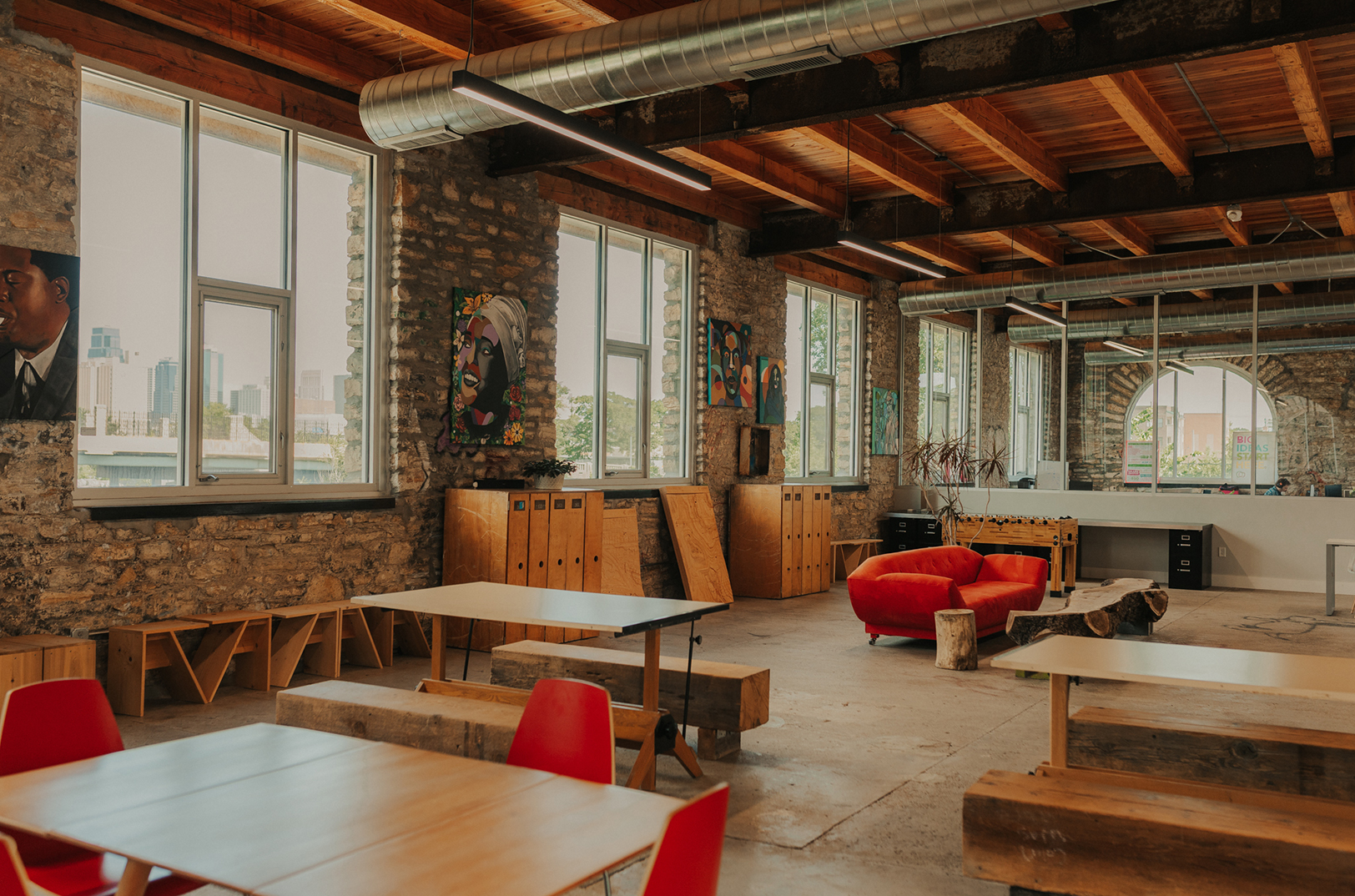

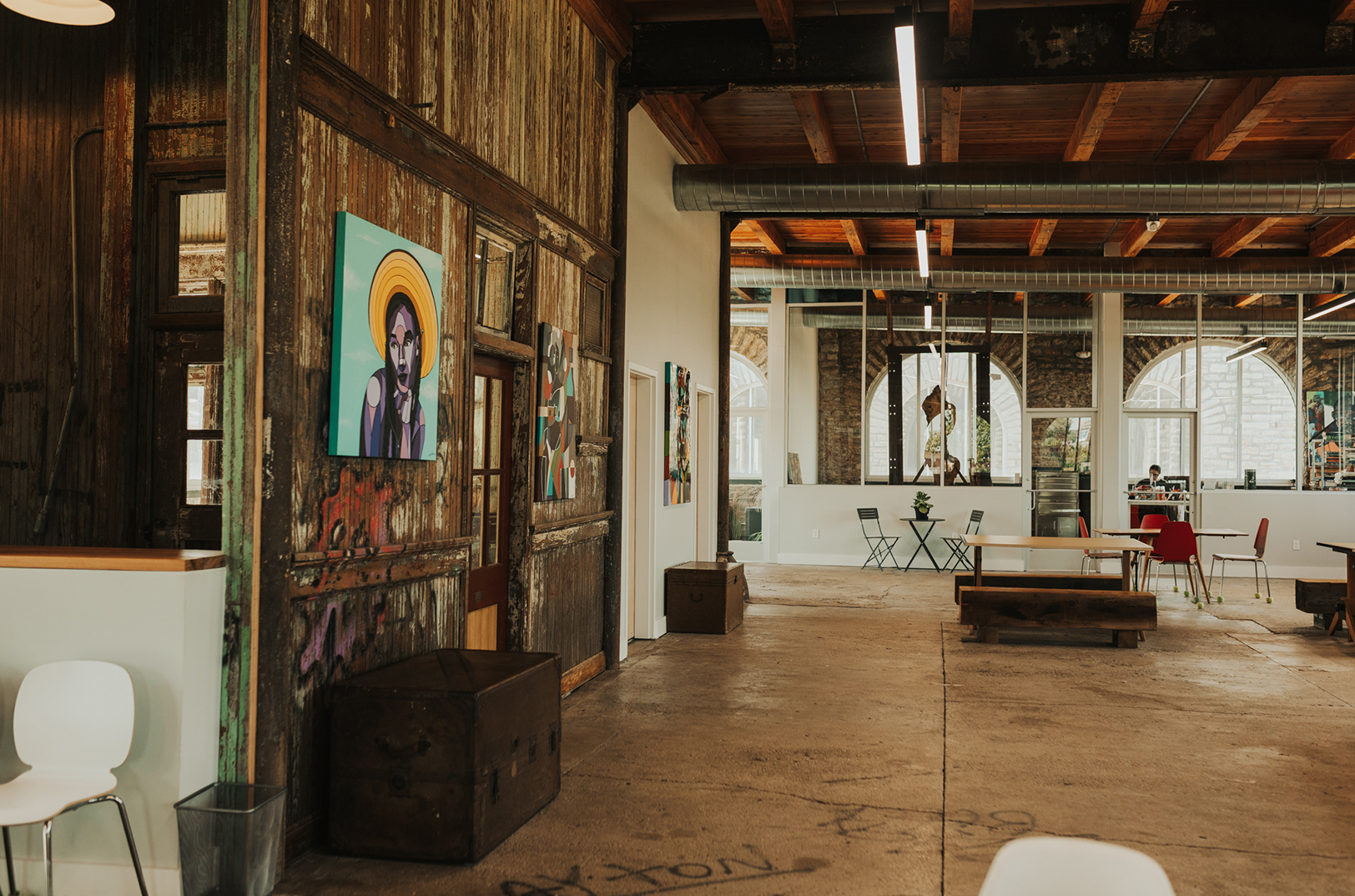
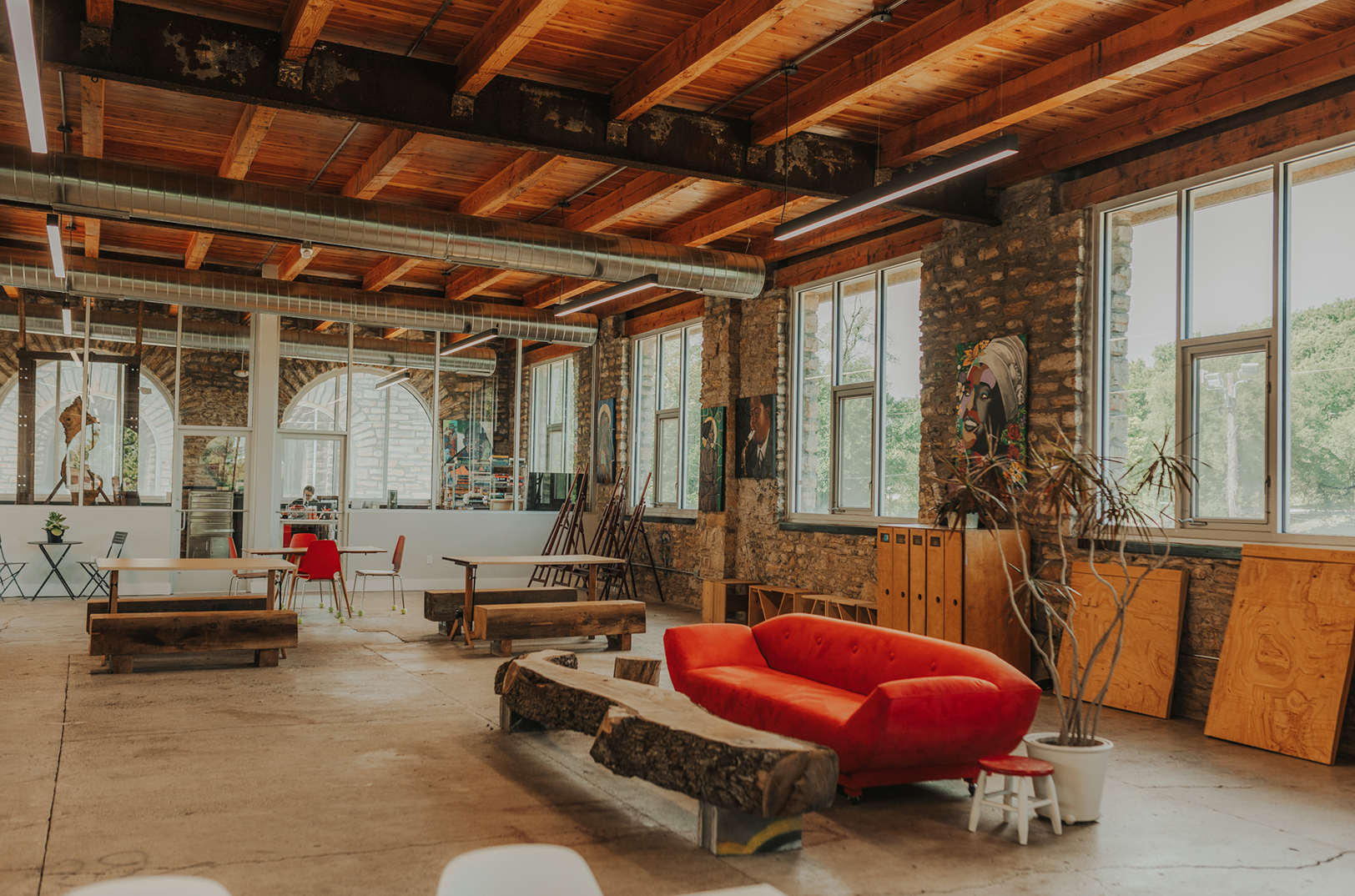

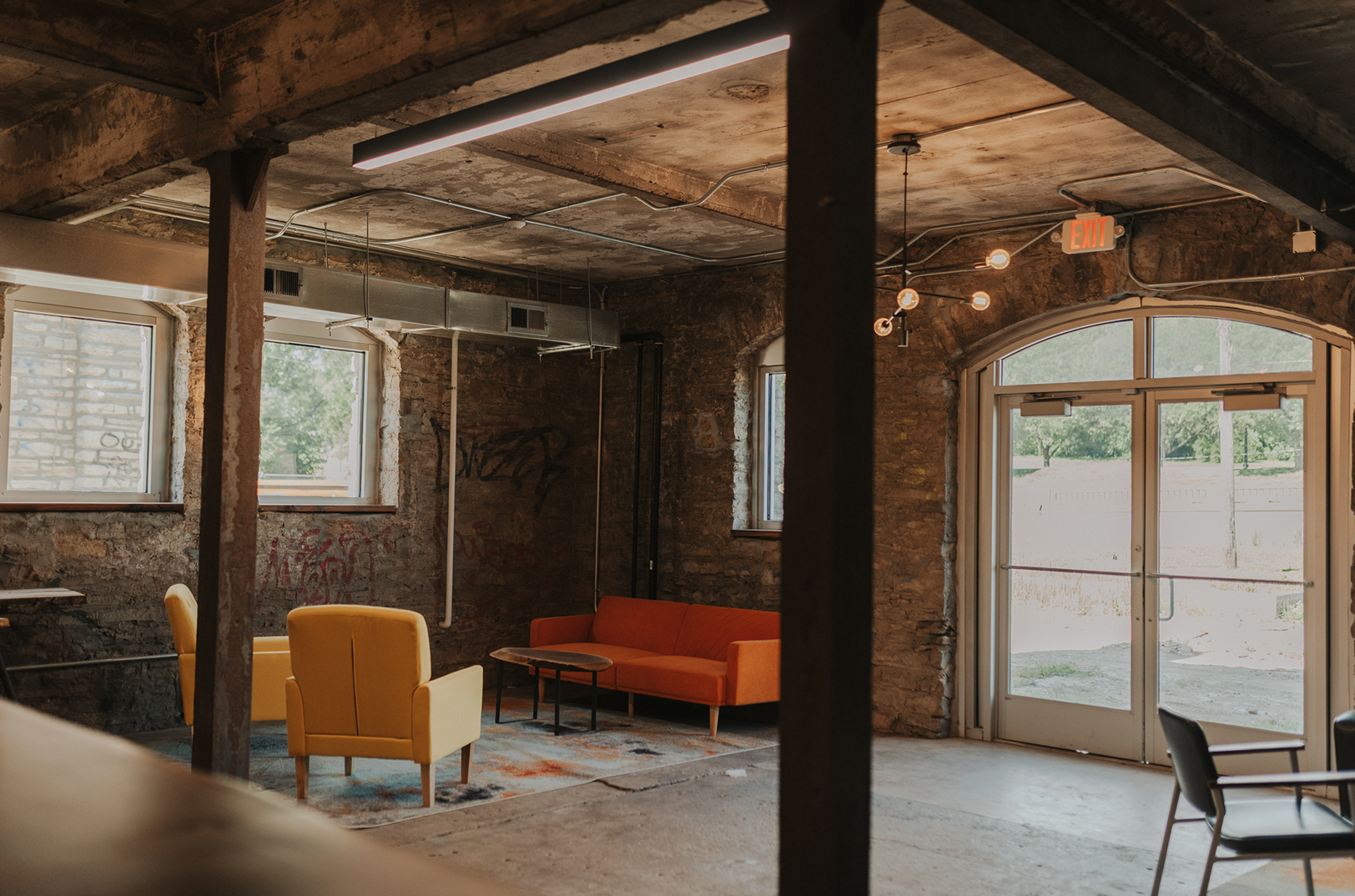
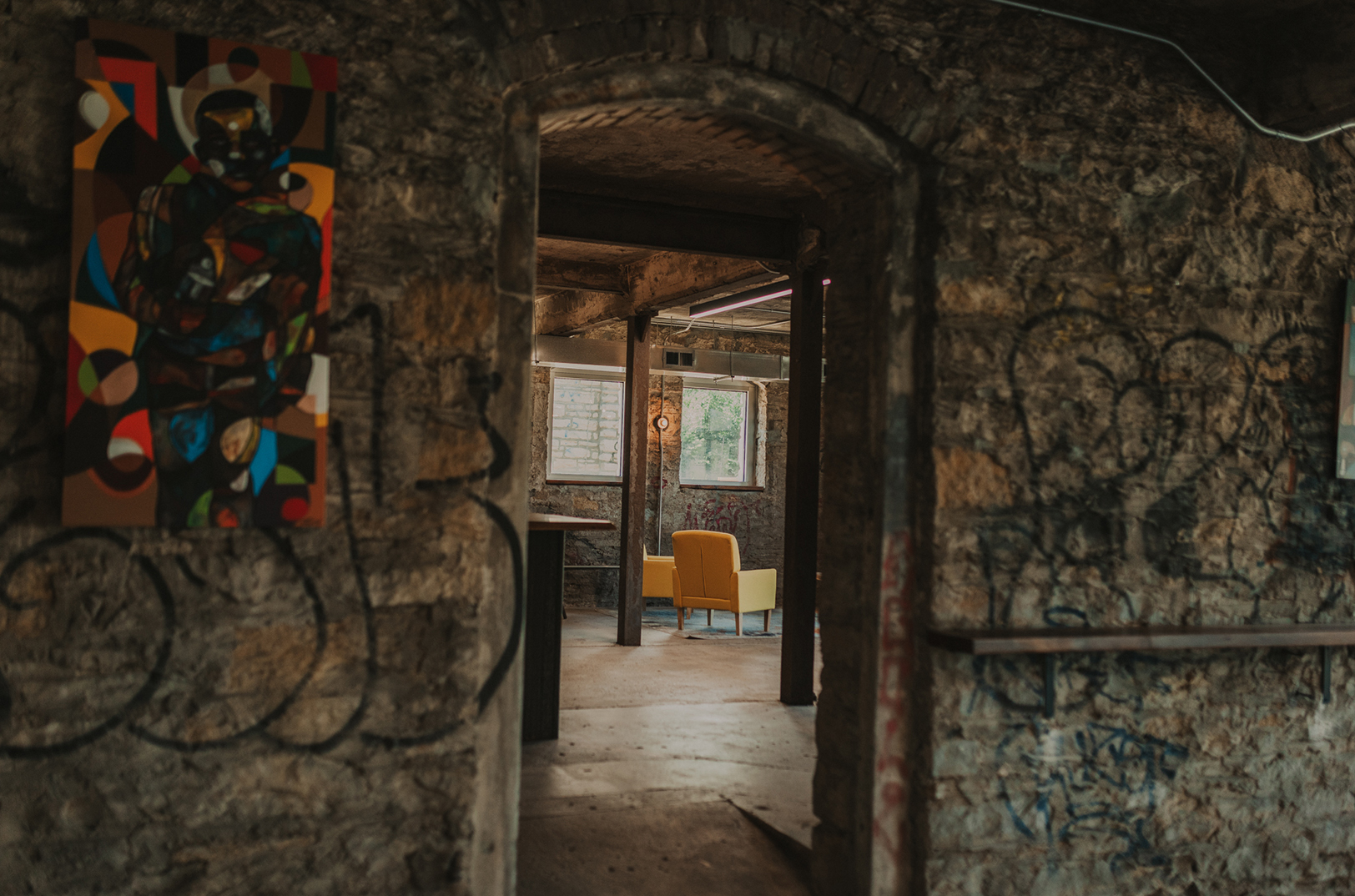
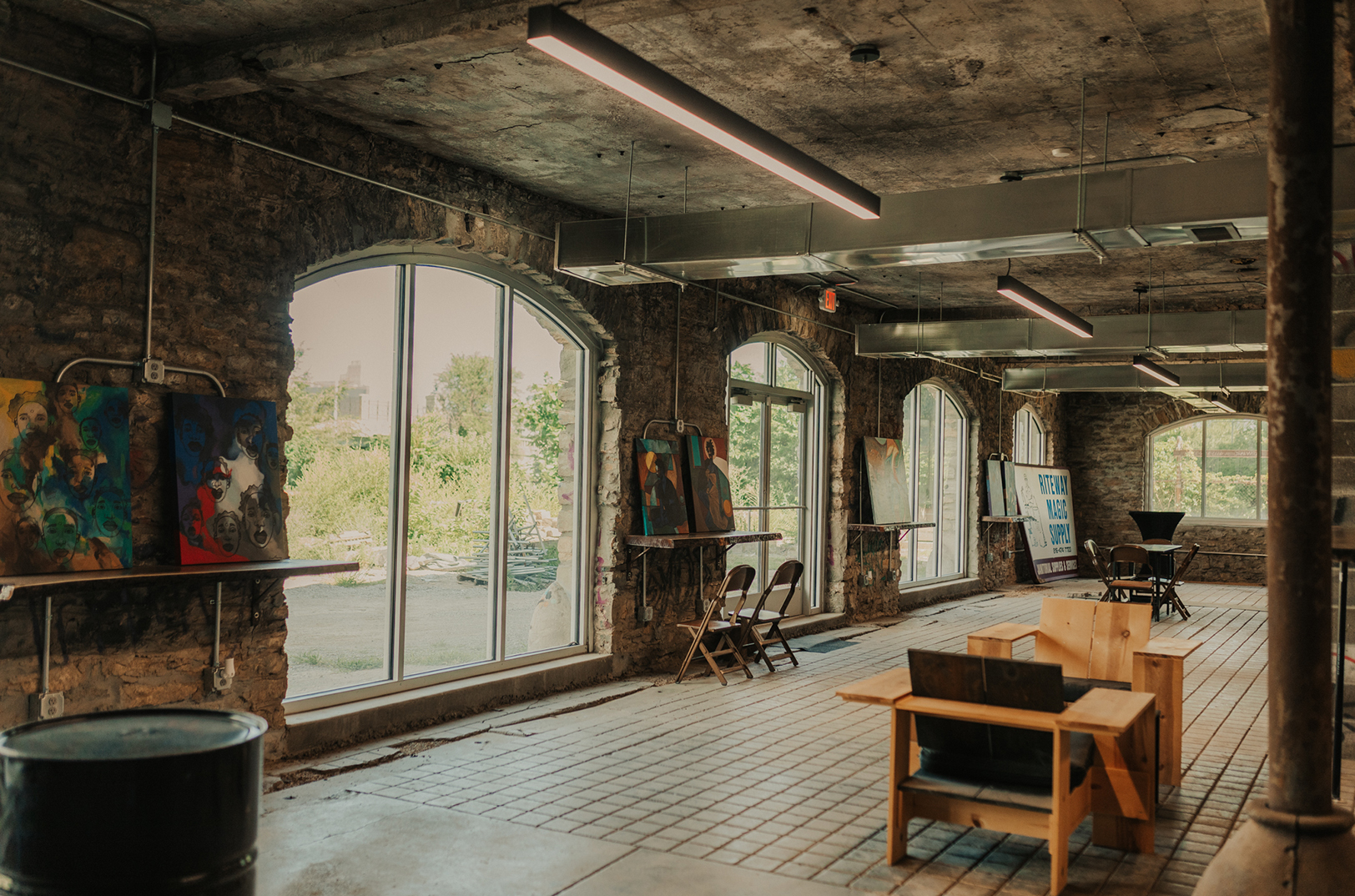
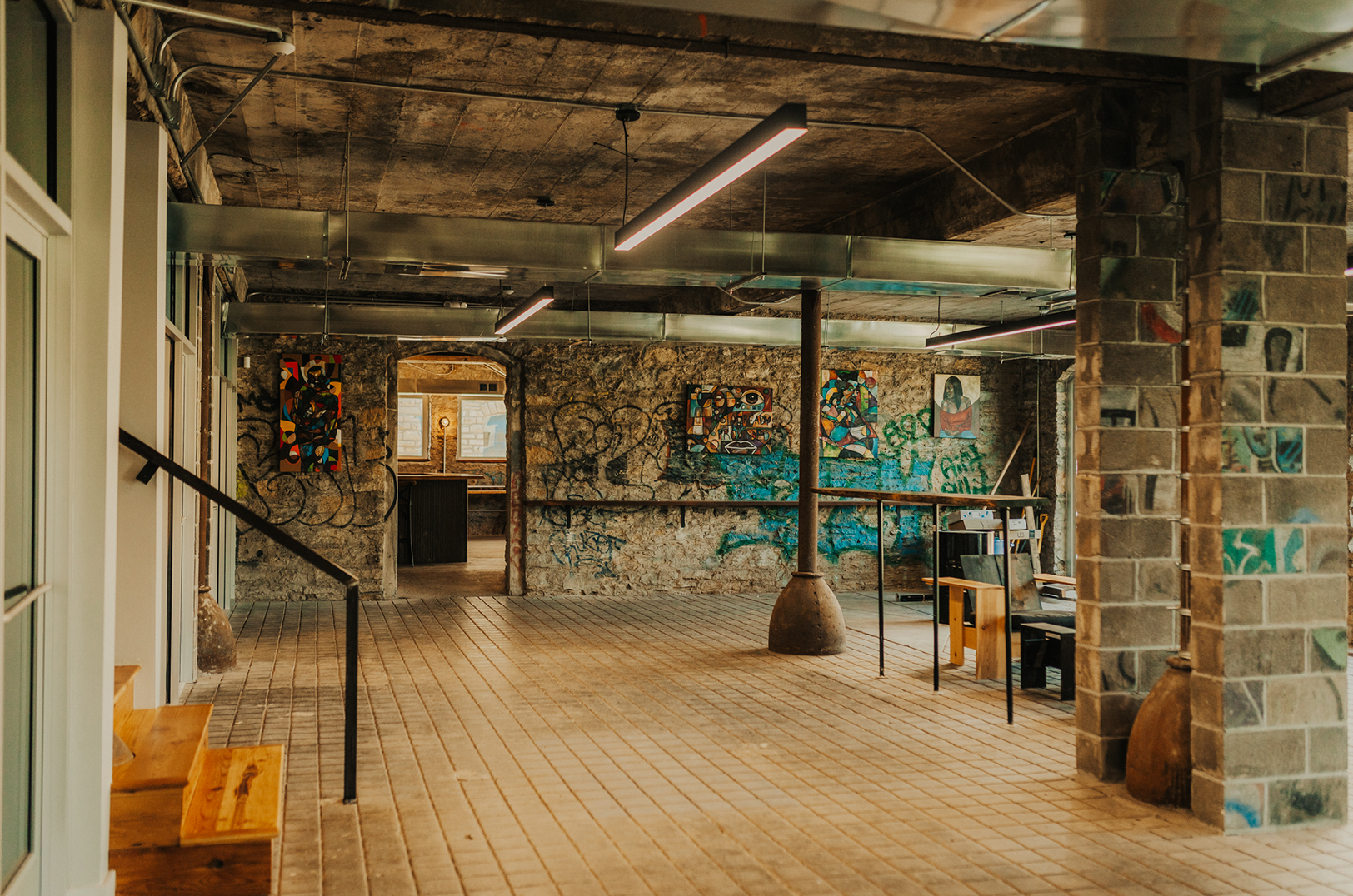
Duggan added that the building will also be used as an event space, both for recurring events like First Fridays, as well as other programming.
“We didn’t anticipate that to be both as big of an opportunity and to evolve as quickly as it has, but to [the] point about these buildings and the architecture, people walk in and they’re pretty enamored by the spaces,” Duggan said.
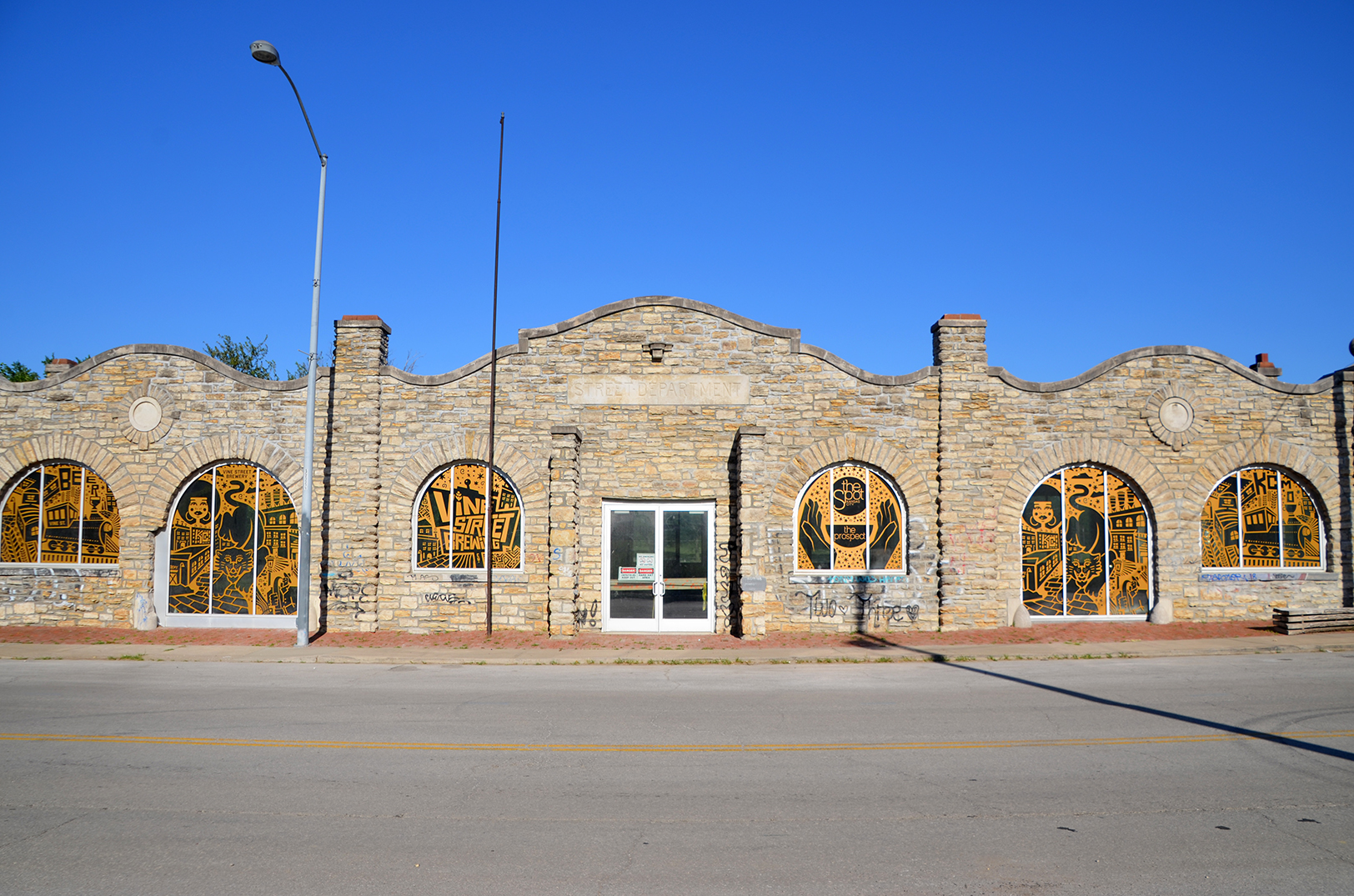
2000 Vine Street, July 2022
The south building — the former Street Department — is targeted to open later this year after experiencing some construction delays.
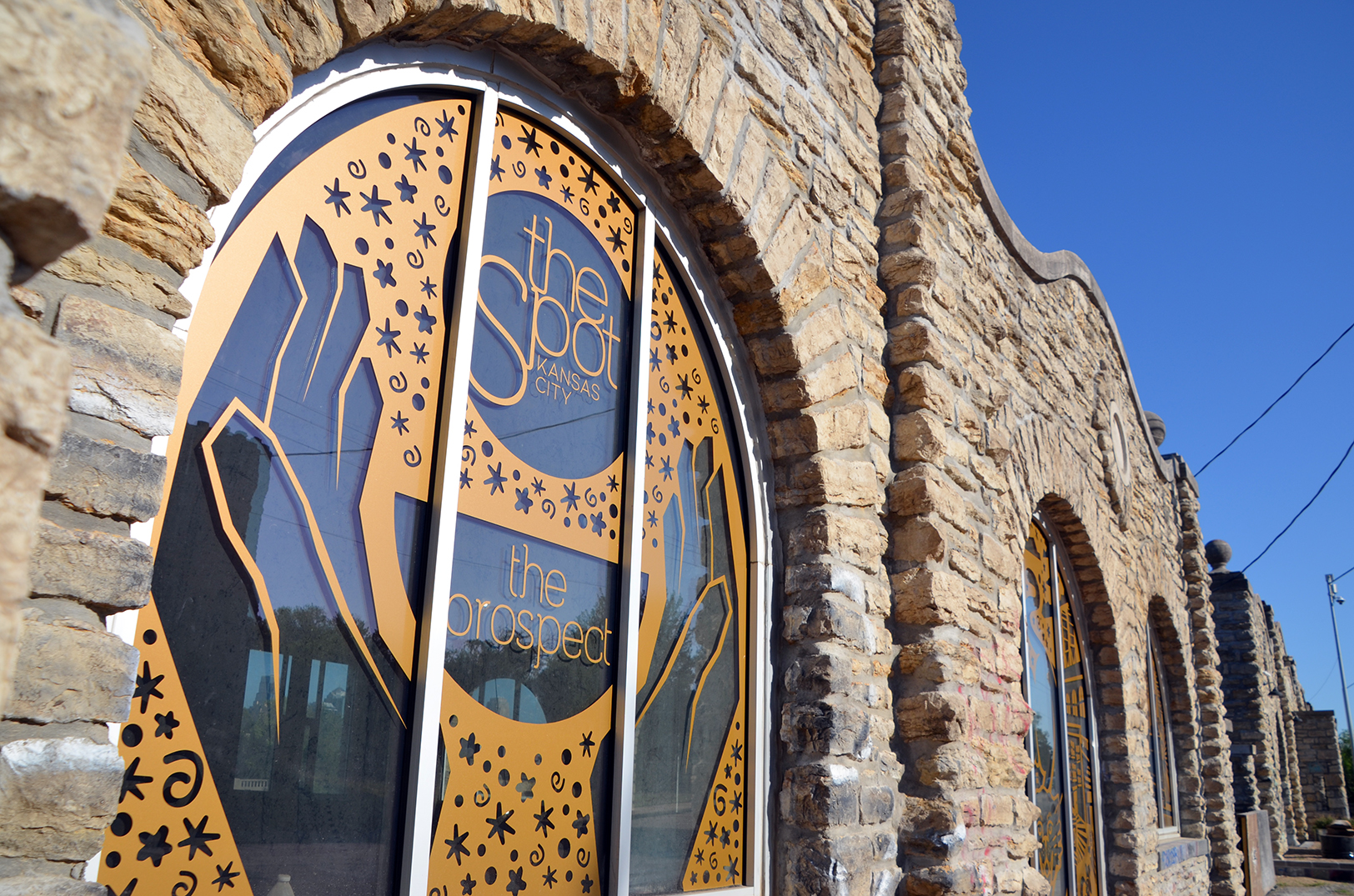
2000 Vine Street, July 2022
It will be home to Vine Street Brewing Co. — the region’s first Black-owned brewery — and The Prospect KC Urban Eatery, a social enterprise that provides nutritional education, kitchen training, and culinary entrepreneurship support to members of disenfranchised communities.
The plan is to add more tenants to fill out the remaining space and create a mixed-use brewery and beer garden with artisanal food and beverage options, according to Duggan.
In the bigger picture, the entrepreneurs-turned-developers hope that 2000 Vine can be “a piece of the puzzle” in the broader revitalization taking place in and around the 18th and Vine District.
“I would say it’s a historic anchor to a significant community within the city,” Benton said.
“Ultimately, it’s about its location [close] to downtown,” Benton added. “It’s about its cultural inheritance. It’s about its current cultural and geographic value, and a representation of Kansas City’s African-American culture specifically, but also the broader Kansas City culture.”
Duggan said he expects to see all that reflected once 2000 Vine fully opens its doors.
“I think we are an urban core node that all different communities and neighborhoods will want to connect to.”

This story is possible thanks to support from the Ewing Marion Kauffman Foundation, a private, nonpartisan foundation that works together with communities in education and entrepreneurship to create uncommon solutions and empower people to shape their futures and be successful.
For more information, visit www.kauffman.org and connect at www.twitter.com/kauffmanfdn and www.facebook.com/kauffmanfdn

Featured Business

2022 Startups to Watch
stats here
Related Posts on Startland News
Kauffman CEO: Foundation’s reset aligns Mr. K’s intent with KC’s needs of the moment
A recently announced strategy refresh for the Ewing Marion Kauffman Foundation will drive the organization’s collective impact in the community — honoring the vision of its namesake while recognizing the challenges Kansas City faces today, said Dr. DeAngela Burns-Wallace. “Mr. K had very distinct philosophies and ideas around how he wanted this work done,” explained…
Block by block: Prototype builds startup’s housing vision where everyone can afford their own castle
A mock home facade project on the grounds of Kansas City’s historic Workhouse Castle serves as a proof point for Godfrey Riddle’s rebooted Civic Saint — a social venture built on compressed earth blocks as its key to affordable, sustainable housing. “CEBs (compressed earth blocks) are great for Kansas City, because non-expansive sandy clay soil…

Resource revival: Digital Inclusion Fund relaunches with initial grants focused on devices
Kansas Citians can’t upgrade skills or devices they don’t already have, said organizers of a newly relaunched Digital Inclusion Fund — emphasizing a need to attack the metro’s digital divide at the infrastructure level. The fund is set to award up to $250,000 to 501(c)(3) public charities (including schools and churches) or governmental entities across…
New deal with lightwell keeps WeWork in Kansas City after closing Corrigan Station space
A freshly negotiated lease agreement with the developer behind the lightwell building in downtown Kansas City means WeWork will continue its two-floor coworking and flexible office space operation in the heart of the city’s central business district. WeWork has officially completed its lease rationalization with the assumption of its lightwell location contract, the company said…