

Kauffman leader: Our economy can’t afford to leave half the population behind; there’s a new way forward
June 23, 2022 | Wendy Guillies
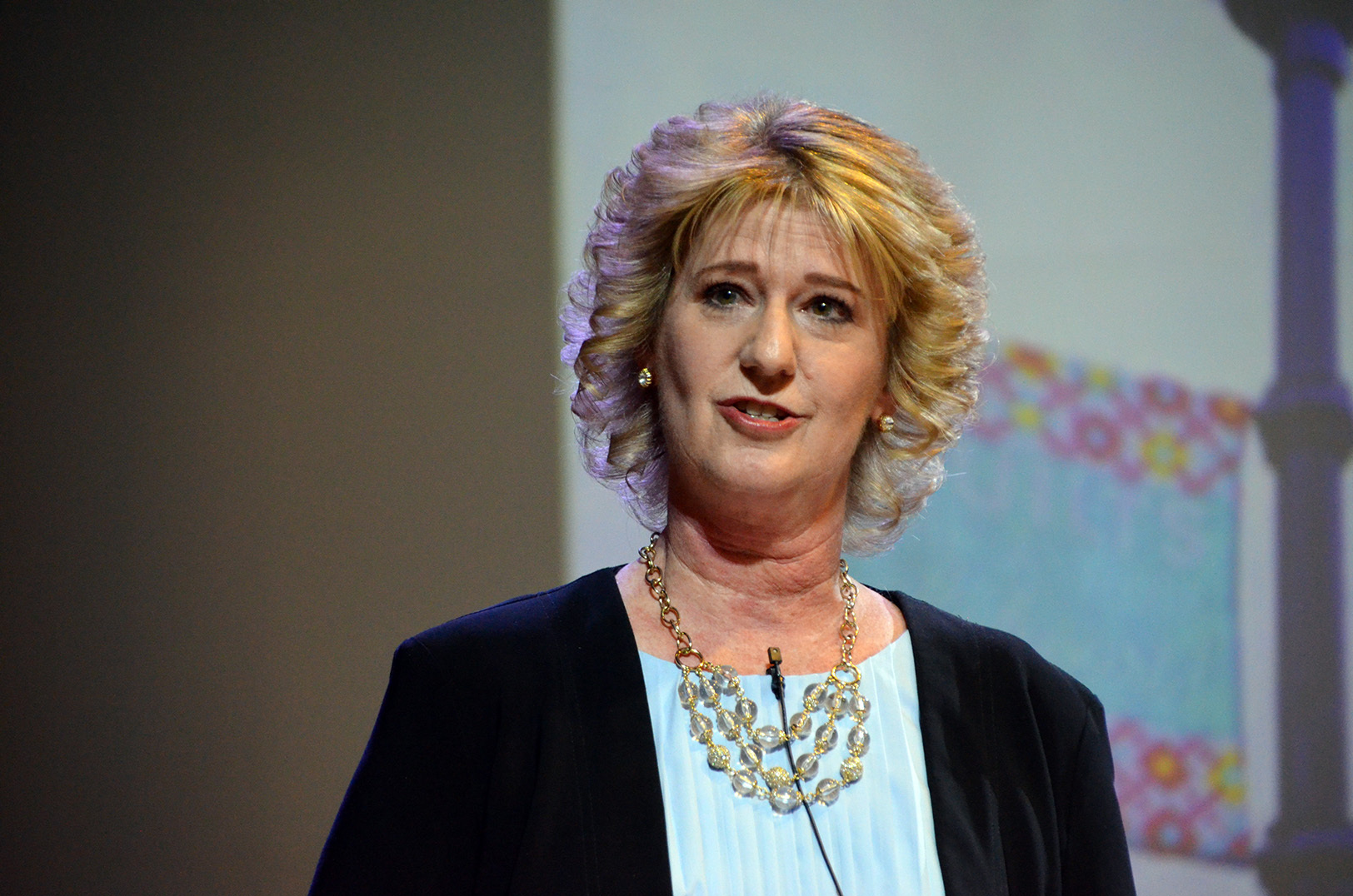
Editor’s note: The opinions expressed in this commentary are the author’s alone. Wendy Guillies is president and CEO of the Ewing Marion Kauffman Foundation. Startland News is financially supported by the Kauffman Foundation and other sponsors.
This commentary originally appeared in The Hill.
I am not oblivious to the political divisions that dominate national news outlet headlines. Yet, those headlines don’t tell the full story of what our foundation associates see and experience working across the heartland.
Most want a level playing field for themselves and their neighbors. In far too many communities across the country, wages and opportunity have lagged far behind rising costs and increasingly uneven supply over the past many decades. Today we are witnessing an outcome of policies that were ill-equipped for the global shocks of the pandemic, supply chain disruptions, and now, war.
At the same time, policies that benefit very large corporations with the resources to navigate the complexity of legal, financial and regulatory regimes have led to wealth consolidated in the hands of a very few. In fact, billionaires added trillions to their fortunes during the pandemic. Their access to teams of attorneys and consultants exacerbates a competitive disadvantage facing new and small businesses — and further deepens access and opportunity disparities.
There is a way forward. We presently have a unique opportunity to abandon the zero-sum game approach to building the economy, in favor of a new path that moves Americans currently facing difficult economic choices onto paths of economic stability through good jobs and brighter futures.
A recent trip to Washington D.C. to engage elected officials gave us hope that many on the Hill and in the administration are trying to find common ground. Despite what you see on the news about the irreparable political divide, there is agreement on many of the policy recommendations outlined in our “America’s New Business Plan,” which calls for practical, actionable and bipartisan approaches to build an economy based on entrepreneurs and a prepared workforce.
Click here to read “America’s New Business Plan.”
Why is entrepreneur-focused economic development critical for a growing and fair economy? For nearly 250 years, the United States has spurred opportunities for aspiring entrepreneurs and innovators. Today, nearly 32 million small businesses employ almost half of America’s workforce, and it is entrepreneurs who come up with new ideas and improve ways of doing things. Newer businesses, after all, create the overwhelming bulk of net new jobs, making it a key bellwether of a strong economy.
But while entrepreneurship has propelled millions into the American Dream — growing cutting-edge companies across new and old sectors in the process — systemic barriers remain that concentrate vital resources among a select, advantaged few. While data showing at least a partial return to new business creation pre-pandemic levels is indeed encouraging, gender and racial gaps in growing businesses both persist.
Today, we’re in Washington, D.C., to launch America’s New Business Plan for 2022.
It’s a nonpartisan, practical policy roadmap to provide increased access to the funding, opportunity, knowledge, and support #entrepreneurs across America need. https://t.co/RvWbmZEn4x
— Kauffman Foundation (@KauffmanFDN) May 17, 2022
Absent ample support and opportunity, entrepreneurs will almost certainly struggle to reach their full potential. Opening more avenues to funding is critical. Today, at least 83 percent of entrepreneurs do not access bank loans or venture capital when launching a business. Women founders raised just two percent of venture capital dollars in 2021, and Black women founders raised just 0.34 percent. We must counter the harmful legacy of discriminatory policies, like redlining, by supporting women, communities of color and rural Americans who have less access to funding in the private market. Failing to reduce these barriers will put the economy on a path to falling well short of its full potential, despite an abundance of talent, ideas and resources.
The Small Business Administration (SBA) recently committed more than $58 billion to rural Americans, $17 billion to Black Americans, $23 billion to the Asian American Pacific Islander community and $15 billion to Hispanic and Latinos, and there are plans to open 280 business development centers to promote greater access and to establish women’s business centers on three Historically Black College and University campuses. These are good things, but we need to go beyond allocating the funding and ensure that the money is spent on programs and practices that change the conditions for entrepreneurs. That happens when there’s strong technical assistance, mentorship and the support systems necessary to help people take risks for business creation and growth.
We also heard in conversations with policymakers in both parties a deep concern for both the current state and future of our workforce.
In our country, 44 percent of workers are employed in low-wage jobs. A recent analysis of these workers found that skill development, career guidance, or informative feedback was lacking at their places of work. While low-wage workers flounder, employers continue to ring the alarm that middle-skill jobs are going unfilled. Corporations and education systems must work collaboratively to develop pathways that make these experiences easier to find and are inclusive of all students, regardless of race, gender, or geography.
Despite skills-based hiring being elevated by large corporations, industries such as information technology still have a range of companies that require a bachelor’s degree for jobs that can be filled by a credential holder or skilled worker. College degrees have become a proxy for “soft skills” (or “essential skills”), which are highly desirable to employers. But these key competencies, such as collaboration, critical thinking and proactivity, can be embedded into workforce and workplace training.
As the country rebuilds after a historic pair of public health and economic crises, there is no better time than right now to shape a resilient, more inclusive economy that works for everyone. Growing our economy — the right way — means recognizing that no demographic group and no geographic location has a monopoly on either the motivation or talent it takes to launch a business or to get a good-paying job. It’s about numbers — we can’t afford to leave half or more of our population struggling to make ends meet.
To remain the leading economy and a primary driver of growth and innovation on the increasingly competitive world stage, we must prioritize national strategies that successfully identify, nurture and unlock the full brilliance of our nation.
Wendy Guillies is president and CEO of the Ewing Marion Kauffman Foundation.

Featured Business

Wendy Guillies
Wendy Guillies was president and CEO of the Ewing Marion Kauffman Foundation from 2014-2022.
2022 Startups to Watch
stats here
Related Posts on Startland News

KC’s top emerging business just exited; How a deal forged in the stands at Arrowhead rewrites the code on Black women in tech
No stereotypes here, Tammy Buckner said, announcing a merger between Techquity Digital and a rising Kansas City-born startup that’s expected to elevate Black tech in the region — and the women in its ranks. “[There’s an idea that] ‘Black women can’t work together.’ … I think this proves that we can,” Buckner, founder and CEO of…

Taste 200 restaurants in 10 days? Why your stomach (and hungry neighbors) will thank you
Curious Kansas City diners can step away from their kitchens for the next 10 days, teased Carlos Mortera, as chefs at 200 restaurants across the city plate their latest trending tastes during the metro’s most-anticipated culinary showcase. “It’s a big deal in Kansas City. Many of the restaurants feature items they don’t usually have on the…
She’s on a mission to boost the region’s tech talent; SnapIT’s new office in Wichita is the next step
Overland Park-based SnapIT Solutions has expanded its promise to deliver high-quality technology job training and educational services into Wichita, Neelima Parasker said, detailing a new partnership between the information technology firm and Wichita State University. “The IT side of the tech industry is now more in demand than ever. … I want to maximize Kansas’…

‘People eat with their eyes first’: Why pop-ups were just a sample of this new bakery’s appeal
Brown Suga Bakes began modestly — selling cookies out of lunch bags mid-pandemic, said Ebony Paul-Harris, detailing a strategy of starting small to achieve big results. In her case: opening the oven to a brick-and-mortar bakery and storefront in Olathe. “In the beginning, we used to make really small cookies. We also had a sample…