

Leanlab launches edtech certification with focus on accountability to classrooms
May 12, 2022 | Startland News Staff
A new product certification from Leanlab Education means increased transparency for edtech companies — as well as added credibility for their work within schools.
“We want to give teachers and school administrators a quick way to understand if an edtech product reflects the insights of educators, students, and parents — the true end users in education — and was built for the realities of classroom environments,” said Katie Boody Adorno, founder and CEO.
Leanlab launched Thursday its Codesign Product Certification — a recognition that verifies qualifying edtech companies iterate their products based on authentic, school-community recommendations and feedback from Leanlab’s collaborative research process, Codesign.
A company is eligible for certification six-months after its research study and must demonstrate product modifications based on research recommendations and school-community insight, Leanlab explained.
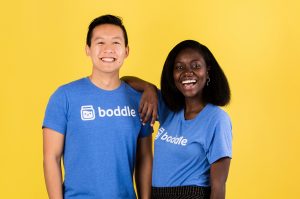
Clarence Tan and Edna Martinson, Boddle Learning
Initial certifications are expected to be awarded to Boddle Learning, Tulsa, Oklahoma; Classcraft, Montreal, Quebec; Levered Learning, Santa Cruz, California; and Sown to Grow, Oakland, California.
“The opportunity to partner with Leanlab on this research study was a no-brainer for our team,” said Edna Martinson, co-founder and CEO of Boddle Learning, which launched in Kansas City before relocating to Tulsa in 2020.
“Leanlab’s commitment to improving student outcomes and helping educators be successful is something that has been evident throughout the years and their great approach to research that prioritizes the feedback of end users — students and teachers — is something that our team finds a lot of value in,” Martinson continued.
“Through this research we will not only be able to measure our impact but also receive valuable feedback on how we can improve and better serve educators and students,” she added.
Studies currently offered by Leanlab include:
- Sandbox studies that aim to understand if a product is needed
- Usability studies to improve ease of use and functionality
- Feasibility studies to improve a products use in a daily classroom environment
- Implementation studies to help companies understand where a product is used best
- Correlational studies to identify any relationship between product use and intended incomes
A second cohort of companies in the running for the certification include Kansas City-based CodeAlgo Academy and Crib Coaching, as well as a collection of such out-of-state ventures as BeeReaders, Career Village, Pango, and Schoolytics.
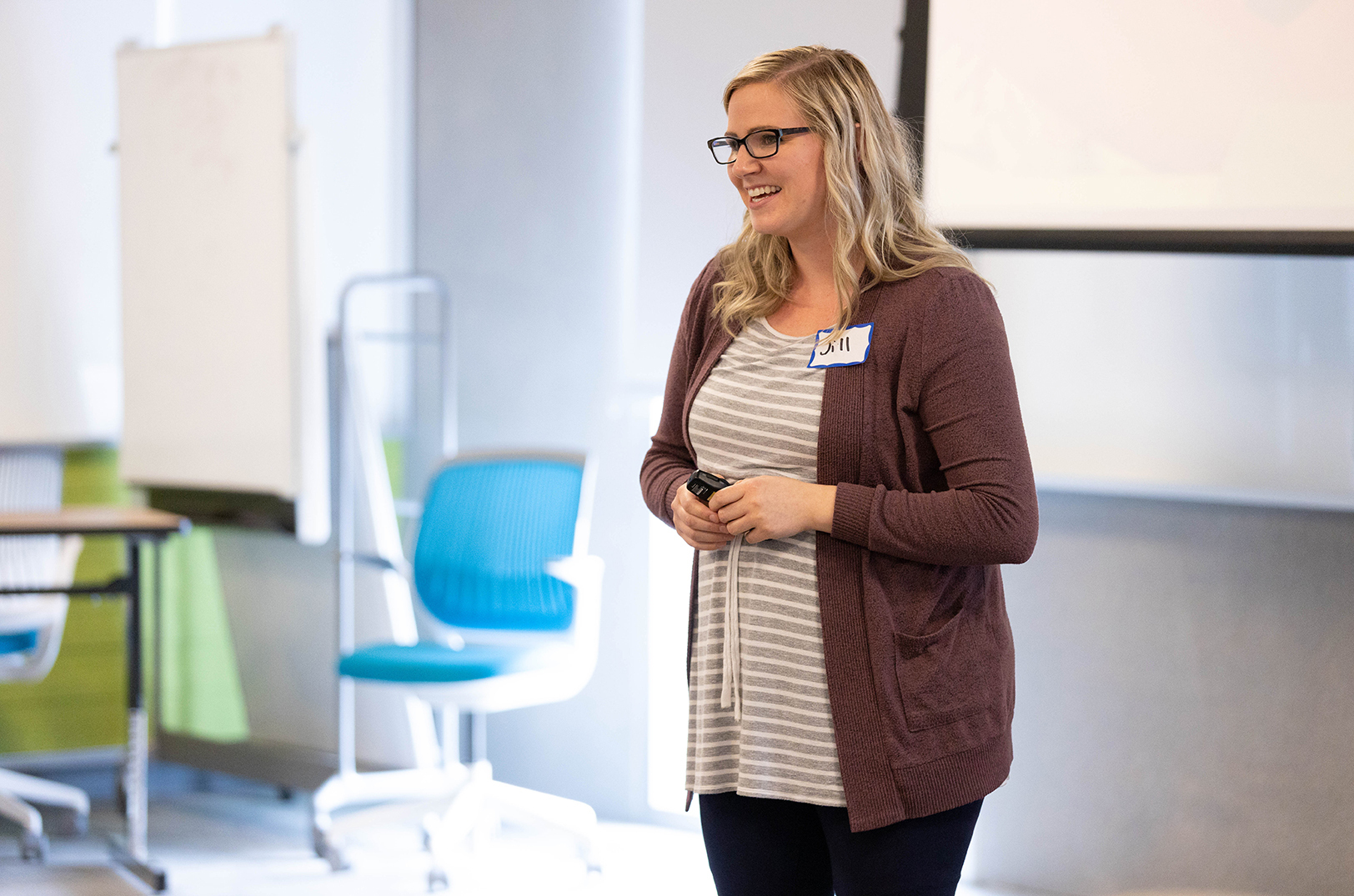
“Gaining feedback from teachers and students has been crucial in mapping the trajectory of our product,” said Jill Bertelson, CEO of Crib Coaching, which recently earned a $10,000 prize in the Regnier Venture Creation Challenge at the University of Missouri-Kansas City.
Crib Coaching has gamified the experience of parenthood, offering new parents an educational outlet to level up their parenting skills, according to the edtech startup.
“With the information that we have gained through our research study with Leanlab, we will be able to narrow our target market and focus on what matters most to Crib Coaching, our social mission of helping families develop positive habits as they transition to parenthood.”
This story is possible thanks to support from the Ewing Marion Kauffman Foundation, a private, nonpartisan foundation that works together with communities in education and entrepreneurship to create uncommon solutions and empower people to shape their futures and be successful.
For more information, visit www.kauffman.org and connect at www.twitter.com/kauffmanfdn and www.facebook.com/kauffmanfdn

Featured Business

2022 Startups to Watch
stats here
Related Posts on Startland News
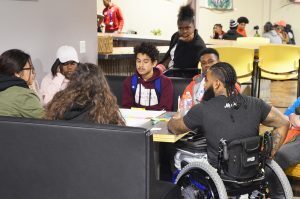
Students struck by KC gun violence search for solutions at MECA Challenge
Editor’s note: MECA Challenge and Startland News are both programs of the Kansas City Startup Foundation, though the content below was produced independently by Startland. For more information on the relationship, click here. Escaping the cycle of gun violence can seem impossible, said Lea Thompson, still wearing a cast on her hand after being shot…
STEAM Studio team coding best fit for boy’s 3-D-printed prosthetic arm
Four-year-old Hudson Borton extended his arm Wednesday, as his father fitted a 3-D-printed prosthetic to the boy’s upper arm and elbow. The light blue plastic piece mimicked the size and length of Hudson’s right arm, though his father and Mandi Sonnenberg, co-founder and director of STEAM Studio, agreed the new device wasn’t yet a perfect…
KC-based SouveNEAR vending machine startup prepping to scale up
SouveNEAR offers travelers a piece of KC — from KC, said co-founder Tiffany King. The Kansas City-based startup, which repurposes vending machines to sell locally made souvenirs, is in its fourth year of steady, organic growth, King said. As a member of ScaleUP! KC new class, SouveNEAR is preparing to grow the business and turn…
Google, Techstars partner to lower barriers for March 23-25 Startup Weekend
A new partnership with Google will allow Techstars to present this month’s Startup Weekend free of charge to Kansas City participants, said John Coler. “It opens up the opportunity to reduce the barrier for entry for those who either would not usually use their discretionary income or (do not) have the ability to pay for…