

Missouri startup wants to make it easier for HR to fill tech gap with foreign nationals; its immigration management software just got funded
April 26, 2022 | Startland News Staff
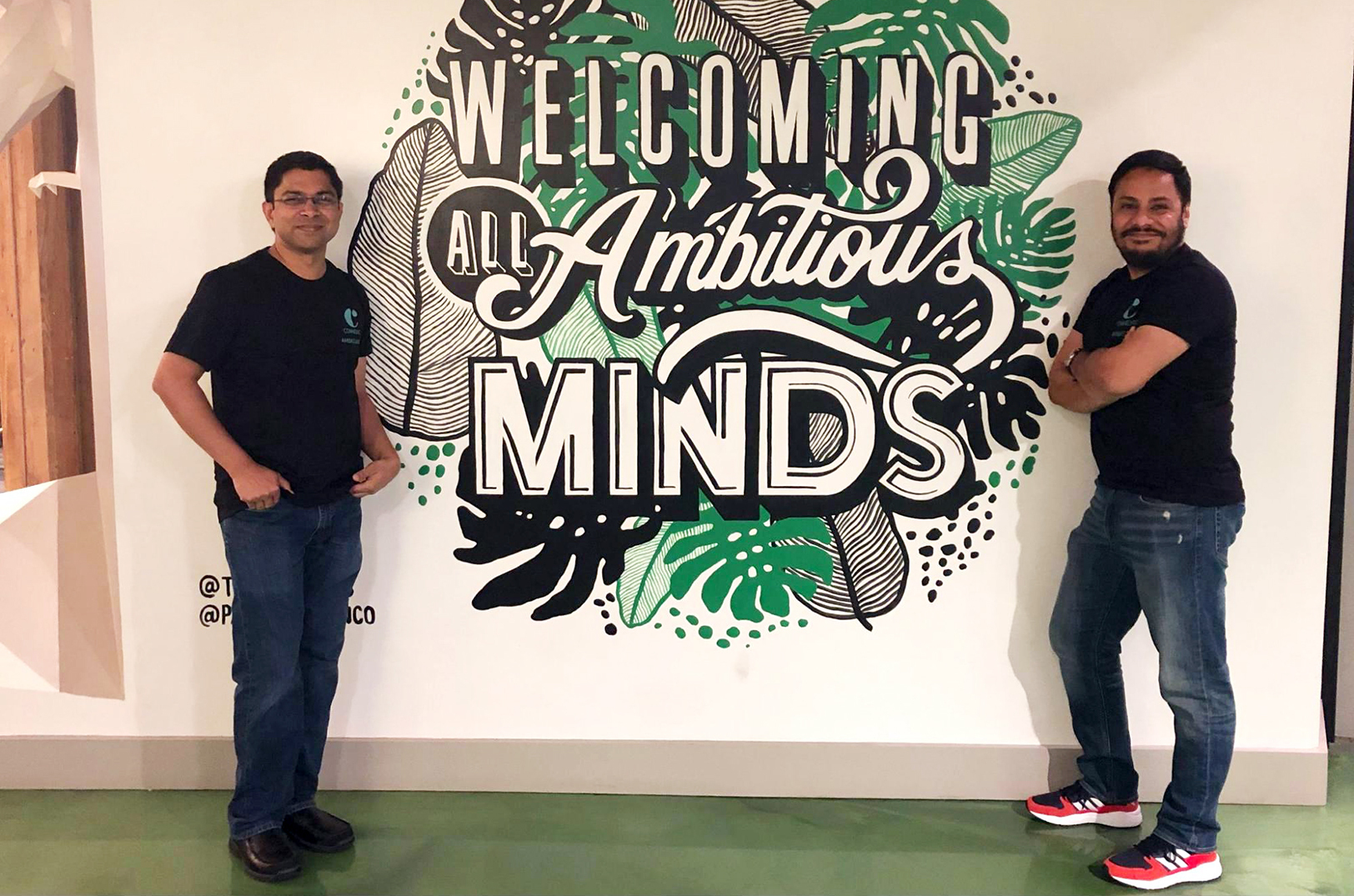
Startland News’ Startup Road Trip series explores innovative and uncommon ideas finding success in rural America and Midwestern startup hubs outside the Kansas City metro. This series is possible thanks to the Ewing Marion Kauffman Foundation, which leads a collaborative, nationwide effort to identify and remove large and small barriers to new business creation.
ST. LOUIS — WayLit, a Missouri technology firm that created immigration management software for employers and employees, announced Tuesday it raised $180,000 from a Minnesota-based accelerator for bootstrappers.
The funding and TinySeed accelerator’s collaborative network will aid WayLit in its mission to help businesses navigate the complexities of hiring and managing foreign national employees, the company said.
“The future of work is changing and the pandemic accelerated the change,” said Raj Singh, co-founder of WayLit. “Employers are more focused on making sure that they control the experiences of their employees to keep them happy and to retain them for longer periods of time. Immigration is a crucial part of the employee experience, which needs greater transparency and support. TinySeed has been crucial in our ability to realize this change by allowing us to focus on growth rather than day-to-day operations.”

Founded in 2020 by Raj Singh and Satya Mishra, WayLit helps businesses navigate the complexities of hiring and managing foreign national employees. WayLit’s platform helps businesses hire the best global talent, verifies their immigration history, files the necessary visa paper, and automatically tracks renewals and compliance.
Think of WayLit as an extension of a company’s human resources and tech teams. The platform combines an immigration attorney, AI software, and immigration specialists to simplify the immigration process. In addition to helping businesses navigate complex immigration regulations, WayLit also verifies candidates’ and employees’ immigration history, files the necessary visa paperwork, and automatically tracks renewals and compliance.
Click here to learn more about St. Louis-based WayLit.
The company’s technology is particularly timely as the United States faces a large tech talent gap, tens of thousands of unfilled STEM jobs, and stiff competition to find the staff they need.
For a typical U.S. company with 10 foreign national employees, an HR team spends about 500 hours and at least $100,000 per year on managing foreign national staff. This includes managing cases with law firms, communicating with stakeholders, and maintaining relevant employee data and calendars for immigration compliance.
WayLit cuts down the number of hours spent on immigration management by more than 80 percent — from 500 hours per year to 60 hours. It also lowers the associated costs of managing immigrant employees by nearly 40 percent from $100,000 per year to $64,000.
“I’ve seen firsthand how expensive and time-consuming immigration compliance can be,” said Rob Walling, general partner at Minneapolis-based TinySeed. “The WayLit team is addressing this persistent, expensive pain point with a simple solution that helps businesses find and retain the talent they need.”
WayLit’s mission is personal to WayLit co-founders Singh and Satya Mishra. Both came to the U.S. as immigrants, worked on visas, and then hired people who needed work sponsorship.
“We both have had our fair share of bad experiences with the attorneys who managed our immigration cases,” Mishra said. “These pain points are personal to us and we are out to solve problems that we wanted to solve for ourselves. We believe that the future of immigration is that of empathy and support and we are building that future at WayLit.”
Click here to learn more about portfolio companies in the TinySeed network, an early-stage investment fund and remote accelerator program that has invested in 59 fast-growing, B2B SaaS companies.

This story is possible thanks to support from the Ewing Marion Kauffman Foundation, a private, nonpartisan foundation that works together with communities in education and entrepreneurship to create uncommon solutions and empower people to shape their futures and be successful.
For more information, visit www.kauffman.org and connect at www.twitter.com/kauffmanfdn and www.facebook.com/kauffmanfdn

Featured Business

2022 Startups to Watch
stats here
Related Posts on Startland News

How this KC trucking platform is helping drivers achieve the ‘American Dream’ amid high industry demands, burnout
The COVID-19 pandemic highlighted the importance of truck drivers in the American economy, said Jeff Dema; and Foxpoint is targeting its efforts to ensure that drivers succeed and stay in the demanding industry. “Being a truck driver is a hard job. They’re gone 250 plus nights a year from their home. It requires lots of…

Google’s $100K ‘stamp of approval’ for PlaBook reads like validation for KC-built edtech startup
Kansas City expatriate PlaBook is set to receive $100,000 from Google’s initiative to provide funding to Black-led startups. But for Philip Hickman, it’s not just about the funding, he said. It’s also a credibility boost. “We were happy to receive an investment from Google,” the edtech startup founder said. “It’s a stamp of approval to…

KC’s first Hispanic beer company craft-brews conversations beyond stereotypes
Defining his own cultural identity has been a lifelong struggle for Damon Arredondo, the longtime brewer said. Coming from a mixed-cultural background, Arredondo often felt as if there was “a checklist” that decided whether or not he was able to identify with his heritage, he shared. “Only recently in the last five year have I…
Veteran entrepreneur finds security in pizza, opening new Rosati’s in south Overland Park
Bob Ring sold his homegrown company of 25 years — then got a job delivering pizzas. All part of the recipe for the longtime Kansas City businessman who — despite his decades of experience — initially found banks hesitant to lend to him during the pandemic as he worked to open his own pizzeria in…