

A weakness today can be KC’s superpower tomorrow: Call for corporate engagement begins with CEOs
March 8, 2022 | Channa Steinmetz
Editor’s note: The following story was sponsored by KC Rising, a regional initiative to help Kansas City grow faster and more intentionally, as part of a campaign to promote its CEO-to-CEO Challenge on supplier diversity.
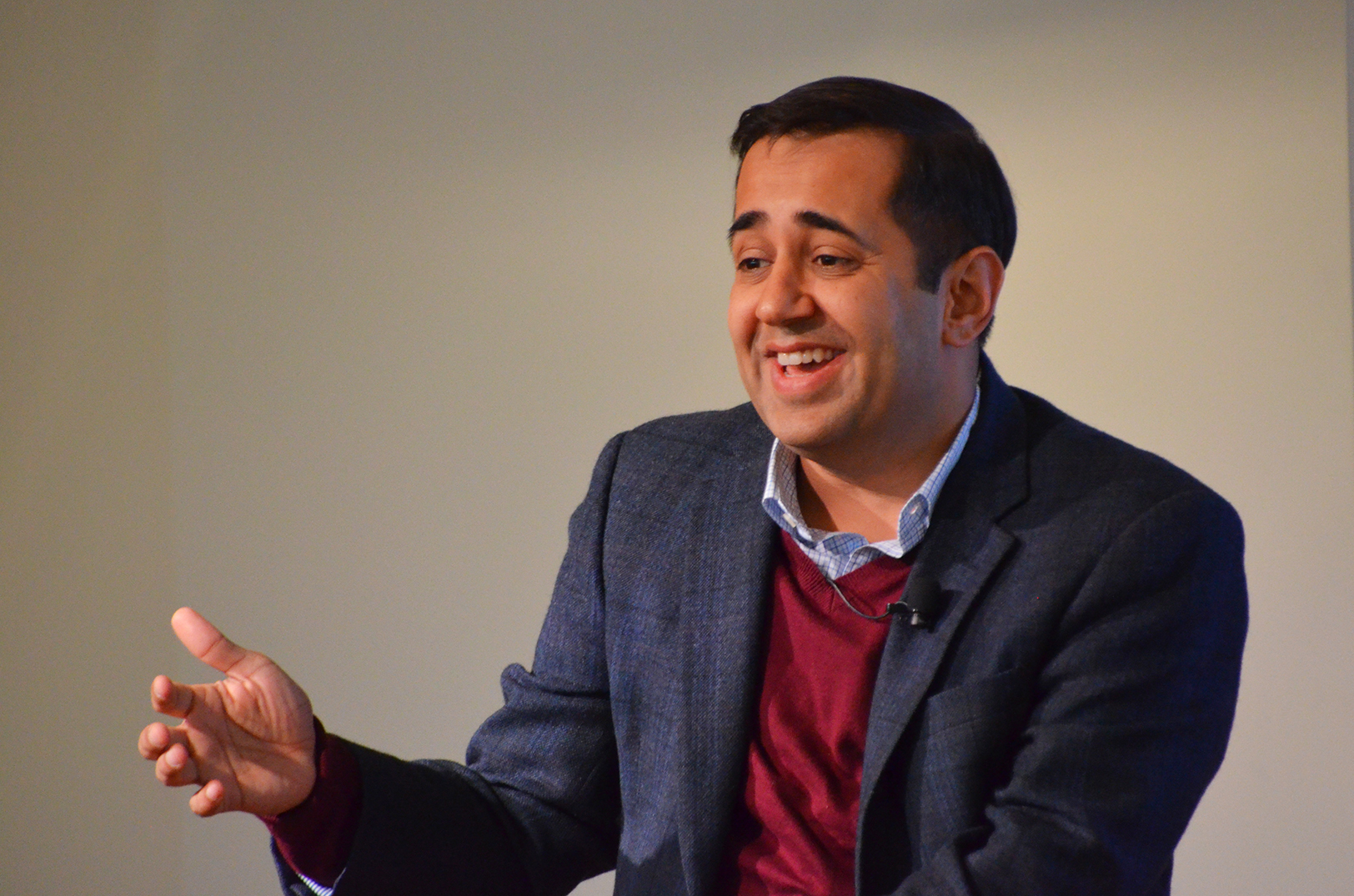
Successful entrepreneurial ecosystems require a certain level of corporate engagement — and even stewardship — said Neal Sharma, noting the high potential for untapped growth in Kansas City that hinges on such relationships.
“When you look at other thriving entrepreneurial ecosystems in places like Silicon Valley, it comes from this great intersection between larger businesses and entrepreneurs,” said Sharma, who serves as the co-chair of KC Rising, as well as CEO and co-founder of the digital marketing agency, DEG. “[KC Rising] identified this lack of intersection as a long-standing weakness in the KC region; so we are collaborating with existing community efforts to accomplish that.”
CEO-to-CEO Challenge
The CEO-to-CEO Challenge is powered by Connectus Worldwide, KC Rising and KCSourceLink in collaboration with the Civic Council of Greater Kansas City and the Greater Kansas City Chamber of Commerce.
Click here to take the challenge.
Tapping into research from the We Create Corporate Engagement report by KCSourceLink (which identified five critical exchanges between larger corporations and startups), community leaders volunteering within KC Rising created an initiative surrounding supply chain diversity, Sharma explained.
After months of discussion, KC Rising activated what is now known as the CEO-to-CEO Challenge. The initiative calls for CEOs of larger corporations and organizations throughout the Kansas City metro to intentionally increase their spending with diverse small businesses — and encourage fellow CEOs to do the same.
“The pledge consists of eight commitments of national best practices,” Sharma noted. “These practices truly create a culture of intentional diversity within their supply chain, and it’s not just a passing trend or fad. … I really appreciate and respect the commitment these companies and CEOs have expressed. They are putting their time, resources and money into this effort, rather than just talking about it.”
Click here to read the eight major commitments for CEOs who accept the CEO-to-CEO Challenge.
Twelve CEOs from local corporations took the pledge in November 2021, joining the first cohort of the CEO-to-CEO Challenge. A majority of the 12 corporations are implementing a focus on supplier diversity for the first time since their founding, Sharma added.
Click here to see which companies were among the first 12 to join the CEO-to-CEO Challenge.
Efforts to diversify suppliers are significantly valuable to local ecosystems, Sharma continued, noting three major reasons:
Startups building credibility and client portfolios
When companies of various sizes embrace a culture of collaboration, they can scale to new markets and produce quality jobs, Sharma explained.
“I’ve often said that what young startups need more than anything is a client logo,” he shared. “Client logos are what allow them to build on for the future. Without that, the entrepreneurial upstarts don’t have the client portfolio and credibility to be able to launch national and global operations.”
Corporations fostering a culture of intrapreneurship
As corporate workers and entrepreneurs begin to interact with one another, it encourages intrapreneurship — or innovation within the corporation.
“It is often very inspirational within these firms, and gives them license to begin intrapreneurial efforts that lead to growth and possibly spinouts that create even more value in our region,” Sharma said.
Local communities developing culturally and economically
The COVID-19 has exacerbated the struggles that many small businesses encounter, Sharma said, noting that minority- and women-owned businesses have been hit the hardest. By networking with larger corporations, these businesses can access the resources they need to thrive — which then provides an economic and cultural value to the ecosystem, he continued.
“Our community depends upon these small and micro businesses to exist,” Sharma said. “If we do not find ways to sustainably support them amidst the pandemic, we will lose them and that will have significant economic and cultural impacts.”
Click here to read how some of the first 12 companies to take the CEO-to-CEO Challenge have already begun creating change within their organizations as part of the pledge.


2022 Startups to Watch
stats here
Related Posts on Startland News

Report: Kansas is more innovation-friendly than Missouri
The Sunflower State is more hospitable to innovation than its eastward neighbor, a recent study found. The Consumer Technology Association’s annual “Innovation Scorecard” ranked all 50 states in 10 different categories to determine which states best fostered innovation and economic growth. The study dished Kansas slightly higher innovation kudos than Missouri, comparing their friendliness to…

Another Uber fiasco? KCMO proposes $600 fee, regulations for Airbnb hosts
Recently proposed city regulations could throw Kansas City home-sharing in the doghouse. More than 100 area hosts and guests of services like Airbnb and VRBO fueled a discussion Monday on home-sharing regulations that the City of Kansas City, Mo., is proposing after complaints of abuse. Led by assistant city manager Rick Usher, city officials met…

Kansas City is a top 10 locale for women-owned businesses
The Kansas City area is a top destination for women to own a business, according to a new report. A study released Monday by personal finance website WalletHub placed Kansas City in the top 10 U.S. cities for women-owned businesses. WalletHub ranked the 100 most-populated metropolitan areas, doling out points for new business friendliness, female…
Local, artificial intelligence firms enter the Sprint Accelerator
There’s a bit of local flavor in the latest class of startups to enter the Techstars-led Sprint Accelerator. Now hosting its third batch of startup companies, the accelerator welcomed ten new companies to its three-month program, including one from Kansas City and another from Lawrence. Super Dispatch, based in Kansas City, and Mycroft, based in…