

Spring in the face of ‘doom and gloom’: KC Can Compost grows green infrastructure while expanding its own footprint
March 2, 2022 | Katie Bean
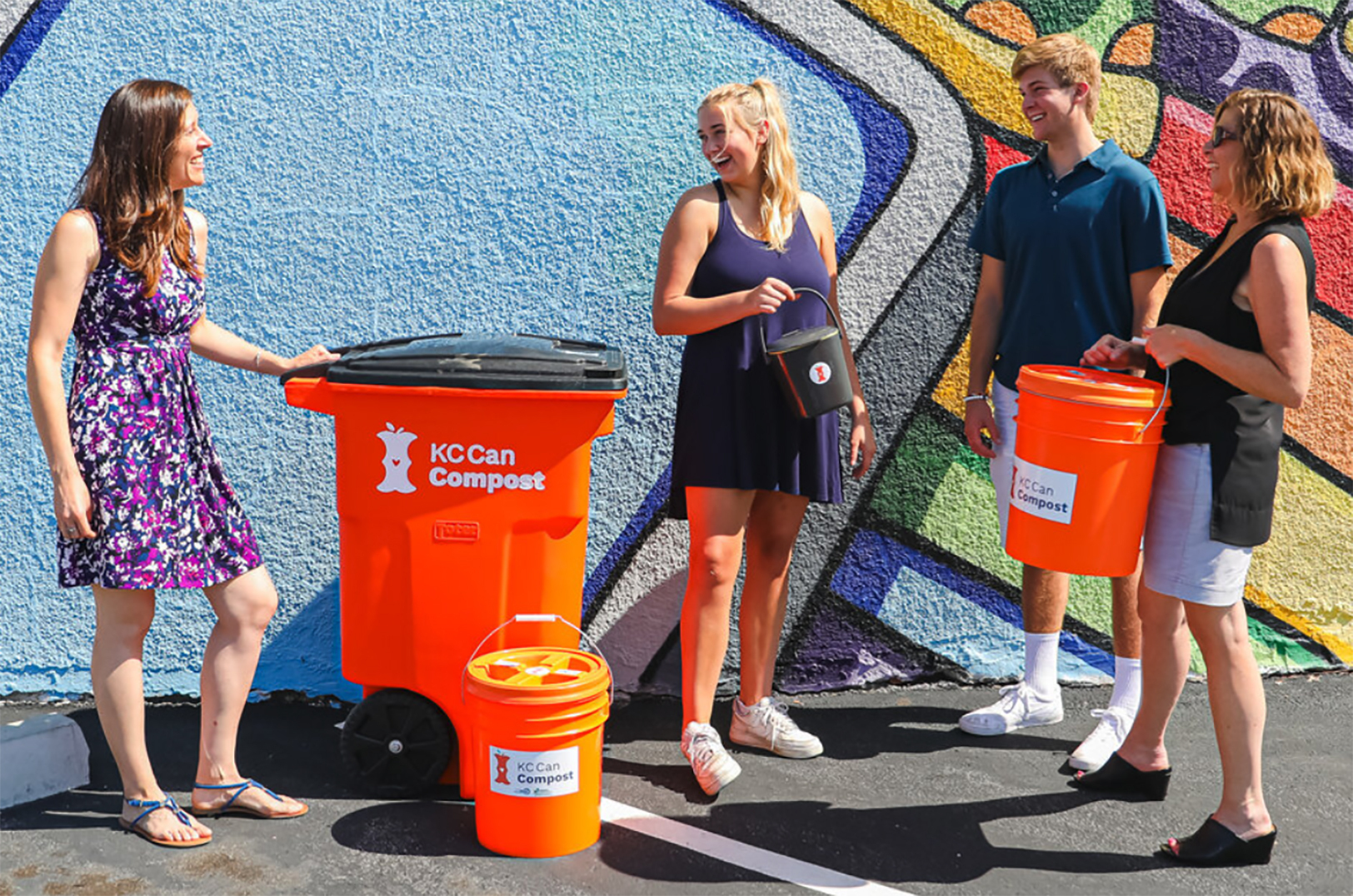
The market for commercial composting services goes well beyond restaurants hoping to dispose of food scraps — a welcome discovery for Kristan Chamberlain, who saw such specialized demand disintegrate in 2020 amid a pile of bad news for struggling eateries.
Today, KC Can Compost has helped divert more than 1.4 million pounds of waste from landfills since 2019 — where it otherwise would create hazardous methane gas during decomposition — thanks to more than 100 partnerships with a broad range of Kansas City companies and organizations: from C2FO and Sporting KC to K-State Olathe and the Nelson-Atkins Museum of Art.
And, yes, restaurants and cafes like Kind Food, Betty Rae’s, and Wild Way Coffee are still in the mix.
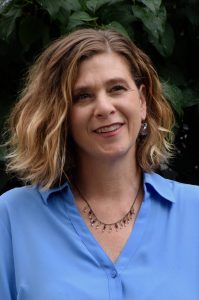
Kristan Chamberlain, KC Can Compost
“We really do have a wild customer base,” Chamberlain said. “It might seem so random. We couldn’t have chosen it.”
Click here to follow KC Can Compost on Instagram and learn more about its partners and pickup locations.
Through its partnership with Missouri Organic Recycling, food waste collected by KC Can Compost is turned into compost and sold to individuals and commercial operations. The composted material acts as a natural fertilizer and sponge to absorb water when added to soil.
Though the organization is a nonprofit, it has a self-sustaining, traditional revenue model, Chamberlain said. KC Can Compost got off the ground with funding from grants, a charitable trust and “large, generous donations from individuals,” she said, but now supports itself through fees for its collection services.
Chamberlain aims to build on its already-broadened base and double the number of businesses KC Can Compost serves in 2022.
Click here for a full list of KC Can Compost’s partners.
She also hopes to expand the company’s Waste to Work program, which allows businesses to offer a convenient compost drop-off location for employees. The businesses can then keep track of their landfill diversion totals to help meet sustainability goals, Chamberlain said.
“It’s critical for businesses to be investing in sustainability efforts at this point in time,” she said, noting it also builds morale to show employees that a company is actively working to make a positive environmental and social impact.
The Waste to Work model expands accessibility of KC Can Compost’s individual collections at a time when the organization has chosen to create drop-off locations for home composters rather than a pick-up system, Chamberlain said, to remain in line with its overall mission of reducing greenhouse gas emissions.
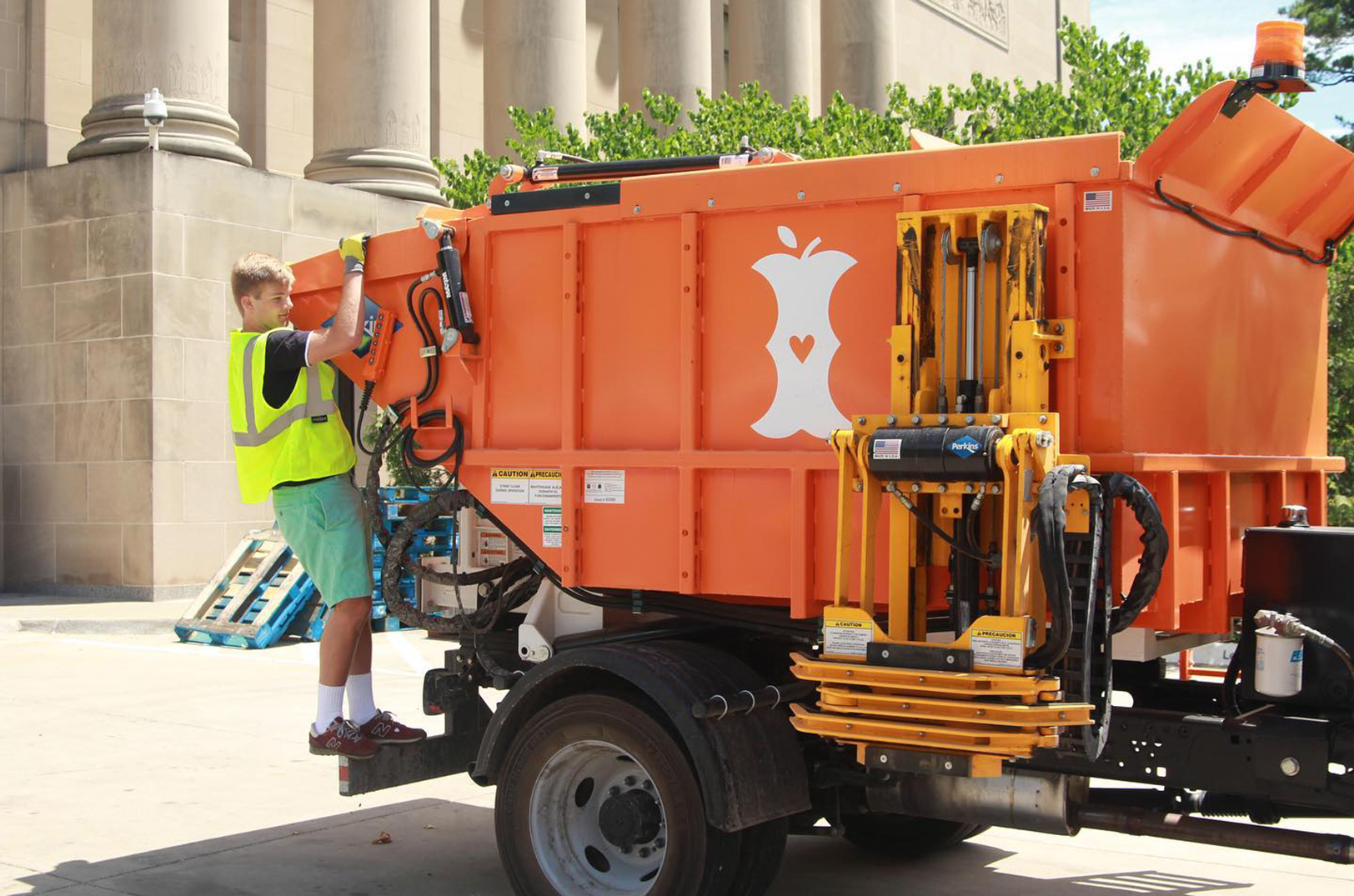
KC Can Compost collection outside Union Station
Orange cans, need are hard to miss
Chefs and restaurateurs were early adopters of KC Can Compost both because of their need and understanding of the complexity behind Chamberlain’s work.
Restaurants generate about 20 percent of U.S. food waste each year, according to research from GRACE Communications Foundation. Chefs know how much food they are throwing away, Chamberlain said, but she learned that one of the biggest hurdles to composting was managing the process.
KC Can Compost
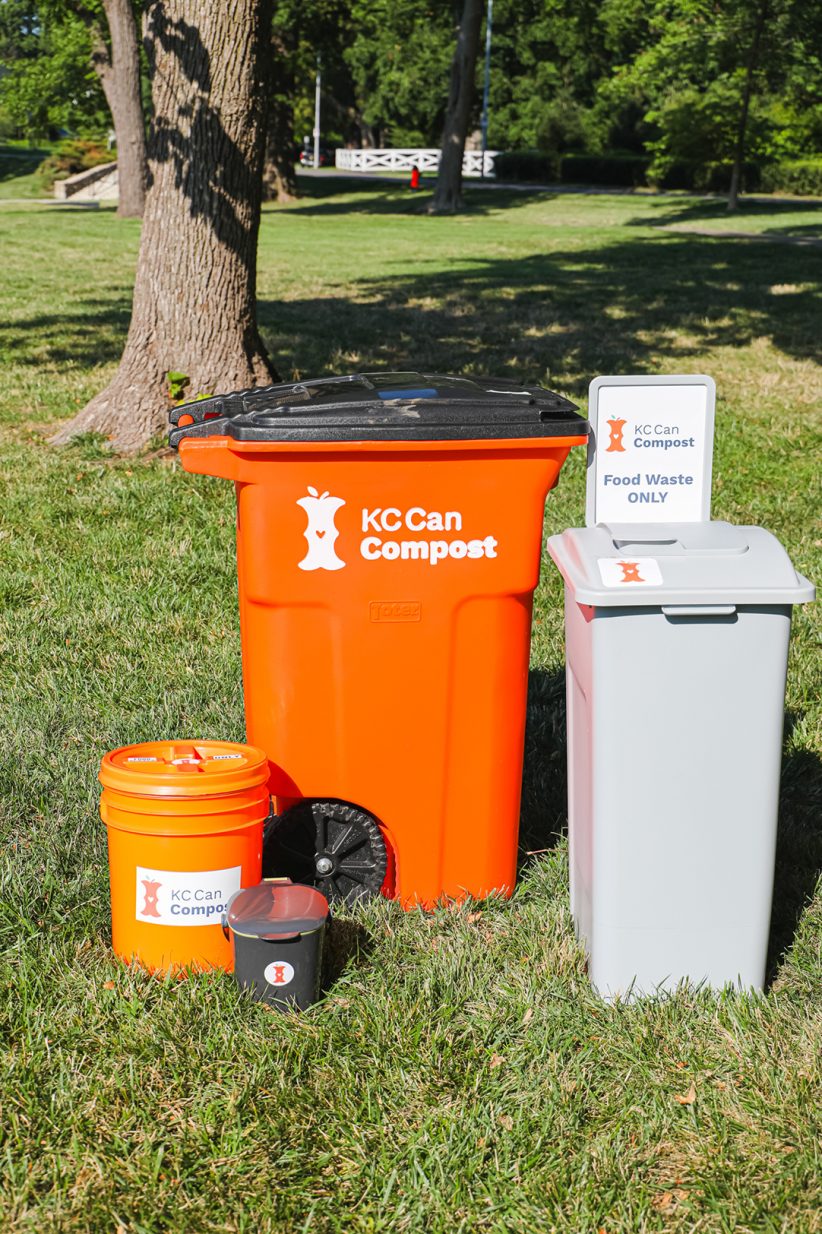
KC Can Compost
“Many businesses have tried to do composting in the past where it was a complicated process. They had to create the system themselves,” she said.
She researched the concerns: no infrastructure for collecting the compost; worries about pests, bugs and the smell; and educating the staff on how to compost and what can be included.
In response, KC Can Compost has created a white glove service to address the potential objections. The process starts with a waste audit that determines what kind of receptacles a business needs, where they physically need to be placed and how they fit into the kitchen’s workflow.
The organization provides all of the equipment businesses need as well as the education for employees, which is provided through Zoom tutorials. Smell and bug concerns have been eliminated through the use of receptacle liners, Chamberlain said.
“Our system has made it very easy to implement,” she said. “They don’t have to separate anything out. We take dairy products. We take paper towels and paper waste and flour waste. There’s a system — our bright orange can is kind of hard to miss.”
As a bonus, Chamberlain said, eliminating food waste from dumpsters cuts down on pests and also on the amount businesses pay for trash collection.
View this post on Instagram
Growing green opportunities
As KC Can Compost grows its footprint, the team behind it also is expanding. The nonprofit now employs seven people and aims to add a second truck for pickups this year.
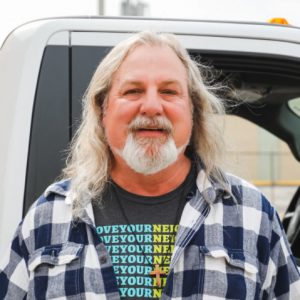
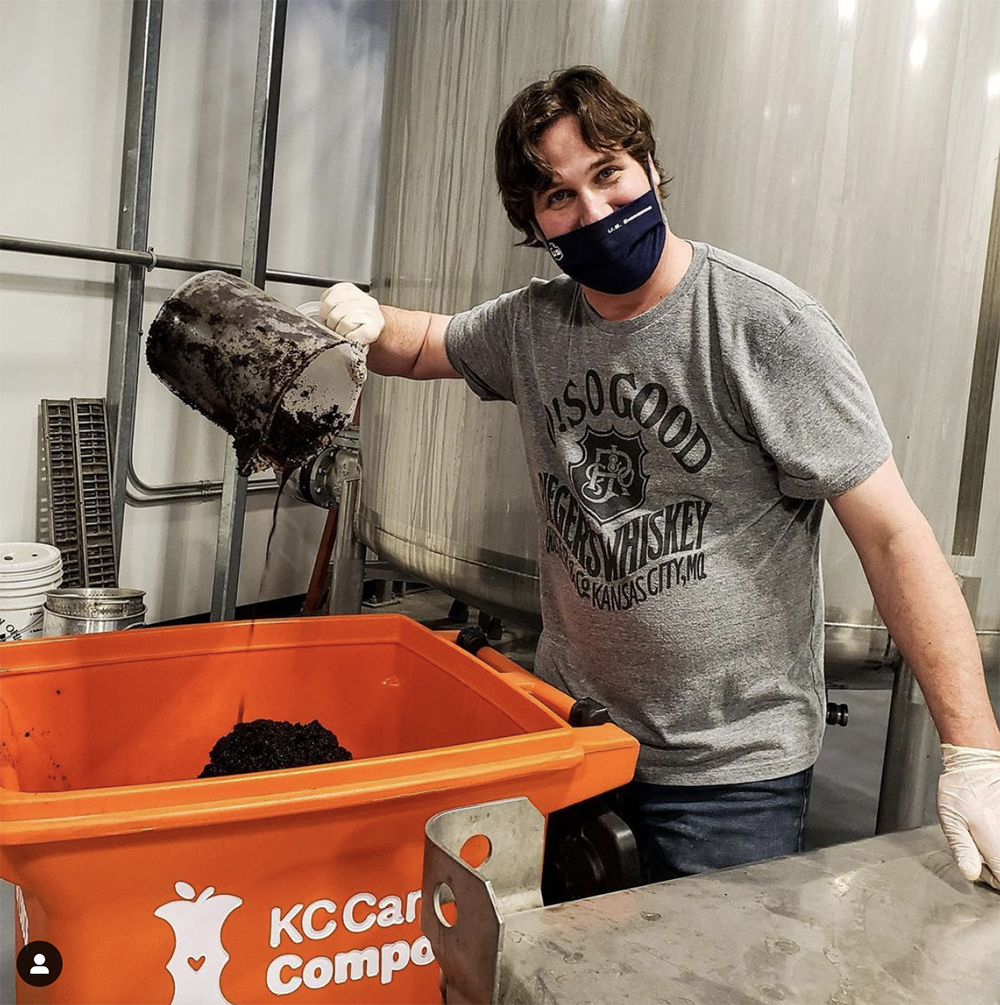
Chris Shelar, KC Can Compost
And its Green Core Training Program is helping individuals build the job skills and environmental literacy to get jobs in green industries. The program — which reflects aspects of KC Can Compost’s social justice mission — is specifically designed for those with difficult backgrounds and barriers to employment, such as homelessness and incarceration, Chamberlain said.
“Our program is designed to educate and train those individuals for green employment jobs,” she said. “I feel like the environmental industries … it’s a very therapeutic place to work. So for the people I am trying to employ, there’s a lot of value. It’s dignified. They’re giving back to the community, which is a positive kind of reinforcement circle.”
KC Can Compost partners with other organizations, including Donnelly College, Shelter KC and others, to educate people through the Green Core Training. The program works to place them in jobs at KC Can Compost and throughout the metro.
Chamberlain points to a success story from the training program: Chris Shelar, a driver for KC Can Compost since 2020 who experienced homelessness. He’s now on the organization’s board of directors.
“He’s been amazing. He is a pillar of the organization,” she said. “Part of our business model is to have representation from various communities on our board so that our board is really diverse and informed about the people we are trying to help. So Chris has been critical in helping steer our board of directors from his own experience with homelessness.”
In addition to educating future green industry workers, Chamberlain hopes to help educate the community about how food waste and composting fit into the larger picture of helping the environment.
“It’s a little doom and gloom, but the reality is, it’s like the COVID curve — unless we flatten the curve now by our behavior, we’ll get the same results we have seen with COVID-19,” she said. “We have to prioritize (the environment).”

This story is possible thanks to support from the Ewing Marion Kauffman Foundation, a private, nonpartisan foundation that works together with communities in education and entrepreneurship to create uncommon solutions and empower people to shape their futures and be successful.
For more information, visit www.kauffman.org and connect at www.twitter.com/kauffmanfdn and www.facebook.com/kauffmanfdn


2022 Startups to Watch
stats here
Related Posts on Startland News

Back2KC effort attempts to bring Kansas City expatriates home to an emerging innovation hub
A first-of-its-kind event is drawing successful Kansas Citians who’ve left the region “Back2KC” Thursday and Friday for a hands-on glimpse at the city’s evolving innovation economy, Darcy Howe said. As managing director of the KCRise Fund — a co-investment fund that works with venture capital investors to support early-stage Kansas City companies — Howe saw…
Artist Vi Tran to KC-based innovators: Wipe ‘local’ label from your vocabulary
Some roots are best left behind, but not forgotten, said multi-faceted Kansas City artist Vi Tran. Others are worth holding close. Speaking at Startland’s recent Innovation Exchange, the actor, playwright, musician and owner of The Buffalo Room decried the idea that innovators who choose to stay in places like Kansas City are any less worthy…

The not-so-secret Sauce behind KC hip hop entrepreneur’s success: Authenticity
Royce “Sauce” Handy wears his influences and inspiration like pins on the outside of his well-worn jean jacket. The KCK-born hip hop entrepreneur embraces his identity: A collector of Goosebumps books. A student of history. A fan of 1990s family sitcoms. And he’s unapologetically black. His lips twist into a smile and his eyes brighten…
Startup Hustle podcast duo pledging $50K in Full Scale tech resources at Pure Pitch Rally
Early stage businesses need more than cash — they need the tools to grow, said the hosts of the KC-based Startup Hustle podcast. “Good ideas in startups move faster when they’re supported by successful business people in the community,” said podcast co-host Matt DeCoursey, announcing the plan late Wednesday to award $50,000 in tech resources,…