

This new agrobot could be the future of farming: chemical-free and swarming in a field near you
March 25, 2022 | Austin Barnes
Startland News’ Startup Road Trip series explores innovative and uncommon ideas finding success in rural America and Midwestern startup hubs outside the Kansas City metro. This series is possible thanks to the Ewing Marion Kauffman Foundation, which leads a collaborative, nationwide effort to identify and remove large and small barriers to new business creation.
Harvesting innovation ‘with nature, not against it’
CHENEY, Kansas — Greenfield Robotics is well watered and growing, Clint Brauer said, previewing new partnerships and redesigned robots that are ready to ride for regenerative agriculture.
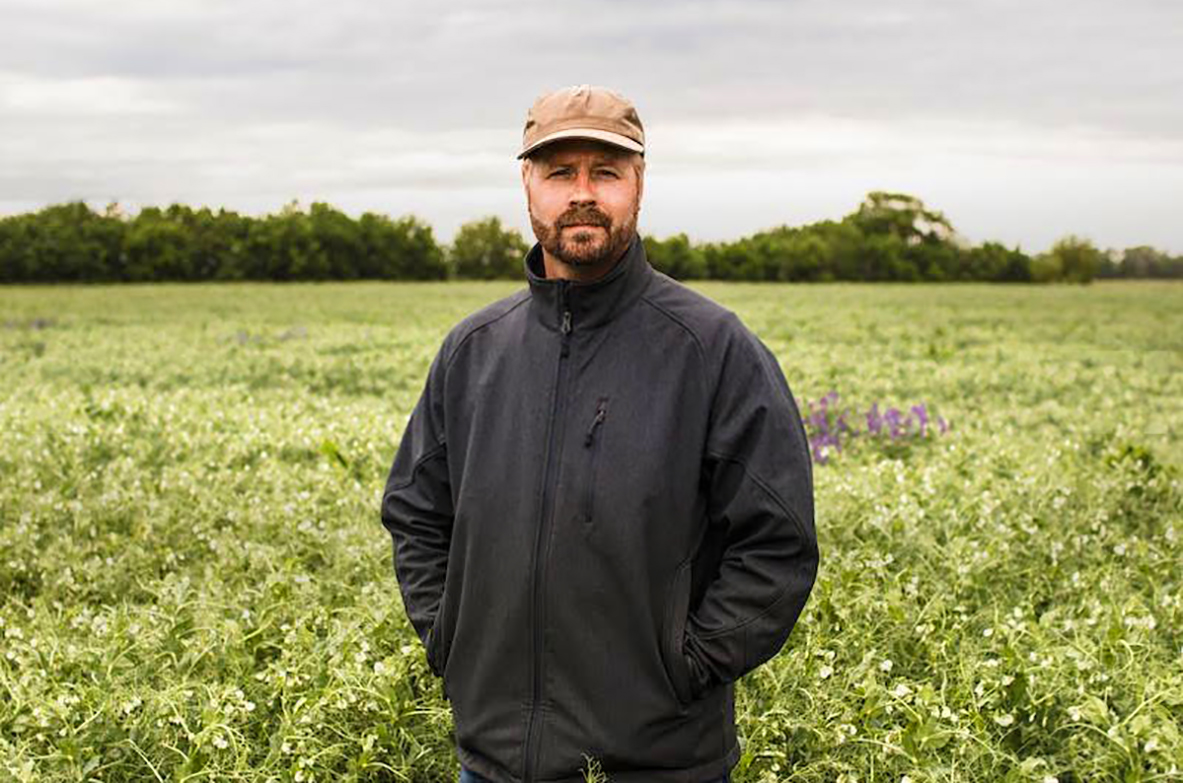
Clint Brauer, Greenfield Robotics
“We’re getting close to where that first set of bots — ‘weedbots’ as we call them — are going to be commercially viable,” said Clint Brauer, founder and CEO of the Cheney-based agrobotics startup that’s vowed not to rest until consumers have access to food that’s chemical free.
Click here to learn more about the startup and how it got its start.
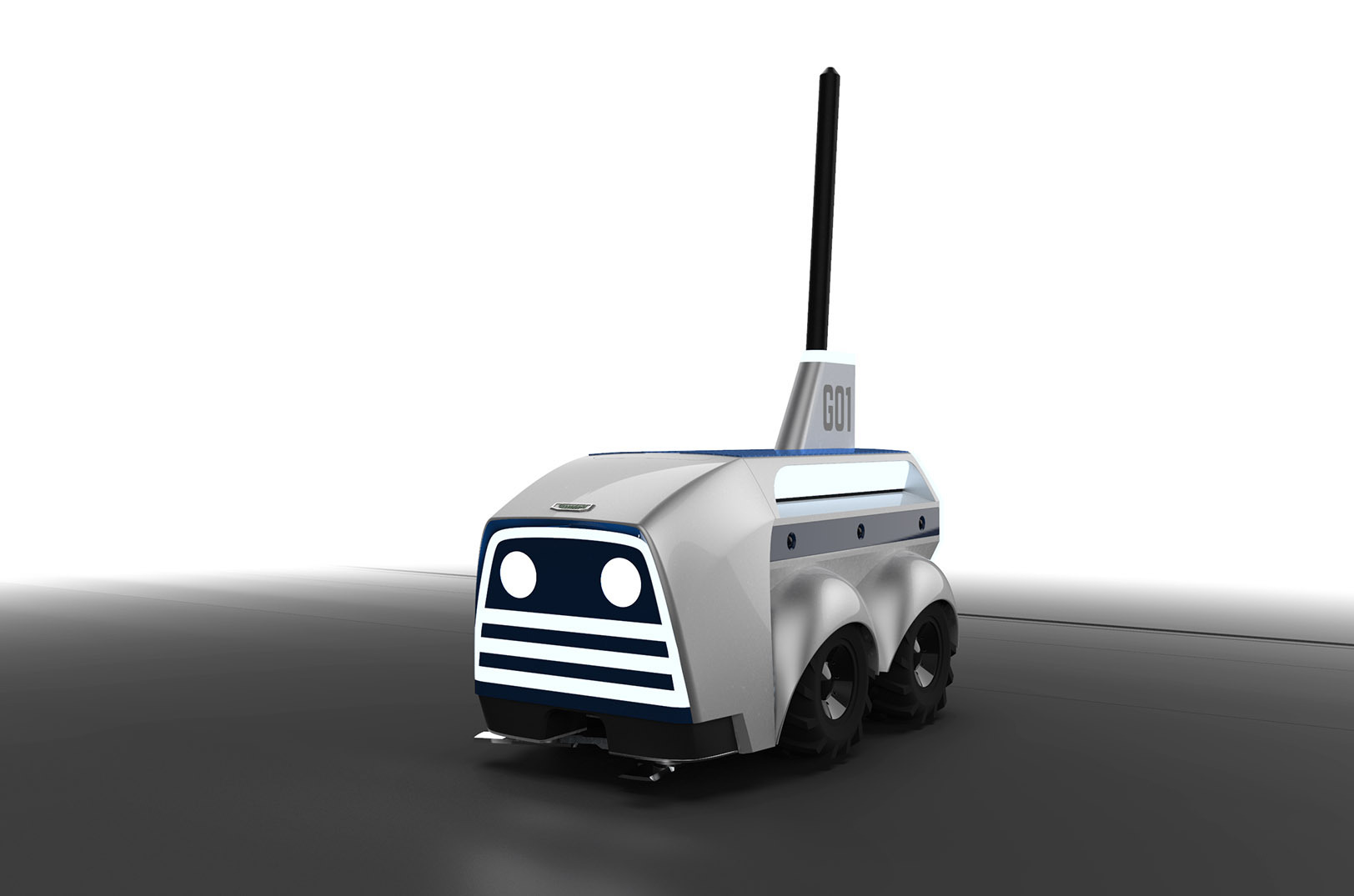
Greenfield this week unveiled its Version 2.0 robot — a new and improved version of the head-turning, battery-driven machines that reduce chemical use.
A Weedbot 2.0 can travel through farmland at 3.5 mph and cut weeds down within inches of a crop. Ten of the machines deployed at once can weed 10 acres in a single hour, the company said.
Watch a video about the newly released version of the weedbot below then keep reading.
“They’re way better machines [and] way better partners in terms of hardware,” Brauer said, noting the redesigned robots up the ante for Greenfield and what the world of agtech and robotics expects from its cutting-edge, multi-skilled, and growing team.
“I told the team last year, ‘This is where we go from [research and development] to a commercial provider.’ The target isn’t [smaller companies] anymore. It’s Toyota,” he continued, offering an example of the level of partnerships the company is eyeing as it doubles down on its mission.
Having sewn seeds of success in its 2021 farming season, the 2018-planted Greenfield recently reaped a partnership with Mid Kansas Cooperative (MKC) — a four-state farm cooperative that operates in Arkansas, Kansas, Missouri and Oklahoma — along with an undisclosed amount of funding.
The funds (and collaborative opportunities) harvested through the partnership are expected to put more robots in more fields, Brauer told Startland News.
“I couldn’t be more excited. The investment [from] MKC is a signal that they’re serious about working with us,” he explained, noting the company has to date secured just over $4 million in total funding from a number of industry heavyweights including MKC, Kauffman Seeds, Wichita Technology Corporation, and Cleo Capital in addition to investments from John Kuenzi, ingredient supply chain entrepreneur, Melanie and Joshua Rosenthal, Louisville-based healthcare entrepreneurs, Sean Walsh, pioneer in the crypto space, and a number of private investors from the Midwest to Silicon Valley.
Fundraising previously presented an uphill battle for Greenfield, he acknowledged.
“It was very hard to raise money in the first few years of this company. We started up when a lot of robotics projects were failing and people didn’t understand agriculture — let alone regenerative agriculture,” Brauer continued.
“In the last few months, I’ve seen a complete change in that. It seems virtually everyone out there understands the need for this [work] now.”
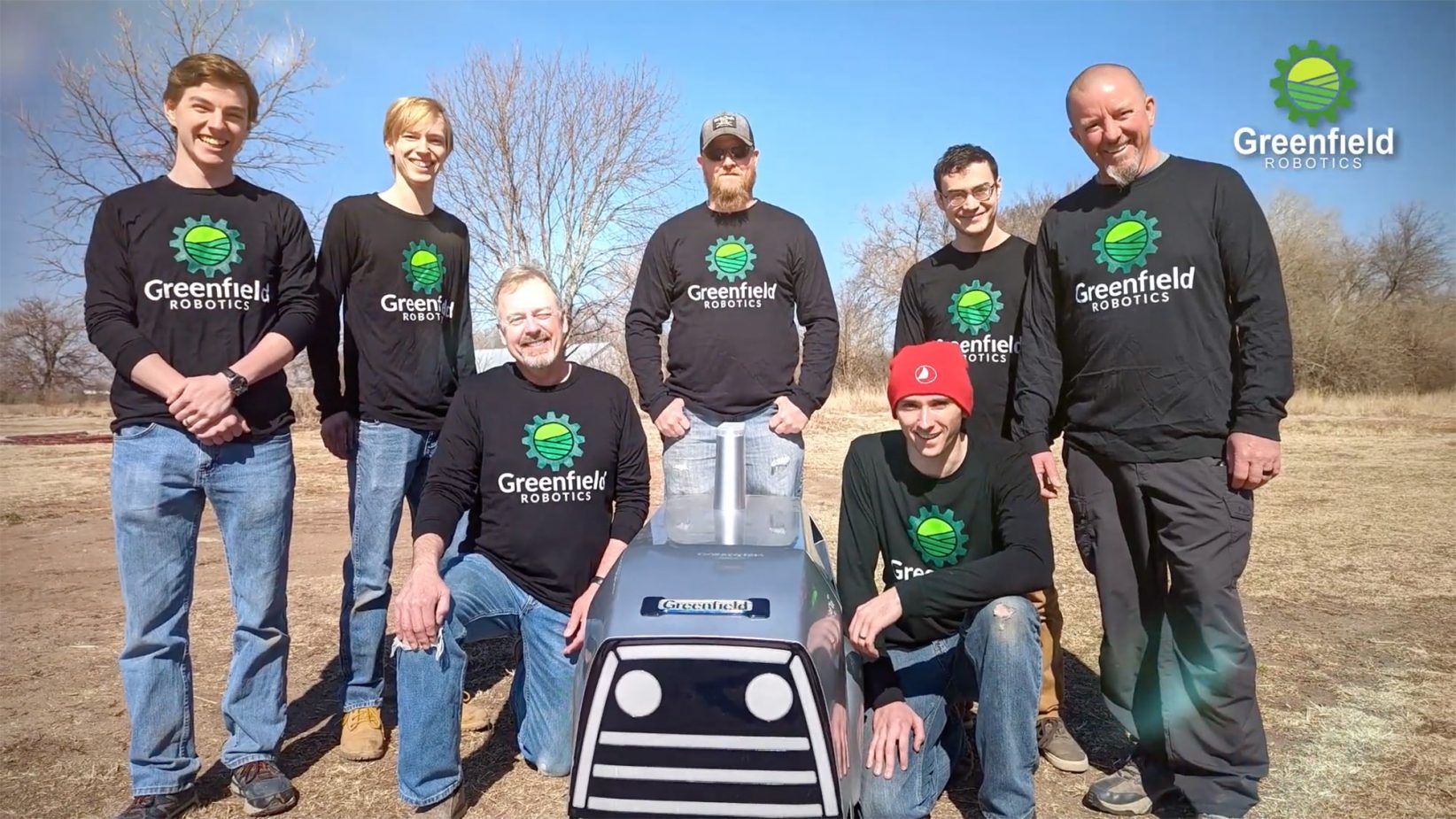
Greenfield Robotics team with Weedbot 2.0
Green Fields
“Regenerative agriculture works with nature, not against it,” Greenfield Robotics explained of its efforts in an official description on its website.
Regenerative agriculture for broadacre farming operates around four elements: reduced or no-tillage, extended cash crop rotation cycles, cover cropping (crops grown to restore the soil), and intensive grazing of livestock on cover crops and cash crops.
Results of the effort include reduced soil erosion, reduced or eliminated use of chemical herbicides and fertilizers, grass fed and antibiotic-free grazing animals, and nutrient dense crops.
If the practice were to be adopted by all farms, up to 1.4 gigatonnes of carbon could be sequestered annually, the company said.
Having already regeneratively farmed crops for Canidae Pet Foods, Brauer said Greenfield’s newly-forged partnership with MKC could lead to even more work with food producers. The organization has more than 10,000 member farmers across the region.
“We’re working toward supplying ingredients to food brands [free of] chemicals [or] carbon,” he said. “[MKC] has 49 facilities to clean, ship, store — and tons of logistics experience.”
“They have tons of partnerships beyond that as well,” he continued. “If we [outgrow] their footprint, that’s something they know how to deal with. [The possibilities are] very exciting.”
With a fully functional supply chain in place through its partnership with Canidae, there’s not much stopping Greenfield from reaching its goals, Brauer said, adding he’s optimistic the company can grow into an innovation influencer role within the Wichita-region and its startup ecosystem.
“It used to be in the Wichita-area we had Cessna, Beechcraft — companies started here and all the spinoffs from [them]. But it’s been a while,” he said, admitting an observed decline in the region’s corporate innovation with the exception of giants like Koch Industries.
“We need the Dell computer of Austin — but we need that for Wichita. I’m hoping that’s Greenfield.”
Additional robots with additional uses are currently in development, Brauer said.
An announcement about the machines and how they function could come within the year, keeping Greenfield “on track to solve the regenerative agriculture problem.”
Click here to learn more about the regenerative agriculture behind Greenfield Farms.

This story is possible thanks to support from the Ewing Marion Kauffman Foundation, a private, nonpartisan foundation that works together with communities in education and entrepreneurship to create uncommon solutions and empower people to shape their futures and be successful.
For more information, visit www.kauffman.org and connect at www.twitter.com/kauffmanfdn and www.facebook.com/kauffmanfdn


2022 Startups to Watch
stats here
Related Posts on Startland News

Inaugural smart city summit eyes the future of public safety
How can technology improve the safety of a city? That subject and more will be discussed during the upcoming Smart City Tech Summit, which will host dozens of government officials and public safety professionals from around the U.S. The summit — set to take place March 29 through March 31 — will focus on the…

Kansas’ angel tax credits sprint to legal finish line
The Kansas House of Representatives nearly unanimously agreed that the state’s Angel Investor Tax Credits program must continue to boost early-stage businesses. The House voted 122 to 3 in favor of a measure that will extend the life of the $6 million program until 2021. Angel investor tax credits, which are set to expire in 2016,…

Shawnee native sells another startup for over $1B with GM deal
General Motors is hoping to become the leader of self-driving car technology with the gargantuan acquisition of Cruise Automation, whose founder has a local tie. GM announced on March 11 that it purchased Cruise for more than $1 billion in a move that aims to accelerate the development of GM’s autonomous vehicle tech. Cruise…

Kansas’ angel tax credits score first victory but hurdles remain
A bill extending Kansas’ popular Angel Investor Tax Credits scored its first victory Thursday, but legislators must make quick work of the measure if the program is to survive. The Kansas House Committee on Taxation unanimously approved a measure to continue the program, which offers accredited investors a tax credit of up to $50,000 on…