

Fintech revolution follows historical abuse of Black wealth: ‘We’re already late, but we’ve got to do something’
March 11, 2022 | Channa Steinmetz
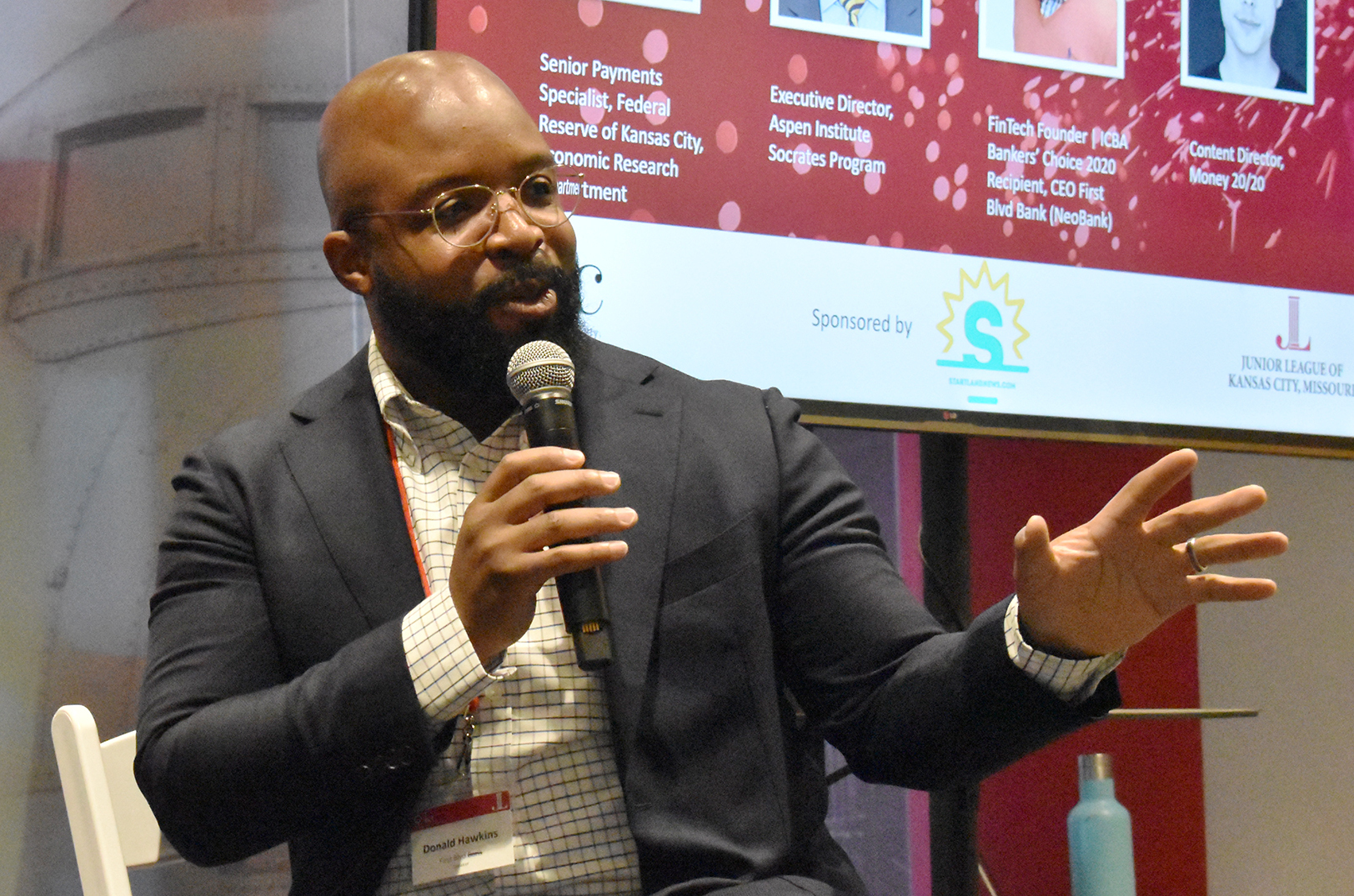
Editor’s note: Startland News is a media sponsor for the C3KC session “Fintech is Revolutionizing Banking.”
With nearly 30 percent of Americans reported as under-banked or unbanked, leaders in the financial space need to ask themselves what steps must be taken to create a more inclusive system, said Cordell Carter II.
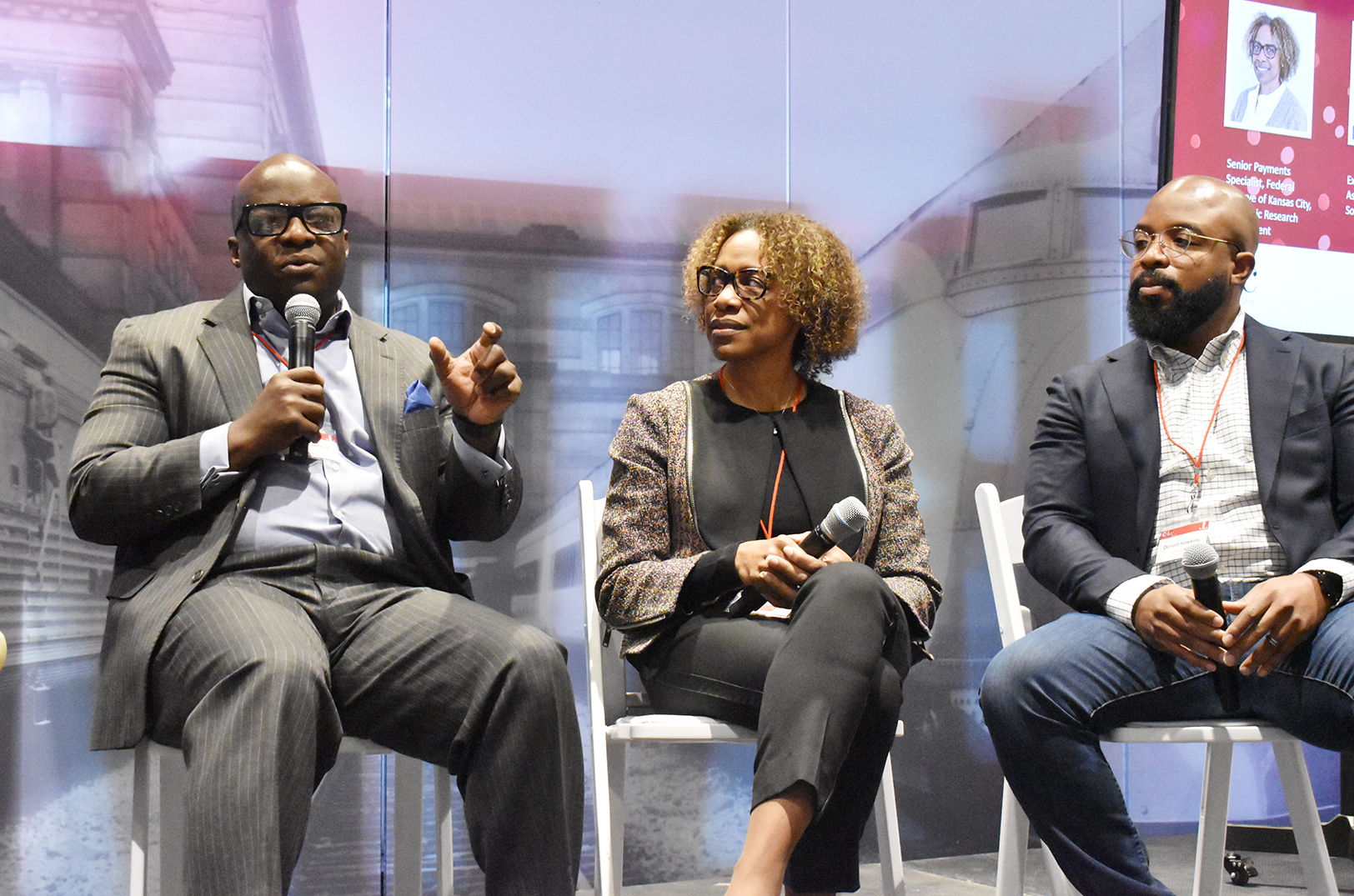
Cordell Carter II, Aspen Institute Socrates Program, Terri Bradford, Federal Reserve of Kansas City, and Donald Hawkins, kinly, at the C3KC “Fintech is Revolutionizing Banking” session
“We often ask leaders the following question, ‘You’ve been successful, but are you significant?’ Significance is about what you do for others and how they will remember you,” explained Carter, who serves as the executive director of the Aspen Institute Socrates Program, during the “Fintech is Revolutionizing Banking” session at Tuesday’s C3KC conference at Union Station.
Click here to check out an overview of C3KC 2022’s breakout sessions.
Fintech elements like neobanking (digital-only banks) and mobile banking applications have the potential to include those who have been historically under-banked or unbanked, noted Zach Anderson Pettet, content director for Money 20/20 and moderator for the panel, hosted by the Junior League of Kansas City, Missouri and sponsored by Startland News.
Carter and Pettet were joined alongside Donald Hawkins, founder and CEO of neobank kinly (which recently rebranded from First Boulevard) and Terri Bradford, research specialist at the Federal Reserve of Kansas City.
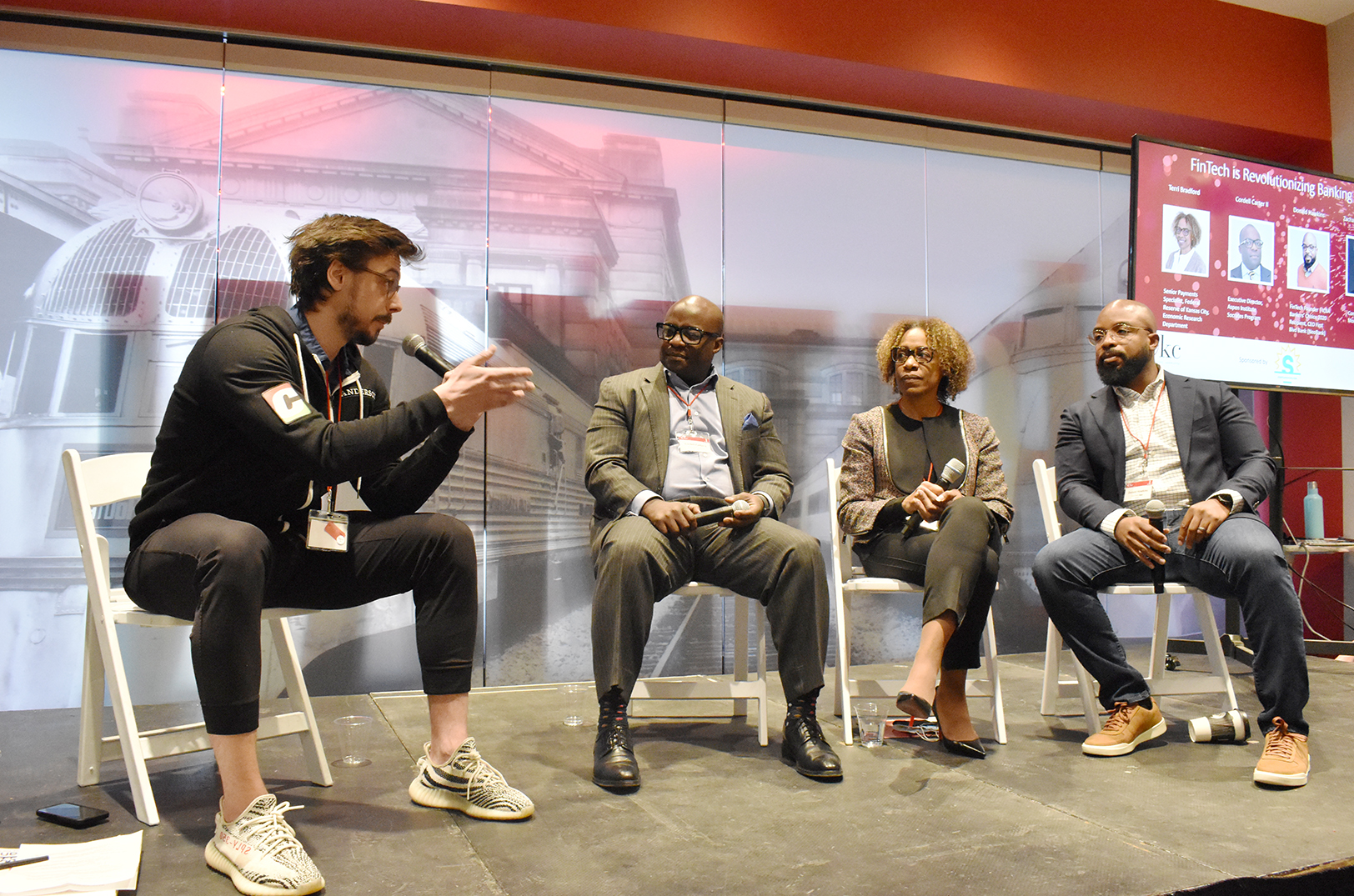
Zach Anderson Pettet, Money 20/20, Cordell Carter II, Aspen Institute Socrates Program, Terri Bradford, Federal Reserve of Kansas City, and Donald Hawkins, kinly, at the C3KC “Fintech is Revolutionizing Banking” session
Hawkins recalled for the audience watching Black Lives Matter protests in 2020 shortly after the killing of George Floyd at the hands of Minneapolis police. Realizing he could use his skills and resources in fintech to make a difference, Hawkins launched what is now kinly — a fully-inclusive neobank with the mission of helping the Black community build wealth, he explained.
“Nobody that looks like me was doing [neobanking],” Hawkins said, noting that he struggled with imposter syndrome at first.
By November 2020, only a few months after launching the startup, Hawkins raised $5 million in an oversubscribed seed round. He has raised another $15 million since then, he added.
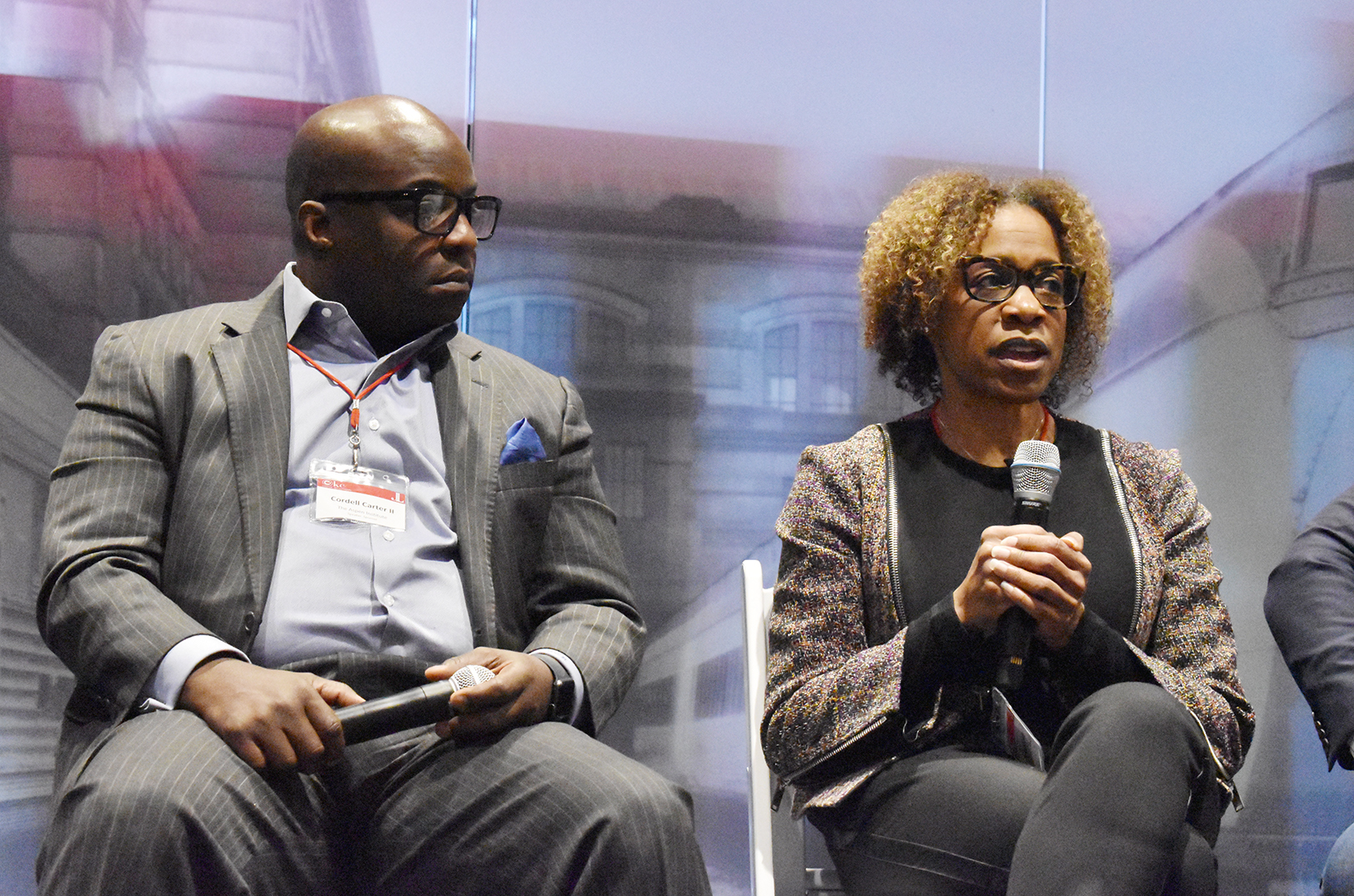
Cordell Carter II, Aspen Institute Socrates Program, and Terri Bradford, Federal Reserve of Kansas City, at the C3KC “Fintech is Revolutionizing Banking” session
Bradford — who pointedly noted her personal thoughts discussed during the panel do not reflect the views of the Federal Reserve — applauded Hawkins for providing another avenue of access.
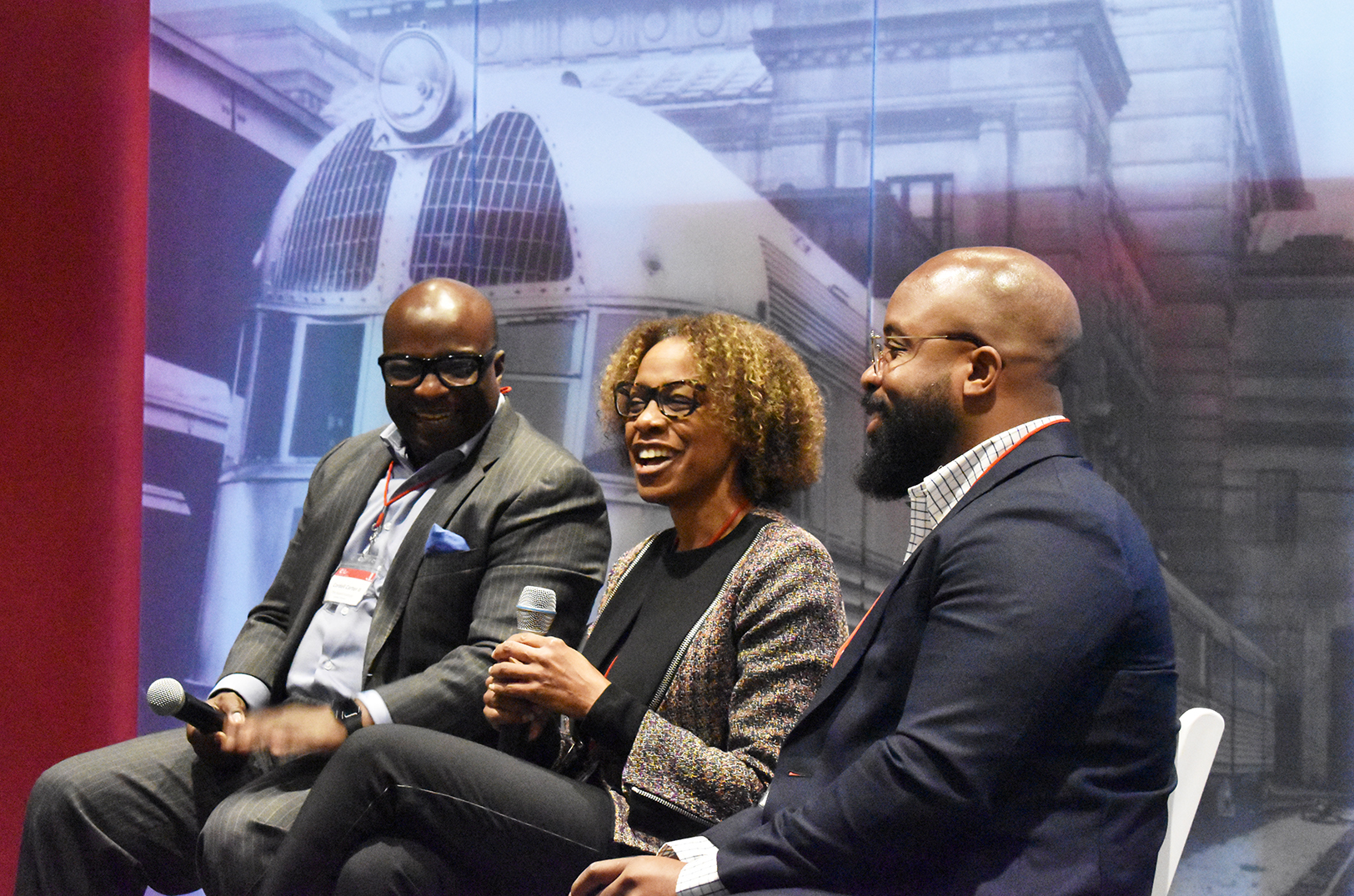
Cordell Carter II, Aspen Institute Socrates Program, Terri Bradford, Federal Reserve of Kansas City, and Donald Hawkins, kinly, at the C3KC “Fintech is Revolutionizing Banking” session
“From the perspective that I look at things, more options are better,” Bradford said. “… [Kinly] could be a place for individuals who have had a bad relationship or no relationship with financial institutions to start and move onto something else; or, it could be where they choose to live and finish. I think it’s great that the opportunity is out there because it comes with not only the opportunity to access financial services — but with the opportunity to access knowledge.”
Mistrust in banks among members of the Black community specifically stems from a history of abuse, Bradford said.
“With some of the earliest banks that Black folks put their money into, they were not allowed to participate in how that money was handled, and the money disappeared,” she said. “That comes into play in terms of trusting financial institutions. … Black wealth has been mishandled in a lot of different ways — financial institutions, homes, burning of communities, all types of things that we need to educate ourselves about.”
Found on the Federal Reserve of Kansas City’s website, individuals can order a free copy of “Let’s Put Our Money Together: The Founding of America’s First Black Banks,” Bradford noted. The book delves into why the number of Black banks in the U.S. is at an all time low.
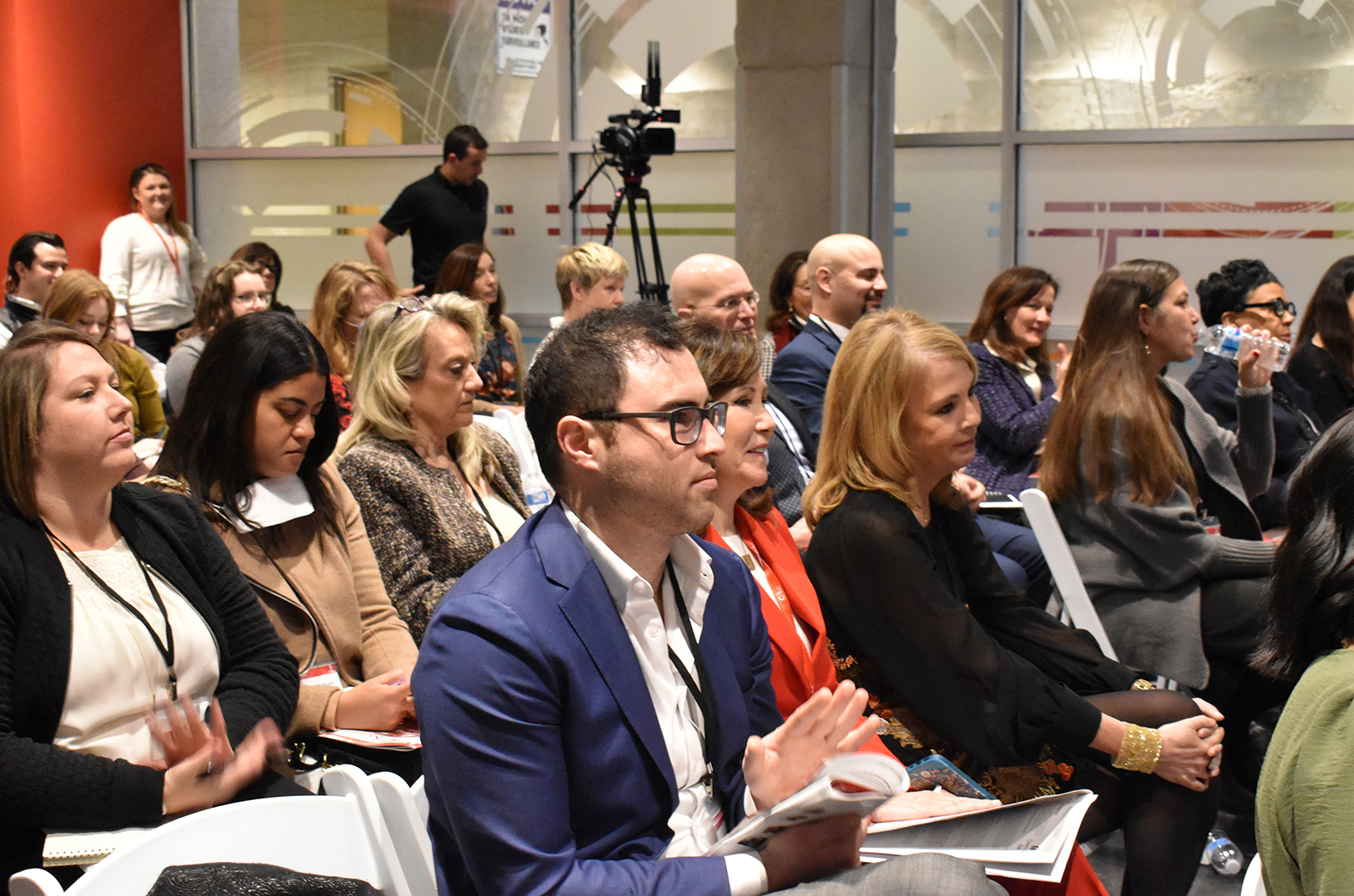
C3KC fintech panel attendees
Although banks are progressing in some areas, such as no longer charging overdraft fees, underserved communities are still being left behind, Hawkins said.
“Right now, there are fewer Black homeowners in America than there were in the ’70s; there are fewer homeowners now than when Black people were in the Civil Rights Movement,” Hawkins stated, noting that banks fall short on lending to the Black community.
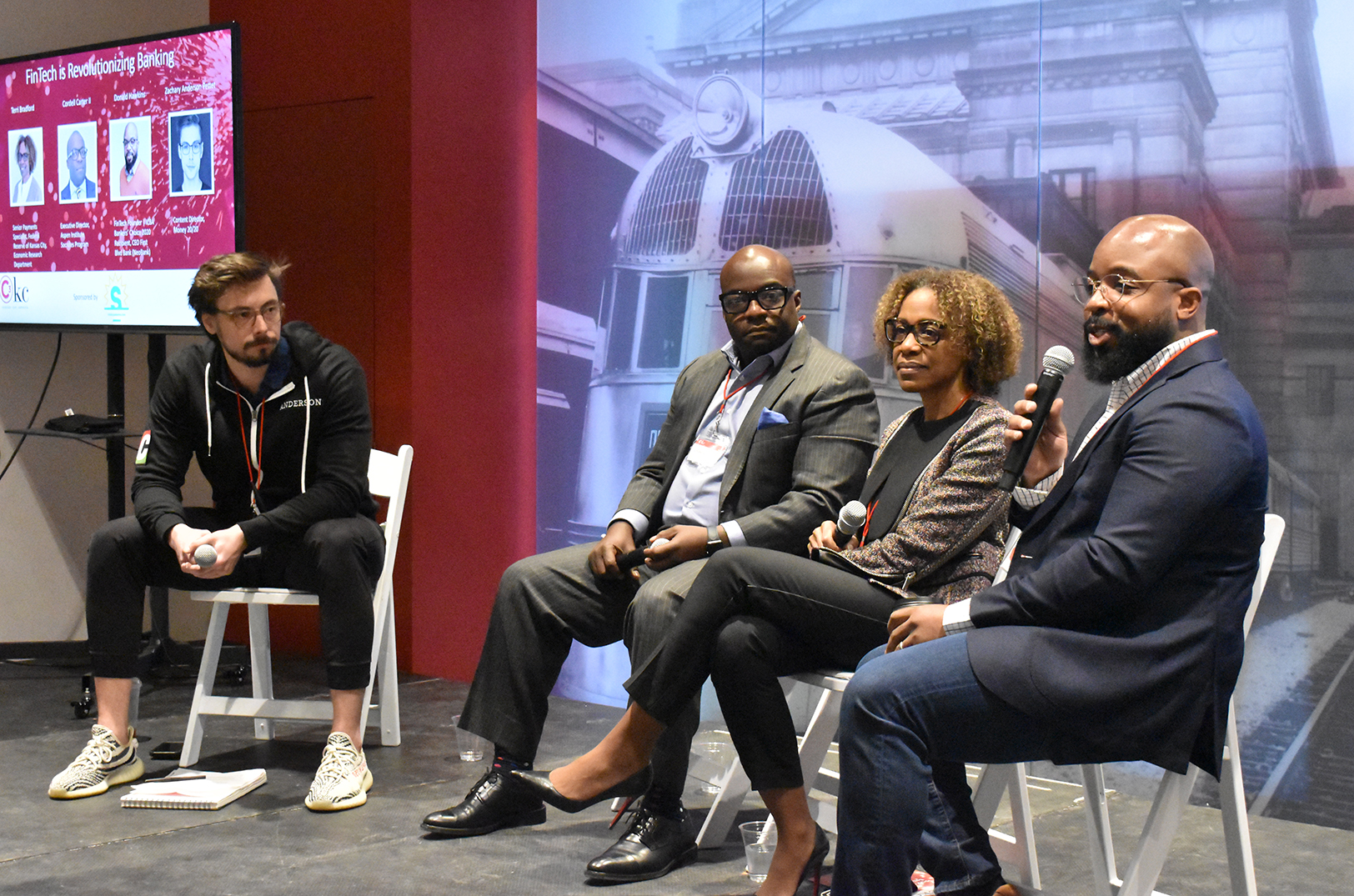
Zach Anderson Pettet, Money 20/20, Cordell Carter II, Aspen Institute Socrates Program, Terri Bradford, Federal Reserve of Kansas City, and Donald Hawkins, kinly, at the C3KC “Fintech is Revolutionizing Banking” session
“[A study by Prosperity Now and the Institute for Policy Studies showed] that by 2053, the net median income of the Black family in the U.S. is going to fall to $0,” he continued. “We can see inflation increasing with revenue and salaries not increasing, so there’s a lot of very painful moments that we have ahead of us if we don’t act now. We’re already late, but we’ve got to do something.”
Innovations in the fintech space have already proved to be successful, Hawkins acknowledged.
“Fintech gives us the ability — through lending, through credit, through financial education — to go and serve those customers that honestly banks have left on the side,” Hawkins said, noting that neobanks also push large incumbent banks to provide more inclusive features like early access to paychecks.
The COVID-19 pandemic has accelerated the digital-first movement, Hawkins said, and neobanks are in a strong position to build their customer base.
“There are neobanks that have already purchased incumbent banks; there are incumbent banks that are looking to purchase neobanks,” Hawkins noted. “We’re headed in a direction that banks can either get on the train and be a part of it — or try to compete with it. Because, as Terri mentioned earlier, optionality is great.”

This story is possible thanks to support from the Ewing Marion Kauffman Foundation, a private, nonpartisan foundation that works together with communities in education and entrepreneurship to create uncommon solutions and empower people to shape their futures and be successful.
For more information, visit www.kauffman.org and connect at www.twitter.com/kauffmanfdn and www.facebook.com/kauffmanfdn

Featured Business

2022 Startups to Watch
stats here
Related Posts on Startland News

Kauffman Fellows hosting hundreds of global VCs in Kansas City homecoming
More than 200 investors and entrepreneurs from around the globe will soon converge in Kansas City as part of one of the most highly-esteemed venture capital organizations in the world. Now in its 21st year, the Kauffman Fellows program will reunite top-tier investors that hail from five continents for a reunion summit on Oct. 24…
KCRise Fund makes first area investments in SpiderOak, Innara Health
Only a few weeks after closing on its first $10 million, the KCRise Fund announced Wednesday that it has invested in its first Kansas City-area companies. Launched in February in conjunction with the KC Rising economic initiative, the KCRise Fund is joining ongoing investment rounds in SpiderOak and Innara Health. The fund, led by Darcy…
Magic Johnson, David Stern headline $5M round in ShotTracker
A sojourn to the City of Angels has taken on magical meaning for ShotTracker. The Merriam-based firm announced Wednesday that basketball legend Earvin “Magic” Johnson and former NBA Commissioner David Stern are among a group of investors that have injected $5 million into its coffers. The duo of high-profile investors will help accelerate the wearable…
Successful VideoFizz campaign supports breast cancer awareness, research
One Kansas City startup is recognizing breast cancer awareness month through a promotion to support the American Breast Cancer Foundation. This October, VideoFizz is encouraging users to create a video on their platform to let someone special know you are “pinking” of them, raising awareness and support for the foundation. Whether it’s celebrating survival, uplifting…