

For the good of the hive: KC pediatrician builds buzz with award-winning urban bee farm effort
December 7, 2021 | Blythe Dorrian

No one is more surprised by pediatrician Marion Pierson’s newfound career success as a beekeeper and advocate for urban apiaries, the Prairie Village doctor said.
“I didn’t know this would happen,” Pierson said. “In fact, I’m scared of bugs. My husband asked me how I was going to start a bee farm. When I’m in my beekeeping suit, I’m not scared of anything.”

Bee suits hang in the corner of the shed for people to use while working or volunteering with MO Hives KC. Pierson said she is trying to find ways to get more people involved. One program the organization started in the past year is called “AmBEESadors.”
Yet she was drawn in by the links between medicine and nature, she said, pointing to the medicinal use of honey and how people can combine natural solutions with western medicine. Honey, for example, is used in bandages.
“[But] beekeeping isn’t just about honey,” Pierson said. “They sell pollen, royal jelly, and they sell wax as a billion-dollar cosmetic ingredient in lipstick. There are a ton of products besides honey. That part excites me, and I want people to know about it.”
In April 2020, she brought MO Hives KC to life with co-founder Brian Reeves. Their plan: to place and support urban apiaries (bee farms) in blighted urban areas, to pollinate urban food gardens, and to provide teaching and economic opportunities for the community.
Click here to learn more about MO Hives KC.
The organization maintains four active hives, housing nearly a quarter of a million bees at the apiary. Each hive has about 50,000 bees.
“If you were standing at your car, you probably wouldn’t have known there were any here,” Pierson said. “People think there will be swarms since it is a bee farm. The bees are out on a sunny day, and they’ll go back in when it’s cold. The hives will stay out all winter.”
The plan is to eventually have 10 to 12 hives, she said.
“We have two hives across from the Chiefs stadium,” Pierson said of one site that sits atop a now-vacant building at what was the Adam’s Mark Hotel along I-70. “We have three on vacant property by the VA and by Hospital Hill. We’ll probably add one hive to each of those sites.”
This fall, Pierson was named Beekeeper of the Year by the Missouri State Beekeepers Association for her work with MO Hives KC. She accepted the award on behalf of the organization, she said, and couldn’t have been as successful without the contributions of the community.
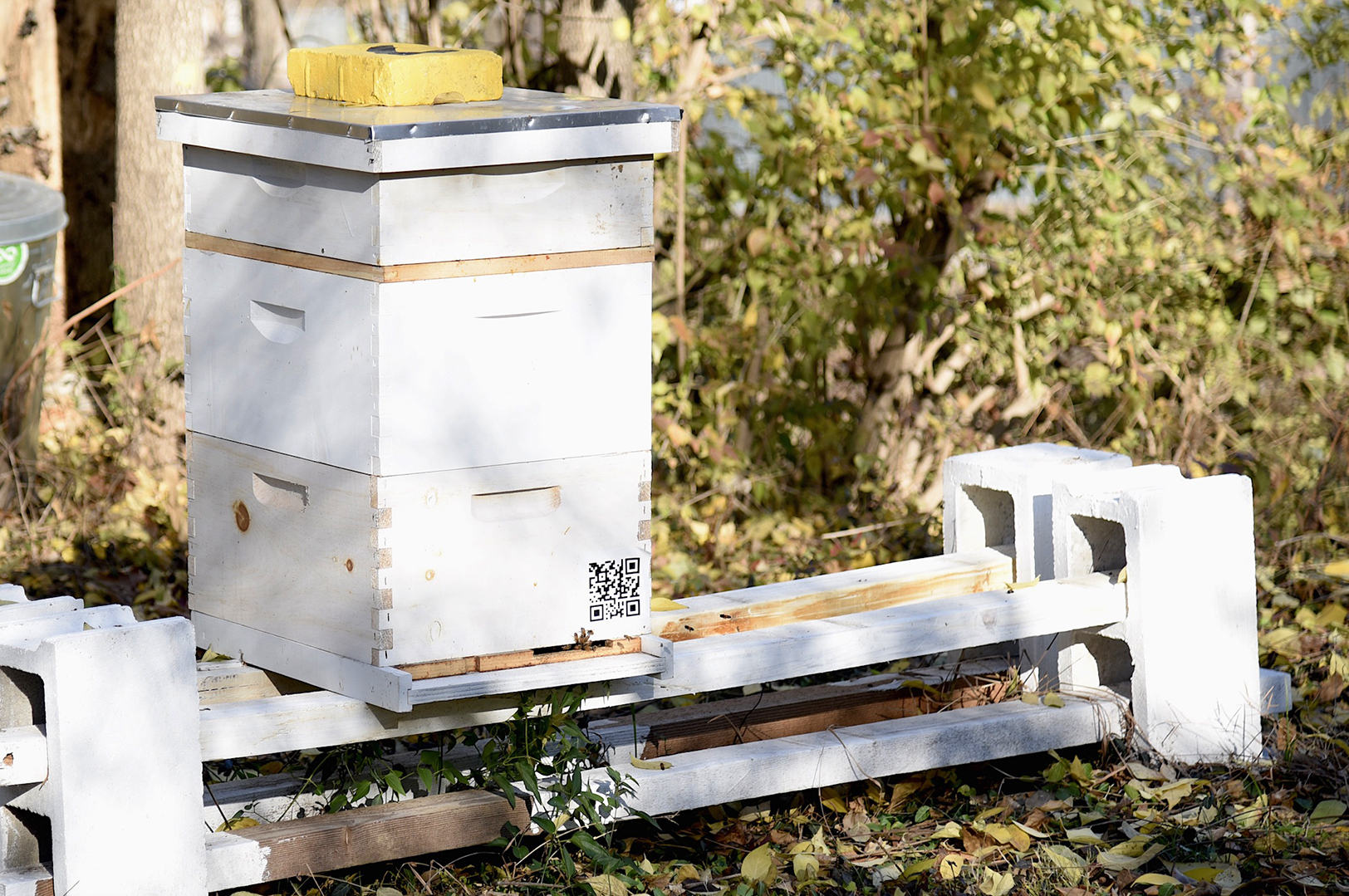
Four hives are currently active at the MO Hives KC apiary, but organizers would like to increase hives in the future. Another addition MO Hives KC hopes to create soon: a medicinal wall.
Putting ‘potions’ into practice
A Kansas City native, Pierson remembers spending her early childhood years walking the trails at Swope Park with her brother and father, a former Marine and Boy Scout. She was taught to appreciate nature and the city at a young age, she said.

The MO Hives KC bee apiary is located at 3050 Wabash Ave in Kansas City. It was created out of six vacant lots to form a sustainable garden for bees. Across the street is a community garden. The mission created “hive five” goals to help with beautification and educating others about pollinators and food security.
“My mom at one point was the president of the Blue Hills Neighborhood Association, and she was always a community activist,” Pierson said. “I have a connection to this particular part of the city. Service was how I was raised, and it was nothing new to me.”
When thinking about potential careers, combining science and nature came to mind early, she emphasized.
“My brother, my cousin, and I used to joke about how we made potions all the time,” Pierson said. “We just tinkered with things using chemistry.”
Pierson later went on to study biology and attend the six-year medical program at the University of Missouri-Kansas City after graduating high school at 17. She now owns her own pediatric practice in Prairie Village.
“Medicine isn’t something we traditionally practice in the outdoors,” Pierson said. “I think people underestimate what it does for your mental health.”
Through her work with MO Hives KC, Pierson also learned to appreciate learning about the health of bees — specifically preserving their lives like any other patients.
“Before I started beekeeping, I didn’t understand the impact varroa mites had on the bees,” Pierson said as an example. “It’s like a tick the size of a dinner plate but comparable on a bee. Those mites make the bee so sick, they become subject to diseases just like humans.”
“Whenever I lose bees, I feel so depressed,” she continued. “We’re doing this to help the bee population, and we’ll figure out why we lost a hive.”
Pierson’s family has gotten involved with the apiary. And it’s allowed her to spend more time with the people she loves, she said.
“My nephew is now an agriculture major, and he wasn’t before we started the apiary,” Pierson said. “When Lincoln University closed last year, I asked him if he would help with the bee farm. He got so interested in it that he changed his whole major.”
“My dad actually did get in a bee suit to help me feed one of the hives,” she continued. “I haven’t gotten my husband in a bee suit yet, but I am working on it.”

Brett Creason works on drawing a plan for replacing invasive species with plants that will benefit the apiary. “We’re wanting to get rid of the bush honeysuckle and replace it with coral honeysuckle,” said Creason, who started working with the organization because of his work with the Lincoln University Extension Office. The organization also hopes to plant blackberries and Missouri gooseberries.
A collective initiative
The doctor draws parallels throughout her two careers.
“My practice is called Village Pediatrics because it does take a village,” Pierson said. “Everything bees do is for the good of the hive. That collective work that all 50,000 bees do in a colony is exactly what we are doing as humans.”
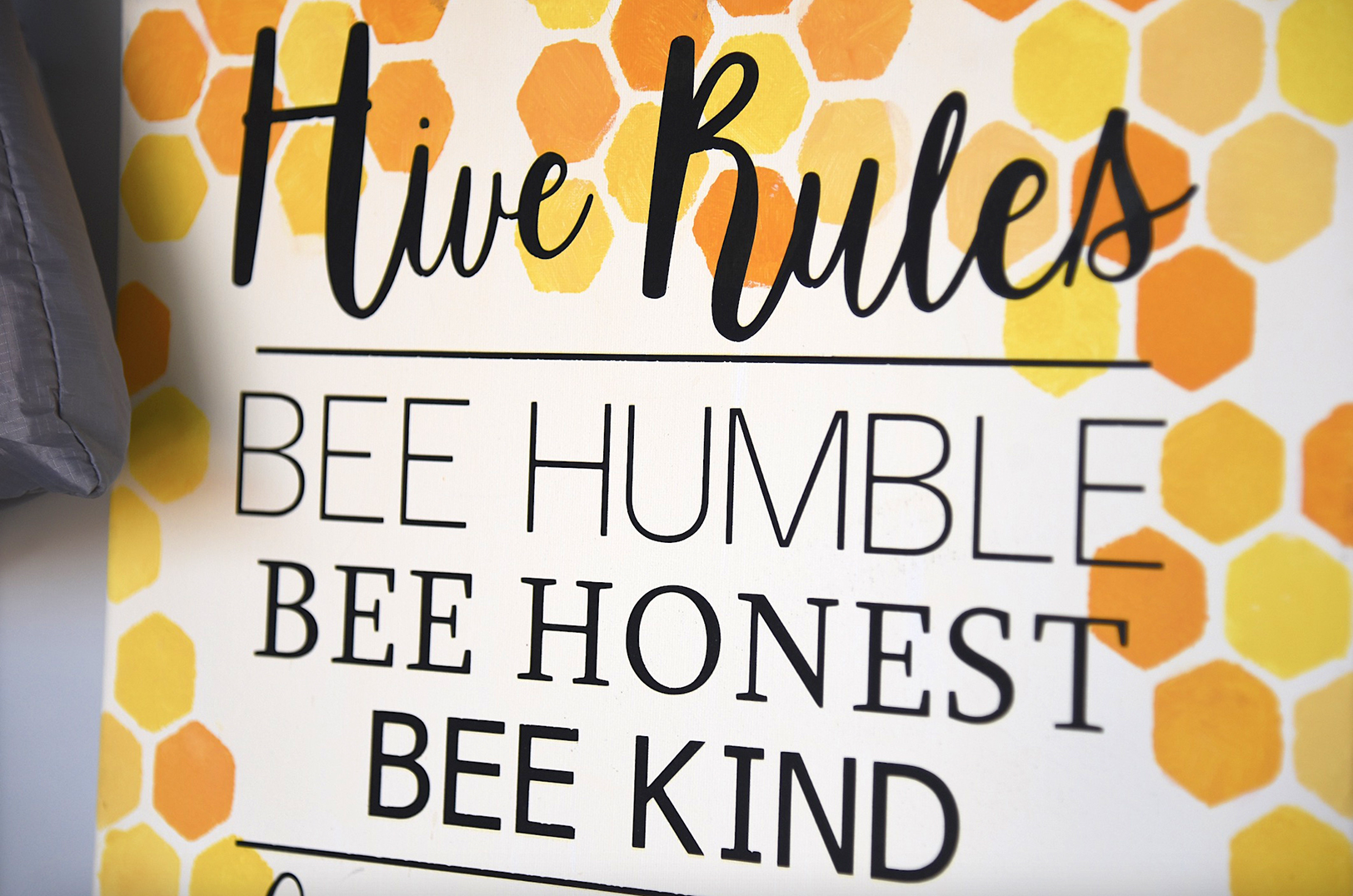
Inspirational signs are hung up around the apiary. The inspiration for the organization came from Detroit Hives.
MO Hives KC has helped Pierson become more connected to the residents of the neighborhood she is serving, she said.
“It’s been amazing getting to know them,” Pierson said. “I don’t live on this block, so I have to be intentional with what our plan is. When things are presented as a conversation, people seem to enjoy it. Everyone has been incredibly supportive.”
One of the goals of the apiary is to eventually provide hyperlocal honey with more outlets for people to receive local products. People need to know that food security is about more than just having grocery stores, she said.
“There is so much land mass in urban areas, and there are so many people who could manage hives. People could do it if they just knew more,” Pierson said. “We’re into training so maybe they take on a bit of this. Anyone can do it if they have passion for it.”
Click here to follow MO Hives KC on Facebook.

Pierson holds soil MO Hives KC has been composting with its Johnson-Su compact system. It breaks leaves down to form a more compact soil.
The apiary offered a six-week summer program for high school and college students with two of the eight participants being Pierson’s own patients.
“I think they had a great time,” she said. “I still have patients who ask me about [it] because they want to try it.”
Pierson spends a few days a week on the bee farm, and also does volunteer work every Sunday.
A group of African American women recently helped her plant garden boxes through a partnership with the National Wildlife Foundation, she detailed.
“The fact that a group that isn’t even connected to wildlife wanted to help was amazing to me,” Pierson said. “Every little bit of encouragement people offer has been an amazing surprise.”
With 4,000 species of bees, doing right by them means they will do right by you, she said, encouraging people to get out and start making a difference.
“Until stuff hits your own front door, it is easy to say that someone will take care of it, “ Pierson said. “That somebody is us. The people who live in the middle of the city.”

This story is possible thanks to support from the Ewing Marion Kauffman Foundation, a private, nonpartisan foundation that works together with communities in education and entrepreneurship to create uncommon solutions and empower people to shape their futures and be successful.
For more information, visit www.kauffman.org and connect at www.twitter.com/kauffmanfdn and www.facebook.com/kauffmanfdn


2021 Startups to Watch
stats here
Related Posts on Startland News

Google Fiber hops to new, pricier plans for businesses
All good things — or in this case inexpensive things — must come to an end. Google Fiber will soon nix early-access pricing for its gigabit business service and will more than double its costs for new customers in August. Google Fiber — which first arrived in Kansas City in 2012 with residential service —…

Amazon to bring 1,000 jobs, huge facility to KCK
Online retail giant Amazon will open a massive new facility in Kansas City, Kan. The Seattle-based company announced Monday that it will create more than 1,000 full-time jobs and construct an 855,000-square-foot fulfillment facility near the Turner Diagonal on I-70 in Kansas City, Kan. “These aren’t just any jobs. They are the best entry-level jobs our…
Survey: KC is sticky for startups with equity funding
A majority of Kansas City startups choose to maintain their hometown roots after they raise capital — even when the funds come from outside investors, a recent survey found. Of the companies that raised money in 2013 and 2014, 74 percent of them are still active and headquartered in the City of Fountains, according to…
A marriage of Mr. K’s passions, ‘E Day at the K’ returns July 19
To say one of Kansas City’s greatest entrepreneurs — Ewing Marion Kauffman — loved baseball would be an understatement. The founder of Marion Laboratories Inc., Kauffman purchased the Royals in 1968 to bring America’s pastime to his beloved hometown, Kansas City. Along with boosting civic pride, the Royals became a model franchise, employing “moneyball” statistical…