

Why an interactive digital business card could replace LinkedIn for startup, small business leaders
November 30, 2021 | Austin Barnes
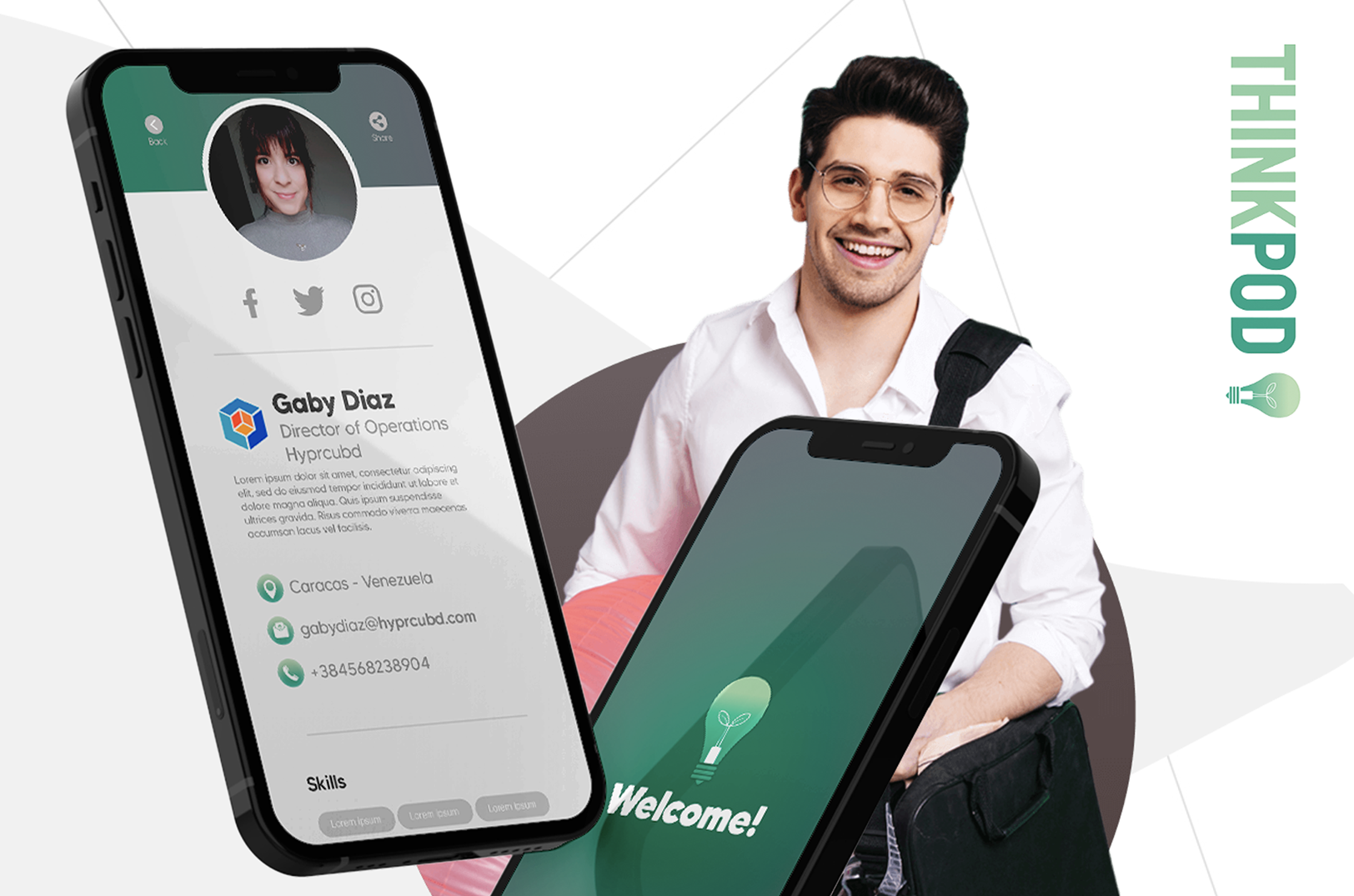
People want to get their foot in the door, Jess Phillips said, laying out her plan for a newly launched social media platform that opens professional connections with an insightful twist: an interactive digital business card offering data on who visits and why.

Jess Phillips, ThinkPod
Free of the awkward sales pitches and forced conversations that often come with networking, ThinkPod puts people and connections first, explained Phillips, co-founder, previewing the beta-phase of the platform and its main objective: empowering small business owners to effectively grow and enhance their networks.
“It’s a way of better connecting, better expressing who you are and how you can help,” she told Startland News, explaining how a ThinkPod profile works and what kind of information it houses.
Click here to create a ThinkPod profile or to learn more about the platform.
“ThinkPod is a community for power connectors that want to collaborate with other professionals in an organic way. … You can create different ‘Pods’ to help you find individuals or teams with whom you can connect on a professional level for a project, and also allows you to search out and join other people’s projects, teams or post employment opportunities,” reads an official description of the growing platform.
“ThinkPod is a place where you can explore all of the facets of your personality: professional, creative, and social sides.”
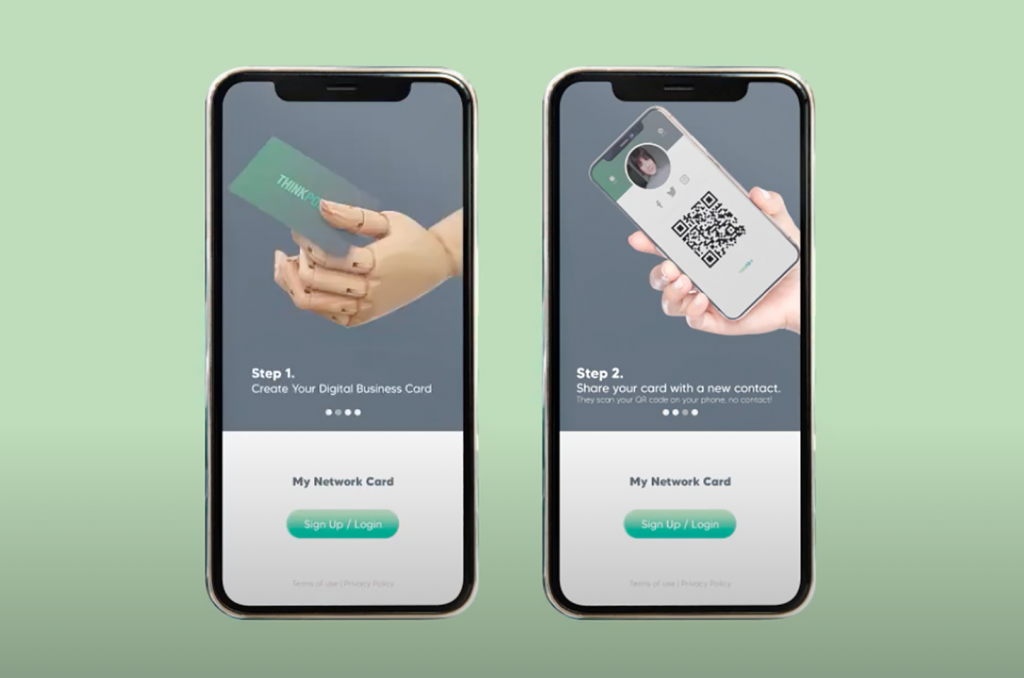
But the social media platform itself isn’t the most interesting piece of the ThinkPod conversation, Phillips noted, adding she and her husband, Nick, have developed what they call the “network card” — a digital business card that could revolutionize networking in the pandemic-era.
“With COVID people are really struggling with connection,” Phillips added, highlighting the ups and downs of ever changing guidelines and restrictions and the lingering safety concerns that come with in-person event attendance — findings she made while consulting clients and partners for her rising IoT startup, Hyprcubd.
Click here to download your own Network Card from the Apple App Store or here to download the app using Google Play.
“It hit me. If we had a QR code with a variety of features and customization and made this virtual, people wouldn’t have to hand out business cards,” she explained, noting a scan of the network card (whether it be in a virtual networking breakout room or in-person) links a new connection directly to a user’s ThinkPod profile and as much information about themselves or on their business as they’d like to upload.
Adding conversation to virtual networking
The service is something Phillips hopes benefits entrepreneurs across the board, but primarily small business owners; a group she’s found isn’t served as well by larger networking platforms such as Linkedin.

“[Linkedin] is great for B to B and B to C [operations] — but that doesn’t fit everyone,” she explained.
“I started thinking about freelancers, consultants — friends that have restaurants in the area. … I know how difficult it is for them to get going and get moving. [ThinkPod] provides the ability to connect and communicate with professionals [via a more accessible platform].”
“It’s not like Linkedin where users are just talking to each other. It’s more like Reddit where people can have conversations back and forth about topics and ideas and inspiration.
The potential of ThinkPod to impact small businesses doesn’t stop with network building, Phillips continued. The platform collects metrics as a user builds their network, providing feedback and insight into what they’re doing well and what they could stand to improve upon.
“If somebody clicks on your network card and they’re looking around, it’s basically a mini website or landing page. Knowing data such as daily use of a user, the length of time they’re looking around on your digital business card — what they’re interested in, what they’re clicking on, what’s drawing them into your profile — can further assist with the growth of business,” she explained, noting the platform ultimately stands to gamify the idea of networking.
“We want people to receive badges and notifications and different certifications. [Users can] nominate and recommend [each other for their skills] which then raises their ‘pulse rate.’ The thought being that by raising other people up in our community [you can help establish them as] a thought leader and someone other people can look to for mentorship or guidance.”
Be professional, but be yourself
Chock-full of beneficial tools, additional value from ThinkPod comes from its stance on network building with authenticity, Phillips said, a component that was missing from networking events before the pandemic — and one a retreat into the depths of the digital world has made even harder to find.

Nick and Jess Phillips, ThinkPod
“So many times people feel like, ‘I have to do it a certain way,’ or, ‘I have to present in a certain way.’ There are so many different types of businesses and people are so unique — we want people to be organic and be who they are,” she said, passionate about finding ways to bring as much connection back to the lives of entrepreneurs as possible.
“[I’ve found] there is this need for staying buttoned up. People feel that they have to have a certain degree or certification or years of experience — to present themselves in a certain way on Linkedin. That was an ongoing stigma [I heard] as I was talking to people.”
“With this, I thought, let’s remove that. Let’s allow people to be who they are. You don’t have to have a degree. You have years of experience, life experiences. … It’s always good to have a first impression, to be professional, but also, be as you are.”
People tend to surprise each other when they aren’t pretending to be someone else, Phillips said, adding that such an approach often builds the most valuable relationships.
“When people are allowed to be who they are and show their worth, they allow their nervousness and anxiety to be set aside. People get nervous! They aren’t their best self [when making] a first impression,” she said.
“When they relax, they’re able to calm down and show you, ‘These are my abilities.’”

This story is possible thanks to support from the Ewing Marion Kauffman Foundation, a private, nonpartisan foundation that works together with communities in education and entrepreneurship to create uncommon solutions and empower people to shape their futures and be successful.
For more information, visit www.kauffman.org and connect at www.twitter.com/kauffmanfdn and www.facebook.com/kauffmanfdn


2021 Startups to Watch
stats here
Related Posts on Startland News

Goodwill merger pushes expansion plans, KC’s new adult high school to the front of the store, leader says
Consolidating operations between offices in Kansas City in St. Louis not only will produce one of the largest Goodwill footprints in the nation, said Mike Sinnett; the move is expected to bolster efforts to add more retail stores and deepen initiatives like the soon-to-open Excel Center at Bannister Road. Goodwill of Western Missouri and Eastern…

LISTEN: Biotech founder breaks down how she turns microorganisms into high-quality protein in just 24 hours
On this episode of Startland News’ Plug and Play Topeka founder podcast series, we explore a ground-breaking food innovation with Katelijne “Kate” Bekers, co-founder and CEO of MicroHarvest. This biotech startup is pioneering the world’s fastest protein production — turning microorganisms into high-quality protein in just 24 hours, using sustainable fermentation and agricultural side-streams, while…

From ravioli to revenue: How Pasta La Fata became a fresh pasta powerhouse in mid-Missouri
Editor’s note: The following story was produced through a paid partnership with MOSourceLink, which boasts a mission to help entrepreneurs and small businesses across the state of Missouri grow and succeed by providing free, easy access to the help they need — when they need it. COLUMBIA, Mo. — Michelle “Shelly” La Fata built Pasta La Fata with…
KC startups graduate K-State accelerator, earning equity-free cash, greater conviction
A trio of Kansas City-built ventures — from sports apparel and mental health solutions for young athletes to tech that uses autonomous drones and 3D vision AI — were among the Kansas businesses earning funding through an eight-week accelerator at Kansas State University. The Center for Entrepreneurship Accelerator program at K-State — which provides participants…