

How Finotta emerged from 2020’s perils with a leap of faith, $3M investment banked
November 9, 2021 | Katie Bean
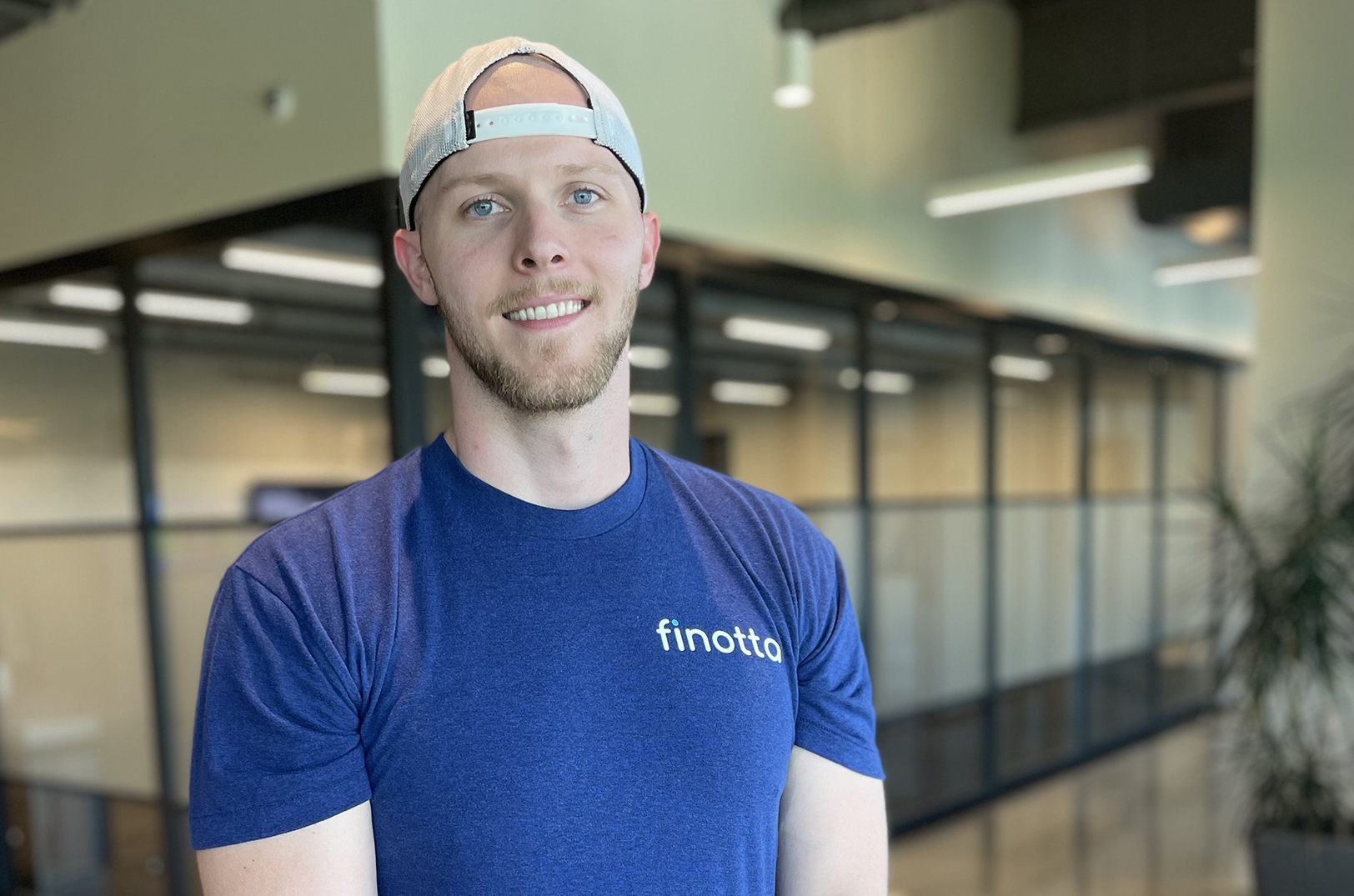
The through line of Parker Graham’s startup journey so far: resiliency.
“People like to joke that cockroaches just don’t die,” laughed Graham, reflecting after his fintech company, Finotta — more pheonix rising than cockroach surviving — recently closed a $3 million seed funding round and completely changed the makeup of its team. “I feel like one of those companies where, whatever was in front of us, we just met head-on and crushed through whatever that barrier was, and we just keep crushing through those and breaking down those barriers.”
A veteran of the inaugural Fountain City Fintech accelerator at nbkc bank in 2018, Graham’s startup — then branded as “Destiny Wealth” with a focus on helping individuals get out of debt — was venturing forward at full steam. Named one of Startland News’ Kansas City Startup to Watch in 2020, Graham predicted: “this is going to be a game-changing year.”
Emphasis on the changing.
Today the company is Finotta, having pivoted its focus to helping banks and credit unions personalize the app experience for customers. Graham, a member of the current Pipeline fellowship, now leads the six-person startup alone — his two co-founders having departed mid-pandemic.
“I really look at Destiny, the first two years of the company, being kind of the life and death of one startup, and Finotta, our rebrand, being a new life,” he said candidly.
But rebirth and reinvention didn’t come easily.
Plotting his Destiny
Graham started Destiny with $50,000 in 2018 alongside Joe Krywicki and Jerry Workman.
He was working at a bank in Oklahoma and saw the effects debt had on people’s financial lives. The trio was enticed to move to Kansas City to participate in nbkc’s fintech accelerator, which offered another $50,000 in addition to guidance and connections, both in banking and in Kansas City.
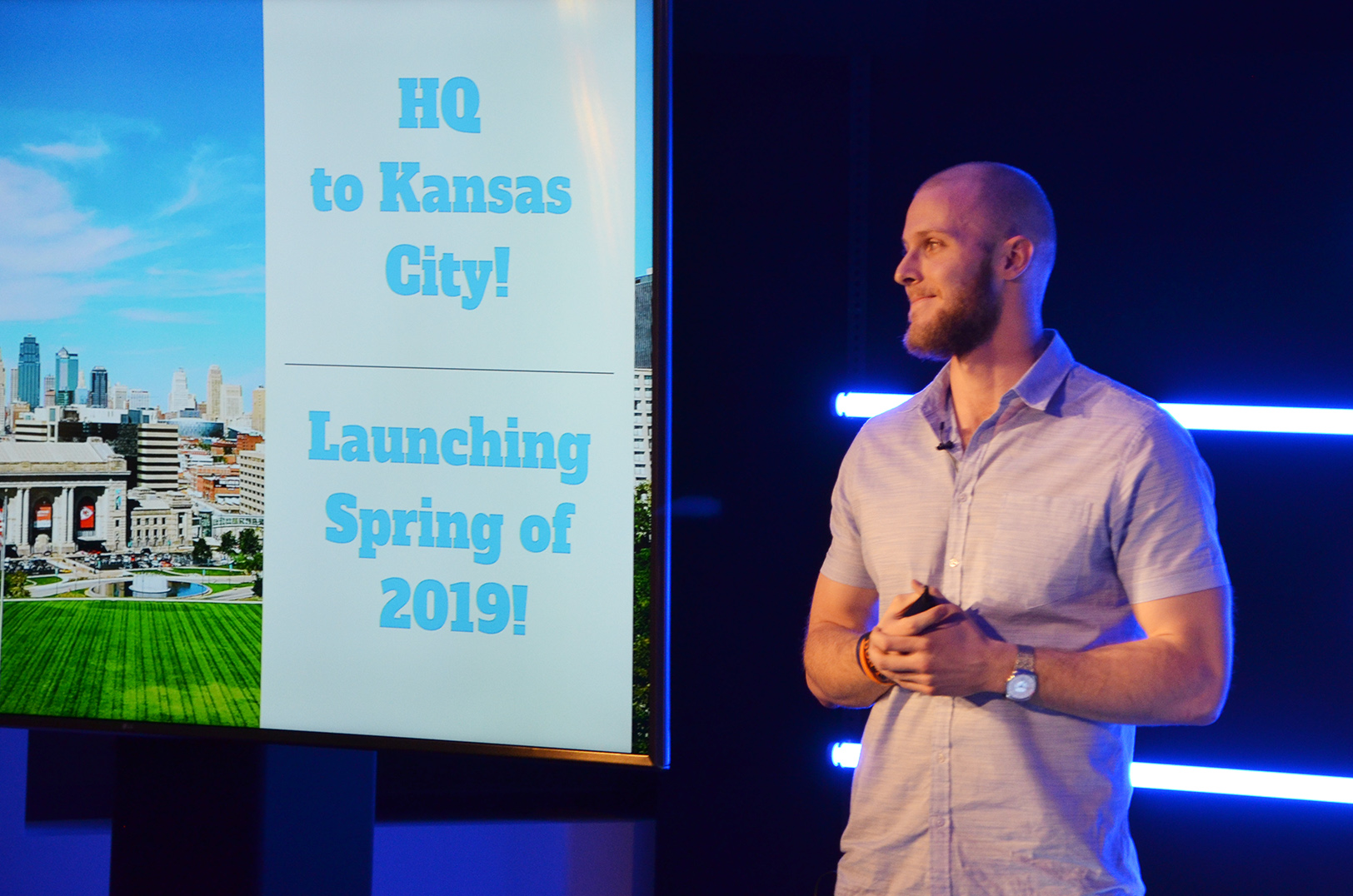
Parker Graham, Destiny Wealth, presenting at Fountain City Fintech demo day in 2018
The founders tried to pay themselves a small salary from that money, Graham said, but quickly realized there wasn’t enough to go around. To support himself, Graham took a part-time job at Lukas Wine & Spirits Superstore in Overland Park.
“It was an incredibly humbling experience, going from being a founder who left their big corporate job at Bank of Oklahoma to working at a liquor store and trying to make my dream still survive and thrive,” he said.
Graham learned a lot about scotch, whiskey and other liquors during his four- or five-month tenure at the store, he said. But he also learned his part-time paycheck wouldn’t cut it.
“I was quickly realizing that I need more money,” Graham said. “I had a girlfriend at the time who’s now my wife; I was trying to get an apartment and live like a real human for a little bit, not just a founder.”
Toward the end of 2019, he took a job at a bank, which not only afforded him a larger salary, but also granted him an inside look at “what was broken in banking,” he said.
Around that time, Destiny’s course was shifting to become a banking technology company. Call it destiny or “divine intervention,” as Graham does: He was able to see the specific challenges the banking industry encountered and discovered his startup was on the right track.
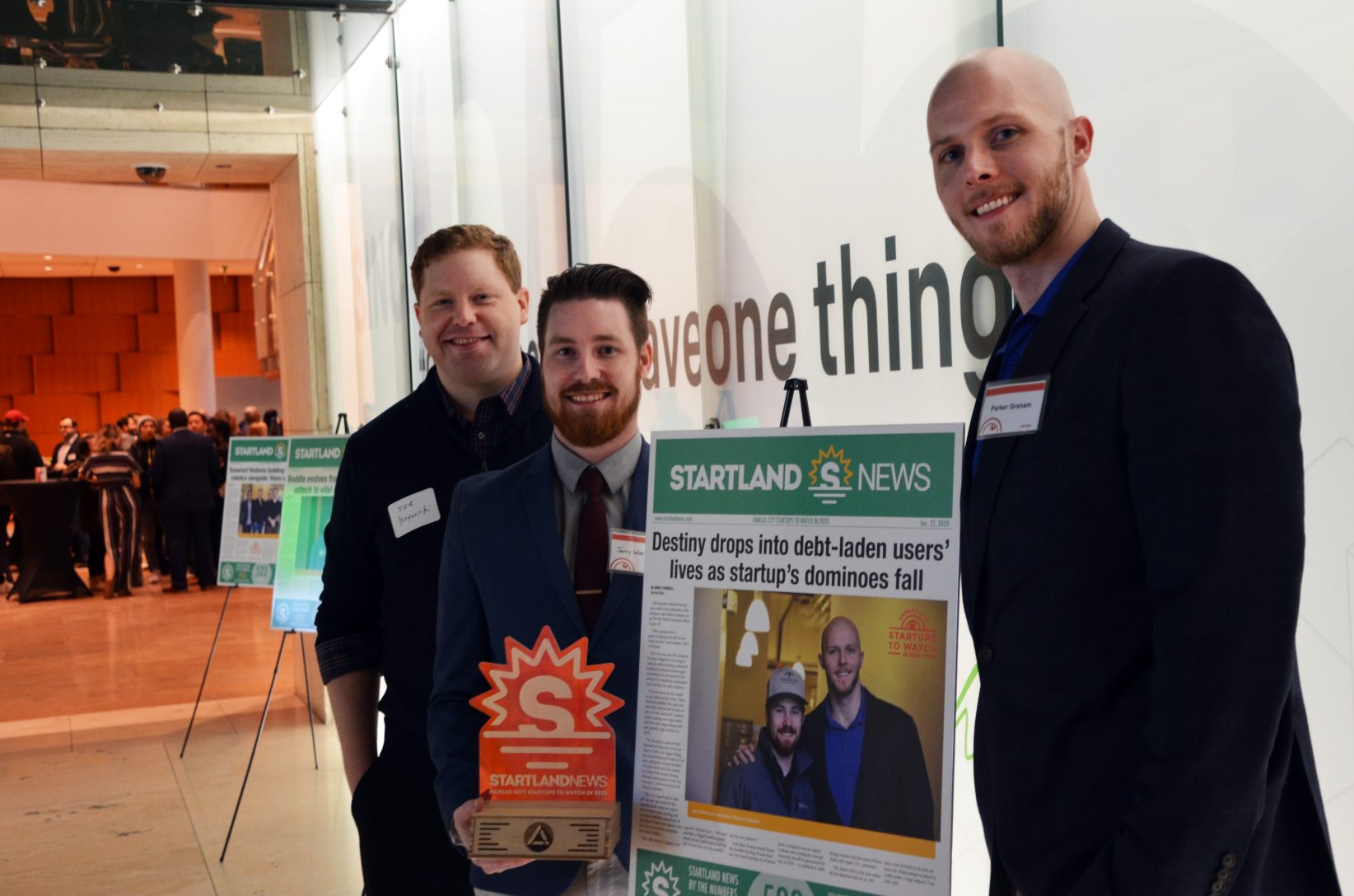
Joe Krywicki, Jerry Workman and Parker Graham, Destiny; Startland News’ Kansas City Startups to Watch in 2020
“The ‘aha’ moment was like, ‘Wow. Yeah, what we built directly correlates with the problems customers are experiencing,’” he said.
The company began pivoting to focus on personalizing the experience for customers within banking apps. It can recommend products and services relevant to each person’s financial situation, whether that be refinancing a mortgage payment, offering savings on a car loan or recommending a credit card with a favorable rate.
“When we save the user money, the beautiful thing about that is that we’re winning products for the bank that drive revenue,” Graham said.
He and his co-founders continued refining the platform throughout 2020, amid the pandemic and applying for PPP loans. He also worked to align his sales pitch to resonate with banks and credit unions.
In August 2020, Graham took a leap of faith. He left the bank and returned to the startup full-time, aiming to find a customer or an investment. Within about two months, he had landed both: A large financial institution signed on, and the company secured about $100,000 in funding.
Reinvention
Just when Graham felt the team had momentum to celebrate, he was dealt a huge blow: His co-founders decided to leave the company.
“We had basically all been doing other jobs plus trying to build Destiny at the same time and trying to make it work,” he said. “They felt like they had gotten the technology to a certain point and wanted to go do something else. …
“There was no ill will. There was nothing like, you know, some big sob story. It was just, legitimately, they were burnt out, and rightfully so.”
Though he could understand their reasoning, Graham said, the news wasn’t easy to digest.
“I felt like I had taken that leap of faith and bet on myself and on the company, and when I had actually succeeded at doing what I had set out to do by finding funding and a customer, I would have expected a different response. I expected a little bit more celebration and excitement around that. That’s what I was expecting, but I didn’t get that.”
Still, Graham called it a blessing that his co-founders spoke up when they did.
“It freed me up to go find the next people that were going to work with me, which is our incredible CTO and our incredible lead architect,” he said. “If they would not have made that decision then, I wouldn’t be able to find those guys. And what would the company look like now? I mean, it could have been completely different. So everything happens for a reason.”
Graham took a birds-eye view of the situation and realized he had an enormous opportunity “to reset and try again.” The company rebranded as Finotta in January 2021 with its new team, new focus and special attention on the culture created.
Click here to read more about rebranding as Finotta.
Finotta has gained momentum in its new life, including a $3 million investment from an unnamed investor that came through in September. In addition, Graham said a large financial institution is expected to roll out Finotta’s technology in its app in late 2021 or early 2022.
Finotta’s next direction hinges on the coming six months or so, Graham said. He’ll be tracking the metrics of the company’s first big deployment, which will determine how the company approaches new customers and the timing of when he’ll raise series A funding.
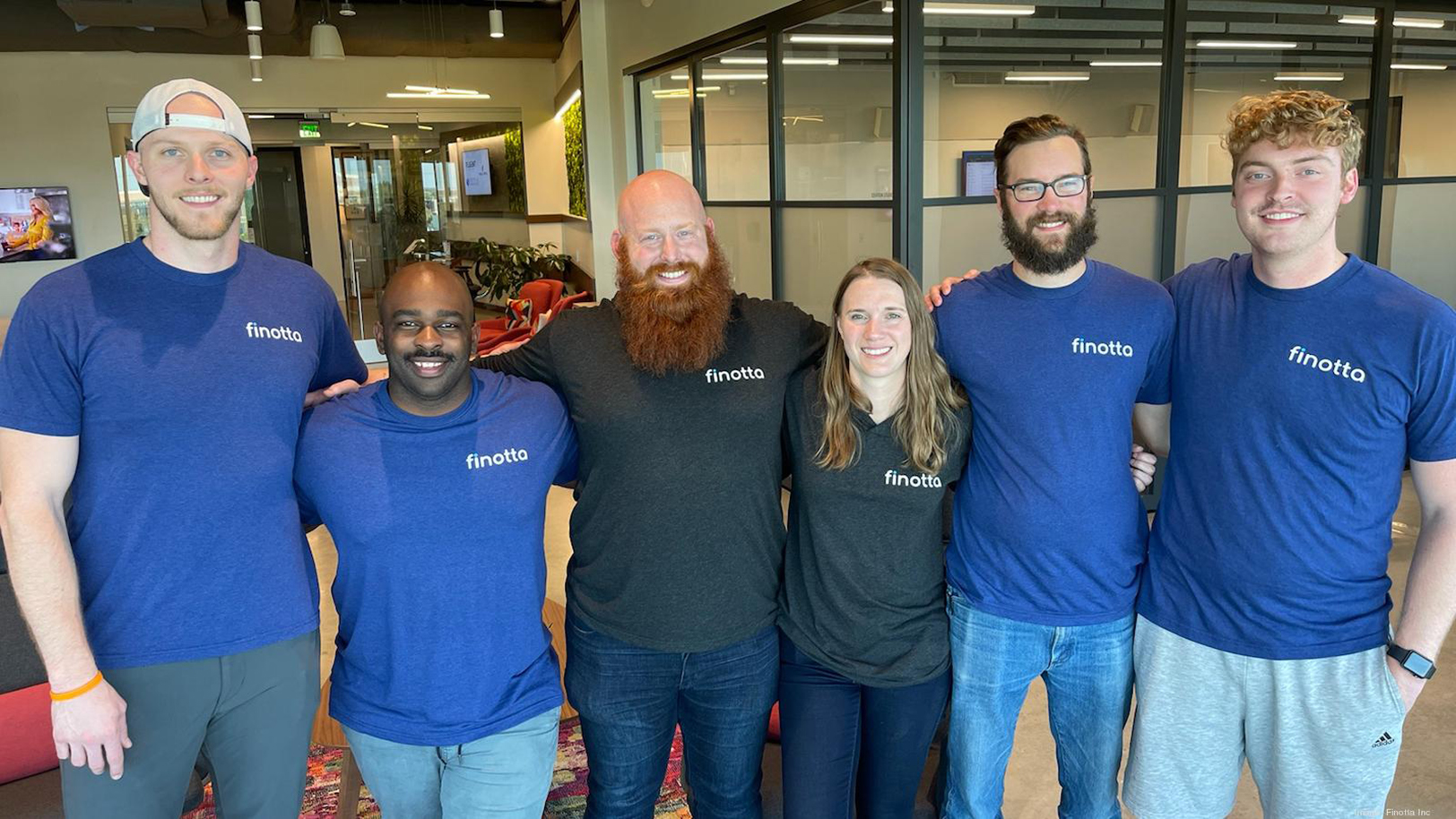
Finotta team 2021
Culture reset
The funding infusion secured this fall allowed Graham to bring employees on full-time.
“It’s a really cool experience as the founder getting to make that call and have everybody leave their old jobs to start new here and really start building the foundation of a beautiful culture, that I think is what’s really separating us from other companies in the area and definitely in our space.”
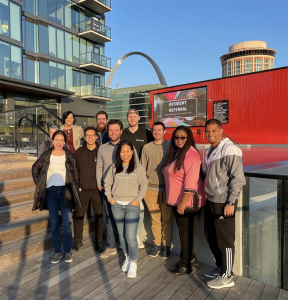
Parker Graham, center, with members of the 2021 Pipeline fellowship during a recent module in St. Louis
In starting fresh with a new team, Graham said, he was able to consider what type of culture he wanted to build within Finotta.
“We basically said: This is going to be something new, and I’m going to create a culture where people want to be, where people really want to work. Not necessarily that they are obsessed with banking technology but a place where people want to be,” he said. “If you can create a place where people want to be, the things they will create will exceed any of the expectations that you have about what can be created. And once I made that decision, it snowballed from there.”
Graham fleshed out Finotta’s culture by creating four pillars for employees: Lead with love, radical transparency, unapologetic accountability, and good times and good vibes.
The pillars’ order also is important: For employees to feel that they have a say and a role in defining the company’s direction, they must understand that people are the most important part of the organization — not the bottom line or other corporate trappings, he said.
Finotta currently has a team of six and is officing at Serendipity Labs in Overland Park. As it grows the team — Finotta is now hiring several developers, a marketing director and more to come — the culture has proved to be a selling point, even in bringing on highly sought-after tech experts.
“When we tell the story about our four pillars and the company we’re building, and people meet with our team and they see the people that are working here — that’s the true secret sauce,” Graham said. “When I hear people say that it’s super hard to hire right now — it is, but also things that some companies have in their tool kit that are just different make it a little bit easier.”


2021 Startups to Watch
stats here
Related Posts on Startland News

Voodoo Volleyball bounces back in OP: Father-daughter duo doubles as new venture’s setters
Quinn Austin put several sports to the test as a preteen — racing from basketball practice to softball to volleyball. But she latched on to just one. “Volleyball. It was my sport. Everyone was having a good time,” she said. “We just loved the cheers — a cheer when we got a hit, a cheer…

Black farmers are losing ground in the fight to feed their communities, advocates say
More than a century of systemic land dispossession and discriminatory practices has left Black farmers with less than 0.6 percent of U.S. farmland — less than a third of the 16 million acres they operated in 1910, according to local urban farming advocates. They gathered Tuesday at Independence Boulevard Christian Church to confront this history…

Cracking egg-flation: How farmers, substitute ingredients help restaurants mitigate price spike
Editor’s note: This story was originally published by Kansas City PBS/Flatland, a member of the Kansas City Media Collective, which also includes Startland News, KCUR 89.3, American Public Square, The Kansas City Beacon, and Missouri Business Alert. Click here to read the original story. Whether ordering an omelet, French toast, chicken n’ biscuits, chilaquiles, corned beef hash…

Soccer tennis comes to KC ahead of World Cup; here’s how a weekend street festival is kicking it across the map
Ryogoku Soccer Academy — with the help of local businesses like MADE MOBB, Café Ollama, and Café Cà Phê — is taking soccer from the pitch to the streets of Kansas City’s historic Northeast, Brad Leonard shared. As the metro gears up for hosting World Cup games in 2026, the neighborhood-based international school and soccer…