

Planner pitches two-mile gondola over West Bottoms, linking KCK, KCMO downtowns
November 15, 2021 | Kevin Collison
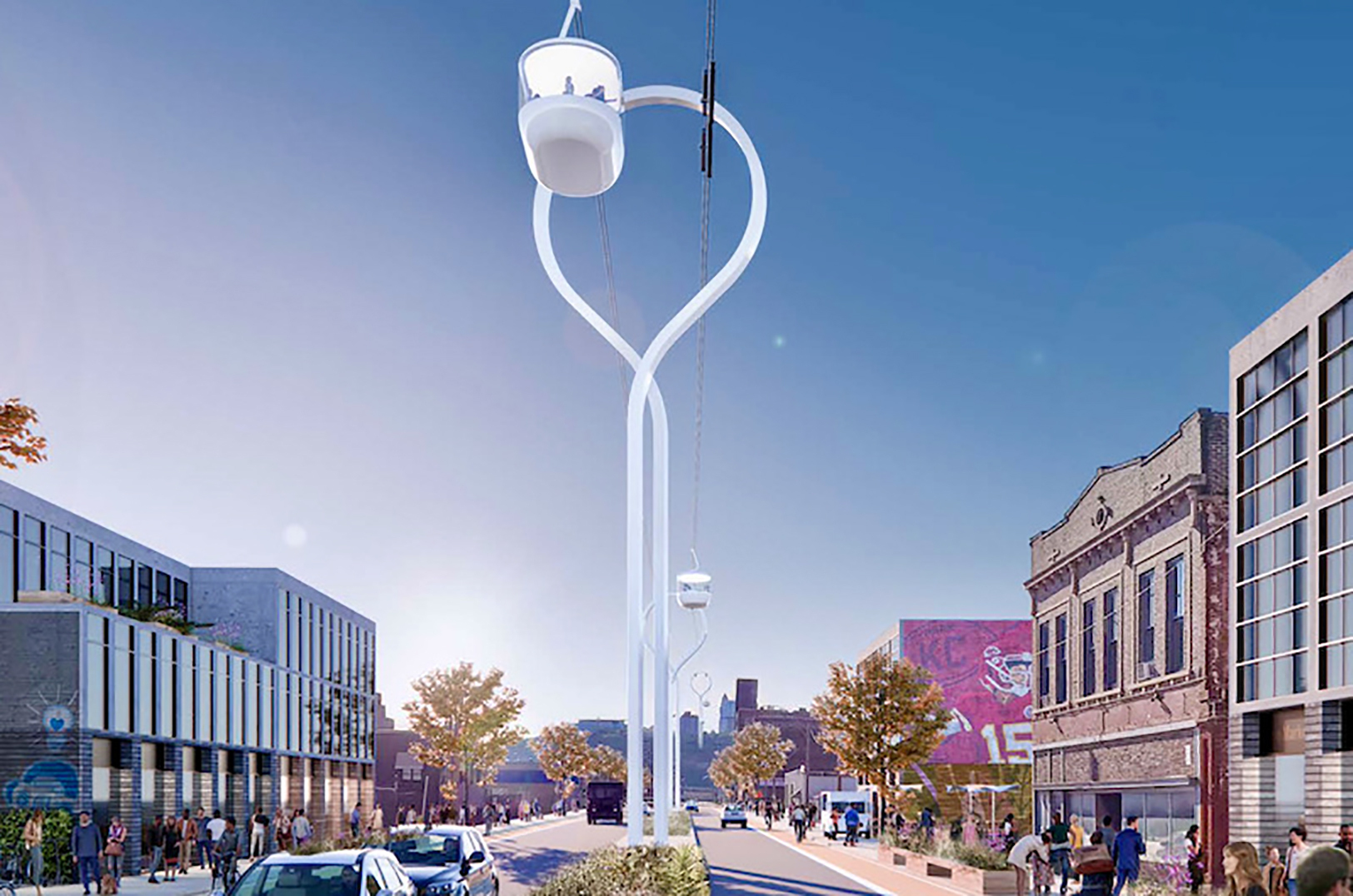
Editor’s note: The following story originally published by CityScene KC, an online news source focused on Greater Downtown Kansas City. Click here to read the original story or here to sign up for the weekly CityScene KC email review.
The idea of using gondolas for mass transit in Kansas City is back, but this time it’s being floated by a senior government official in Wyandotte County, not perennial petitioner Clay Chastain.
The concept calls for a two-mile gondola line above the West Bottoms that would link the downtowns of the two Kansas Cities, and it’s being pitched by Gunnar Hand, director of planning and urban design for the Unified Government of Wyandotte County/KCK.
“The idea is to connect the cities’ two largest pedestrian neighborhoods, their downtowns,” Hand said. “The benefit is it would be going from bluff to bluff over a serious geographic challenge and crossing the river.”
The UG commissioned national firms Skidmore Owings & Merrill (SOM) and HR&A Advisors to prepare a preliminary concept as part of a mobility strategy study, and Hand has been quietly soliciting comments about the idea for about a year.
Prior to coming to the UG, Hand was an associate at SOM for five years, according to his Linkedin profile.
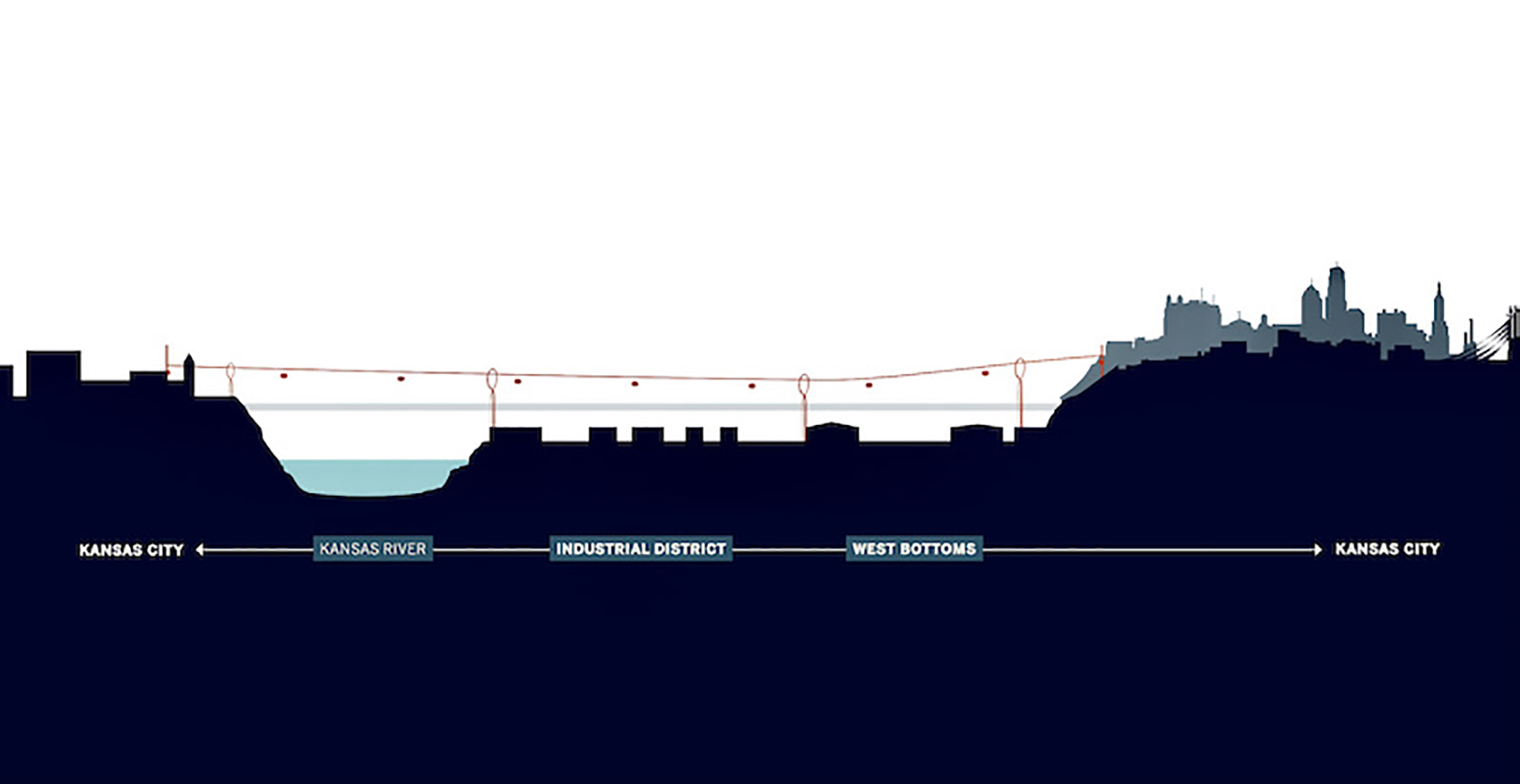
Cross section of how a gondola or aerial lift line could run from near Strawberry Hill to Quality Hill. (Image from SOM/HR&A study)
He said the UG wants the Mid-America Regional Council to include the gondola concept in its long-range transportation plan. That would then open the door to potential further funding.
“If adopted by MARC, we’ll be seeking money for a feasibility study,” Hand said. “We’d like to be collaborative with Kansas City, MO.”
Hand said a gondola line, or what’s generically described as an “aerial lift,” could run between Case Park/Quality Hill on the Missouri side to St. John’s Park/Strawberry Hill in KCK. It could include two stops serving the West Bottoms as well.
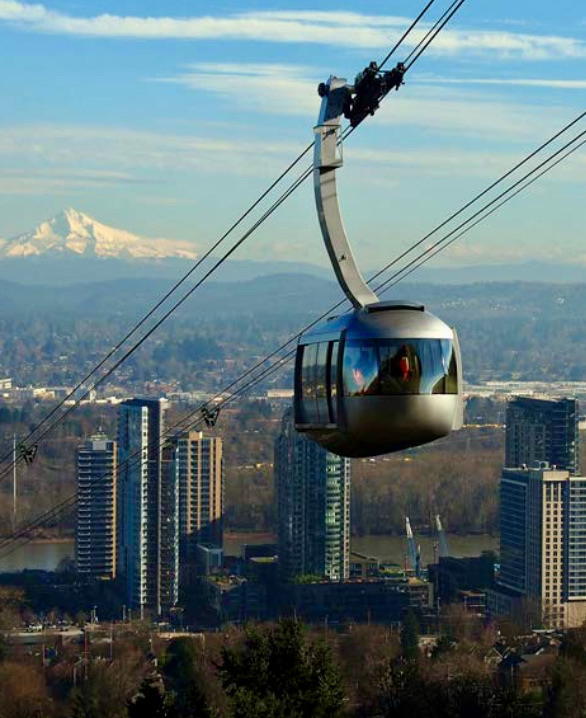
Portland, Oregon, already has an urban gondola line in operation. (Photo from SOM/HR&A study)
An aerial lift could cost about half as much per mile to build than the Kansas City streetcar, $25 million vs $50 million, Gunnar said. Gondola cabins range in size from 15 passengers to 35-40 passengers, and a line could carry between 3,000 and 5,000 people per hour.
The gondola project envisioned by Hand differs significantly from the concepts pitched by Chastain in his petition drives. The Chastain proposals focused on a line from within downtown Kansas City to Penn Valley Park, and much smaller passenger cabins.
The study prepared by SOM suggested a gondola line between the two downtowns could benefit downtown KCMO by linking it with the more affordable housing in Strawberry Hill and reinforce the economic development of both communities.
“An aerial lift will bring both the West Bottoms and downtown KCK within walking distance of downtown KCMO and its wealth of cultural attractions, convention center activity, arena events and jobs,” the study reported.
“The lift has the potential to not only be a functional commuter model, but a destination in and of itself…
“And with arguably the best view of the KC skyline and significantly lower housing costs, downtown KCK can leverage the success of downtown KCMO redevelopment into its own continual renaissance.”
Hand said successful urban gondola lines already exist in cities that include Portland, OR, New York City and Medillin, Colombia.
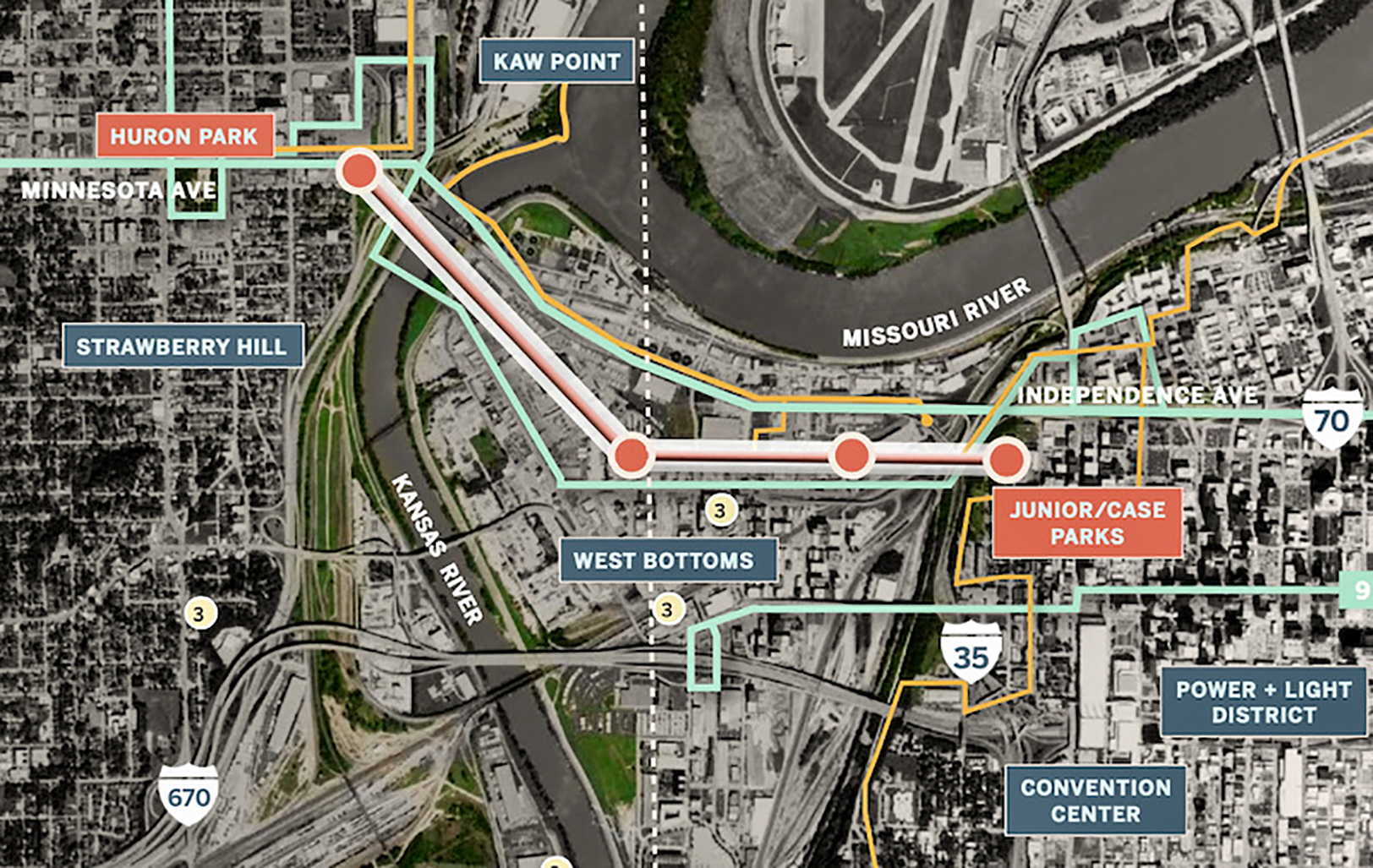
A potential gondola route from Strawberry Hill to Quality Hill with two West Bottoms stops. (Map from SOM/HR&A study)
The SOM report suggested that an aerial lift line could be less expensive to operate than other forms of transportation, observing the systems are designed to last up to 30 years “comparable or superior to rail cars and buses.”
“The system could potentially offset both operational and capital costs with sponsorships, special packages and events, naming rights, or real estate related revenues from integrated to adjacent development,” the report stated.
The aerial lift line could be managed by the Kansas City Area Transportation Authority, a private entity or a public-private partnership, according to the study.
Hand also said the gondola could repair what was once a robust transit connection between the downtowns. At one point in their history, the two Kansas Cities were knit together by two streetcar lines and several bus routes.
“Those connections have deteriorated and basically we now have the viaduct and that’s it,” he said.
A potential gondola line is the latest example of the Unified Government’s stepped up interest in the West Bottoms. The UG also is planning a park, bike trail and other improvements along the Kaw River.
As part of his ongoing educational campaign, Hand is scheduled to make a presentation on the gondola concept at the Kansas City Downtowners luncheon on Dec. 8.


2021 Startups to Watch
stats here
Related Posts on Startland News
designWerx makes room for growing makers in North Kansas City
A home garage workspace can be a lonely, stifling place for a maker trying to grow his or her business, said Pam Newton, who is leading the artistic vision for designWerx, a new coworking space and incubator specifically for makers in North Kansas City. “You’re alone constantly. Sometimes it’s hard to get motivated,” she said.…

KCultivator Q&A: Tyler Enders talks his biggest failure, the ‘Made In’ concept and Obama
Seated amid vintage mosaic tile and striking black-and-white portraits by Kansas City photographer Cameron Gee, founder Tyler Enders seems at home within the walls of the Made in KC Cafe. He’s an art lover with a finance degree — not to mention one of the minds behind Made in KC, a retail showcase for local…
Kimberly Gandy: Proof a startup can emerge stronger from its founder’s cancer diagnosis
Cancer needn’t mean can’t, Kimberly Gandy said. When the Play-It Health founder and CEO was diagnosed with an aggressive, mid-stage cancer in May 2016, her startup found itself at a crossroads. Gandy had just joined the Kansas City-based Pipeline fellowship and her company was poised for growth through its web- and mobile-based health regimen tracking…
Code Ninjas uses karate format to punch into KC youth STEM scene
Students often want more than their schools can offer, said Jason Hansen, of Code Ninjas. For some, that’s competitive sports teams or specialty athletics, he said. Others yearn for greater STEM-based learning opportunities — like those offered at Hansen’s Leawood center. “It’s just like you might have a dance studio, or a baseball academy,” Hansen…