

KC social entrepreneur Wesley Hamilton surprised with $1M on Good Morning America
October 20, 2021 | Startland News Staff
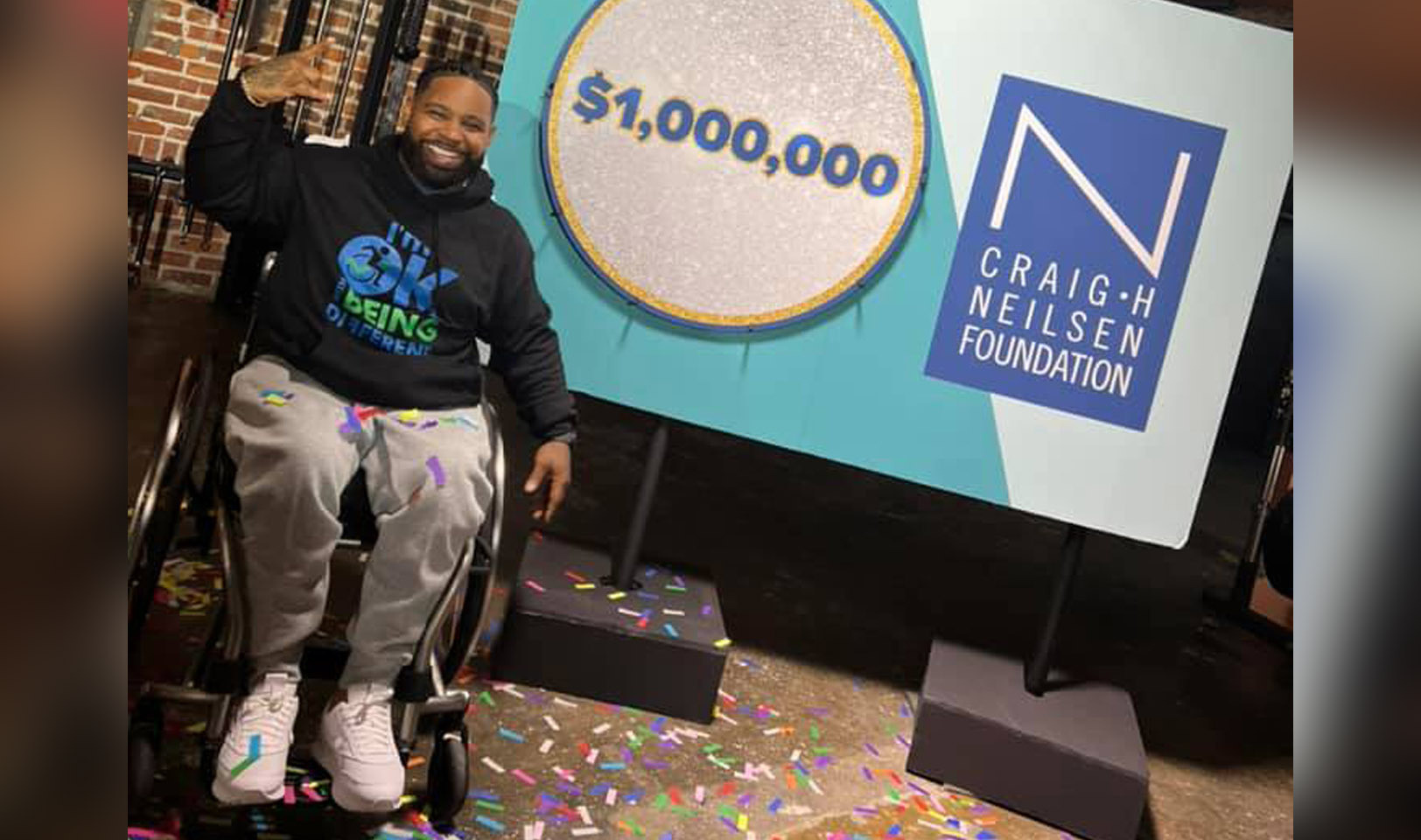
Wesley Hamilton experienced a roller coaster of emotions Wednesday morning, with a grand finale surprise of a $1 million donation from the Craig H. Neilsen Foundation.
“Thank you, everyone, for believing and watching the journey. It’s always been about the people we’ve been serving. I’m just grateful,” Hamilton said through joyful tears on Good Morning America. “… My story and where I come from, it doesn’t seem real; but it gives my people hope, and that’s all I wanted.”
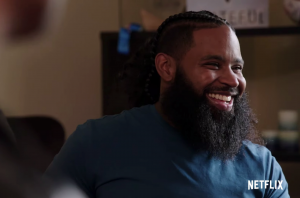
Wesley Hamilton, Disabled But Not Really; image courtesy of Netflix
Anticipating a promotional segment on his non-profit, Disabled But Not Really, Hamilton was all smiles watching a video of his story produced by the network morning show with guest appearances from his family and friends. Hamilton was then asked to spin a wheel for a chance to win up to $100,000 — but GMA revealed that he was actually one of three recipients of the $1 million 2021 Craig H. Nelson Foundation’s Visionary Prize.
Click here to read more about Wesley Hamilton’s journey in founding Disabled But Not Really.
Established in 2020 to honor the legacy of Craig H. Neilson, the foundation is the largest private funder of spinal cord injury (SCI) research, education, clinical training and programmatic support in the U.S. and Canada.
The Visionary Prize was created to celebrate influential voices who show great potential to expand or advocate for new ideas for those living with a disability, according to the foundation’s press release.
The recipients reflect several of the late-Neilsen’s qualities: from being unafraid to take bold risks, to boundless determination and passion, to the ability to inspire others. Alice Sheppard, an award-winning choreographer and founder of the disability arts ensemble Kinetic Light, and Kim Anderson-Erisman, director of the Northeast Ohio Regional SCI Model System, were the other two Visionary Prize recipients alongside Hamilton.
“We are honored and excited to award Kim, Wesley, and Alice the 2021 Visionary Prize,” said Kym Eisner, Executive Director of the Neilsen Foundation. “All three embody the vision of the Neilsen Foundation and the dreams our founder had to enrich the lives of those affected by SCI. The Prize is awarded for contributions and significant impact they have already made and their potential to continue to inspire all around them as they do.”
“My father would be so proud to see Kim, Wesley, and Alice representing his legacy,” said Ray Neilsen, co-trustee and chairman of the board. “The Visionary Prize reflects his limitless ambition, determination, and passion to ensure that anyone living with SCI can achieve their goals as active members of their community, just as he did.”
Hamilton plans to use part of the funding to launch Disabled But Not Really’s mobile gym, he shared on GMA.
“Our goal is to take what we’ve been doing and spread it across the country,” Hamilton said. “One of our biggest things was finding a vehicle to transport, and this is going to give us that opportunity.”
Hamilton’s life changed in 2012 when he was shot two times, leaving him paralyzed below the waist. Turning his life around, Hamilton founded Disabled But Not Really in 2015, was notably featured on Season 4 of Netflix’s “Queer Eye” and serves as a local philanthropist and motivational speaker.
“The man who tried to take my life, gave me life,” Hamilton shared. “This is me every day, and I’m living. I’m living my purpose. Everybody’s seeing that. Follow your dreams despite the circumstances that happen to you.”
A man who changed his life after gunshot wounds left him paralyzed nearly a decade ago was surprised with $1 million. https://t.co/HGLo5P5QwI
— Good Morning America (@GMA) October 20, 2021
This story is possible thanks to support from the Ewing Marion Kauffman Foundation, a private, nonpartisan foundation that works together with communities in education and entrepreneurship to create uncommon solutions and empower people to shape their futures and be successful.
For more information, visit www.kauffman.org and connect at www.twitter.com/kauffmanfdn and www.facebook.com/kauffmanfdn


2021 Startups to Watch
stats here
Related Posts on Startland News
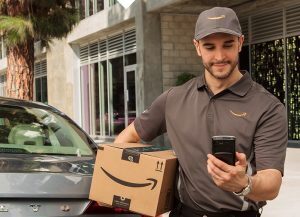
Convenience unlocked: Amazon now offering delivery directly to vehicles in KCK
Adding to its area delivery offerings, Amazon is turning trunks in Kansas City, Kansas, into mailboxes. The Seattle-based tech giant on Tuesday introduced in-car delivery options in 37 U.S. cities, allowing its Prime members to receive packages in their parked vehicle. Kansas City, Kansas, and St. Louis are the only cities in Kansas and Missouri…

Big food hall concept Parlor KC plans fall opening in Crossroads
Parlor KC, a collaborative food hall now under construction in the Crossroads Arts District, hopes to serve as a laboratory and incubation hub for area chefs and restaurateurs. Eyeing a fall opening in the east Crossroads, Parlor will offer chefs and restaurateurs a physical space to test dishes and concepts on diners that want variety…

Looking for nation’s lowest-cost small cities for startups? No. 9’s in the KC metro
A Kansas City suburb finds itself among the top 10 lowest-cost small cities for starting a business, according to a new nationwide report. Raytown, Missouri, lands at No. 9 on the ranking by personal finance website WalletHub — just below Cape Girardeau, Missouri, at No. 8. The rest of the top 10 is filled by…

Merit-based economy is an illusion ripe for AI disruption, talent coop founder says
Organizing Midwest talent to use artificial intelligence and machine learning to combat societal challenges like income inequality could be a powerful tool for a new generation of problem solvers, said Brian Curry. “I truly believe in the possibility of artificial intelligence for changing the way we look at jobs, income, capitalism, poverty, wealth disparity, disease…