

Blockchain to beef: Why one serial innovator traded the slow pace of corporate life for another muzzle
October 14, 2021 | Amelia Arvesen
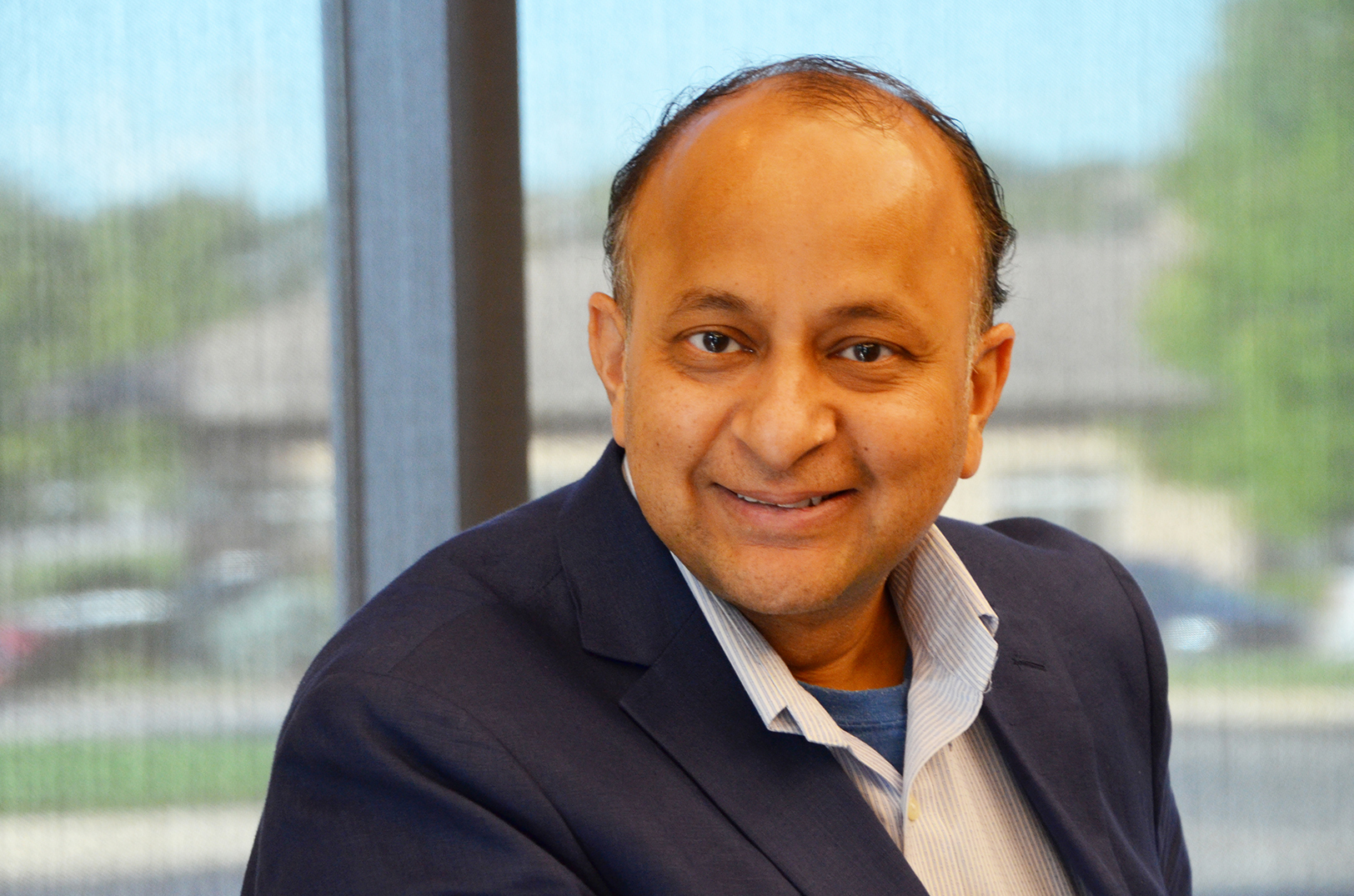
Shekhar Gupta learned early that life comes with two approaches for overcoming challenges: accept the problem and move on or figure out a better way of solving it.
The Kansas City serial entrepreneur has no shortage of ideas for finding solutions, but he keeps moving nonetheless.
Techstars Kansas City 2021 class
As COO of Blockchain Initiatives, Gupta has his hands in projects ranging from the KCCOVID-19 site for donating and requesting pandemic help to Interacshn — a startup focused on machine learning and AI-based coronavirus solutions. His latest venture, MyAnIML, helps ranchers predict diseases in cattle through facial recognition, and earned him a spot in the recently completed Techstars Kansas City cohort.
“I don’t have any aspiration of becoming the next Jeff Bezos,” Gupta said. “I just love solving things.”
Click here to learn more about MyAnIML.
Originally from New Delhi, India, Gupta moved to the U.S. to earn his electrical engineering degree at the University of Nebraska in Lincoln. Living in the states on his own helped Gupta grow up quickly and taught him how to either fight or accept existing systems.
After graduating, he stayed in the Midwest, landing a job working on breakthrough technology in the late 1990s at Sprint in Kansas City. Later joining teams at telecommunications companies like Motorola and Centurylink, the urge to start his own ventures persisted.
Simply put, the corporate pace was too slow, Gupta said.
“When I wake up in the morning, I know what I need to develop,” Gupta said. “Then when I lie down in the nighttime, I go through that list of accomplishments. Did I do all that or not? And in many cases, working for those Fortune 100 companies, I wasn’t able to because you’re waiting on somebody else to do something before you could do your own work.”
In 2001, Gupta and his wife, Dr. Saroj Gupta, started their first business together. Since then, he’s moved from project to project, leading wildly successful and not-so-successful businesses, he said — with both outcomes teaching him unique lessons.
When he’s not working, Gupta likes to hike, camp, and fish.
CJ Obermaier, a senior software engineer for the internal risk management company, Archer, knows Gupta through the Kansas City chapter of Government Blockchain Association and through Gupta’s annual Blockchain KC Conference.
Gupta is ambitious and emphasizes community impact, he said.
“All of the things he wants to do, any startup, any business, anything like that, has a bigger focus than just on the profit of it,” Obermaier said.
Most of Gupta’s ideas start with his innate curiosity.
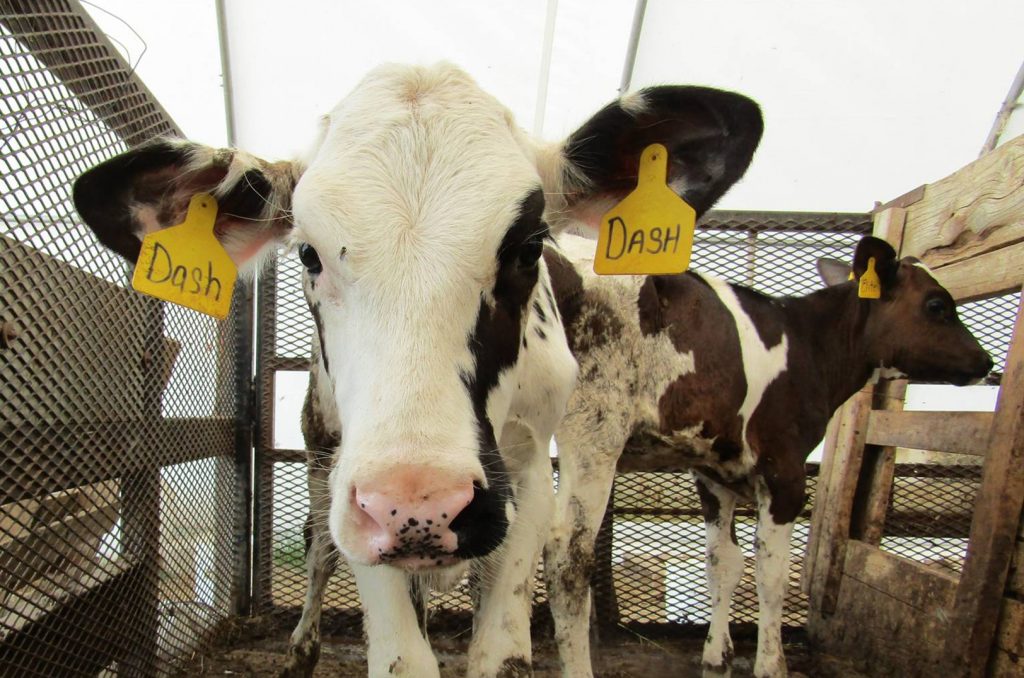
MyAnIML tech
A few years ago, the seed for MyAnIML was planted when Gupta started wondering about ways to prevent or limit beef and dairy recalls. He learned that many recalls happen because a cow was sick when it was processed. If the processing provider didn’t learn about the sickness until the food product was distributed, whole batches would be pulled from shelves.
Each recall costs about $10 million, plus impacting the health of people affected, he said.

Working with veterinarians and a data scientist for MyAnIML, Gupta is developing a technology that evaluates a cow’s face and muzzle for changes that can indicate whether or not it will get sick. By predicting a disease, ranchers can isolate the one cow so it doesn’t infect the rest of the herd, therefore saving them revenue.
“When I started proposing this idea, people asked me if there was any research paper that I could point out to them because they were very skeptical,” Gupta said. “Everybody said, ‘No, this will never work.’ But in July of this year, we proved that a disease shows up on the muzzle before you can visually see the cow being sick.”
A trial of MyAnIML launches at West Texas A&M University later this year, he said, and he hopes to add up to eight diseases to the data set to bring more value to the technology.
MyAnIML could launch with consumers as early as spring 2022.
Combined with his interest in health, technology, and finance, Gupta is mostly drawn to projects that help fellow humans, he said, whether it be through a blockchain-based workforce development program or a disease management system.
“They all tie into my vision of being a productive member of Kansas City and eventually the overall society as well,” Gupta said.

This story is possible thanks to support from the Ewing Marion Kauffman Foundation, a private, nonpartisan foundation that works together with communities in education and entrepreneurship to create uncommon solutions and empower people to shape their futures and be successful.
For more information, visit www.kauffman.org and connect at www.twitter.com/kauffmanfdn and www.facebook.com/kauffmanfdn

Featured Business

2021 Startups to Watch
stats here
Related Posts on Startland News
Pegah’s expands its family of restaurants to Martin City with new faster-service concept
A locally owned restaurant chain is putting a drive-thru emphasis on breakfast with its newest location in Martin City — offering “hand foods” handed directly to hungry diners. “We’re trying a fast-casual drive-thru focusing on coffee and beverages — tea and juices — and fast-casual meals,” said Rameen Sharifi, owner of Shawnee-based Pegah’s Family Restaurant.…
K-State opens physical innovation hub space to boost research, economic development
Startland News’ Startup Road Trip series explores innovative and uncommon ideas finding success in rural America and Midwestern startup hubs outside the Kansas City metro. MANHATTAN, Kansas — A newly unveiled collaborative office space at Kansas State University is expected to catalyze research commercialization, industry partnerships and economic growth, said Richard Linton. “This new space…
Northeast Pizza shop bakes KC’s most accessible food into a new restaurant for all, owner says
Rising from a family of restaurateurs, Noah Quillec is striking out on his own — with the help of some culinary friends — to bring a new pizzeria to Kansas City’s Northeast; it’s a move he hopes will bring unity by the slice. “This neighborhood is very accessible, so diverse and so all over the…

Acting camp to cast: Lifetime movie filmed in KC gives young actors their TV dream moment
A Lifetime movie debuting this weekend not only shines a spotlight on Kansas City, said Elaina Paige Thomas, but it showcases talent at The Next Paige, Kansas City’s first Black-owned talent management agency. “Girl in the Garage: The Laura Cowan Story” — set to premiere Saturday, Jan. 18 — was filmed this fall in various…