

Bearded Fellas shave away ‘just a doll’ — leaving the beauty of everyday magic, people
October 22, 2021 | Amelia Arvesen
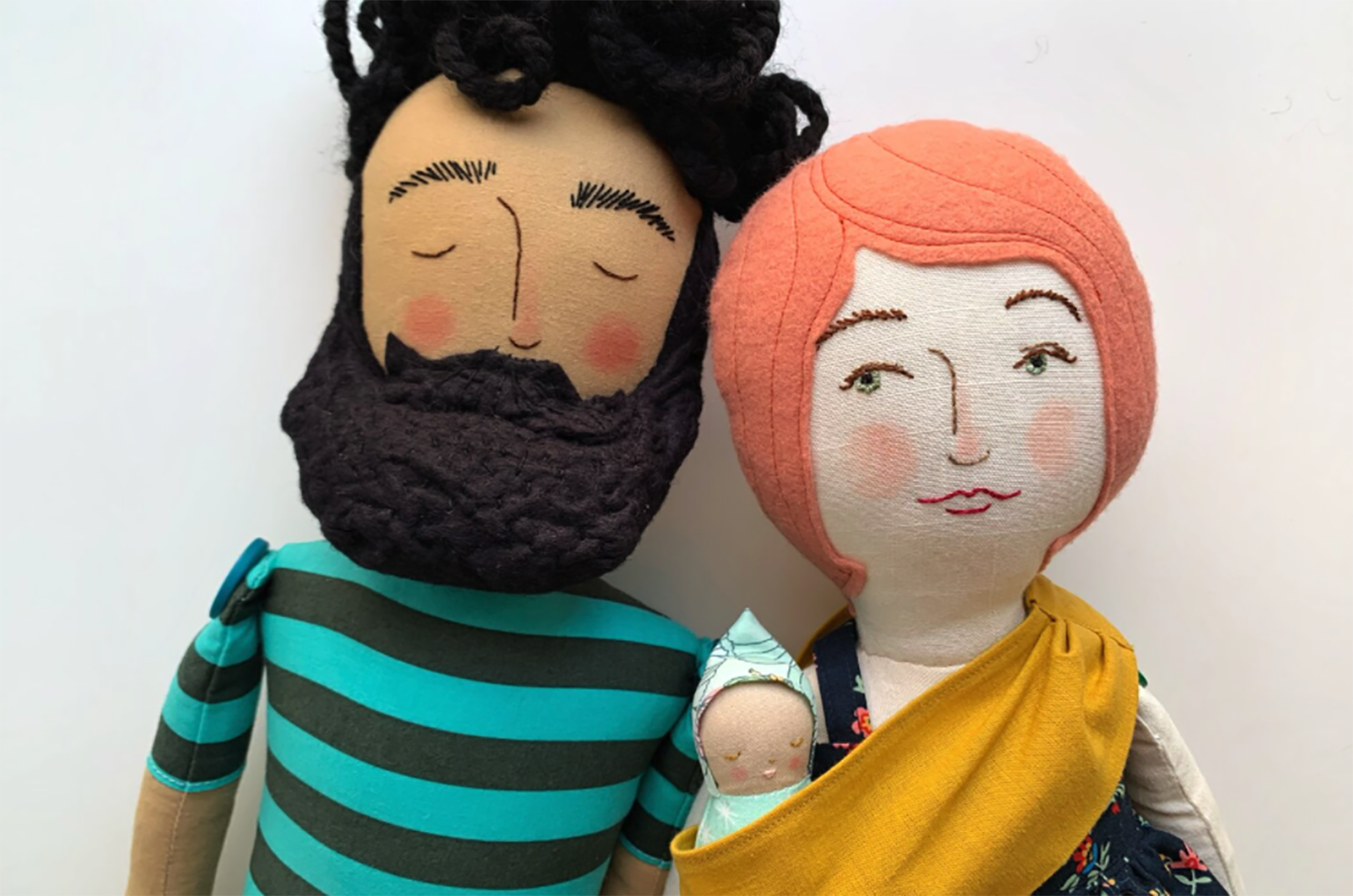
Ali Bustos didn’t even know how to sew when she was gifted a sewing machine by her parents in 2008. More preoccupied with painting at the time, the machine sat mostly unused.
But when her first son was born, it was difficult to paint with a wiggly baby in her arms, she said.
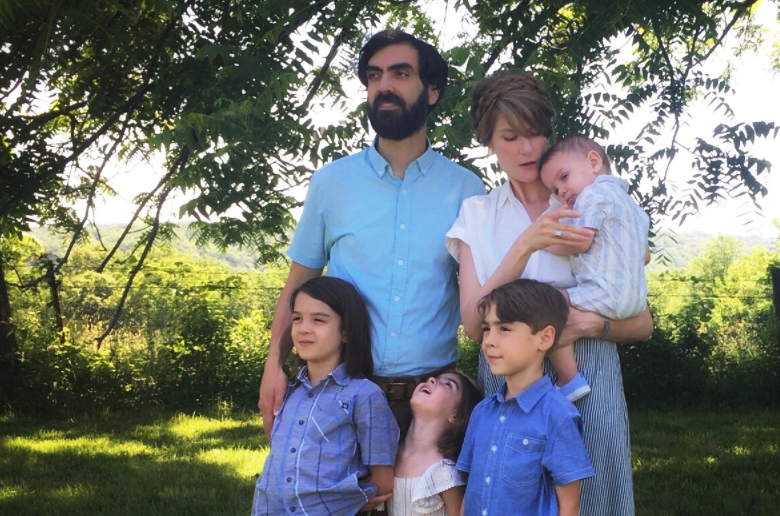
Brian and Ali Bustos family, Bearded Fellas
Her yearning for a creative outlet persisted, and she pivoted to a new medium that was more kid-friendly. She started by embroidering the silhouettes of people and animals onto pillows for her son to hold. Eventually, she made her first doll for him.
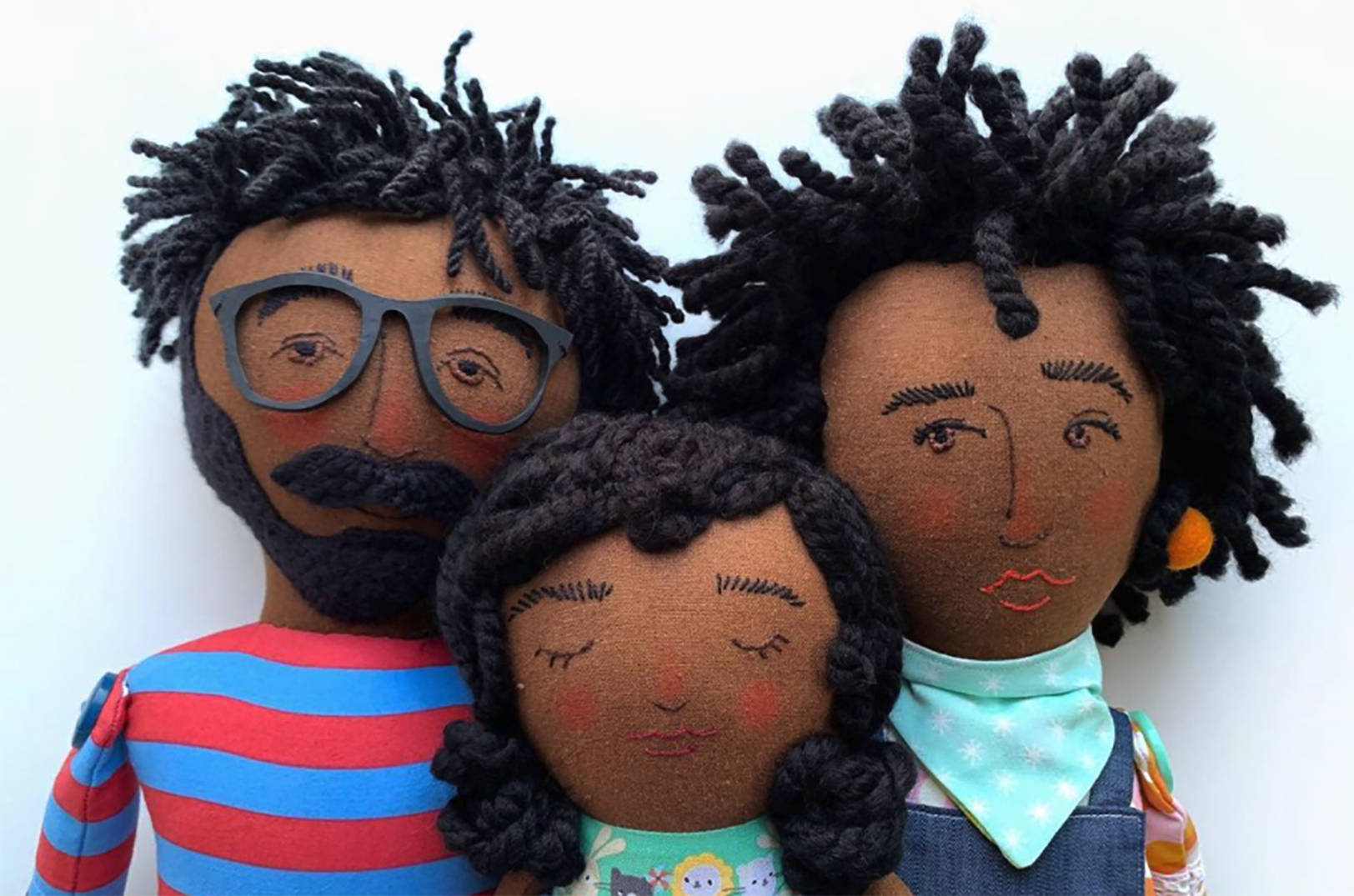
It looked less like G.I. Joe or a Ken doll and more like her husband, who she described as tall and lanky with a big beard.
“I just thought it was kind of messed up that there were no dolls for boys,” she said. “I wanted my son to learn how to be nurturing and loving. Why is that not encouraged for boys?”
The endeavor continued. She kept making the soft toys as baby gifts for friends and family, and was soon after encouraged to start selling them under the name Bearded Fellas.
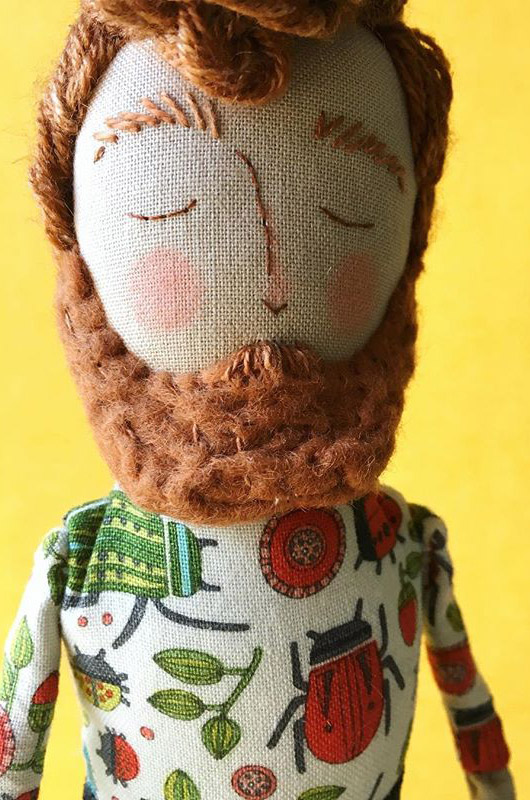
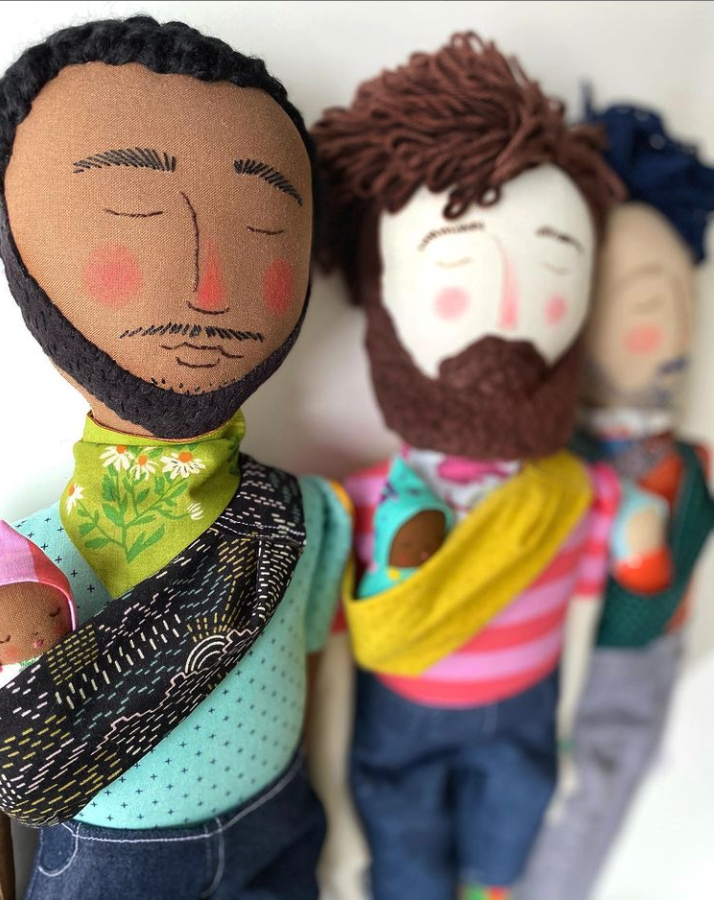
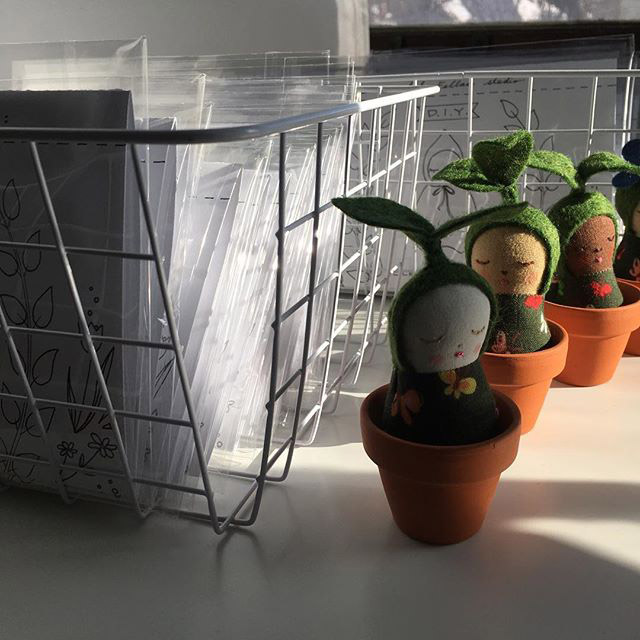
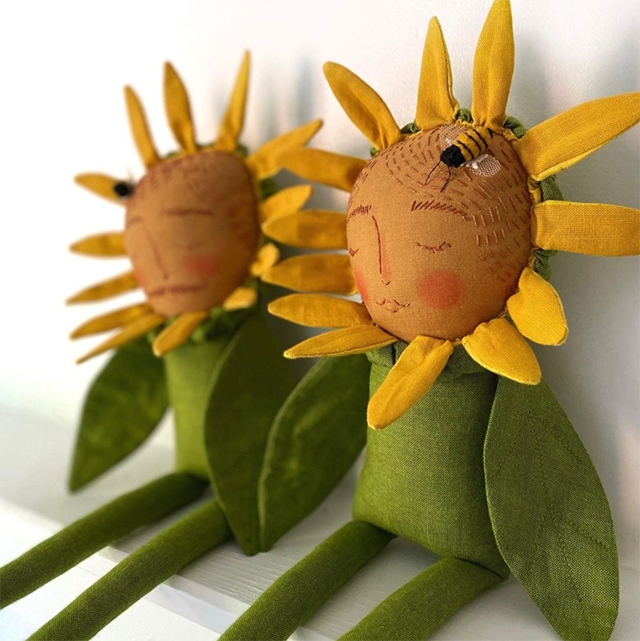
“When I started Bearded Fellas, they were dolls, but they became more of an artistic expression,” she said. “I know people will look at them and be like, ‘Oh, that’s a doll.’ To me, it’s an anthropomorphic textile. It’s painting with fabric.”
Bustos crafts dolls in all shapes, sizes, forms, and colors, from people to woodland creatures — each piece inspired by her love of people-watching.
“People are just so beautiful,” she said.
Click here to explore the Bearded Fellas website.
She grew up on both sides of Kansas City’s state line, where she was surrounded by a diversity of cultures at home and school, she said.
Bustos studied architecture and painting at the University of Missouri-Kansas City. And while she has traveled the country and abroad, Kansas City will always be home, she said.
She lives downtown with her husband and four children, ages 4 to 11.
Stacked in a hutch along one wall of her studio are squares of patterned fabric in every color of the rainbow. The room is in organized disarray, often with dolls’ limbs hanging from that same sewing machine.
She typically works in groupings or collections that reflect her mood and personal seasons — more earthy for mellower times, brighter for energetic times, as an example.
Her children are highly involved in the design process, voicing their opinions about a doll’s hairstyle, clothes or beard. And despite whatever is going on in their lives at the time, her husband, Brian, always makes sure she spends some precious solo time in the studio.
“I find that I’m a nicer human if I’ve been here for a while,” she said.
Bearded Fellas
While the dolls fill an artistic need for Bustos, she has learned over almost 11 years of making them that they also represent something special for her customers.
The first piece she sold was an African-American doll with glasses on display at the coffee and art space Oddly Correct. It went to a family that had just adopted a child from Ethiopia, and they wanted a toy to which their child could relate.
Bustos has cried with customers who have lost children and observed others connecting with the dolls in ways she didn’t even expect, she said. One man told her that he had never seen his skin tone represented before in such a beautiful way, she recalled.
If not every doll sells out right away, that’s OK, Bustos added. She’s grateful for everyone who has supported the Bearded Fellas journey, and has made peace with the fact that they’ll go to the right home one day. It means she just gets to spend more time with them.
“I don’t just want them going to anybody,” she said. “I want them to go to their own family where they’re needed, where they’re wanted, where they’re loved because a lot of love goes into them.”
This winter, a limited number of Bearded Fellas will be available at Shop Local Kansas City at 3630 Main Street, Seven Swans Creperie at 1746 Washington Street, and the Bearded Fellas website. She’s also selling stitched dad and baby pairs at ONEderChild, a toy store in Solvang, California.

This story is possible thanks to support from the Ewing Marion Kauffman Foundation, a private, nonpartisan foundation that works together with communities in education and entrepreneurship to create uncommon solutions and empower people to shape their futures and be successful.
For more information, visit www.kauffman.org and connect at www.twitter.com/kauffmanfdn and www.facebook.com/kauffmanfdn


2021 Startups to Watch
stats here
Related Posts on Startland News

Cornstalks to cardboard: This KS company is turning farmers’ trash into sustainable fiber packaging
Startland News’ Startup Road Trip series explores innovative and uncommon ideas finding success in rural America and Midwestern startup hubs outside the Kansas City metro. WILLIAMSBURG, Kansas — One small town just south of I-35 in Franklin County — population 390 — soon will become home to a new world headquarters, said Mark Majors. Williamsburg’s…
Vine Street Brewing drafts ‘Afrodisiac’ Ale: A tribute to love, Black culture
A cross-Kansas City collaboration crafted specifically for the month of February could become a staple at Vine Street Brewing if customers fall in love with the blend as much as its brewers hope. Kansas City’s first Black-owned brewery — in partnership with André’s Chocolates and The Black Pantry — unveiled ‘Afrodisiac’ last week, offering a…

Fans packed Chiefs rally, one didn’t come home; citywide trauma from shooting won’t heal quickly, grief expert says
Trauma and grief come in waves, said Mindy Corporon, foreshadowing a long road ahead for those impacted — directly and indirectly — by Wednesday’s shooting near the Kansas City Chiefs’ Super Bowl victory rally. Like many across the region, Corporon, co-founder of the Merriam-based nonprofit SevenDays foundation, was watching the Chiefs parade on TV when…
Black leaders need to earn a ‘thriving wage’ before they can help others; an Evergy-backed cohort could help them ascend
A new program backed by entrepreneur support groups and Evergy aims to raise household income by at least 30 percent for participating Black professionals, nonprofit founders, and entrepreneurs, said Craig Moore II. “The ultimate goal is making sure you’re a leader who can do more than show up and talk about community — you have the…