

New in KC: How two OU alumni secured over $1M from NASA, US Air Force for 3D printing startup
September 2, 2021 | Channa Steinmetz
Editor’s note: New in KC is an ongoing profile series that highlights newly relocated members of the Kansas City startup community, their reasons for a change of scenery, and what they’ve found so far in KC. This series is sponsored by C2FO, a Leawood-based, global financial services company. Click here to read more New in KC profiles.
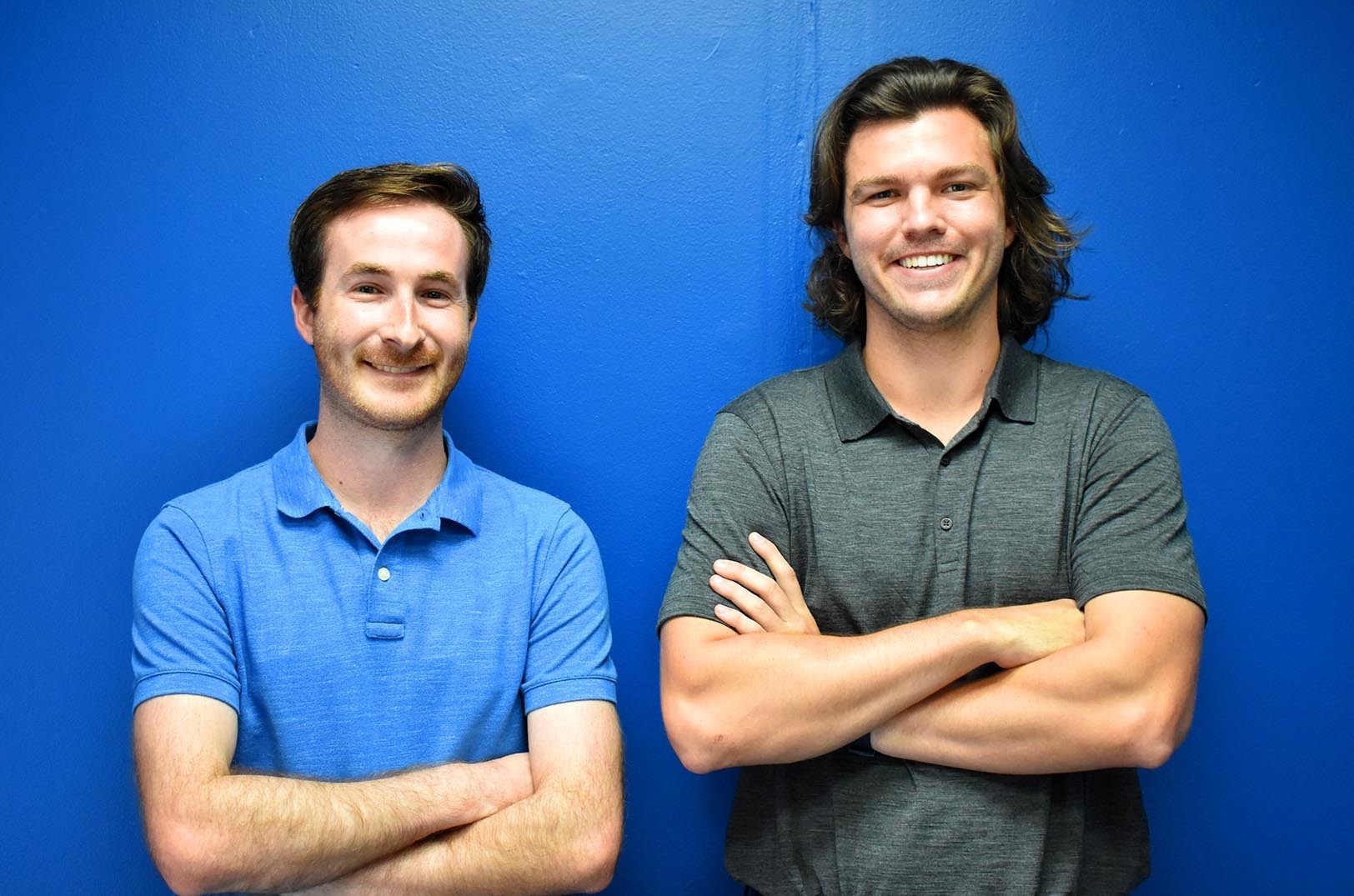
Replicating the founding catalyst for many pandemic-era startups, COVID-19 gave recent transplants Blake Herren and Ryan Cowdrey the headspace they needed to launch Raven 3D Printing — a state-of-the-art 3D printing startup now headquartered in KCK.
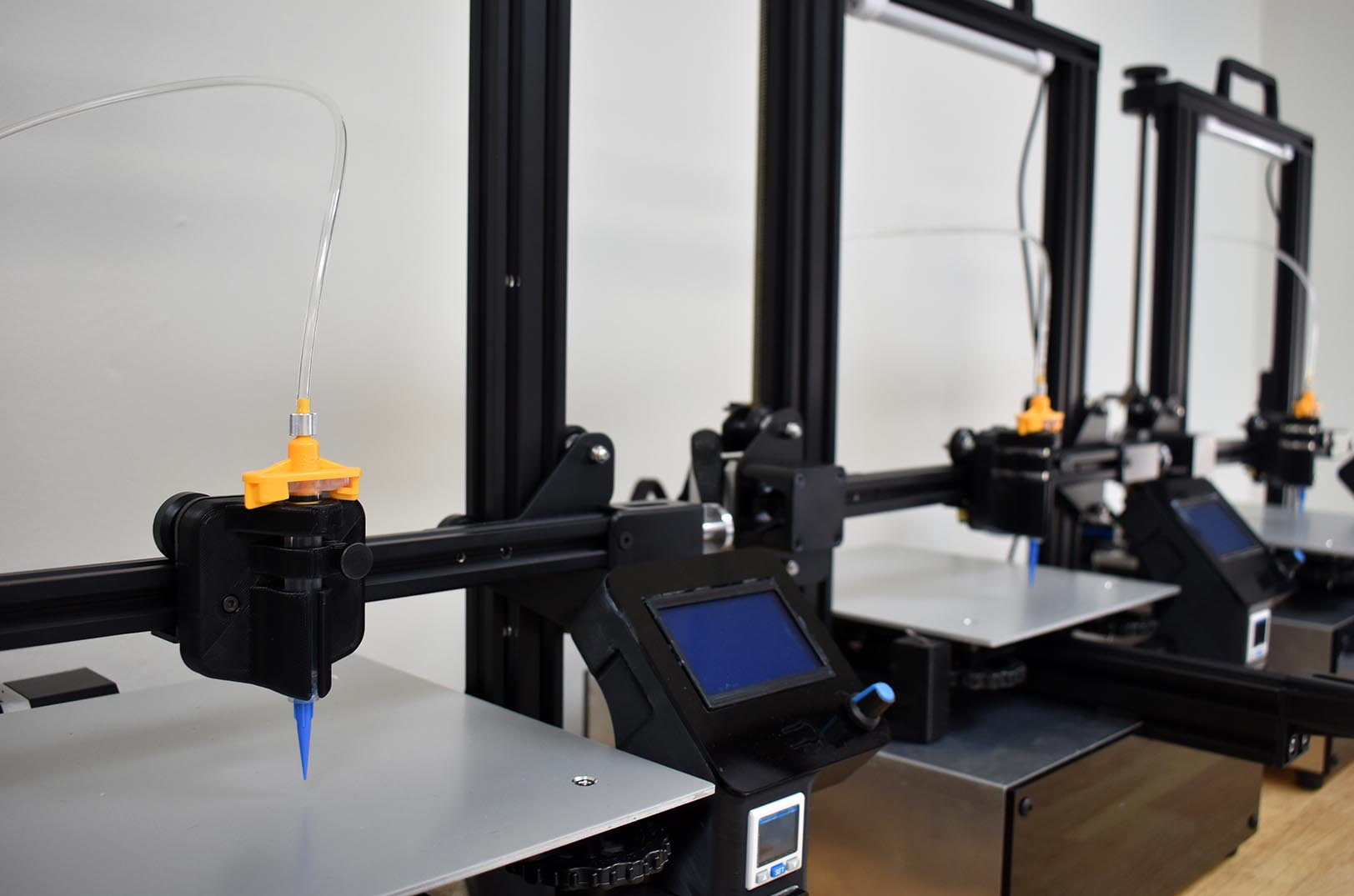
Raven 3D’s desktop Direct Ink Write (DIW) 3D printer
“COVID gave us the bit of free time that we needed,” said Herren, who graduated from the University of Oklahoma (OU) in 2021 with a Ph.D. in mechanical engineering. “It forced me out of the lab at OU, and Ryan had been working full-time. We likely would not have been able to focus as much on Raven 3D without COVID.”
Raven 3D Printing was founded in June 2020 with the mission of establishing a new era of manufacturing through 3D printing the highest quality polymers and composites, they explained.
“We are focused on printing thermoset materials, so they’re much higher performance [and] higher strength, lower weights typically, and much higher durability and resistance to chemicals and lights,” Herren noted.
Cowdrey and Herren met while students at OU, each exploring the possibilities of 3D printing. Cowdrey utilized 3D printing to prototype automotive parts while participating in Formula Society of Automotive Engineers; and Herren did research on 3D printing while in graduate school.
“It started off just building printers, then testing printers, and now we’re prototyping our own,” Herren said. “So it’s been an exciting journey in the 3D printing space so far.”
What is Direct Ink Writing?
Direct Ink Writing (DWI) is a method of 3D printing that utilizes ink, gel or paste to build a structure. It is typically achieved by extruding material out of a syringe or screw extruder — allowing for practically any liquid material to be printed. Materials used in DIW include thermoset polymers, nanocomposites, biomaterials, ceramics, food products and more, according to Raven 3D Printing.
The duo created a desktop Direct Ink Writing (DIW) printer that extracts materials using air pressure — rather than a mechanical plunger — resulting in cleaner and more precise products.
As the two aim to outperform their competitors, they are currently working on “in-situ” curing methods. In-situ curing is the process of liquid material solidifying immediately as it is deposited, which typically requires heat and can be limiting to the size and complexity of a part, they continued.
“Raven 3D is currently focused on the [research and development] of in-situ curing methods and materials to locally heat and cure material immediately upon extrusion,” they noted on Raven 3D Printing’s website. “In-situ curing DIW harnesses the unique capabilities of composite and nanocomposite materials and will enable a revolution in polymer-based 3D printing.”
Click here to check out Raven 3D Printing.
Attention from NASA, Air Force
The duo’s up-and-coming technology has even earned them Small Business Innovation Research (SBIR) and Small Business Technology Transfer (STTR) contracts from NASA and the U.S. Air Force.
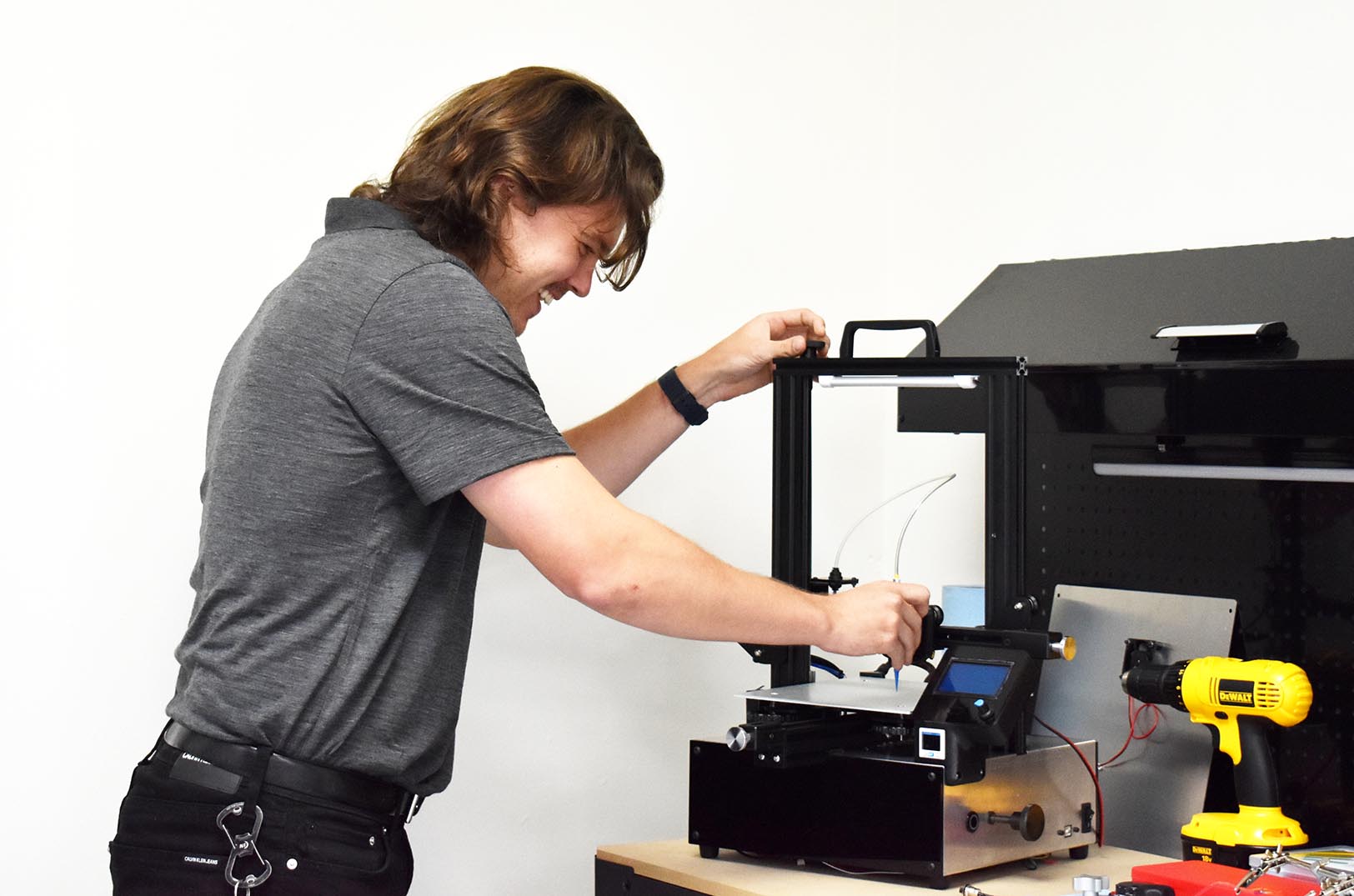
Blake Herren, Raven 3D Printing
“We wouldn’t have even seen the applications for these SBIR programs if it wasn’t for Tom Wavering, the executive director at the [OU] Innovation Hub,” Herren recalled. “… The first topic he brought to us and that we applied to was for the army. We didn’t win at the time.”
Herren and Cowdrey then took time to focus on learning how to write proposals for these contracts and won their second proposal for the U.S. Air Force in November.
“We were also awarded a phase one from NASA earlier this year,” Herren said, noting that they have over $1 million in government funding for research and development.
“We have a good start coming in next year to develop these technologies to print newer and better materials — and to do great things in the [Department of Defense] and across the aerospace community,” Herron said.
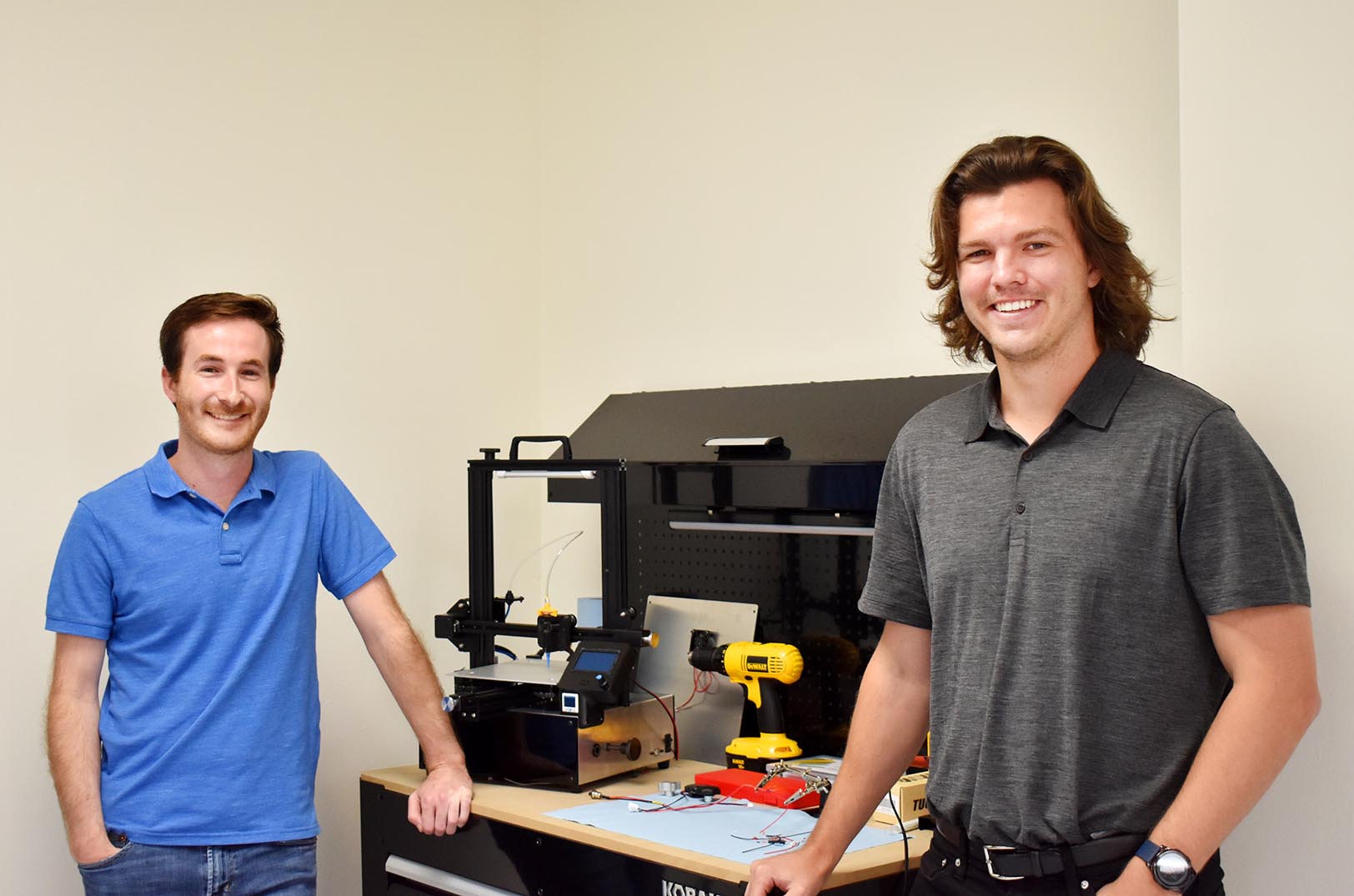
Ryan Cowdrey and Blake Herren, Raven 3D Printing
Engineers-turned-entrepreneurs
Graduating from OU in May 2020 with his Master’s degree in mechanical engineering, Cowdrey was quickly hired as an engineer and moved to Kansas City, Missouri — just miles away from his childhood hometown of Overland Park.
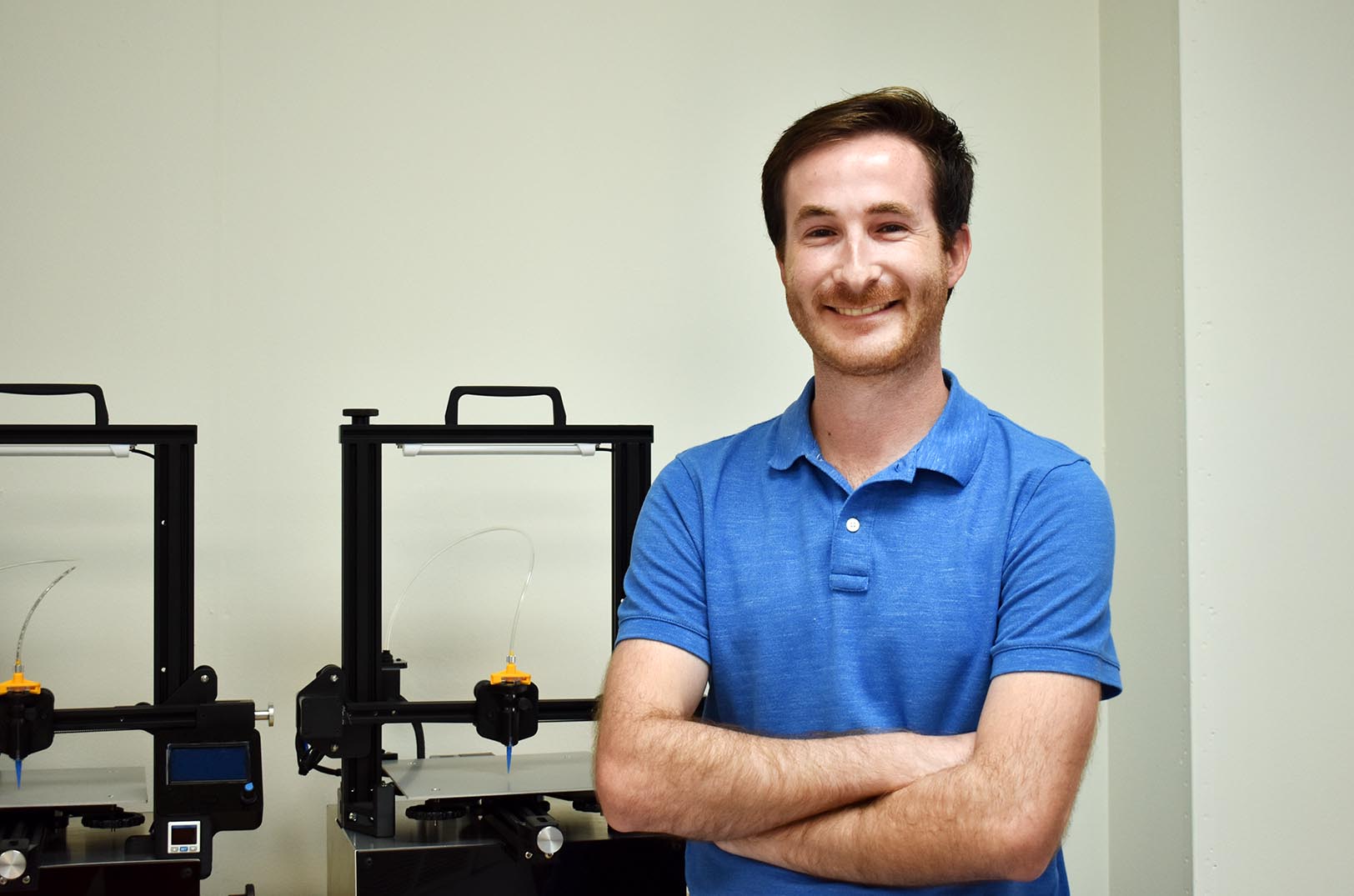
Ryan Cowdrey, Raven 3D Printing
“Building a company in Kansas City was something I was really excited about,” Cowdrey shared. “Growing up, I really liked building things and creating, so it’s cool to be able to come back and continue to do that.”
“I have a lot of family that’s nearby as well, so it made sense to build a startup here — near family and in a bigger city that has more entrepreneurial opportunities,” Herren added, emphasizing their eagerness to get connected to business mentors.
“With both of us being engineers, we need to do a lot of learning on the business side,” he continued. “Starting a company is a whole different experience than doing research in a lab. … We’re hoping that we can connect with [experts and other tech startups] in Kansas City and learn from them.”
Along with advancing their technology, the duo hopes to double their team.
“If you’re interested in 3D printing or have experience in 3d printing, we’re looking for electrical engineers, mechanical engineers, maybe chemists down the line,” Herren said. “It’s just us right now, but with our phase two proposal, we’re excited to hire one or two engineers.”
Connect with Ryan Cowdrey and Blake Herron on LinkedIn.



2021 Startups to Watch
stats here
Related Posts on Startland News

Cali tech firm AutoAlert to create 300 Kansas City jobs
AutoAlert, an Irvine, Calif. Based tech firm, announced Friday that it’s planning to relocate its headquarters to Kansas City. The firm — which will receive a Missouri Works grant of as much as $9.2 million if it meets its job creation projection — offers automotive software communications using data mining and trade-cycle management tools. With plans…

Healthy hip-hop duo remixes rap for exercise, education tech
Raised in the urban core of Kansas City, Roy Scott grew up idolizing gangster rap. Inspired by 90s hip-hop artists such as N.W.A. and Bell Biv DeVoe, he always hoped to become a famous rapper. But years later when raising his own son, a light bulb went off for Scott when he heard his 4-year-old…

CNBC: Kansas City is a top place to affordably ‘live large’
Kansas City was once again nationally recognized as a locale in which residents can live well on a base salary that’s comparatively low to coastal cities. CNBC named Kansas City No. 9 on its list of 12 cities “where you can live large on $60,000.” “The best places are likely the ones where you can…

Listen: Madison Flitch founder carves a furniture firm with KC stories ingrained
Editor’s note: In partnership with the KC Greats podcast, hosted by Scott Parman, Startland News hopes to offer its audience more avenues to learn about entrepreneurs in Kansas City. Opinions expressed in this commentary are the author’s alone. In this episode, Parman chats with Madison Flitch founder John Pryor, who shares the story of bootstrapping his…