

Why a new founder-first Midwest incubator sees scarcity as a source of strength
August 10, 2021 | Channa Steinmetz
Startland News’ Startup Road Trip series explores innovative and uncommon ideas finding success in rural America and Midwestern startup hubs outside the Kansas City metro. This series is possible thanks to the Ewing Marion Kauffman Foundation, which leads a collaborative, nationwide effort to identify and remove large and small barriers to new business creation.
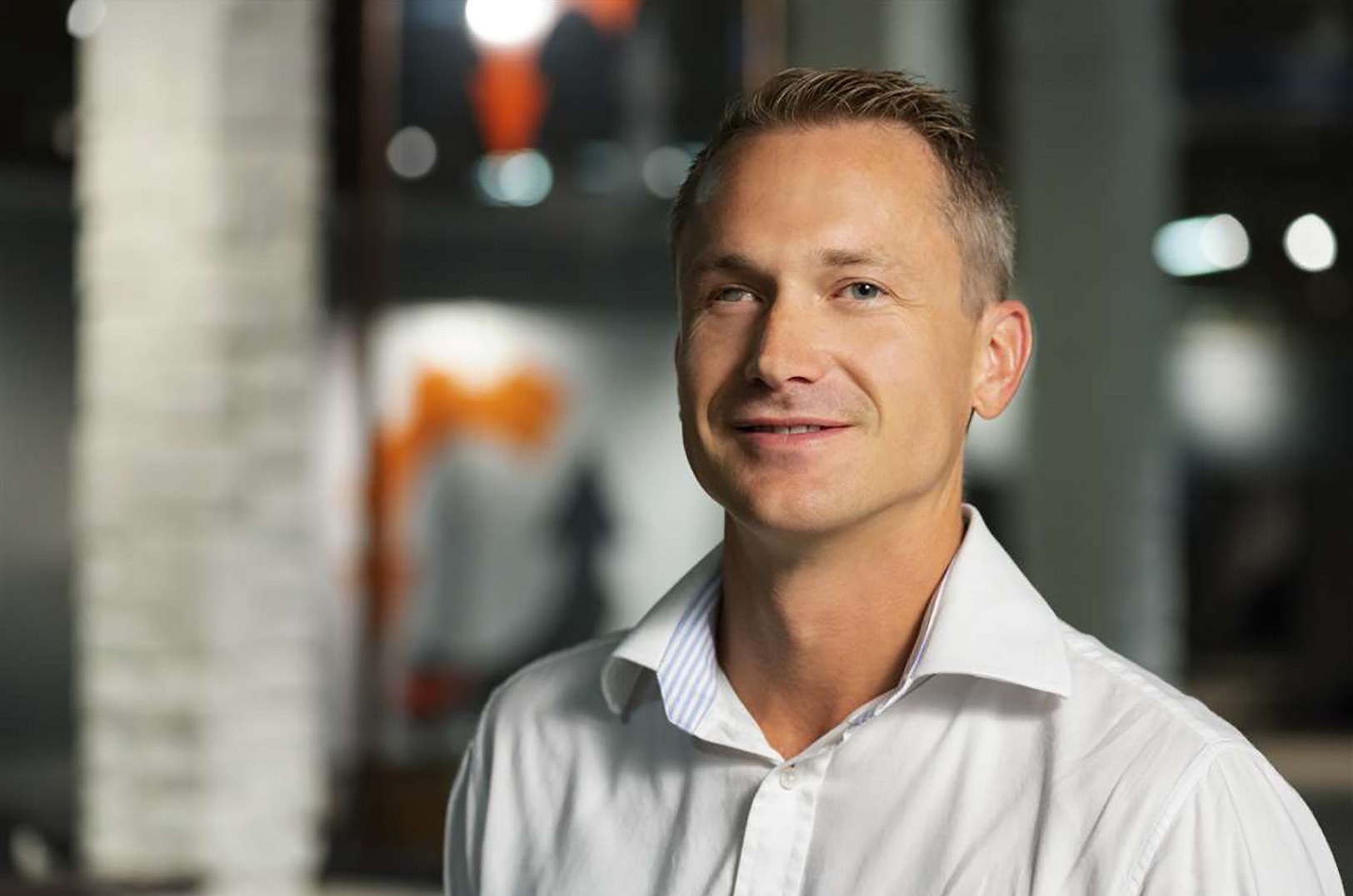
COLUMBIA, Missouri — A startup’s success is inextricably linked to the individuals within the company and their relationship to their own physical and mental health awareness, said Willy Schlacks.
“Most people think there’s this divorce between their own individual journey and then a company journey — and it’s just not true,” said Schlacks, a serial entrepreneur known for co-founding the construction fleet and digital solutions startup EquipmentShare with his brother, Jabbok. “In my experience, most entrepreneurs are not looking inward; they’re looking outward for investors or for validation that this thing they’re building is a good idea.”

Jai Malik, Countdown Capital
To encourage introspection, Schlacks created Scale — a founder-first, Columbia-based incubator program more focused on the individuals as founders, rather than their startup ideas and business plans. He co-founded the 12-week program alongside his brother and Jai Malik, founder and general partner at Countdown Capital.
Click here to apply for Scale’s first cohort. Applicants close Aug. 25.
“Scale actually really isn’t about scaling in the sense of a business chart; we leaned into the name ‘Scale’ because it has far more to do with the fundamental first principle around mathematics and music,” Schlacks explained. “You have a scale, and once you understand the fundamentals, the creativity that evolves from there has limitless potential. The more you deviate from those fundamentals, the more chaotic and dissonant it becomes.”
Scale is intended to give founders knowledge on personal growth and empowerment — insights Schlacks wishes had been more available when he was first starting a company, he said.
Click here to read about recent growth at EquipmentShare in Columbia.
Scale’s advisors are expected to include: Wade Foster, co-founder and CEO of Zapier and Jackson Moses, head of partnerships and founding member of MainStreet. Brant Burkowsky, co-founder of Veterans United, will serve as an investor.
“We have advisors with really deep experience across a wide spectrum of elements and within the business world,” Schlacks said. “… They’ll be imparting their wisdom, and all the things that they also wish they had known when starting out.”
Along with acquiring knowledge to build the fundamentals, entrepreneurs within the cohort will receive a YC Simple Agreement for Future Equity (SAFE) note minimum of $40,000. For companies that have yet to incorporate, the incubator will invest for 5 percent ownership; for companies that have already established, it will invest $40,000 at market, Malik explained.
Constraints equal opportunities
Where a founder chooses to build their business creates a unique level of constraint, Schlacks said, noting people often first think of limited funding opportunities because of geography.
“I’m a huge believer in constraints in the sense that I have built several businesses in Columbia, Missouri,” Schlacks said, noting a lack of resources in the Midwest compared to the coastal regions. “Instead of that being a negative in my mind, constraints are an enormous positive.”
“The individuals and entrepreneurs in this region definitely face scarcity, and that doesn’t scare us. It excites us,” he continued. “We believe that scarcity builds resilience. That’s why [Scale] is here — to really take advantage of that opportunity and offer support.”
Although Scale is focused on building businesses in the Midwest, the incubator is open to all U.S. applicants. Scale is planned to have in-person, virtual and hybrid options for members of the cohort.
“We are remaining flexible due to COVID, but it is strongly encouraged that Scale incubator companies spend at least one-to-two weeks per month in Columbia,” Malik noted.
After the 12 weeks, the Scale team plans to continue engaging with the cohort as advisors, lead follow-on funding rounds where appropriate and help them discover customers and investors, he added.

This story is possible thanks to support from the Ewing Marion Kauffman Foundation, a private, nonpartisan foundation that seeks to build inclusive prosperity through a prepared workforce and entrepreneur-focused economic development. The Foundation works to change conditions, address root causes, and break down systemic barriers so that all people – regardless of race, gender, or geography – have the opportunity to achieve economic stability, mobility, and prosperity.
For more information, visit www.kauffman.org and connect with us at www.twitter.com/kauffmanfdn and www.facebook.com/kauffmanfdn.

Featured Business

2021 Startups to Watch
stats here
Related Posts on Startland News

Facing his daughter’s near-death sparked life in George Brooks’ business
Nine years ago, Avalie was born. My first kiddo. She had already had a number of procedures in the womb to address the cyst growing in her chest and neck. An emergency C-section eight weeks early brought her into a world of tubes, ventilators, needles and an entire staff of amazing nurses and doctors trying…

Arredondo: The Economist documentary, recent press great for Kansas City
It’s no secret that I’m a total homer for Kansas City. I truly believe that we have the opportunity and ability to become a world-class, 21st-century city. With that being said, I’ve been known to hyperbolize when it comes to the promise I see in Kansas City. But recently, our city has sold itself with…

Is 2016 the last year for Kansas’ angel tax credits?
A popular investor tax credit program in Kansas is likely to sunset after 2016 thanks in part to a budgetary crisis that’s forcing the Sunflower State to broadly tighten its financial belt. Launched in 2005, Kansas Angel Investor Tax Credit Program offers a 50 percent income tax credit to qualified angel investors that invest up…
Kansas City’s “Home for Hackers” finds new ownership
The new owner of Kansas City’s “Home for Hackers” is planning to further the legacy of the program that has brought dozens of techies to the area from around the world. Ben Barreth, founder of the Home for Hackers, recently sold his house near 44th and State Line Road in Kansas City, Kan., to Jeff…