

Serial tech entrepreneur, ecosystem builder develops app to help turn everyday purchases into charitable donations
August 26, 2021 | Channa Steinmetz
Editor’s note: The Ewing Marion Kauffman Foundation is a financial supporter of Startland News. This story was produced independently by Startland News’s nonprofit newsroom.
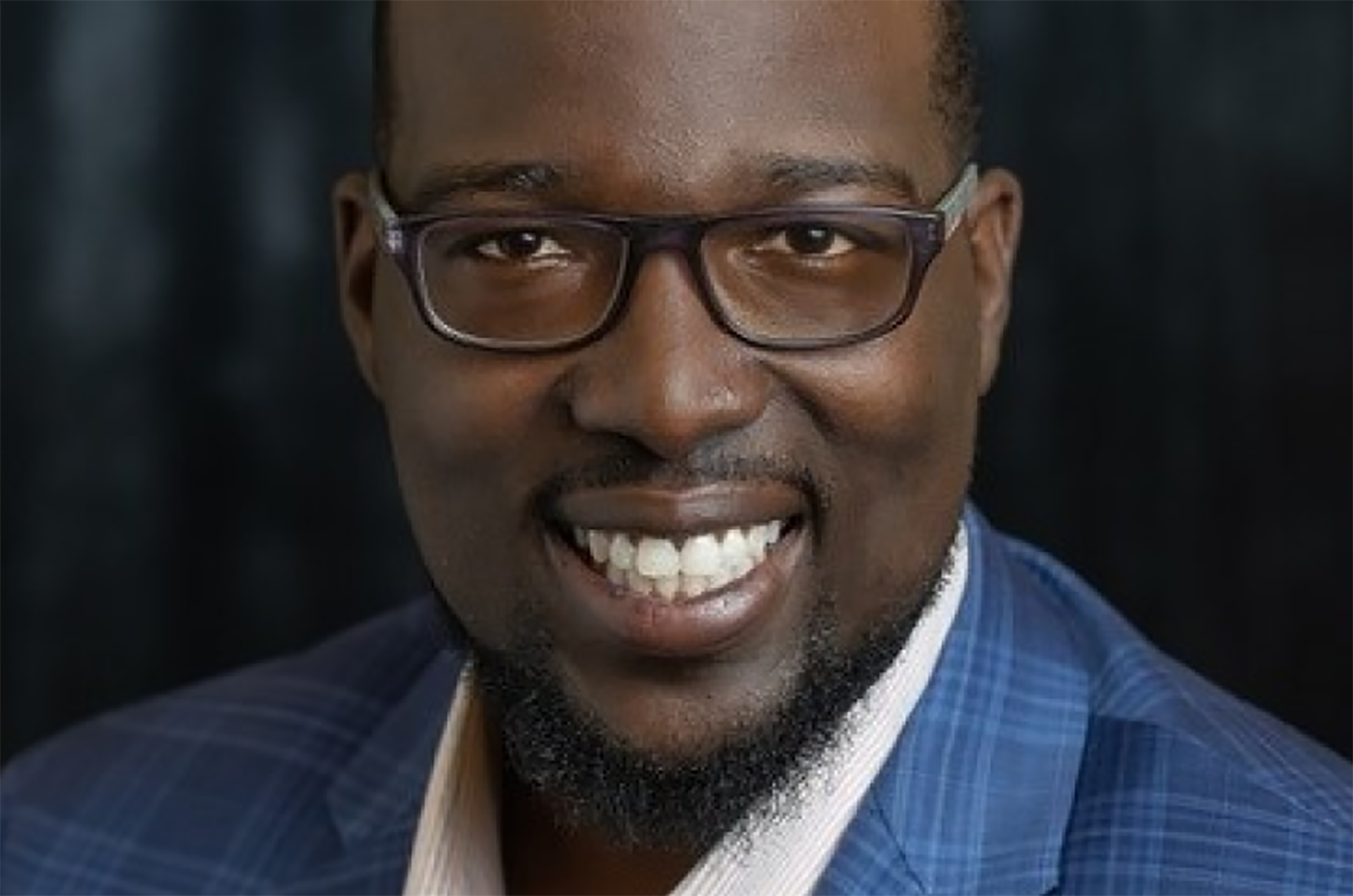
Operating a nonprofit taught Quest Moffat that it’s easier to raise programming dollars than it is to raise operating dollars — and a lack of the latter brings unexpected stressors, he shared.
“While I was running Block Knowledge, there were many times where I was the brokest person in the organization,” Moffat said, referencing his time as the founder of the education-based nonprofit, which previously was known as Project United Knowledge or Project UK. “While paying people tens of thousands of dollars to do software development or lead tech classes, I was either on food stamps or government benefits.”

Alejandro Salazar, Kadogo
His startup solution: Kadogo — a platform that helps individuals turn everyday purchases into charitable donations. Kadogo uses its card linking as a service (CLaaS) platform to make it simple for users to donate their spare change, cashback rewards and more to nonprofits, said Moffat, who teamed with software engineer Alejandro Salazar to build out the technology. They plan to publicly launch the software this fall, he added.
Click here to learn more about Kadogo, which was founded by the duo in early 2021.
Kadogo focuses on four users: nonprofits, donors, retailers and workplaces.
“The individual [donor] powers the app by registering and creating an account,” Moffat said. “After they create an account, they can choose what nonprofits they would like to donate their money to — and then they just shop.”
Donors can round up their transactions to the nearest dollar and donate the spare change, or have an automated amount that is donated with each transaction. If a merchant is inside the Kadogo network, cash back rewards are also generated and go back to the donor to donate — similar to Amazon Smile’s method, Moffat explained.
“Merchants are the main client that Kadogo will work with,” he continued. “We help merchants get more foot traffic, while having an impact in the community.”
Nonprofits may create a Kadogo account for information and data on donor insights, he noted.

“[Kadogo] allows nonprofits to be able to utilize the data of their donor transactions to understand what retailers or businesses they should work with,” Moffat said. “Nonprofits receive aggregate data. So let’s say your nonprofit has 100 donors who love to eat at Chipotle; you can then push a button and easily get connected to work with Chipotle.”
The final possible users of the platform are workplaces, which can use Kadogo to match their employees’ charitable giving and streamline workplace donations, Moffat said.
Earlier this summer, Kadogo received Digital Sandbox KC funding; part of that $20,000 will be used to further the platform’s CLaaS technology, which allows individuals to make tax-deductible donations with American Express, Visa and Mastercard while Kadogo generates cash back rewards, he said.
The rest of the funding will go toward developing the Kadogo DoubleUP tool, Moffat added.
“The DoubleUP tool is our workplace matching tool for direct gifts and donor matches,” he said. “Approximately $10 billion is left on the table each year from corporate sponsors. Corporations donate a lot of money on a year basis — it’s estimated at $3-to-5 billion. The $10 billion left on the table is, from our research, because employees are frustrated with the amount of paperwork that is required to do the donation. So our software aims to automate that paperwork.”
Click here to read about the other five startups who received Digital Sandbox KC funding in the second-quarter application cycle.
Kadogo is an accelerator-funded company, Moffat said, noting the startup received $100,000 from the Minneapolis-based gener8tor.
Kauffman collaboration
The Ewing Marion Kauffman Foundation partnered with Kadogo to offer a six-week program aimed at helping nonprofits build up their campaigns.
“Kauffman Foundation has submitted $10,000 in matching funds for a campaign, so we have chosen to give $1,000 in matching funds to 10 different nonprofits as they raise money,” Moffat said. “What [Kadogo] is offering to the nonprofits is: donor analytics and data; branding, cross-marketing and promotion; and fundraising support. We’re looking at helping them move beyond one-time transactions. We’re also providing one-to-one coaching with the nonprofits to support them throughout their fundraising goals.”
Kadogo is currently looking for strategic nonprofits to join the program, which is set to begin in early September. Those partner nonprofits will be able to access all of Kadogo’s tools for free, rather than the monthly charge of $49 dollars for self-service data or $250 dollars for full-service data.
Nonprofits interested in the program can reach out to Kadogo here.
“We are also looking for businesses that would like to get involved in the matching campaign,” Moffat added. “… I would love to see local restaurants and businesses in the area participate in this type of campaign and have an influx of individuals coming to their business.”
This story is possible thanks to support from the Ewing Marion Kauffman Foundation, a private, nonpartisan foundation that works together with communities in education and entrepreneurship to create uncommon solutions and empower people to shape their futures and be successful.
For more information, visit www.kauffman.org and connect at www.twitter.com/kauffmanfdn and www.facebook.com/kauffmanfdn


2021 Startups to Watch
stats here
Related Posts on Startland News

Techstars KC demo day: How to build inclusive teams that give first
When Lesa Mitchell first learned she’d be managing director of the inaugural Techstars KC program, she thought to herself, “Wow, I’m going to have the most inclusive program in the world,” she said Thursday at the program’s demo day event. As it turns out, diversity and inclusion can be difficult to apply — even with…

No folly for Techstars KC startups declaring growth at demo day (photo gallery)
Traction, new pilot tests and funding rounds were among the milestones met and revealed by a handful of Techstars KC startups at the accelerator’s inaugural demo day celebration. The 2017 Techstars KC class features a variety of industries — from edtech and artificial intelligence to virtual reality and food. Five of the 10 companies hail from…

Is KC enough for Amazon? Pros and cons
Correction: An earlier version of this story used an incorrect figure for Kansas City streetcar ridership. It has since been corrected to reflect the system’s more than 3 million riders. Kansas City wants Amazon. But does the online retail giant want KC? With only a few days remaining before the deadline to submit proposals for…

Deadlines approach for $100K, $500K co-investment opportunities for MO startups
It’s easy to form an idea. It’s more difficult to take it to market. The Missouri Tech Corporation’s IDEA Funds seek to facilitate the commercialization process for high-tech Missouri technologies, via a variety of co-investment opportunities. The IDEA Funds divide financing into four components that correspond to four stages of growth for entrepreneurs, from pre-investment…