

KC tech guru, startup advocate talks cryptocurrency’s value: ‘History doesn’t always repeat itself, but it often rhymes’
August 13, 2021 | Channa Steinmetz
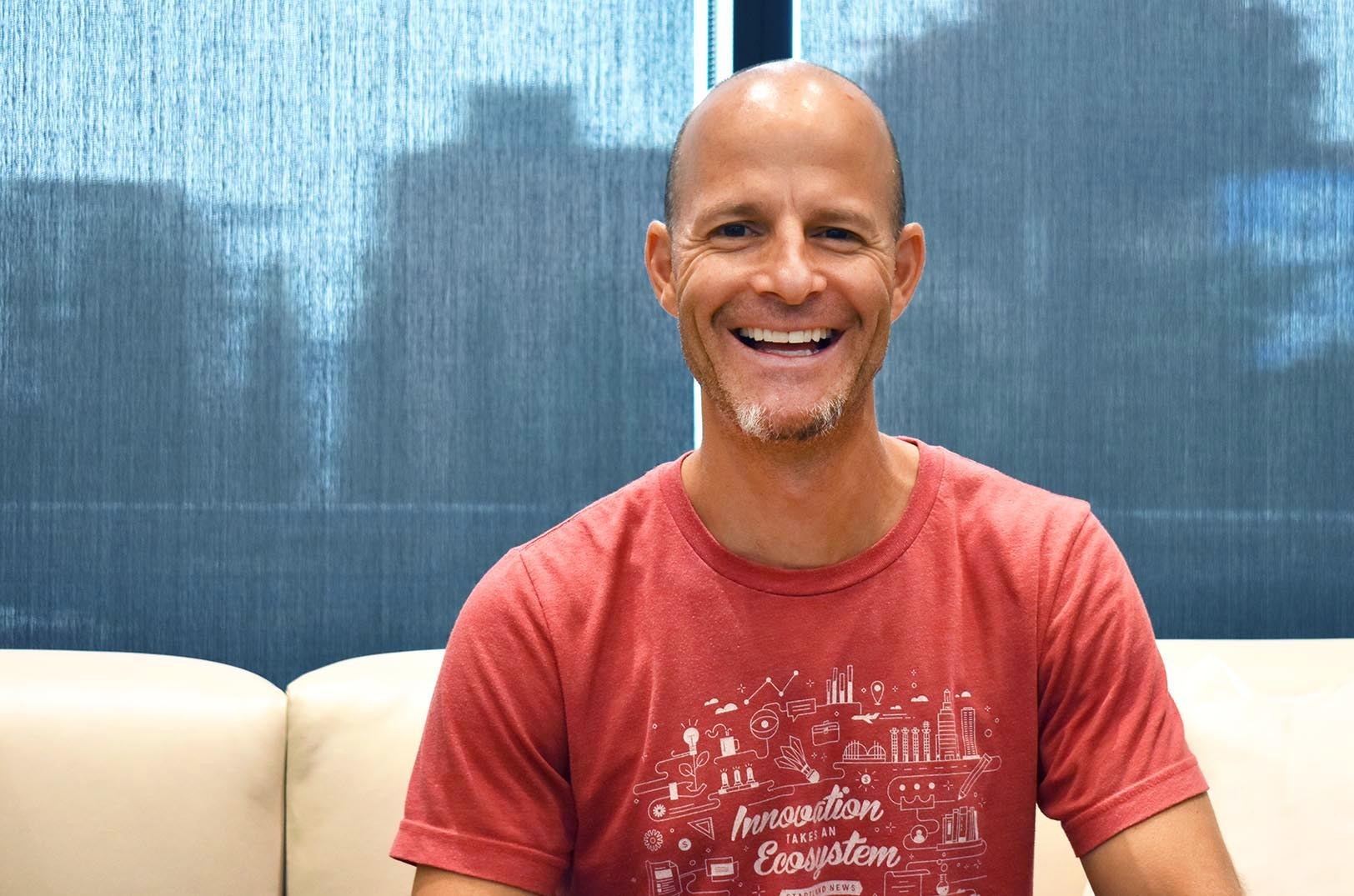
Cryptocurrency eventually will cause the most significant exchange of wealth mankind has ever experienced, Matthew Marcus forecast, and the web developer-turned-startup community organizer hopes to help others get involved early.
“We are essentially in the early 1990s of the internet. The same way we talked about the internet and email 20-some years ago, will be how people look back on how we talk about Bitcoin or crypto now,” said Marcus, who founded Good KarMa Capital in June.

Good KarMa Capital is a curated library of free resources surrounding cryptocurrency. Within the library, users can find everything from beginner tutorials to the latest news from verified crypto news sources, Marcus noted.
“It all started because my friends and peers, who had seen me be a part of crypto for several years, would come to me and ask about what they should be doing,” Marcus recalled. “I love helping people, so I would spend a lot of time answering questions and repeating myself. Then it dawned on me that I should make a central place where I can send people to answer these common questions.”
Click here to check out Good KarMa Capital.
For those who want a more personal and in-depth guide into cryptocurrency, a complex market with headline-grabbing highs and lows, Marcus also offers one-on-one consulting as a paid service.
“I can walk people through the exchanges that I believe are trustworthy, the coins that I think have true merit and utility value, which wallets I would use — all the knowledge that I’ve gained through my own journey,” he explained.

Matthew Marcus, then-executive director of the Kansas City Startup Foundation, giving a tour of the Kansas City Startup Village in 2016
Marcus first heard about cryptocurrency in 2012, but he didn’t dive deeper into the field until 2017 — around the same time he co-founded the Kansas City Startup Foundation (now known as Startland) — after years at the forefront of the Kansas City Startup Village and involvement in numerous startups that followed Google Fiber’s arrival in 2012. (Marcus owned the first home in the world wired to receive Google Fiber, which he chronicled in a series of YouTube videos.)
Editor’s note: Startland is the parent organization of Startland News, and Marcus previously served in development and leadership roles at the nonprofit before leaving March 2020 to pursue other ventures.
“My background is in tech programming, and a big component in cryptocurrency is in tech,” he noted. “So once I started learning about how these networks and blockchains work, the finance aspect started to make more sense to me.”
Then it clicked. After reading the Bitcoin whitepaper by Satoshi Nakamoto, Marcus came to his conclusion that digital currency will play a major role in the future of the global economy, he shared.
“What’s going on in our economy right now is an immense amount of money printing. The continual printing along with the money that the [Federal Reserve] is lending to banks — these aspects inflate the economy,” Marcus explained. “And then you look at Bitcoin, which has a finite supply; there is only ever going to be 21 million Bitcoins in existence. It’s all programmed into the code.
“When you look at the history of global reserve currencies, they always come to an end,” he continued. “The Spanish peso, the great British pound, they all lasted a while until something came along and caused it to shift — maybe a war or something. I think this pandemic — along with all the things that the government has done, in my opinion — is going to eventually cause the end of the U.S. dollar being the global reserve currency.”
Basic cryptocurrency terminology
Blockchain: A blockchain is a decentralized database that is validated by a wider community, rather than a centralized authority.
Node: A network node is a connection point that can receive, create, store and send data across a network. Every computer is a separate node, and they are all connected and can receive, create, store and send data to each other.
Proof-of-work: Proof-of-work is a decentralized consensus mechanism that requires members of a network to expend effort solving an arbitrary mathematical puzzle. This is to prevent hackers from gaming the system.
Mining: Mining is an activity carried out by network participants, which involves proof-of-work and results in generating new coins as a reward for the miner who successfully completed proof-of-work first for each new block.
Wallet: A crypto wallet is a digital wallet used to store, send and receive digital currencies.
Private key: A private key is a random string of numbers. To make a crypto transaction, individuals need a wallet and private key. If the private key is stolen or forgotten, there is currently no way to recover it.
Decentralized database
Along with the financial aspect of cryptocurrency, it contains a technology component through which everyday individuals can participate, Marcus noted.
Because cryptocurrency has a decentralized model (meaning no one entity is in control), users who download the software onto their computers can become a node in the Bitcoin blockchain/network.
“Here’s an example: There’s a project called Helium, and they are creating the world’s largest LoRa (long range) network. … Instead of doing something centralized like Verizon — which sets up big towers that the company owns — Helium allows for individuals to buy these hotspots that they can plug in at home.
“Now, you’re a node on the network, and data can literally come into your node and go through the internet,” Marcus continued. “And then, you’ll earn money from that. [Helium] is basically allowing people to participate and earn money, rather than keep it all to themselves.”
Crypto community
Good KarMa Capital is a one-man show, but Marcus joked that he technically has 13 employees working for him. They just so happen to be computers.
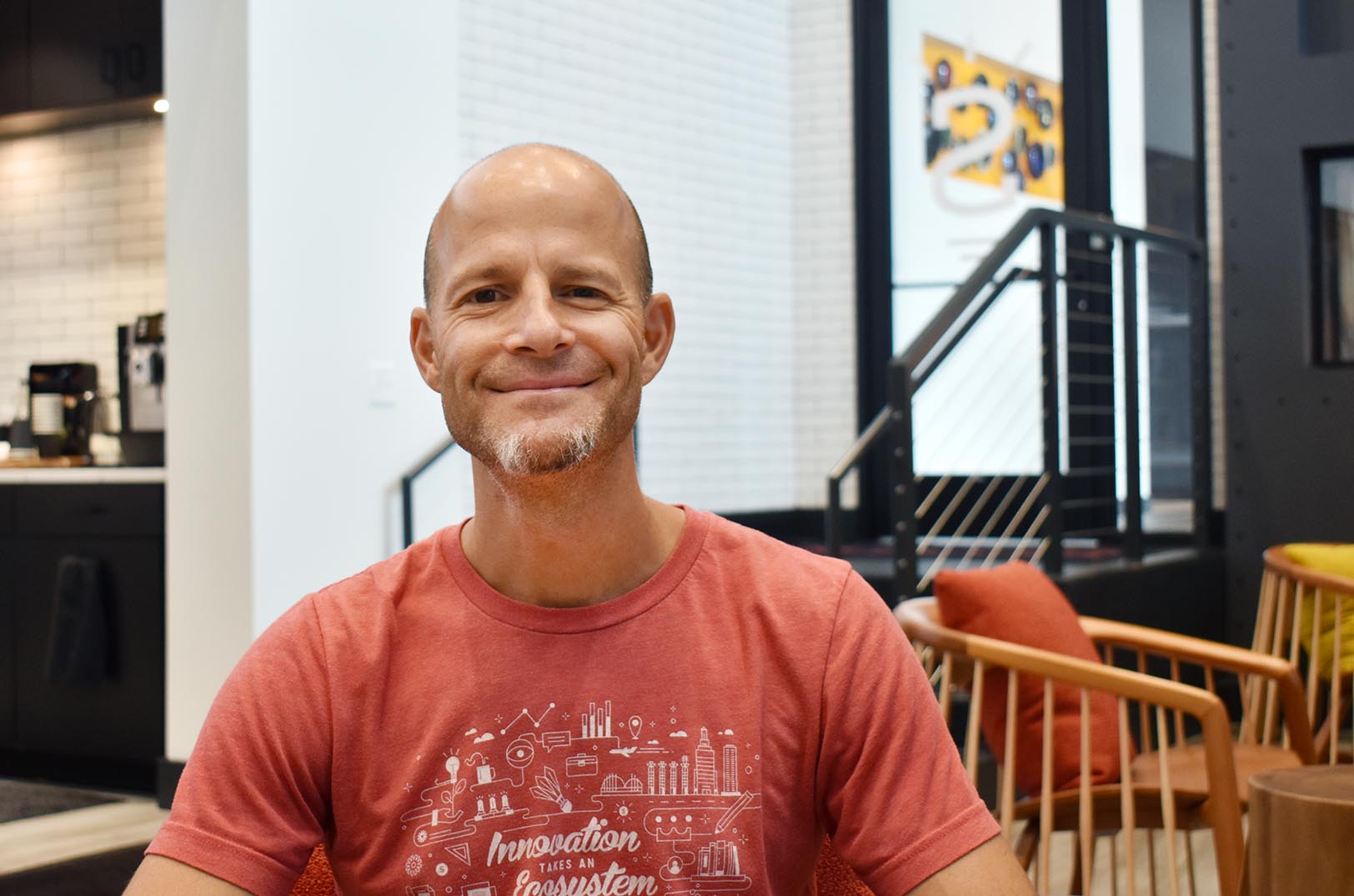
Matthew Marcus, Good KarMa Capital
“Like with Helium, if you want to participate in the network, you have to buy one of these hotspots that you plug into your internet and get running,” he said. “Well, I consider that little computer an employee because as soon as I set it up, it is earning me money 24/7 without me doing anything.”
Cryptocurrency is a global phenomenon, Marcus noted, but Kansas City has its own community where curious individuals can connect.
“It’s not like you have to only resort to learning about crypto [through online research]. You can actually get together and talk to local people through the Kansas City Bitcoin Club on Facebook,” he shared.
“You don’t want to miss this ride, man,” Marcus continued, encouraging others to get involved. “No one knows exactly what the future holds. History doesn’t always repeat itself, but it often rhymes. So when we look at the past 10 years and how crypto has played out and where we see the trend is going — it’s not going to go away. This is going to be a game changer.”


2021 Startups to Watch
stats here
Related Posts on Startland News

PlaBook to compete for $1M in prizes at world’s largest pitch competition for edtech startups
Fresh off its selection to Pipeline’s latest fellowship, a Kansas City edtech startup is now set to compete at The Elite 200 as a semifinalist in The GSV Cup — representing top pre-seed and seed stage startups in digital learning across the “Pre-K to Gray” space. KC-based PlaBook is set to vie for $1 million…
C2FO closes $140M funding round amid record growth, expanded focus on underserved companies
Editor’s note: C2FO is a financial supporter of Startland News’ nonprofit newsroom. Kansas City fintech powerhouse C2FO grows best when it’s accelerating access to capital for those traditionally underserved by the banking industry, said Sandy Kemper, announcing a $140 million funding round for the Leawood-based company. Led by Third Point Ventures — a multi-stage investor…

Joining 500 Global’s Japanese accelerator will test KC proptech startup’s market fit for Asian expansion
Access to acceleration has been unlocked, David Biga said, announcing Particle Space has joined a newly launched accelerator program from 500 Global that could give rise to a fully functioning startup ecosystem in Aichi, Japan — while helping the startup further realize its own potential. “One of the things we’ve been exploring with our API services…

Accelerator taps first 7 startups to help bring KC back from the edge of global health crisis
Seven Kansas City tech startups have taken the leap to launch new technologies and startups in response to challenges posed by COVID-19 — and have received technical and financial assistance through Comeback KC Ventures to accelerate their efforts. “These innovations were conceived after two years of the coronavirus pandemic revealed and ignited a need for…