

Beacon analysis: Restaurant relief funds flowed to whiter, more affluent areas of Kansas City
August 18, 2021 | Celisa Calacal
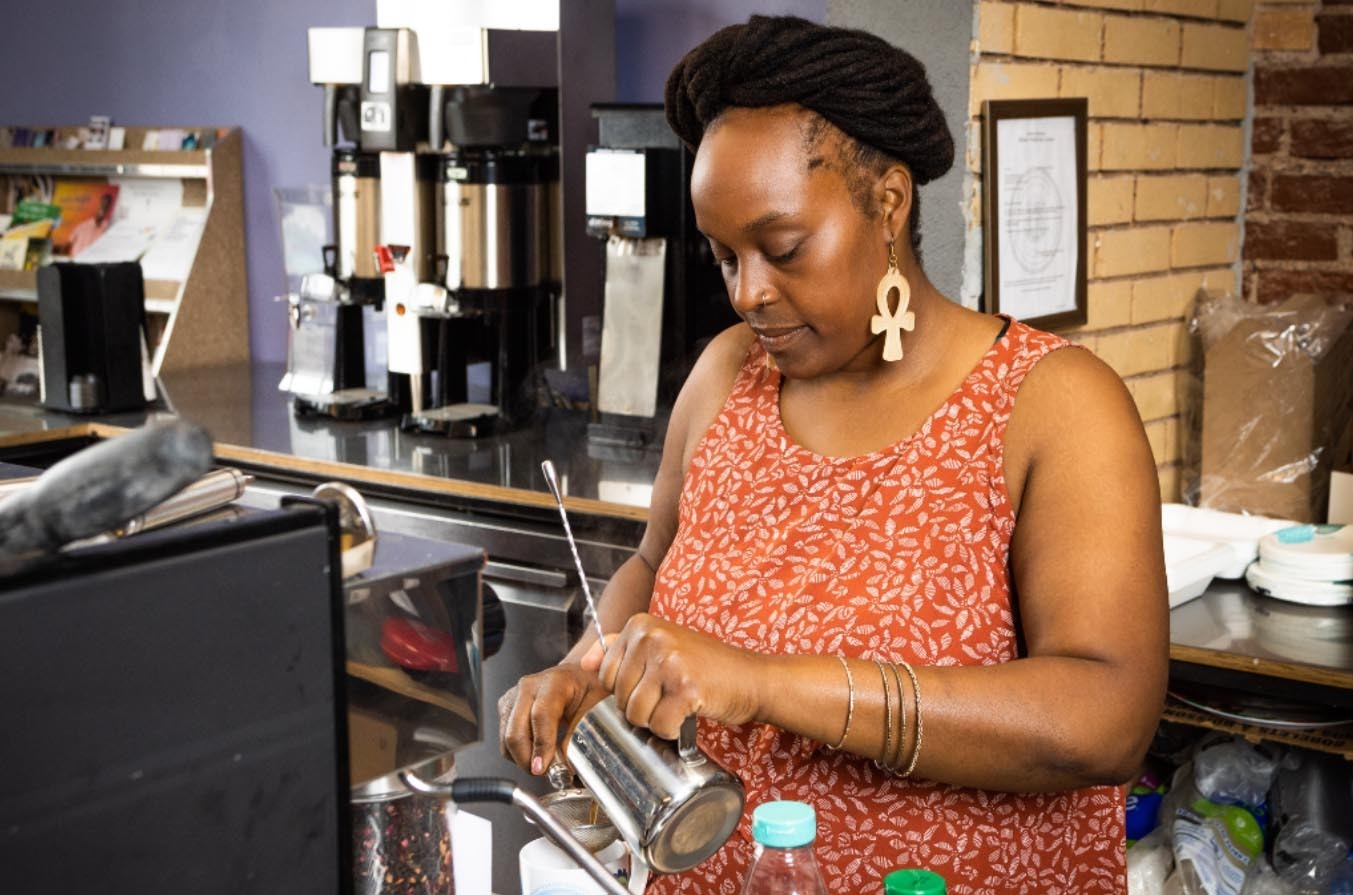
Editor’s note: The following story was originally published by The Kansas City Beacon, a nonprofit, public-service journalism newsroom serving Kansas and Missouri. Click here to read the original story or here to sign up for the free Kansas City Beacon email newsletter.
Located along 30th Street and Troost Avenue, the tea shop wasn’t eligible for any Payment Protection Program loans because it wasn’t open before the pandemic began. Cotton couldn’t get a loan from a bank.
This spring, she heard about the Small Business Administration’s Restaurant Revitalization Fund and its plans to provide grants to restaurants and businesses like hers.
Soulcentricitea was eligible. Cotton applied immediately.
“I thought it was a guarantee,” she said. “Like, you apply, you send the financials, you’re guaranteed to get this money.”
But in late June, Cotton received an email that the program was closing. All the money had been awarded. Soulcentricitea never received a grant.
“It was very frustrating to fill that out and be like, ‘OK, well, maybe I’m gonna have this money come in soon, and I can kind of use some of that for the lease,’” Cotton said. “Especially being a pandemic, every penny is significant.”
The Restaurant Revitalization Fund, first established in April with $28.6 billion in funding, offered eligible businesses grants of up to $10 million to offset revenue lost because of the pandemic.
But on July 2 — about two months after launching — the program closed. The funding ran out.
As of June 30, the program had received 278,000 applications for a total of about $72.2 billion in requested funding — far beyond the program’s capacity.
In Kansas City, Missouri, 187 businesses received Restaurant Revitalization Fund grants. The list includes restaurant franchises, bars, breweries, barbecue joints and more. In total, Kansas City businesses received more than $53 million in funding.
When the Restaurant Revitalization Fund first launched, it intended to prioritize minority- and women-owned businesses. Applications from women, veterans and members of socially and economically disadvantaged groups were supposed to be reviewed within the program’s first 21 days.
But a Beacon analysis of grants awarded in Kansas City found that those groups did not necessarily receive preference. Of the 187 grants awarded:
- 63 businesses identified as women-owned.
- 11 businesses identified as veteran-owned.
- 49 businesses are classified as being socially and economically disadvantaged. The SBA defines this as a business that is at least 51% owned by one or more individuals who are socially and economically disadvantaged, such as members of racial minority groups.
- 72 businesses are located in low- to median-income areas.
When Cotton heard about the initial goals, she thought she would get the funding.
“That’s really disappointing that they switched that up after they kind of advertised it as trying to help,” she said. “Because we need it.”
The initial goal of prioritizing minority and disadvantaged businesses was upended by several lawsuits filed by white business owners backed by conservative legal groups. They contended the policy discriminated against white males.
Troost divide shows up in Restaurant Revitalization Funds
Disparities among Restaurant Revitalization Fund grantees skew along geographic lines in Kansas City. Data shows that dollars flowed predominantly to businesses located in the city’s more commercial, affluent areas, like midtown, downtown and the Northland.
Of the 10 local businesses that received grants of more than $1 million, a majority are located either downtown or in midtown.
In contrast, few businesses east of Troost Avenue, a historic racial and economic dividing line in Kansas City, received a grant.
Decades of redlining, discriminatory housing policies and disinvestment have contributed to higher rates of poverty and a decline in Black-owned businesses east of Troost.
“These policies are continuing that history of disinvestment in this area and investment in these other areas,” Cotton said. “So it’s very unfair, very unjust.”
For Cotton, who was born and raised in Kansas City, opening Soulcentricitea on Troost was intentional. She wants Soulcentricitea to be a place where Black people feel comfortable, especially as Troost develops.
“We’re starting to see more investment where there’s historically not been investment here,” she said. “It’s important for that investment to look like us.”

Brandon Calloway, GIFT, Generating Income for Tomorrow
That’s also a goal of a new local nonprofit, Generating Income for Tomorrow.
GIFT was established in May 2020 to provide grants to Black-owned businesses located east of Troost Avenue.
“Our target is the people on the east side,” said co-founder and CEO Brandon Calloway. “And our vehicle is Black business growth and expansion.”
GIFT is funded primarily through individual donations, with a few corporate donations. In its first year, GIFT provided $227,000 in grants to 14 businesses. The organization provides grants of $10,000, $25,000 or $50,000. GIFT also provides businesses with pro-bono legal consulting and marketing services for one year, Calloway said.
Soulcentricitea received a grant from GIFT.
“That’s really helped me to kind of keep afloat, because it’s been really rough,” Cotton said.
Calloway is not surprised that few businesses east of Troost received help from the Restaurant Revitalization Fund. It happens all the time, he said.
“It is a strong reinforcement of the current divide that we have in place, and of the status quo,” Calloway said.
Even when government programs seek to prioritize minority-owned businesses, Calloway said the blame will fall on Black-owned businesses for not participating. But it’s harder for Black businesses that are solo entrepreneurships or microenterprises to access the resources to apply to grant programs like the Restaurant Revitalization Fund, he said.
“They weren’t set up to be in a position where books were what the banks specifically were looking for,” he said. “For them to be able to get the best support.”
Other businesses that didn’t get funding
Rafi Chaudry, CEO of Torn Label Brewing Co., a brewery in Kansas City, applied to the Restaurant Revitalization Fund on the first possible day.
The application was still under review when the SBA announced the closing of the fund in July.
The company was never notified that its application was denied, Chaudry said. But Torn Label never received a grant from the program.
Chaudry said he’d hoped to use the grant money for rent and other costs.
“You kind of start to feel regret that you were optimistic about it for such a time,” he said.
Chaudry tries to not feel bitter. Still, he said it’s frustrating to see wealthier restaurants — ones with better finances and more capital to weather a pandemic — benefit from the program.
“That amount of decreased income might mean less executive bonuses, as opposed to small businesses, where it’s the difference between keeping your doors open,” he said. “In both cases, it’s a case of decreased revenue. For some businesses, it means more.”
What businesses used the money for
For local businesses that received a grant, the money helped to pay rent and staff.
Cocktail bar Julep in Westport received $436,968 from the Restaurant Revitalization Fund in May. Owner and founder Keely Edgington said it was a relief.
“I kept thinking it would get taken away for some reason. That’s just the kind of year we’ve had, though,” she said. “… It’s the only thing that’s going to keep Julep open.”
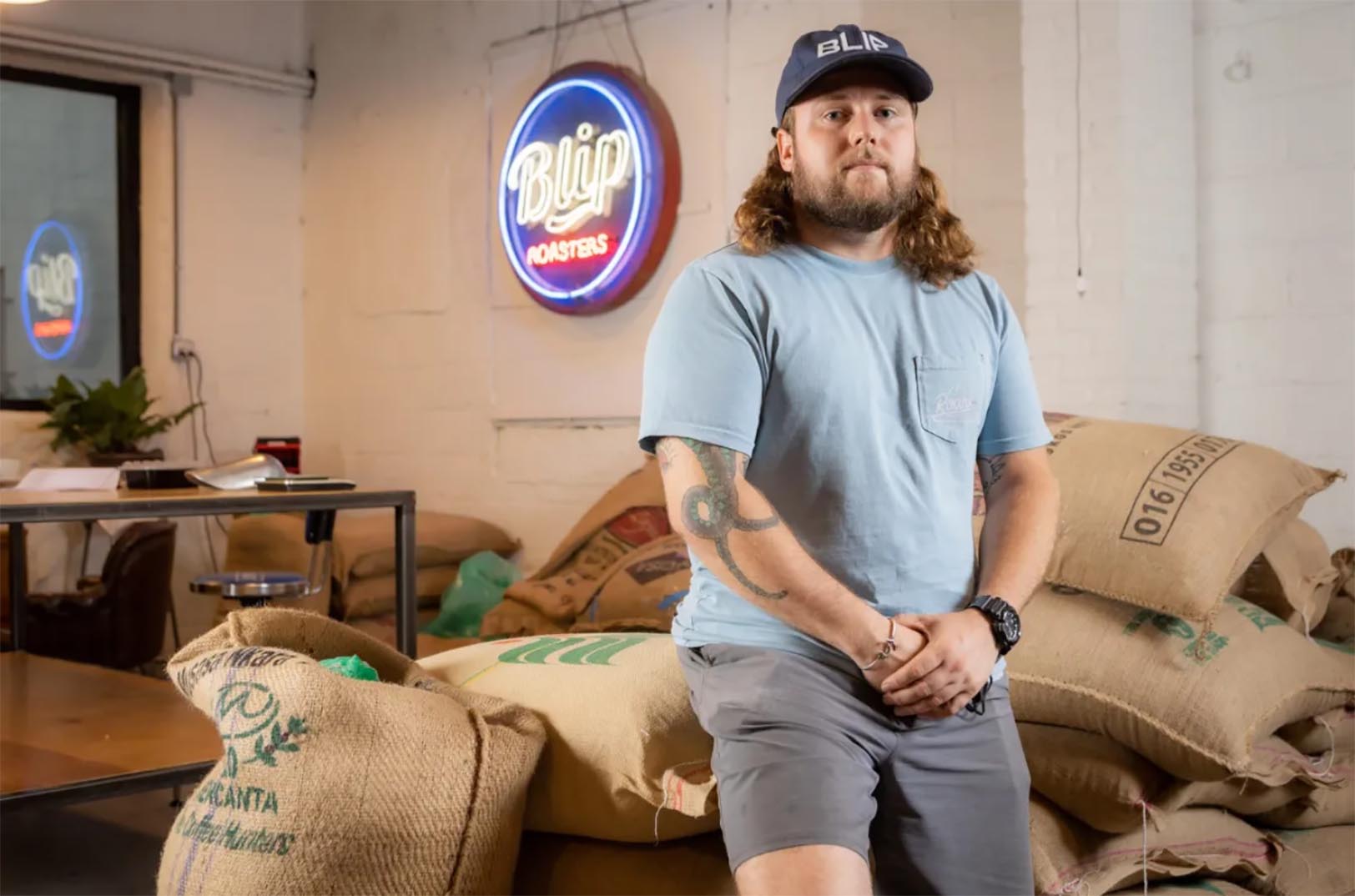
Ian Davis is the owner of Blip, a coffee shop in Kansas City’s West Bottoms. Blip received a grant from the Restaurant Revitalization Fund that helped with reopening and hiring more staff. Photo by Zach Bauman/The Beacon
Blip Coffee Roasters in the West Bottoms received $181,674 from the revitalization fund. The news surprised owner Ian Davis and his team, who had expected that minority- and women-owned businesses would get priority.
“It allowed us to reopen the business with a better trajectory than what we had before,” Davis said.
But Davis, who is white, said the disparities in aid are unfair to minority-owned businesses.
He sees a need for better access to information.
“The playing field definitely needs to be leveled so that everybody can have access to these things,” Davis said.
Meanwhile, Cotton at Soulcentricitea is continuing to look for grants. She keeps checking the SBA website for updates on renewing the Restaurant Revitalization Fund.
She is “hoping that maybe they open the fund back up again, and maybe do what they said they were going to do and prioritize Black, women-owned businesses,” she said.
This story was originally published by The Kansas City Beacon, an online news outlet focused on local, in-depth journalism in the public interest. To republish this story or others from The Beacon, read the publication’s Steal Our Stories policy here.

Featured Business

2021 Startups to Watch
stats here
Related Posts on Startland News
LaunchKC earns honors of its own, must still keep hustling, KC eco devo leader says
Receiving the Bronze Excellence in Economic Development Award proves the real market value for programs like LaunchKC, said Drew Solomon. The win has been energizing, said Solomon, senior vice president of business and job development at the Economic Development Corporation of Kansas City, which partners with the Downtown Council of Kansas City to make the program…
Meet the 2018 LaunchKC winners: $500,000 in grants awarded at Techweek finale
LaunchKC, the hotly anticipated annual pitch contest, capped Techweek Kansas City Friday by awarding a half-million dollars in non-dilutive grant funds to nine winning startups from among 20 finalists. An Atlanta company earned the day’s top prize. The finalist competitors — who beat out more than 586 applicants for a spot on this year’s stage —…
Canadian firm to house in KC, Techstars Demo Day announces other developments for cohort (Photos)
Local government has the most impact on people’s lives, said Ryley Iverson, co-founder and CEO of Townfolio, a Canada-based firm providing city data as a service that was among the 2018 Techstars Kansas City cohort. Townfolio announced a partnership with the Kansas City Area Development Council Thursday during the accelerator’s Demo Day: fuel the international firm…
Pure Pitch Rally passes $1 million in prizes; FastDemocracy and TheraWe lead winners
A quick-paced pitch competition Wednesday saw big wins for political tracking startup FastDemocracy and child therapy resource TheraWe Connect, with more than $1 million in prizes awarded between 10 young companies. “Our sponsors felt a funding head-rush like a speeding train — throwing money everywhere,” said Michael Williamson, an IP attorney for Polsinelli, one of…