

White House vs ‘startup slump’: New executive order puts feds on notice in bid to reverse innovation decline
July 20, 2021 | Victor Hwang
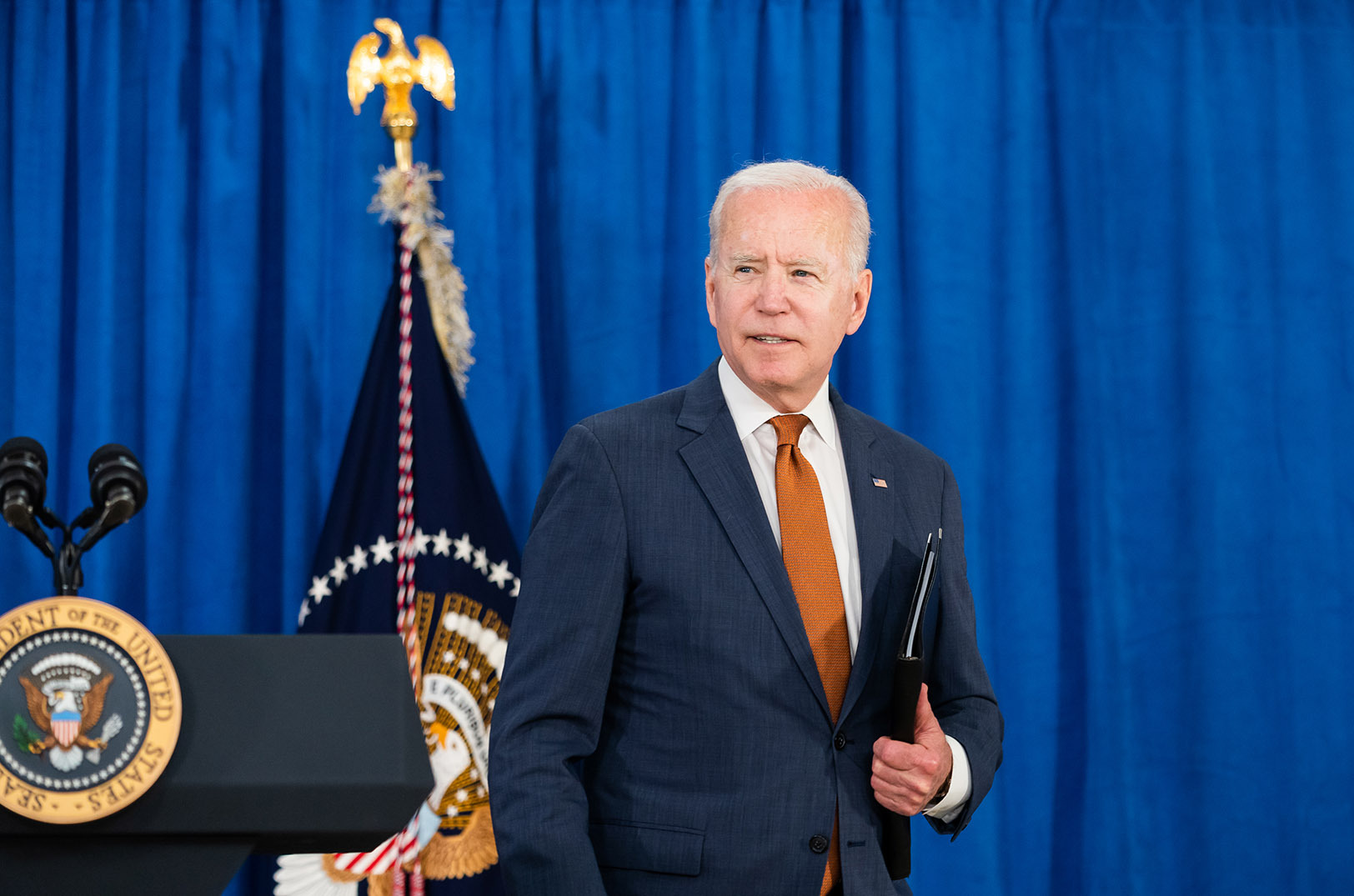
Editor’s note: The opinions expressed in this commentary are the author’s alone. Victor Hwang is the founder and CEO of the Right to Start movement. Click here to learn more about Right to Start, a campaign to drive economic recovery and advance economic justice. This commentary originally appeared on Inc.com and is republished with permission of the author.
On July 9, the White House issued an executive order on “Promoting Competition in the American Economy,” a major policy development that will shift the business landscape. It is potentially huge for entrepreneurs. But the real work is yet to come.

Victor Hwang, Right to Start
The ultimate impact for new businesses depends on how governments — across all agencies, at all levels — act on the issues highlighted in the executive order. Having spent more than two decades advancing entrepreneurship, I see this moment as a profound opportunity.
For the first time, the White House cited America’s decades-long decline in entrepreneurship (also called “the startup slump”) as justification to drive major policy change:
“Inadequate competition holds back economic growth and innovation. The rate of new business formation has fallen by almost 50 percent since the 1970s, as large businesses make it harder for Americans with good ideas to break into markets. There are fewer opportunities for existing small and independent businesses to access markets and earn a fair return. Economists find that as competition declines, productivity growth slows, business investment and innovation decline, and income, wealth, and racial inequality widen.”
In addition, young businesses create almost all net job growth. How to generate new jobs is particularly relevant as America’s economy rebounds from the Covid-19 pandemic.
The executive order addresses competition broadly, but several elements are especially important for entrepreneurs.
The White House seeks to make changing jobs easier, raise wages, and increase economic mobility by banning or limiting non-compete agreements and reducing unnecessary, cumbersome occupational licensing requirements. It also pushes to increase opportunities for small businesses by directing federal agencies to promote greater competition through procurement and spending decisions.

Victor Hwang, Ewing Marion Kauffman Foundation, 2019 State of Entrepreneurship address
These issues — non-competes, licensing, and procurement — have long created barriers for entrepreneurs. But what makes this executive order an even bigger deal is what it signals, both across the federal government and at state and local levels, too. There are three ways this executive order points to a fundamental shift.
Click here to read the text of the executive order.
First, it elevates recognition of these entrepreneurial barriers to the highest visibility ever. The damaging impact on entrepreneurs of non-compete agreements and excessive occupational licensing requirements has been a focus of research for decades. The Ewing Marion Kauffman Foundation, which played a pivotal role in laying that groundwork, published landmark reports in 2014 on “Rethinking Non-Competes: Unlock Talent to Seed Growth” and “Occupational Licensing: A Barrier to Entrepreneurship.”
That and other research led to the publication in 2019 of “America’s New Business Plan,” which I co-authored as then-vice president for entrepreneurship at the Kauffman Foundation. It prioritizes tackling both non-compete agreements and licensing requirements, and moves those and other barriers from academic circles to advocacy. The executive order builds on that years-long effort and raises the issues to new heights, so they are now bright in the public spotlight.
Second, the executive order puts the entirety of the federal government on notice. Tackling entrepreneurial decline is now clearly stated as a priority of President Biden. The entire executive branch is now charged with that broader priority, which is important because countless thousands of other laws and regulations hold back entrepreneurs, not just the 72 issues listed. Moreover, the executive order elevates this issue in a way Congress cannot miss. The president has influence on the legislative branch, especially with his party controlling both houses of Congress, and can set in motion new legislative solutions.
Third, the executive order heightens the visibility of these issues at state and local levels of government. That’s where many of these barriers primarily exist. Occupational licensing requirements are typically enacted and enforced at the state level. Non-compete laws have been primarily dealt with at the state level (and may still have to be because the Federal Trade Commission’s power is unclear). Most permitting restrictions, such as for restaurants and home businesses, are conducted locally.
Right to Start, the nonprofit organization I lead, has published a “Field Guide for Policymakers” that proposes specific actions to be taken at each of the three levels of government. Those actions include: Prohibit non-compete agreements (at federal and state levels); eliminate all registration costs, minimum franchise taxes, and licensing fees for young businesses (state and local levels); and dedicate a pilot percentage of 5 percent of government procurement dollars to businesses under five years old (federal, state, and local levels).
Click here to check out Right to Start’s Field Guide for Policymakers.
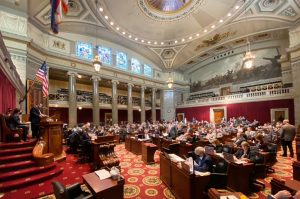
Missouri Chamber; Photo courtesy of Missouri House Communications
The Missouri House of Representatives recently passed a Right to Start Act, inspired by these recommendations and tailored for the specific needs of the state. It limits non-compete agreements and dedicates 5 percent of government contracts to entrepreneurs, among other actions, and it provides a model for other states.
Click here to learn more about Missouri’s Right to Start Act.
The question now should not simply be, “What will the Biden Administration do to implement the 72 specific actions in this Executive Order?”
Rather, it should be, “How will the government — across all agencies, at all levels — respond to the broader challenge of entrepreneurial decline and promote a more competitive American economy by unleashing our entrepreneurs?” That is a question everyone in government must now answer.
Victor Hwang is the founder and CEO of the Right to Start movement.


2021 Startups to Watch
stats here
Related Posts on Startland News

KC firm invests $56M in LGTB+ owned 10KC to reimagine a more inclusive workplace (that employees won’t want to leave)
A funding infusion from a leading Kansas City venture capital firm comes at a critical time as employees struggle to connect in a hybrid work world, said Ten Thousand Coffees (10KC), announcing its first institutional raise since the company’s 2014 formation in Toronto. Originally bootstrapped, 10KC will use the $56 million investment from Five Elms…

Boulevard, Vine Street hop to ‘inspire our city’ with a brew in honor of KC baseball icon Buck O’Neil
A new ale crafted in collaboration between one of Kansas City’s biggest brands and the city’s first Black-owned brewery is expected to commemorate “a true American treasure,” said Kemet Coleman — as well as send 100 percent of its proceeds to the Negro Leagues Baseball Museum. The Buck O’Neil Barrel-Aged Saison honors the late first…
Just funded: Big ‘Pure Pitch’ winners swim with the sharks, earn thousands in cash on the spot
A winning afternoon at the Pure Pitch Rally is validation Dr. Brandy Archie’s healthtech accessibility app is providing connections people actually need, she said. “That’s the most important thing to me,” said Archie, founder of AskSAMIE. “The funds are going to a good cause, but this lets me know that this new idea that I…

New grant from Porter House KC helps business owners ‘Scale Deep’; applications close Oct. 24
An additional funding opportunity for select small businesses is now available thanks to a seed planted years ago by The Porter House KC. The nonprofit has partnered with the JPMorgan Chase Foundation for the new Scale Deep Grant, which will disperse $30,000 between three small businesses for back office support, equipment cost, rental assistance, and…