

Former Starbucks CEO, C2FO’s Sandy Kemper join Morgan Stanley exec for ‘Nothing to Fear’ DEI conversation
July 13, 2021 | Tommy Felts
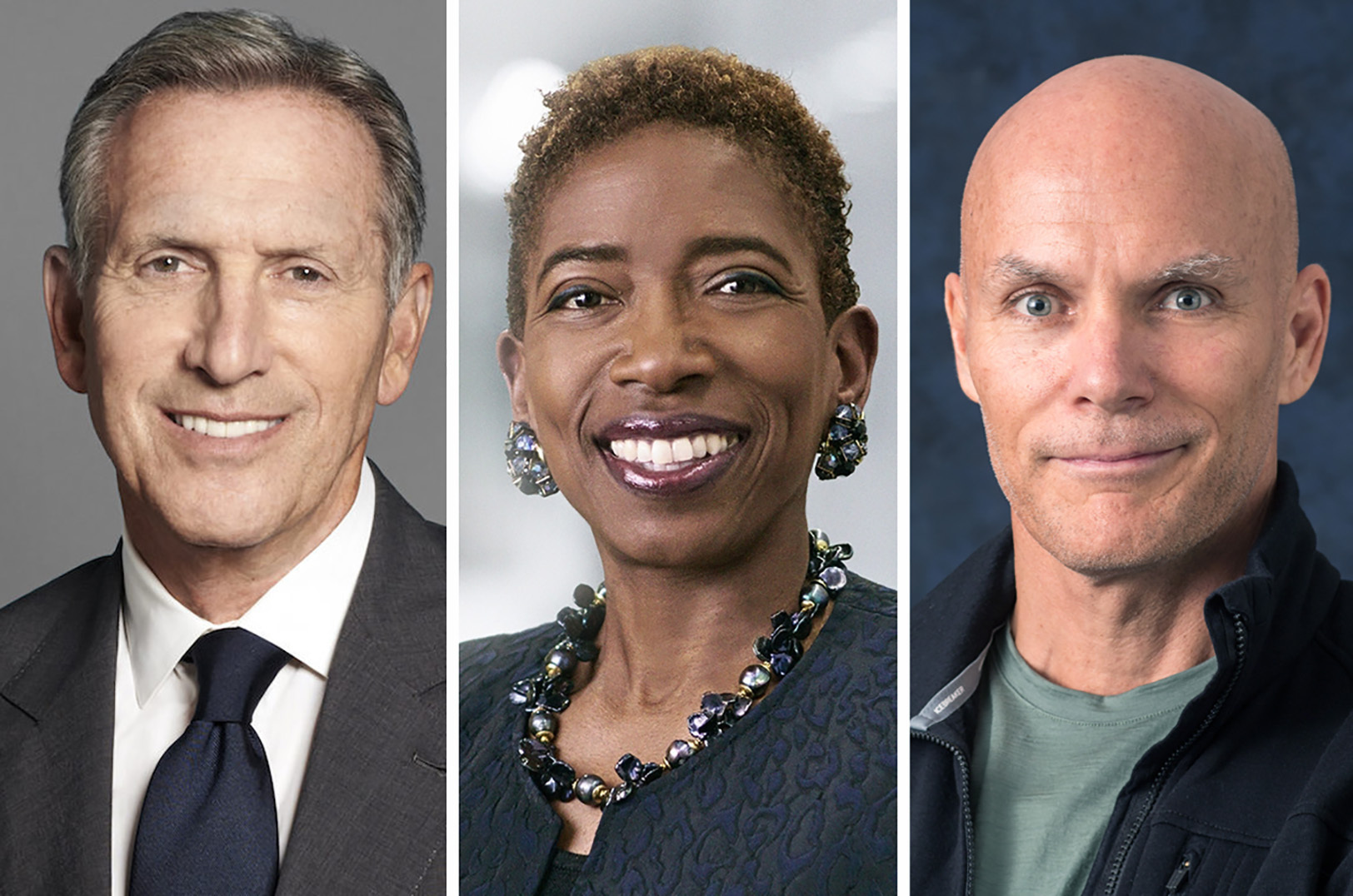
Top business leaders are now embracing diversity and inclusion, Carla Harris said, but even their most sincere initiatives must survive the fear that comes with changing trends and an inevitable economic downturn.
“Fear has no place in your success equation,” said Harris, a 33-year Wall Street veteran and Morgan Stanley executive who headlines Thursday’s Innovation Exchange: Nothing to Fear — a virtual event that explores the role fear plays in the failure of diversity, equity and inclusion efforts in companies regardless of industry.
Joining Harris in Thursday’s conversation: Howard Schultz, former chairman and CEO of Starbucks, and Sandy Kemper, founder and CEO of C2FO, one of Kansas City’s biggest and most influential startups. The panel is set to be moderated by Startland News’ Channa Steinmetz.
Updated: Watch Thursday’s event below, then keep reading.
Innovation Exchange is produced by Startland, the parent organization of Startland News. Morgan Stanley is the event’s presenting sponsor and C2FO is a financial supporter of Startland News.
“You cannot afford to look at this as one moment in time,” Harris said in an interview with the UNLEASH podcast, posted in April. “The demographic of this country has already shifted, and it’s not a 2040 phenomenon; It is a 2020 phenomenon with respect to multicultural people becoming a majority in this country.”
Harris, who serves as vice chairman and managing director at Morgan Stanley, leads the New York-based multinational investment bank and financial services company’s Multicultural Client Strategy Group, which includes a Multicultural Innovation Lab. She also is a best-selling author and hosts the Access and Opportunity podcast.
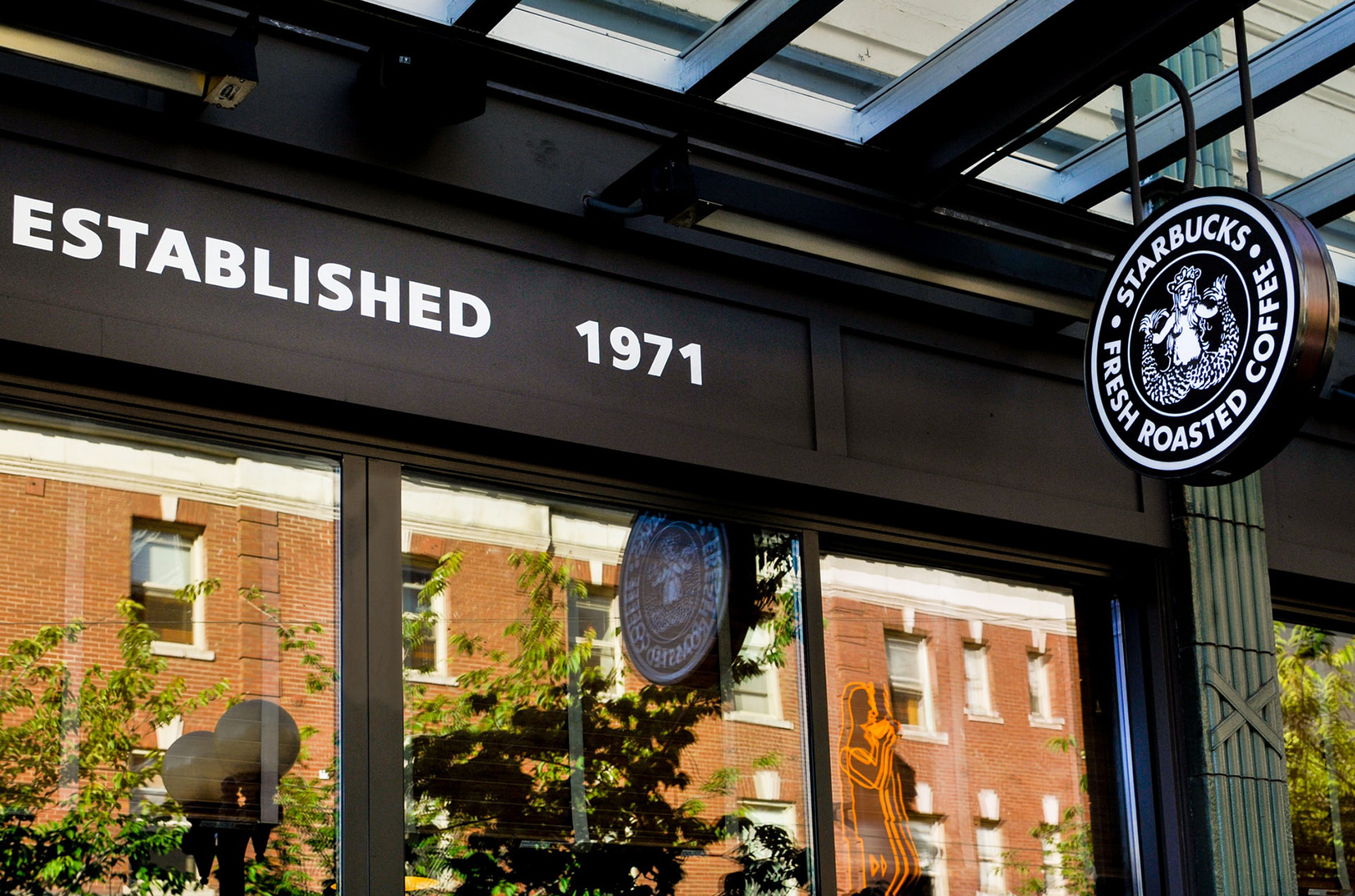
Pike Place Market, Seattle; photo by Zetong Li
Starbucks’ Schultz and C2FO’s Kemper are among executives who are unafraid to discuss race and diversity shortcomings in the business world, said Adam Arredondo, CEO of Startland and an organizer of Thursday’s event — noting both have proven track records of providing more than just lip service on diversity, equity and inclusion.
Schultz, for example, who led Starbucks from 1986 to 2000, and again from 2008 to 2017, made headlines in recent years for the coffee company’s trend-setting efforts to design and adopt DEI standards that would be implemented in shops across the country and beyond — even closing more than 8,000 stores for racial bias training in 2018 when Schultz shifted into an executive chairman role.
Click here to learn more about C2FO’s recent Juneteenth donation to three Black-led Kansas City nonprofits.
“The opportunity with this conversation is to see two powerful white men being willing to talk about DEI efforts — put on the virtual stage with Carla to tell us why they’ve leaned into the work of trying to be equitable and inclusive leaders in the business world,” Arredondo said. “The conversation will allow them to talk with a bit of vulnerability about the journey, the learning, and the discomfort they’ve had to work through themselves as they’ve built the businesses they’re known for in more equitable ways.”
While some people attribute such shifts in leadership focus to COVID-19 and even the social unrest in summer 2020, Harris said, those factors — and the reactions to them — actually hinge on generational change.

Carla Harris, Morgan Stanley
“It is the fact that Millennials and Z’ers are quickly becoming the dominant population in the workforce. And they see excellence differently than those of us who were Boomers,” she said on the UNLEASH podcast. “When I walked out of Harvard Business School in 1987, [excellence looked like] six white men at the top. Pick the company: IBM, Goldman Sachs, GM, Ford, Morgan Stanley … but Millennials have grown up in an environment where they’ve gone to these great schools — smart Black kid on the left, smart Hispanic kid on the right, smart Asian and Indian kid in the front and the back, respectably. That’s what excellence looks like to them.”
“They have seen women lead,” Harris continued. “They have a mother in the C-suite or a mother that’s driving the highest profile non-profit in their city or town. So they’re expecting to see women. That’s really what should be driving your strategy and your shift in your culture. So now’s the time to be a courageous leader and transform.”
Diversity efforts aren’t about just feeling good, she said, noting many initiatives launched during good financial times result in increased diverse hiring in the entry-level ranks — positions that are quickly cut when the economy constricts and companies are forced to reduce their workforce.
“What we have failed to do is to look at diversity and inclusion as a strategic and a commercial imperative,” said Harris, emphasizing the critical business interest and competitive advantage in strengthening companies through diverse hiring practices. “This has been a conversation that has happened in corporate America for over 30 years. In my view, the real conversation started in 1990 and it’s been something that we’ve worked at — as opposed to something that we felt the need to execute.
“People thought of it as something that’s the right thing to do, or it’s the moral thing to do,” she added. “And unless you embrace it as a commercial imperative, it’s easy to put it on the side, especially when we get in a bad market environment.”

This story is possible thanks to support from the Ewing Marion Kauffman Foundation, a private, nonpartisan foundation that works together with communities in education and entrepreneurship to create uncommon solutions and empower people to shape their futures and be successful.
For more information, visit www.kauffman.org and connect at www.twitter.com/kauffmanfdn and www.facebook.com/kauffmanfdn

Featured Business

2021 Startups to Watch
stats here
Related Posts on Startland News

Designed with minimal parking, KC Current wants you to carpool to team’s next home match
A just-announced tech tool aims to help KC Current fans make sustainable and affordable transportation an easier choice on matchday as the hometown team continues a string of development wins at its new riverfront stadium. Current Carpool — a new feature from the free WAY TO GO trip planning and carpool matching app — connects…

Crossroads small biz owners to Royals: Come back with a better plan (and put it in writing)
It didn’t have to be this way, said Crossroads business owners, blaming Tuesday’s failed stadium sales tax initiative on what they viewed as a lack of transparency and legally binding agreements, too many last-minute deals and changes, and a disregard for community input. Most, however, hope the conversation isn’t entirely finished. Jackson County voters this…

These founders just earned Digital Sandbox KC funds; next comes proving their concepts
A trio of newly funded Digital Sandbox KC companies includes a closely-guarded startup launched by an exited Pipeline founder who also helped bring headline-grabbing sports tech to the forefront of the Kansas City innovation scene. Mission Hills, Kansas-based Chemniscient (pronounced kemʹniSH(Ə)nt) is currently operating confidentially and is not disclosing any product information to the public…

Voters hand Royals, Chiefs a resounding defeat on sales tax that would’ve funded stadium projects
Editor’s note: The following story was published by KCUR, Kansas City’s NPR member station, and a fellow member of the KC Media Collective. Click here to read the original story or here to sign up for KCUR’s email newsletter. The 3/8th-cent sales tax extension would have helped build a new Kansas City Royals stadium downtown as well as fund renovations…