

KC-built game simulates segregation, racism with one way to ‘win’: disrupt, destroy white supremacy
June 3, 2021 | Channa Steinmetz
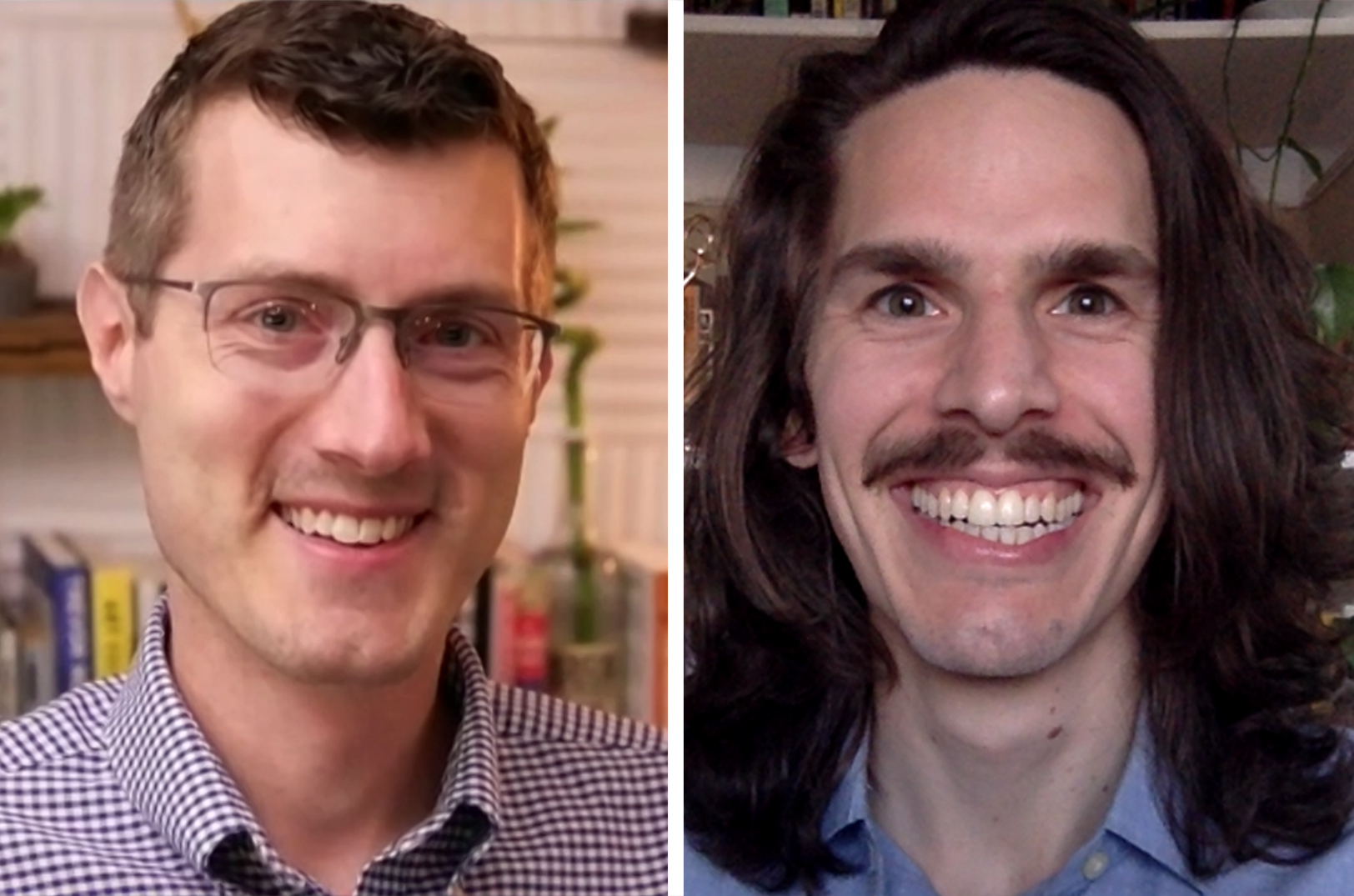
Developing a game that sparks meaningful conversations on systematic racism requires nuance and balance, Nathaniel Bozarth explained, noting the goal is to create an emotional impact while not causing harm to the player.

“It’s tough because you want to teach a topic that’s really hard — and you want to do it delicately enough that you’re not hurting people, but strongly enough that you’re creating a memorable experience,” said Bozarth, who created the game “Shapes” with Christopher Cook.
“Shapes” was designed to simulate how racially-biased policies — paired with self-interested financial actions — led to segregated neighborhoods throughout the United States, and notably within Kansas City, Bozarth shared.
“Historical policy bleeds into the present day and contributes to the racial wealth gap,” he continued. “… The game models redlining, white flight and even a little bit of gentrification. We started this process by asking ourselves, ‘What discussion do we want the game to facilitate? What are the racist policies that we want to cover?’”
Within the game, players are either a circle (which represents a white person) or a triangle (which represents a person of color). The game takes place on various islands where the goal is to accumulate wealth through land acquisition. Circles have certain game advantages, which are intended to represent white privilege. The player with the highest points wins.
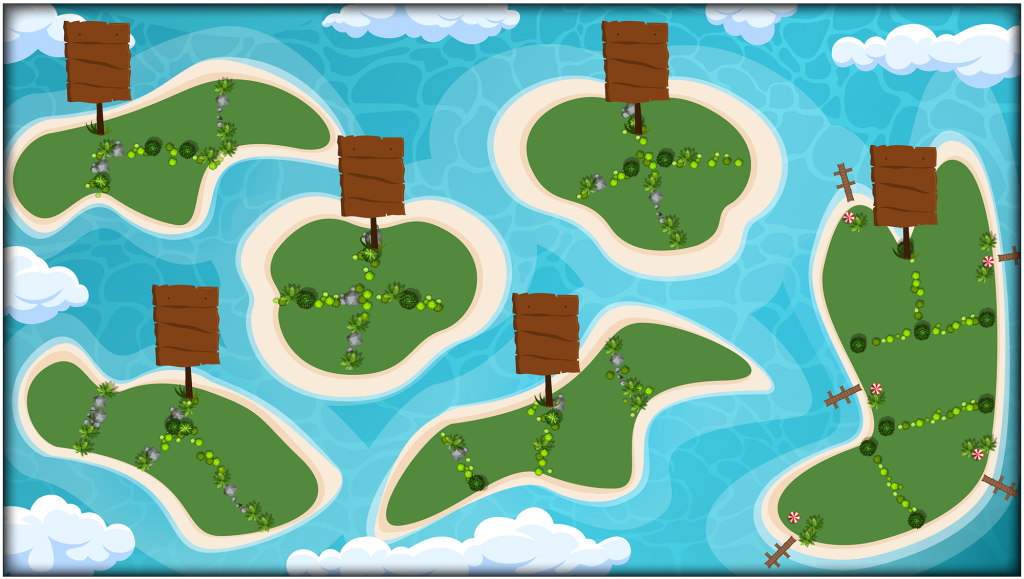
Shapes Game Board
The twist: “Shapes” is presented as a fast-paced socioeconomic game; players are not aware there is a connection to segregation and racist policy, Bozarth noted.
“There’s this moment of reveal at the end of the game,” he said, “which causes this emotional reaction, because the winner feels bad for winning.”
Importance of reflection
The first time Bozarth played “Shapes” with a group, it caused the desired outcome: reflection.
“Someone who was a circle in the game talked about how she had a very strong reaction when she saw triangles moving to her island, because that meant her property values would go down,” Bozarth recalled. “… We want to model that unfairness in the game, so that we can have robust conversations about it afterward.
“We try to stress with all partners who play that you can’t play the game without having a discussion afterward,” he continued. “It can be tough, but it’s so vital.”
Shapes best works with 12 or more participants to accurately depict residential segregation, Bozarth noted. The duo has tested the game on more than 100 different students so far and is continuing to collect feedback.
“Our biggest thing right now is we’re looking for partners to play test the game this summer or in the coming fall,” Bozarth said. “We are open to almost any type of group doing that … whether it’s a high school classroom — recently there was a church — or a university class.”
The duo is testing both the virtual version of “Shapes,” as well as an in-person version of the game — which was the original design of the game until the COVID-19 pandemic.
“We tested it in March 2020 with a group of students at Blue Valley North, and that test went really well,” Bozarth recalled. “And just a few days later, COVID happened and knocked out our plans for future testing with that same group of students.”
Over the summer of 2020, the duo worked to create the virtual version known as “Shapes” and also collaborated with educators to create a curriculum surrounding the game.
For more information on “Shapes” and how to test out the game, reach out to Nathaniel Bozarth at bo.nathaniel@gmail.com.
Dividing Lines Tour
As a white man who has witnessed his peers of color being denied equal access to opportunities, Bozarth said, he is passionate about using his white privilege to make a difference.
“My long-time creative partner [Christopher Cook] is also a white male,” Bozarth noted. “We both seek to hold ourselves accountable to people of color in our lives, as well as do our work as white males trying to speak to other white people in order to disrupt and destroy white supremacy.”
Before “Shapes,” Bozarth and Cook partnered with the Johnson County Library to produce the Dividing Lines Tour — a driving tour that guides participants throughout Kansas City to learn about the history of segregation in the Kansas City metro. The tour was created as part of the Johnson County Library’s Race Project KC.
Click here to read more about the Dividing Lines Tour’s launch.
The duo also made a virtual version of the Dividing Lines Tour that utilizes virtual reality to provide a 360-degree view of various locations in Kansas City, Bozarth said — noting that the experience is free and can be done from the comfort of one’s couch.
“We’ve been really happy that the Johnson County Library has been a really valued partner in this effort — both on Dividing Lines and they’ve supported the creation of this game as part of Race Project KC,” Bozarth said. “We’ve been really blessed to do this work.”


2021 Startups to Watch
stats here
Related Posts on Startland News

Hungry Sprint Accelerator startups bite into corporate partnerships at Demo Day (Photos)
Winning a mother’s trust is a big deal, said Michael Moran, founder of MoPro, a high-protein, low-sugar Greek yogurt that was among the 2018 Sprint Accelerator cohort’s dairy-centric startups. But what’s perhaps even better than earning Mom’s blessing? Winning financial support from a key backer. Dairy Farmers of America announced a partnership with MoPro Tuesday…

Can KC founders replicate success with WeWork Creator Awards?
After two area founders snagged sizable cash prizes in past contests, a global coworking giant is re-igniting the WeWork Creator Awards competition to recognize entrepreneurs’ work. WeWork plans to dish out at least $238,000 and up to $634,000 in awards to the Eastern United States’ region, which includes Kansas City in this year’s contest parameters. WeWork…

Batters up! Voting now open for KCSourceLink All-Star competition
When the Royals take the field June 18 at Kauffman Stadium, more than a dozen freshly crowned KCSourceLink All-Star honorees will be catching accolades. But first: You have to vote. KCSourceLink’s final round of balloting has begun for the All-Star selection, which coincides with the network’s 15-year celebration during Entrepreneur Day at the K. Dozens…

Video: Five ways to build an app — your startup’s high-tech living organism
Editor’s note: Continuing Startland’s mission to help area entrepreneurs and startups grow, we’re happy to share with you a video from our friends at Kansas City-based tech agency Crema. Learn more about the agency here. App development for any startup doesn’t end when the technology goes live for users. Choosing the right method to build…