

Bad Rhino wants to build, not exit (so investors aren’t playing): Why the fast-paced KC studio hopes to rewrite the game
June 10, 2021 | Channa Steinmetz

Midwest investors need to familiarize themselves with the potential waiting to play within the video game industry, said Ryan Manning, noting they otherwise risk losing out on major opportunities.
“I don’t mind having those conversations and educating the parties involved,” said Manning, the founder of Bad Rhino Studios. “I think the biggest reason things need to change is because there are young students here [in Kansas City] wanting to learn game development. And that phrase ‘game development’ is a niche part of real-time tech — the tech expands out into other industries, like film and architectural visualization.”

Elevator pitch: Bad Rhino Studios is a full-cycle, indie studio that specializes in all aspects of video game development — from concept and design, to full production and post-release services.
Founder: Ryan Manning
Founding year: 2015
Amount raised to date: None
Noteworthy partners: Proletariat, Epic Games, Facebook, Cartoon Network, VR In-Motion
Current employee count: 26
When Manning first started his video game development company Bad Rhino Studios in 2015, he recalled, the City of Kansas City, Missouri, was publicly embracing efforts to grow a strong entrepreneurial ecosystem.
“I had this expectation — from everything that I was seeing with Google Fiber coming in and the initiatives for entrepreneurship — that we were going to have some resources to help build [Bad Rhino Studios],” he shared. “I actually came to find out that game development falls in this weird crack between what investment firms understand and what they don’t do.”
Within that “crack,” Manning discovered he had no resources to help build the business, he said — noting Bad Rhino Studios has been bootstrapping for the past six years.
“The weirdest part is that early on when Kansas City did this entrepreneurial push, they realized that apps were extremely lucrative,” Manning noted. “They kind of bought into this ‘create an app and sell it in six months [expectation].’ Well, game development is similar to that; but our life cycle can sometimes be two to three years, and we’re creating products.
“Also, the focus has never been to sell Bad Rhino,” he continued. “I want to build and expand on it. I want to provide career opportunities in Kansas City and make a name for the city in the video game industry. … Because we didn’t fall into the traditional model of an app, there weren’t any mechanisms to support us. In fact, I still don’t think there are any mechanisms that support people who want to create those kinds of things, which is sad.”
Click here to learn more about Bad Rhino Studios.
The initial plan for Bad Rhino Studios was to own intellectual property (IP) through developing original games, Manning said. Because of a lack of resources, Bad Rhino Studios pivoted in its second year and switched to a work-for-hire business model.
“We’ve been partnering with other studios to help offload whatever their production needs are,” he explained. “Like with Proletariat, [a video game publisher], we’re helping them create content for their game, Spellbreak.”
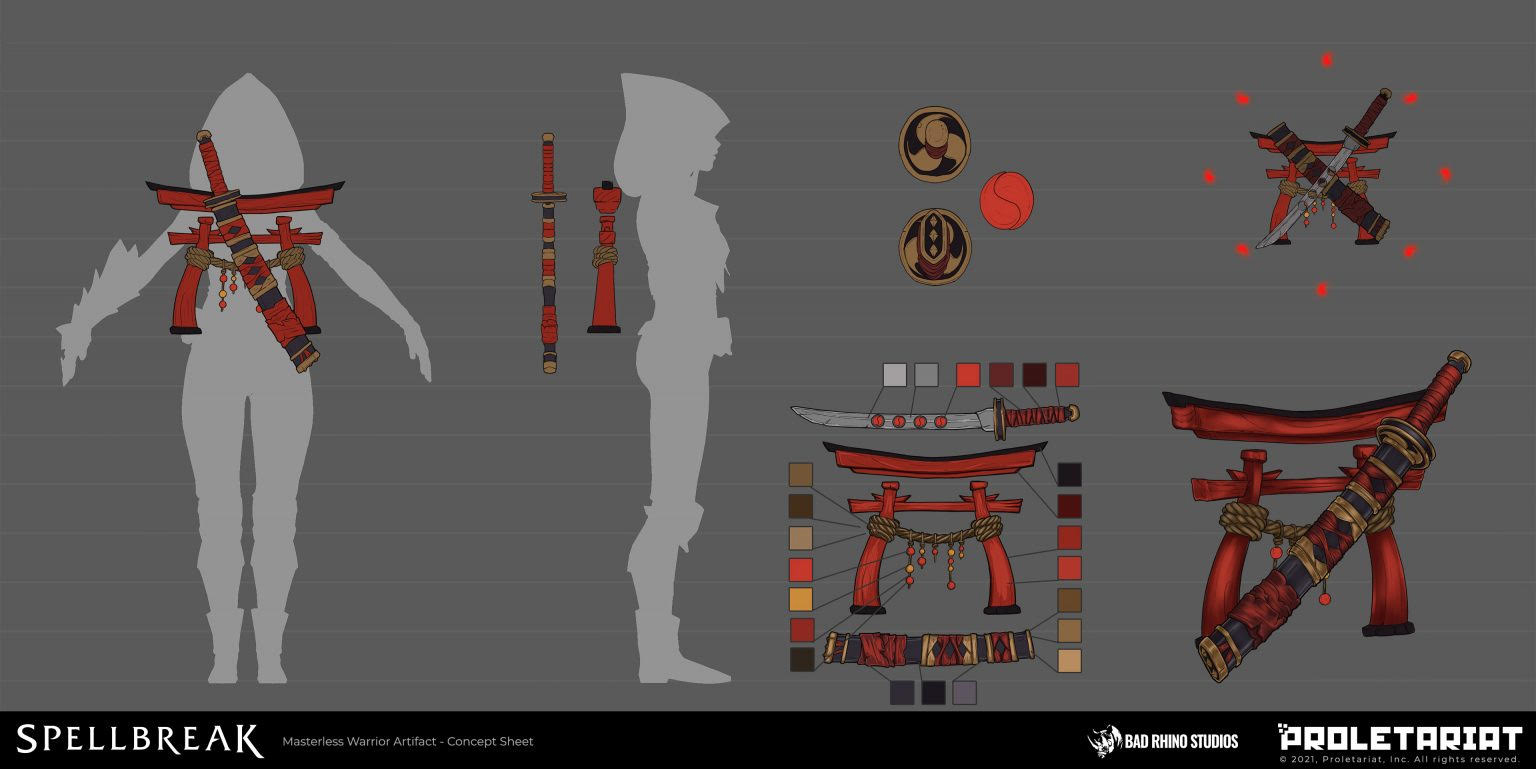
The concept and ideation step, Spellbreak, Bad Rhino Studios
Click here to check out Bad Rhino Studios’ full pipeline process of creating content for Spellbreak.
Skip ahead to 2021, Bad Rhino Studios has partnered with other major companies such Epic Games, Facebook and Cartoon Network.
Its major success with partnership projects had allowed the company to look back at its initial plan and start working on developing its own games, Manning said. The studios’ main goal is to continue scaling the company, so that it can meet the high demand from others, as well as create its own IPs.
“We have projects in the works that I can’t disclose,” he teased, “but we have this really cool chance to finally make our own stories and bring them into the world. We’re excited about that next step in our journey.”
Interest in the vertical is only growing, Manning said, noting the entire video game industry is worth more than $121 billion. Manning — who also serves on several boards for school districts with students ranging from middle schools to colleges — has seen more and more students wanting to learn video game technology, which results in gaining valuable skill sets, he shared.
“If investors don’t start backing the industry, the net effect is that we will lose all these students who want to go into development and have very viable skill sets,” Manning said. “Because if these students decided they didn’t want to do games anymore, they can go into other industries. They have that knowledge.
“… I really wish Kansas City would understand how big of an opportunity this whole movement with game technology is headed,” he continued. “I’d love to see the city put resources back into their original promise of making Kansas City the most entrepreneurial city in the nation and really start diversifying that.”


2021 Startups to Watch
stats here
Related Posts on Startland News

Mizzou students started making real angel investments from campus a decade ago; now they need more capital
COLUMBIA, Missouri — The college-aged leaders of Mizzou’s AACE Venture Fund are learning as they go: not just how to invest in real startups across the region, but how to make the university’s long-running student investment program sustainable. “We’re having real-world experiences — such as getting on the phone with founders, doing due diligence and…

A new credit union on Prospect aims to be the pebble that causes a ripple effect east of Troost
‘Moving individuals out of that payday loan cycle into a banking cycle’ The recent opening of a new credit union with a mission to serve residents of Kansas City’s east side marks a key milestone along “a long road” to build generational wealth for those historically disadvantaged. Since 2007, Dee Evans has been part of…

Facility Ally raises $700K to take its sports venue, ‘eatertainment’ SAAS platform national
Facility Ally, a sports facility and “eatertainment” management software company, has closed a $700,000 pre-seed funding round led by Slabotsky Family Office. The funds are expected to be used to build out Facility Ally’s development, sales and marketing teams. For sports facilities and leagues, Facility Ally provides a central hub for reservations, memberships, payment, waivers…

Healium augments funding with $3.6M seed round, adds Mayo Clinic deal
Healium, a virtual and augmented reality biofeedback company, announced Monday one of the largest private equity raises for a women-owned business in mid-Missouri history. The startup — which transforms bio-data from any fitness tracker into immersive, reactive media — has also entered into a know-how license agreement with Mayo Clinic. A “virtual firefly release” using mobile…