

Bad Rhino wants to build, not exit (so investors aren’t playing): Why the fast-paced KC studio hopes to rewrite the game
June 10, 2021 | Channa Steinmetz

Midwest investors need to familiarize themselves with the potential waiting to play within the video game industry, said Ryan Manning, noting they otherwise risk losing out on major opportunities.
“I don’t mind having those conversations and educating the parties involved,” said Manning, the founder of Bad Rhino Studios. “I think the biggest reason things need to change is because there are young students here [in Kansas City] wanting to learn game development. And that phrase ‘game development’ is a niche part of real-time tech — the tech expands out into other industries, like film and architectural visualization.”

Elevator pitch: Bad Rhino Studios is a full-cycle, indie studio that specializes in all aspects of video game development — from concept and design, to full production and post-release services.
Founder: Ryan Manning
Founding year: 2015
Amount raised to date: None
Noteworthy partners: Proletariat, Epic Games, Facebook, Cartoon Network, VR In-Motion
Current employee count: 26
When Manning first started his video game development company Bad Rhino Studios in 2015, he recalled, the City of Kansas City, Missouri, was publicly embracing efforts to grow a strong entrepreneurial ecosystem.
“I had this expectation — from everything that I was seeing with Google Fiber coming in and the initiatives for entrepreneurship — that we were going to have some resources to help build [Bad Rhino Studios],” he shared. “I actually came to find out that game development falls in this weird crack between what investment firms understand and what they don’t do.”
Within that “crack,” Manning discovered he had no resources to help build the business, he said — noting Bad Rhino Studios has been bootstrapping for the past six years.
“The weirdest part is that early on when Kansas City did this entrepreneurial push, they realized that apps were extremely lucrative,” Manning noted. “They kind of bought into this ‘create an app and sell it in six months [expectation].’ Well, game development is similar to that; but our life cycle can sometimes be two to three years, and we’re creating products.
“Also, the focus has never been to sell Bad Rhino,” he continued. “I want to build and expand on it. I want to provide career opportunities in Kansas City and make a name for the city in the video game industry. … Because we didn’t fall into the traditional model of an app, there weren’t any mechanisms to support us. In fact, I still don’t think there are any mechanisms that support people who want to create those kinds of things, which is sad.”
Click here to learn more about Bad Rhino Studios.
The initial plan for Bad Rhino Studios was to own intellectual property (IP) through developing original games, Manning said. Because of a lack of resources, Bad Rhino Studios pivoted in its second year and switched to a work-for-hire business model.
“We’ve been partnering with other studios to help offload whatever their production needs are,” he explained. “Like with Proletariat, [a video game publisher], we’re helping them create content for their game, Spellbreak.”
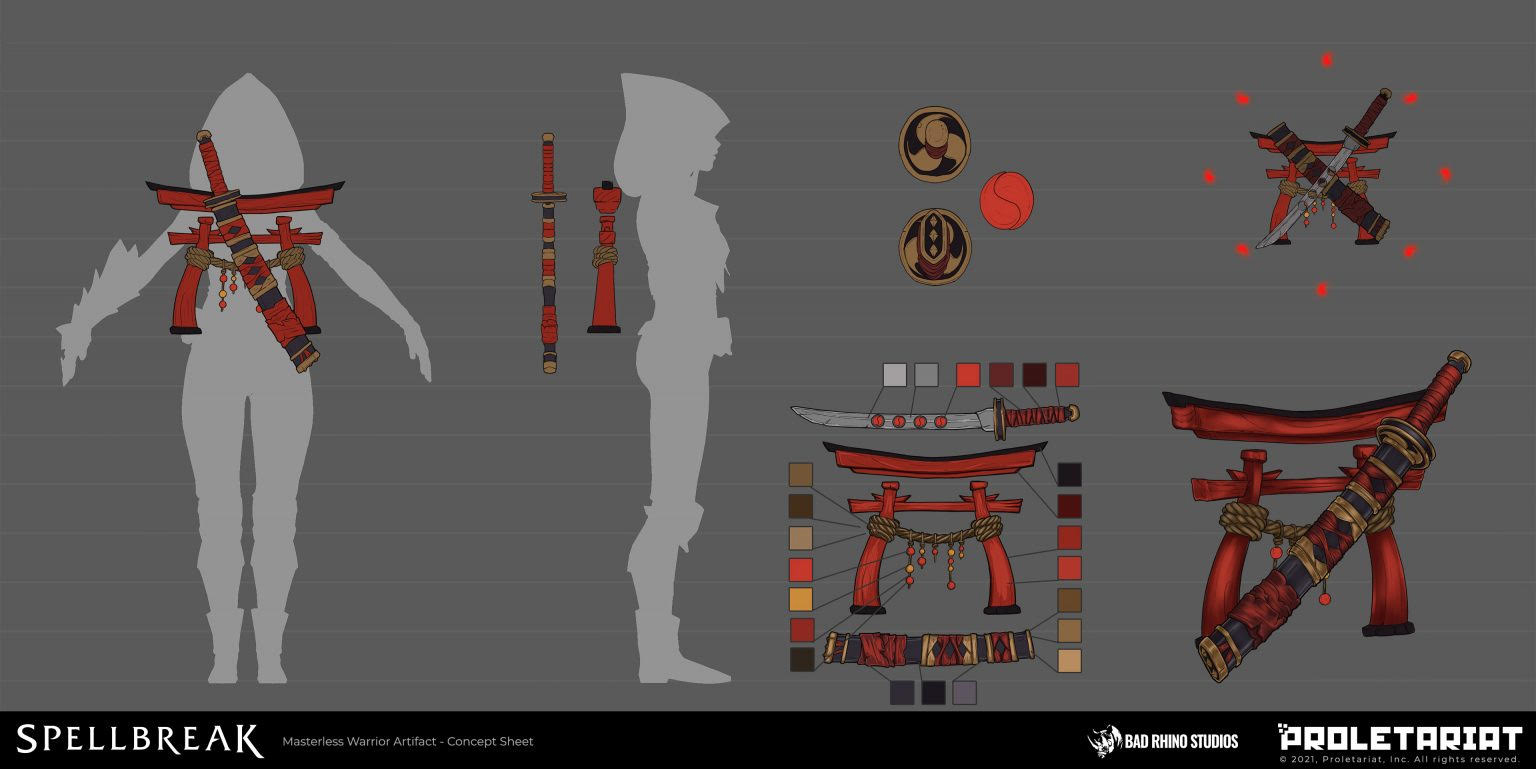
The concept and ideation step, Spellbreak, Bad Rhino Studios
Click here to check out Bad Rhino Studios’ full pipeline process of creating content for Spellbreak.
Skip ahead to 2021, Bad Rhino Studios has partnered with other major companies such Epic Games, Facebook and Cartoon Network.
Its major success with partnership projects had allowed the company to look back at its initial plan and start working on developing its own games, Manning said. The studios’ main goal is to continue scaling the company, so that it can meet the high demand from others, as well as create its own IPs.
“We have projects in the works that I can’t disclose,” he teased, “but we have this really cool chance to finally make our own stories and bring them into the world. We’re excited about that next step in our journey.”
Interest in the vertical is only growing, Manning said, noting the entire video game industry is worth more than $121 billion. Manning — who also serves on several boards for school districts with students ranging from middle schools to colleges — has seen more and more students wanting to learn video game technology, which results in gaining valuable skill sets, he shared.
“If investors don’t start backing the industry, the net effect is that we will lose all these students who want to go into development and have very viable skill sets,” Manning said. “Because if these students decided they didn’t want to do games anymore, they can go into other industries. They have that knowledge.
“… I really wish Kansas City would understand how big of an opportunity this whole movement with game technology is headed,” he continued. “I’d love to see the city put resources back into their original promise of making Kansas City the most entrepreneurial city in the nation and really start diversifying that.”


2021 Startups to Watch
stats here
Related Posts on Startland News

How Trump’s views on climate raise questions for Kansas’ biggest bet: a $4B Panasonic plant in De Soto
Editor’s note: This story was originally published by Kansas City PBS/Flatland, a member of the Kansas City Media Collective, which also includes Startland News, KCUR 89.3, American Public Square, The Kansas City Beacon, and Missouri Business Alert. Click here to read the original story. Headwinds don’t dampen enthusiasm of company executives, government officials The mammoth $4 billion…
Lula builds $28M round with bicoastal investor; plans deep expansion into new markets
Securing Lula’s Series A funding round is not only validation for the Kansas City proptech startup, Bo Lais said; the $28 million in capital means a greater opportunity to enhance the ecosystem for all of his company’s stakeholders, he added. The funding will allow Lula — a leading platform for streamlined property maintenance solutions and…

Invary’s $3.5M seed round gives startup homefield advantage to rewrite the rules of cybersecurity
A $3.5 million seed round backed by two high-profile Kansas City funds is expected to help Invary redefine runtime security, said Jason Rogers, CEO of the Lawrence-based cybersecurity startup — making new funding headlines from within the KU Innovation Park. Invary — a pioneer in Runtime Integrity solutions built on NSA-licensed technology — announced the round…

Closing KCK’s Black-owned coffee shop opens opportunity for Kinship to brew bigger, owner says
When TJ Roberts posted on social media about closing Kinship Cafe, a Black-owned coffee shop in Kansas City’s Strawberry Hill neighborhood, he was surprised by the outpouring of support — a morale boost that not only gives him the spirit to keep fighting for the business, but expand it, he said. “When we posted about…