

Olathe startup set to launch STEM training facility; plans to create 150 jobs over next seven years
May 25, 2021 | Channa Steinmetz
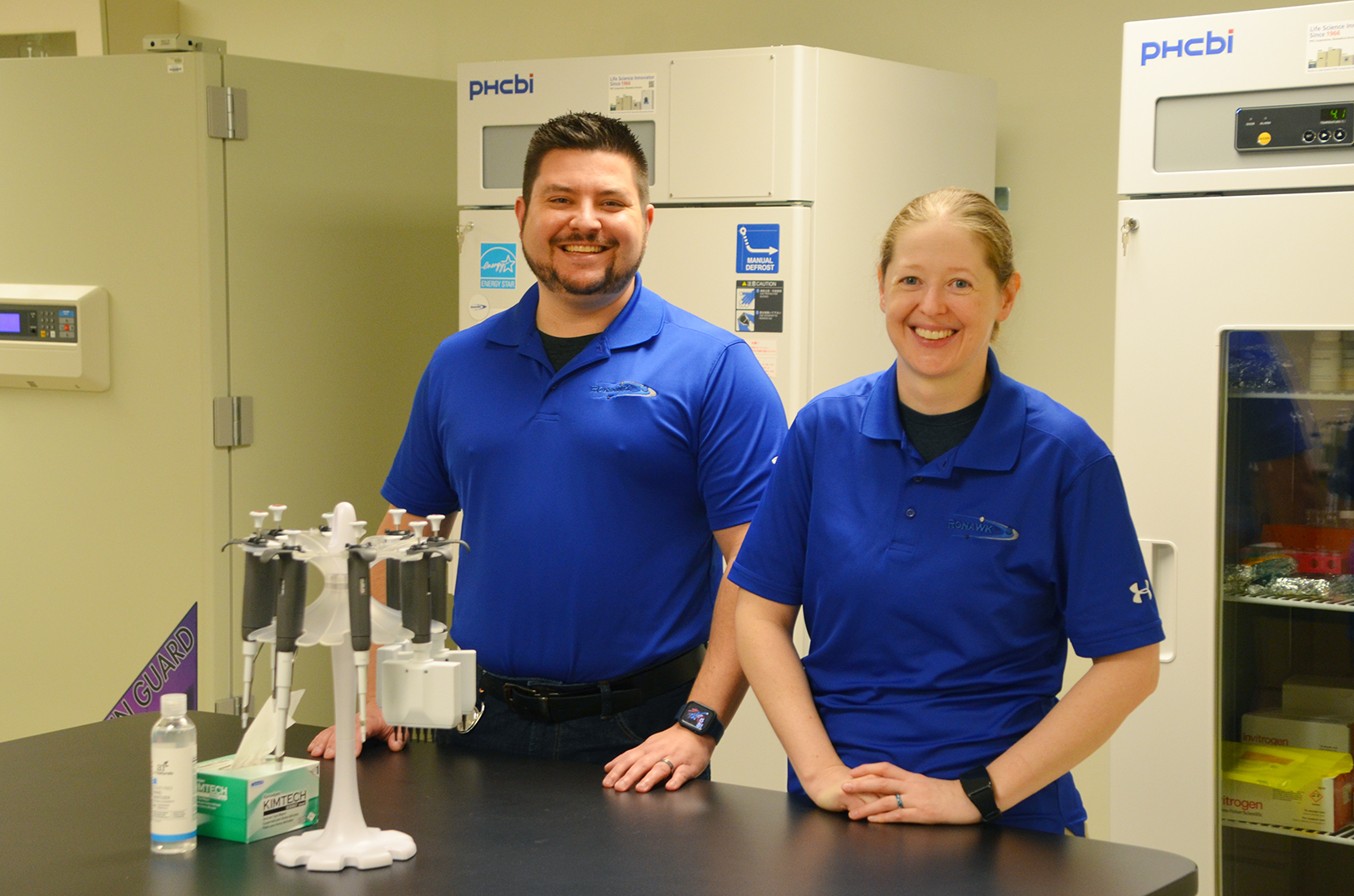
Starting as two scientists with an idea to solve slow and costly cell production, Ronawk has now blossomed into a rapidly growing startup with an increasing demand for its work, said A.J. Mellott.
“We quickly realized that Ronawk was going to need a lot of talent to meet the demand of its products,” said Mellott, who co-founded the biotechnology lab in Olathe with Heather Decker. “We don’t necessarily need individuals who have PhDs and Master’s [degrees]. Our positions are more entry level, but do require some type of STEM proficiency.”
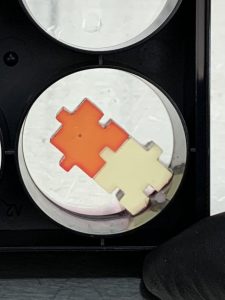
T-Blocks by Ronawk
Founded in 2019, Ronawk develops customized 3D-printed consumables to accelerate cell production in the biotech, healthcare and agriculture industries. The startup is known for its technology called Tissue Blocks (T-Blocks), which allow for researchers to rapidly expand the growth of cells, eliminate the need to subculture and greatly reduce labor cost, A.J. Mellott said.
As a solution to finding talent, Ronawk announced Monday it plans to launch a STEM training facility where individuals can get bioscience certifications in such areas as 3D printing, bioprinting, cell culture, analytical imaging, biological sample prep and staining, gene expression analysis and data analysis.
“This gives students a way to get some of those highly desirable bioscience skills without needing to attend a four-year institution or going to grad school,” Mellott explained, noting that such skills are traditionally not offered by universities and technical programs.
Click here to read why Ronawk was listed as one of Startland News’ 10 Kansas City Startups to Watch in 2021.
The company’s current goal is to accept the first cohort of students at the start of summer 2022, Mellott said, noting some renovations to their space are needed before beginning classes. Along with the space, Ronawk plans to help provide the class curriculum and equipment.
Ronawk is collaborating with Skilled KC Technical Institute on this endeavor to maximize the benefit to the Kansas City region, he added. Students will be able to select which skills they’d like to pursue, and courses will range from 4- to 16-weeks long.
“We are looking into doing a bio trade sort of program where we could provide the certifications with really specific skills that would be desirable in hospitals, biotech companies, biopharma companies, etc.,” Mellott said. “… We want to make sure that what we’re doing is collaborative and synergistic. We do not want to be competitors.”
Ronawk — a 2019 Digital Sandbox KC recipient — is actively looking for partners and contributors to collaborate within their plans of expanding Kansas City’s talent pool. Over the next seven years, Ronawk aims to create 150 full-time positions that heavily rely on individuals with talent and proficiency in a STEM discipline, according to Monday’s press release.
“Over the next 18 months, we are looking to create as many as 25 full-time positions with half of them requiring some type of STEM proficiency,” Mellott noted.
It is important to both Mellott and Decker that they give back to Kansas City by growing the city’s biotech ecosystem and seeking out local and regional talent, he added.
“[Ronawk] is very much a Kansas City company, so we want to do our part in helping the community,” Mellott said. “This is a way that we can help grow some of the talent here, as well as collaborate with others in the community. Kansas City is a really vibrant place, and we want to be as involved as we can.”
Others in the biotechnology community applauded Ronawk for its dedication to education and growing the community’s skill sets.
“Ronawk is an incredible asset to the region,” said Dennis Ridenour, president and CEO of BioNexus KC. “Not only are they developing cutting edge technologies that could have significant impacts on personalized medicines — their management team is committed to the Kansas City region, making investments in both the talent pipeline and physical infrastructure.”

Featured Business

2021 Startups to Watch
stats here
Related Posts on Startland News

Hack Midwest offers coders freedom through 24-hour app creation competition
Technologists are often surprised by what they’re able to accomplish when they work together in a competitive format, Mike Gelphman said. That’s part of the reason Hack Midwest is returning this summer with the objective to inspire more techies to embrace their imagination, said Gelphman, founder of the competition, as well as KCITP, an area…

KCultivator Q&A: John Coler champions making a quick impact, packs of dolphins
Editor’s note: KCultivators is a lighthearted profile series to highlight people who are meaningfully enriching Kansas City’s entrepreneurial ecosystem. Today Startland takes a closer look at startup ecosystem champion John Coler. Check out our features on Made in KC’s Tyler Enders, Hispanic business builder Pedro Zamora, ‘fashionpreneur’ Jordan Williams, Plexpod founder Gerald Smith, innovation coach Diana…

Backed by $4M round, Hilary’s Eat Well expanding organic food line, hiring 10-15 workers
Hilary’s Eat Well is growing its plant-based food line, company leaders said. The move to diversify the company’s offerings — as well as to more efficiently produce larger quantities of its free-from (dairy- and gluten-free) products — comes as the Lawrence-based operation moves its storage to an off-site facility, freeing up manufacturing space, said Lydia…

City challenges startup leaders to swap social media for in-person dialogue on regulation
Editor’s note: Rick Usher is a member of the Kansas City Startup Foundation’s policy committee, and Sarah Shipley is a board member for KCSF, the parent organization of Startland News. This piece was independently produced. There’s a void of shared awareness between city government and the startup community, Rick Usher said. That’s why government officials and leaders…