

How a KC native translated his family business into a development-to-delivery logistics firm
May 6, 2021 | Channa Steinmetz
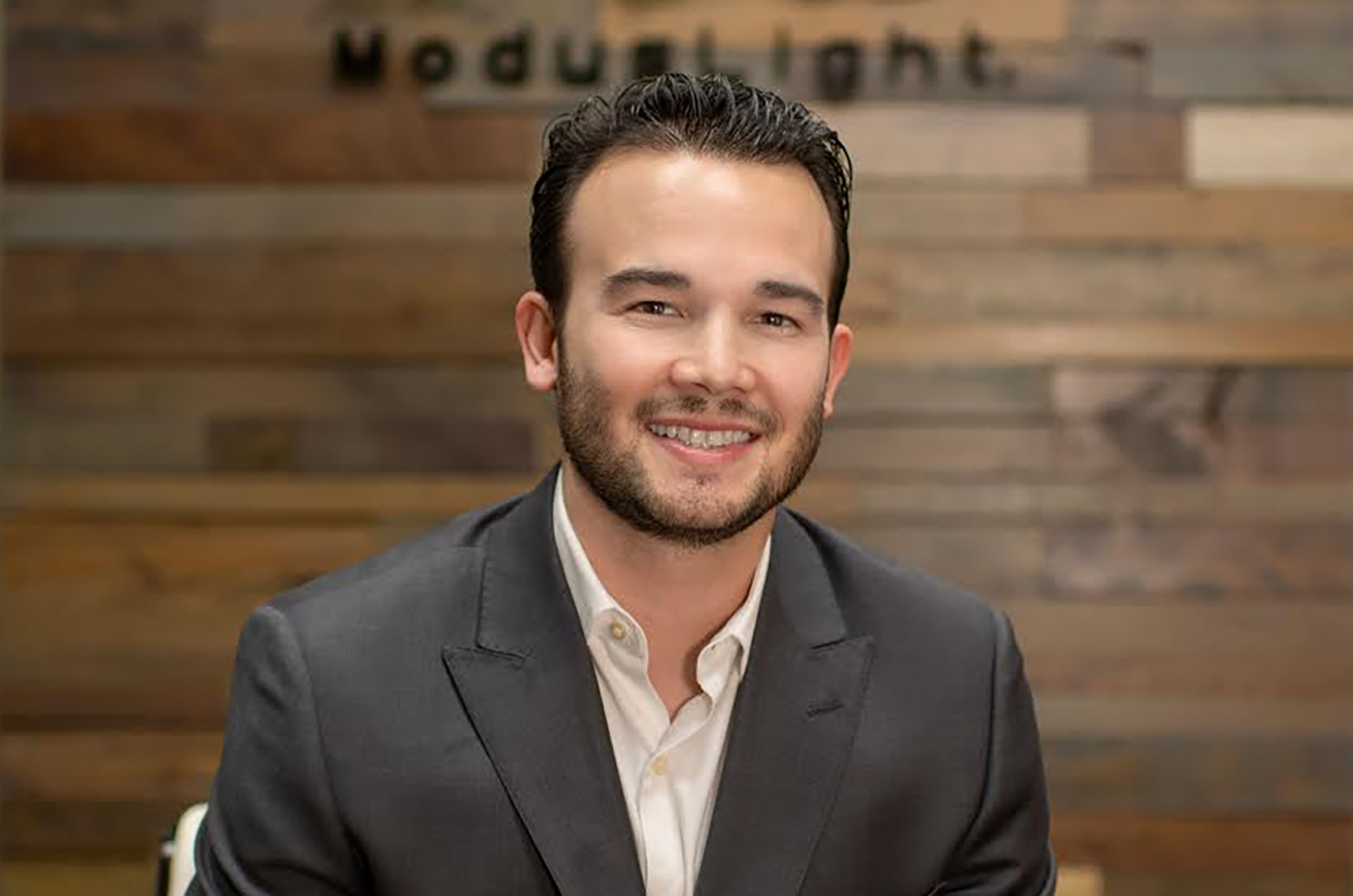
Kyle Davis is connecting the globe to his hometown through Modus Light, his manufacturing and supply chain management provider.
“Modus Light allows companies to have a single source supplier for their multiple product lines, [so then] they only need to manage us,” explained the founder and CEO of Overland Park-based Modus Light. “We’re the ones who have got the boots on the ground — with our quality control, quality assurance, making sure their product is on time and meeting their specifications.”

Modus comes from the latin “modus,” meaning the way in which anything is done.
Light signifies one’s idea, knowledge or understanding.
Davis was first introduced to international business as a child through his late-father, Chris Davis, who served as the president of his own supply chain firm.
“I’ve always loved traveling, and I was exposed to the supply chain/manufacturing side of how businesses work at a really young age,” Davis shared, noting he spent a couple childhood years in Macau, a former Portuguese territory now part of China, where his mother grew up. “When I was younger, I never thought much about what I wanted to do. But it seemed very natural when I went to [Kansas State University] to pursue business and entrepreneurship.”
After gaining several years of work experience both within and outside of his father’s company, Davis saw an opportunity to open his own supply chain firm in 2017.
Click here to learn more about Modus Light.
One of the major goals of the firm was to bridge the language barrier between Western and Eastern culture with extensive experience and personnel in Asia, Davis noted. To accomplish this, Modus Light has offices in China, Taiwan and Overland Park, Kansas; as well as two factories based in China and Vietnam.
“The big difference between [Modus Light] and a traditional trading company overseas is that they often do not have a U.S. presence,” Davis explained. “We’re able to respond to the people in the U.S. in a timely manner. And if the buyers have any questions, the language barrier isn’t there. My staff and I are the ones communicating with the folks overseas.”
Fully vertical solution
Modus Light provides a “vertical solution,” meaning it has the resources to develop, source, manufacture, import and deliver finished goods. Davis tells customers to think of Modus Light as an extension of their sourcing department, he noted.
“The unique thing with us is that we have a [research and development] team,” Davis said. “So someone can come to us, and say they need a coffee mug. Not only are we helping them with product development because of our manufacturing side of things — we’re also handling the shipping process, how to clear it through the U.S. Customs. and dealing with tariffs, duties and things like that.”
As an extension of their customers, Modus Light is constantly developing new products, he added.
“We can’t disclose our clients, but we’ve gotten into everything from developing an entire line of anti-mosquito camping products to products that needed either antimicrobial treatments or flame retardant treatments,” Davis explained. “Often our products haven’t been developed before, so we’ve got to build it ourselves.”
Although the COVID-19 pandemic caused some delays in Modus Light’s vertical solution, the firm was able to pivot to keep freight moving.
“There’s been challenges, but we’ve been able to find unique ways to overcome delays in logistics,” Davis said. “Sometimes unique ways cost a little bit more, but we figured it out.”
Throughout the pandemic, Modus Light didn’t cut salaries or hours of any of their employees, Davis said with pride. The firm even expanded and hired more people in the latter half of 2020.
Davis’ passion for Modus Light comes from the desire to travel, meet new people and intimately experience cultures he may never have, he shared.
“The most fulfilling thing for me is being able to see that we’re doing something that is helping people and boosting employment,” Davis said. “We collaborate with people from various countries, and I thoroughly enjoy being able to work with them and see different cultures.”

This story is possible thanks to support from the Ewing Marion Kauffman Foundation, a private, nonpartisan foundation that works together with communities in education and entrepreneurship to create uncommon solutions and empower people to shape their futures and be successful.
For more information, visit www.kauffman.org and connect at www.twitter.com/kauffmanfdn and www.facebook.com/kauffmanfdn


2021 Startups to Watch
stats here
Related Posts on Startland News
Novel Capital teams with Crux KC to offer growth-focused marketing to early-stage tech companies
An exclusive partnership between two Kansas City-based innovators is expected to help remove a traditional financial hurdle to business growth, said Ethan Whitehill, president and chief strategy officer for the KC Chamber-lauded marketing firm Crux KC. The collaboration between Crux and Overland Park-headquartered capital provider Novel Capital is expected to offer B2B SaaS and tech…
Neighborhood smart cans help Kansas Citians save the planet from their kitchens
Newly introduced composting technology is already turning new ground in Kansas City, Kristan Chamberlain said, with more solar-powered compost cans arriving later this spring across the metro’s urban landscape. Her social venture, KC Can Compost, installed three of the devices in October — free to use for KCMO residents wanting to deposit their soil-making food…

Voodoo Volleyball bounces back in OP: Father-daughter duo doubles as new venture’s setters
Quinn Austin put several sports to the test as a preteen — racing from basketball practice to softball to volleyball. But she latched on to just one. “Volleyball. It was my sport. Everyone was having a good time,” she said. “We just loved the cheers — a cheer when we got a hit, a cheer…

Black farmers are losing ground in the fight to feed their communities, advocates say
More than a century of systemic land dispossession and discriminatory practices has left Black farmers with less than 0.6 percent of U.S. farmland — less than a third of the 16 million acres they operated in 1910, according to local urban farming advocates. They gathered Tuesday at Independence Boulevard Christian Church to confront this history…