

North KC’s Brewkery pours new line of alcoholic kombucha, tapping brand’s inner spirits
May 15, 2021 | Tommy Felts
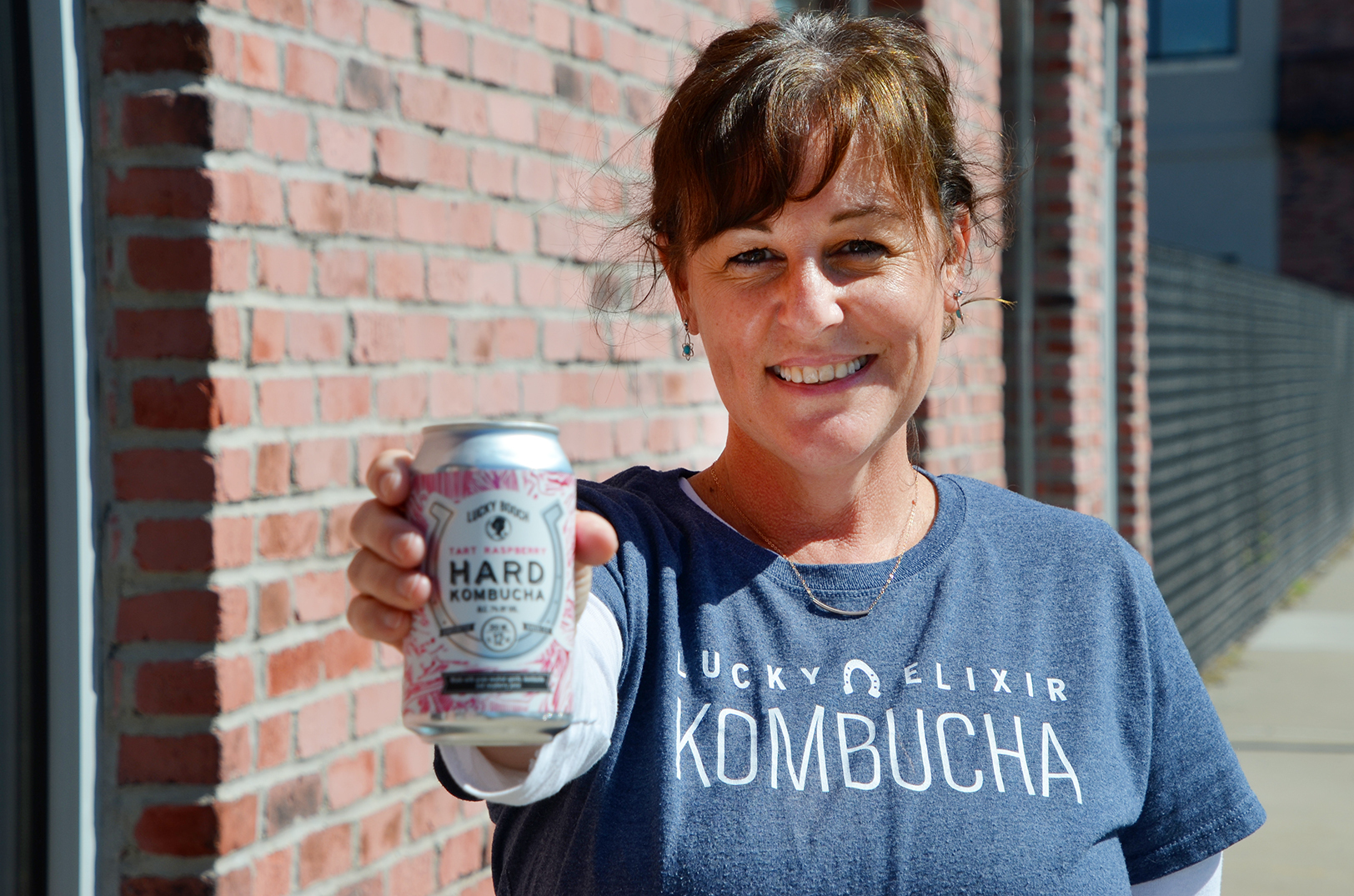
“Hard” doesn’t mean adding a boozy bite at the expense of flavor or natural ingredients, said Amy Goldman, announcing a new line of hard kombucha now available exclusively at The Brewkery’s North Kansas City taproom.
“We’ve all seen the trend toward low-calorie, low-sugar, and more sessionable drinks. The Brewkery opted to do it our way with real ingredients,” said Goldman, owner-operator of the taproom and its Lucky Elixir brand, noting the new Lucky Booch hard kombucha features no synthetic sweeteners.
Peach Blossom Lucky Booch by The Brewkery
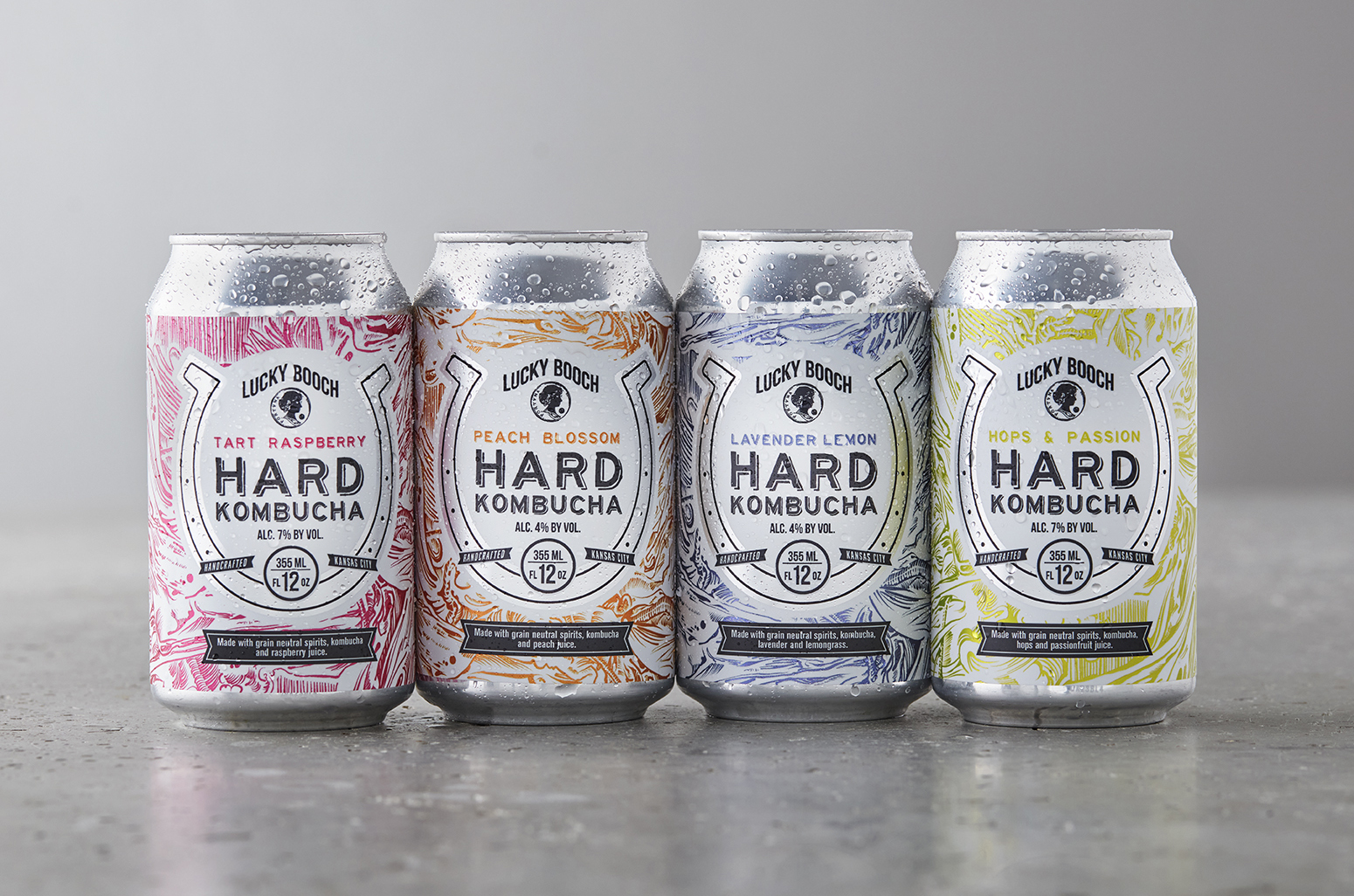
Using a blend of Lucky Elixir kombucha and a neutral spirit to ensure the kombucha’s integrity isn’t compromised, she added, Lucky Booch products are gluten-free, flavored with fruit, hops and/or herbs, and full of healthy acid compounds and antioxidants.
“A lot of people who have tried it say they don’t even detect the alcohol in it at all. They think it tastes like regular kombucha,” Goldman said. “I can tell — but it’s pretty subtle.”
Lucky Booch is available (on tap and in 12-ounce cans) in four flavors: Peach Blossom (4 percent ABV), Lavender Lemon (4 percent ABV), Tart Raspberry (7 percent ABV) and Hops & Passion (7 percent ABV).
The new line was released in April at The Brewkery and is already a popular fixture in the space, which hosts individuals and small groups.
“We wanted to prove sales in our taproom before going to distributors, and we’ve already sold out of one flavor,” said Goldman.
The taproom — launched by Goldman and her husband, co-owner and brewer Sean Galloway in February 2018 — is open 10 a.m. to 7 p.m. Thursday-Saturday at 1443 Swift St.
Click here to learn more about The Brewkery or Lucky Elixir Kombucha.

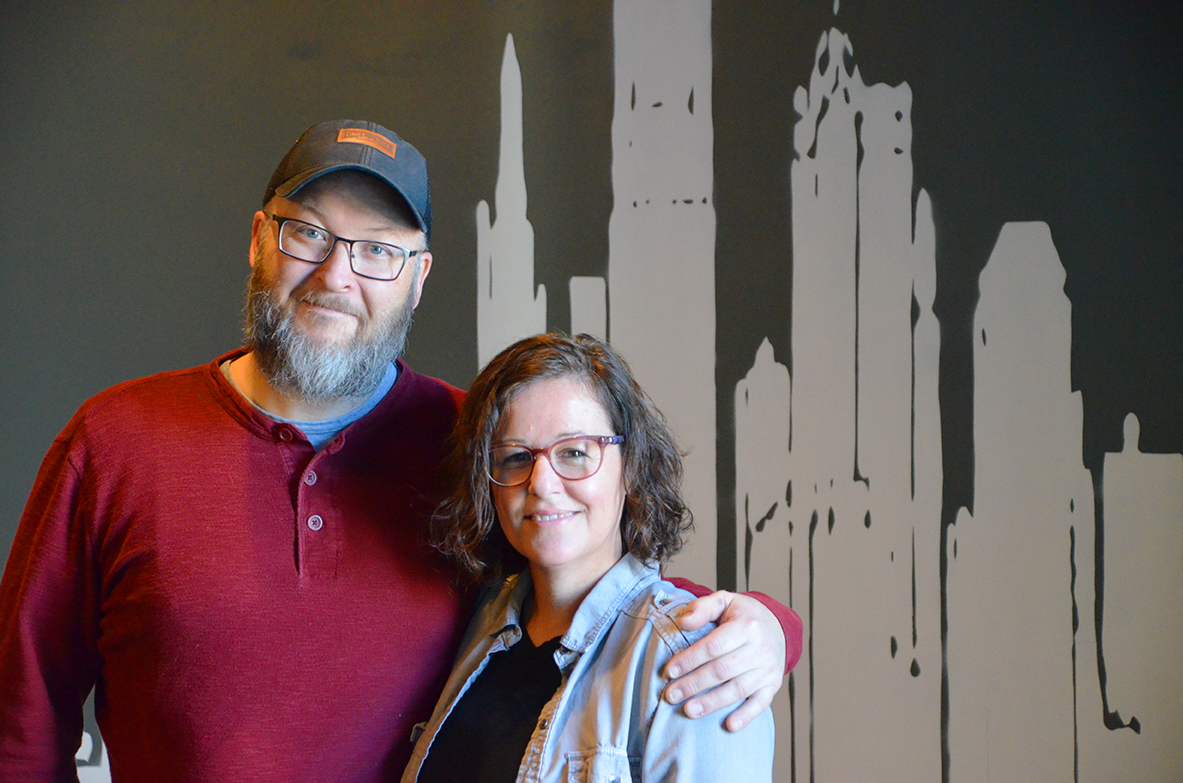
Sean Galloway and Amy Goldman, The Brewkery, Lucky Elixir Kombucha, January 2018
Lucky Booch arrives about six years after the married duo first explored kombucha when they were looking for a non-alcoholic fermented drink to brew for their local farmers’ market — interest grown further from experimenting with making sourdough bread and beer.
“Once we got into kombucha making, we really kind of forgot about beer. It was just too hard to do all of it — even as a hobby,” Goldman said. “During COVID, we actually had a little bit of time to breathe. So it became one of our goals to finalize a line of hard kombucha — How we were going to do it became the big question.”
The project was a labor of love, she said, with its research and development phase serving as a testament to the brand’s commitment to product innovation and crafting high-quality, honest and transparent beverages.
But while the pandemic offered Goldman and Galloway the headspace to iterate their hard kombucha concept, it also saw a steep decline in wholesale demand for Lucky Elixir’s existing kombucha line. Thirst for kegs — especially in places like offices — plummeted during an extended work-from-home shutdown.
“People weren’t coming into work. Offices were closed. Companies didn’t have to worry about providing [those workplace amenities] at the time,” Goldman said. “It’s starting to come back now, and our taproom is stronger than ever.”
Aside from The Brewkery itself, non-alcoholic Lucky Elixir cans may be found in retail locations like The Roasterie, Made in KC, and smaller coffee shops across the city, as well as some grocery stores. A partnership with Kansas City-based Evolve has kombucha in all of their juice stores, from Omaha to Arkansas, Goldman said.
Even as the metro begins to reopen, one pandemic-prompted challenge remains, she added.
“We’re actually finding pretty major problems within the supply chain — everything from flavorings to even just growlers,” Goldman said. “It’s making everything take so much longer than it did before. It’s frustrating, but I think everyone’s still kind of in the same boat.”

This story is possible thanks to support from the Ewing Marion Kauffman Foundation, a private, nonpartisan foundation that seeks to build inclusive prosperity through a prepared workforce and entrepreneur-focused economic development. The Foundation works to change conditions, address root causes, and break down systemic barriers so that all people – regardless of race, gender, or geography – have the opportunity to achieve economic stability, mobility, and prosperity.
For more information, visit www.kauffman.org and connect with us at www.twitter.com/kauffmanfdn and www.facebook.com/kauffmanfdn.

Featured Business

2021 Startups to Watch
stats here
Related Posts on Startland News

Report: KC is a tech hub but labor shortage is hampering growth
Each day, Kansas City is better positioning itself to be the Midwest’s tech hub. But for Kansas City to realize its full potential, tech leaders, policymakers and the community need to do more to cultivate homegrown talent, KC Tech Council president Ryan Weber said. “Attracting talent from another city is a very small game — and…

KC tech startup partners with Children’s Mercy to help diagnose, manage care
Kansas City-based Engage Mobile Solutions developed a mobile app assisting pediatricians at Children’s Mercy Hospital, treating children facing acute illnesses and injuries. The tech firm created “CMPeDS: Pediatric Decision Support” to provide healthcare professionals with evidence-based guidelines to manage patients who are facing acute illnesses such as infections, or children who are experiencing acute injuries,…

UMKC eyes ‘final four’ of Enactus contest attracting thousands of student entrepreneurs to KC
Kansas City will soon become the entrepreneurial epicenter for a national, collegiate competition and conference challenging young innovators to do good in their communities. From May 21 to 23, Kansas City will host more than 2,000 entrepreneurial college students for the Enactus United States National Exposition. Founded in 1975, Enactus challenges students from more than…

Kauffman VP hops on national TV to discuss gaps in entrepreneurship
The Ewing Marion Kauffman Foundation’s vice president of entrepreneurship recently took to national television to examine declining startup rates. CNBC recently featured Victor Hwang to discuss the trend in declining startup rates, including generational gaps, cultural shifts, limited access to capital and the impact of regulations. “It’s hard to pin it down exactly,” Hwang told…