

Tangible ‘teleportation’: Shawnee Mission East grad re-envisions how humans communicate over distance
April 13, 2021 | Channa Steinmetz
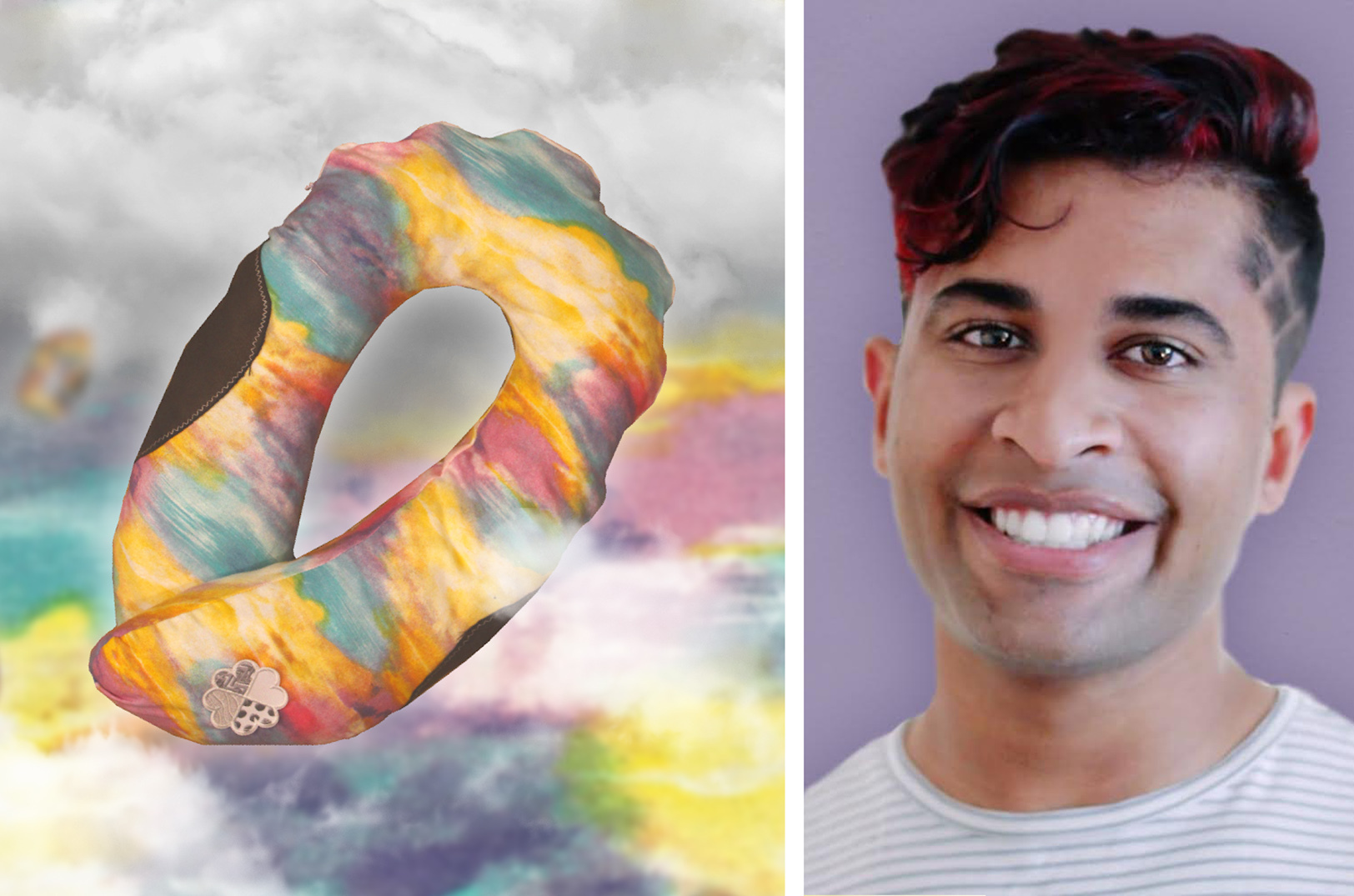
Serving as a caregiver to his late mother during her battle with cancer prepared Akshay Dinakar for the next step in his journey as an entrepreneur, he said.
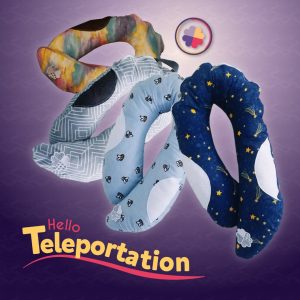
Tangible
“I learned how to do everything — constantly be on call; be able to suit up faster than a fireman and drive to the hospital at a moment’s notice; how to problem solve and manage data on clinical trials or different medicines. It taught me patience,” said Dinakar, who was studying at Stanford University at the time.
The Shawnee Mission East-graduate lost his mother in April 2020 — the same time hospitals banned visitors because of the COVID-19 pandemic, he recalled.
“I learned in that experience that video calls just did not get the job done for me,” Dinakar said. “None of my friends could be with me, and I couldn’t be with my mom. Those were the two things I wanted most in the world.”
Dinakar couldn’t help but long for a better way to communicate with loved ones, he said. Even before his mother’s death, Dinakar had begun engineering a product that would take technology beyond the two-dimensional touchscreen.
The goal: make distance touch Tangible.
The first-ever teleportation kit
During Dinakar’s senior year at Stanford in 2019, he researched the science behind haptics and touch as his mother began losing sensation in the lower half of her body.
The idea behind Tangible Teleportation Co. was to create a product that would reimagine how humans communicate over distance.
“We wanted to figure out how to capture the specific emotional or physical moment of one person, transport that over distance and then render that out to the second person in sensations that are authentic, magical and intentional,” he said.
Dinakar designed wearable technology in the forms of a glove, sleeve and jacket before he landed on his current design — a U-shaped device that wraps around a person’s neck. Such devices connect to the Tangible mobile app where users can video call while wearing the pieces and send specialized sensations to one another.
“It was really important to me that we focus on accessibility, especially since cancer patients can lose a lot of mobility in their body,” Dinakar said, noting that the Tangible teleportation devices can easily be worn and removed.
“We knew that there are strategic hotspots on the body that are great for triggering oxytocin release and making us feel connected,” he continued. “So we really wanted a compressing weight in the chest area and upper back, which creates that hug sensation on its own.”
Although Dinakar was deeply inspired by his mother, Tangible is designed for all those who wish to communicate on a more personal level, he noted.
“I think the magic of Tangible is that we take a human-centered design mindset,” Dinakar shared. “The problem with a video call is that it has always been engineered as a utility. Communicating with someone is an emotional experience; it is not an engineering problem to solve.”
Click here to learn more about Tangible Teleportation Co.

Tangible
One-of-a-kind feelings
Tangible wasn’t meant to simply be another haptics company, Dinakar said, referring to tech that mimics touch by applying forces, vibrations, or motions to the user..
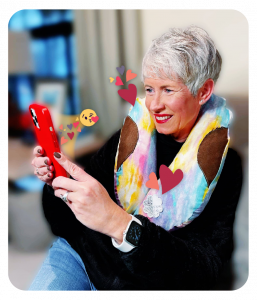
Tangible
“Trying to replicate reality is going to be a failure,” he stated. “Also, replicating reality from a distance is not that interesting of a problem to try and solve.”
For Dinakar and his team, they hoped to add a new version of augmented reality that connects people — seeking to create sensations that people cannot feel in the real world; feelings associated less tangibly with a sense of connection, he explained.
“What does it actually feel like to have fairy dust tingle over you? To be in a spaceship that goes to space? What is it like to have a bunny hop across your shoulders?” he asked. “We want to bring comfort and connection in more delightful, nuanced ways.”
Users can send such unique vibrations through the Tangible app. They can share a hug by synchronously holding down the screen or a specialized message through the doodle tool on the app, Dinakar said.
“You can draw something on your screen and the other person will feel that drawing comes to life — kind of like the game you play as kids where you’d draw shapes on someone’s back.”
A generational product
Tangible Teleportation Co. launched its beta product in October 2020 to collect initial data and consumer feedback. By Valentine’s Day 2021, Dinakar opened a website for pre-orders.

Noah Marsh, Tangible
Tangible also launched its first funding round in February and has raised both an angel and pre-seed round from investors at Stanford University, Columbia and GoogleX, he said.
All the progress within the past year has been accomplished by a fully-remote team, Dinakar said. He and his four other team members are working from San Francisco, Portland, Chicago and he was even able to recruit a childhood friend from Kansas City: Noah Marsh.
“It was easy for Akshay to convince me to be on board,” shared Marsh, an entrepreneur and researcher who graduated from Shawnee Mission East alongside Dinakar. “I knew there was momentum here. It’s going to be very fascinating to keep expanding on what it means to add another dimension to virtual conversation.”
The Tangible team sees its device as a generational product — similar to how Apple releases new iterations of the iPhone and its other technologies.
“We’re on the verge of what this type of technology can do,” Dinakar said, noting that the Tangible app is expected to launch with a limited number of sensations and features to prevent users from becoming overwhelmed by the product. “As we collect more data and feedback, we will integrate that information to make this experience even more magical for customers in the future.”
[divide]

This story is possible thanks to support from the Ewing Marion Kauffman Foundation, a private, nonpartisan foundation that works together with communities in education and entrepreneurship to create uncommon solutions and empower people to shape their futures and be successful.
For more information, visit www.kauffman.org and connect at www.twitter.com/kauffmanfdn and www.facebook.com/kauffmanfdn


2021 Startups to Watch
stats here
Related Posts on Startland News
In time for Mother’s Day: Ovatemp wants to boost women’s fertility
The arrival of Ana Mayer’s baby girl isn’t the only thing she’ll be thinking about this Mother’s Day. Mayer — who’s among the newest founders in the Techstars-led Sprint Mobile Health Accelerator in Kansas City — will also be mulling how to further develop Ovatemp, the Boston-based ovulation tech company she leads. Ovatemp offers women…

Founder of defunct Symptomly shares lessons from failure
Failure is a touchy subject. But for Derek Bereit — the former CEO and co-founder of mobile asthma tracking company Symptomly — his company’s failure was an opportunity shrouded in a difficult situation. Rather than sulking, Bereit sat down with Startland News to discuss Symptomly’s demise, the lessons it provided him and the possibilities that…
Founders discuss tough decisions entrepreneurs face
Two founders took the stage at Kansas City’s chapter of 1 Million Cups to discuss the vast variety of tough decisions entrepreneurs face when starting and running a business. Stuart Ludlow, co-founder of RFP 365 and Sarah Shipley, co-founder of BikeWalkKC, offered insights and advice for those launching a business. Read about RFP365’s recent funding…