

Liberation through innovation: Why KC Girls Prep focuses on history, culture to empower students
April 13, 2021 | Channa Steinmetz

Striving to create feminist, anti-racist leaders does not come with a checklist, said Tara Haskins — rather it takes creative thinking and the willingness to go beyond established norms.
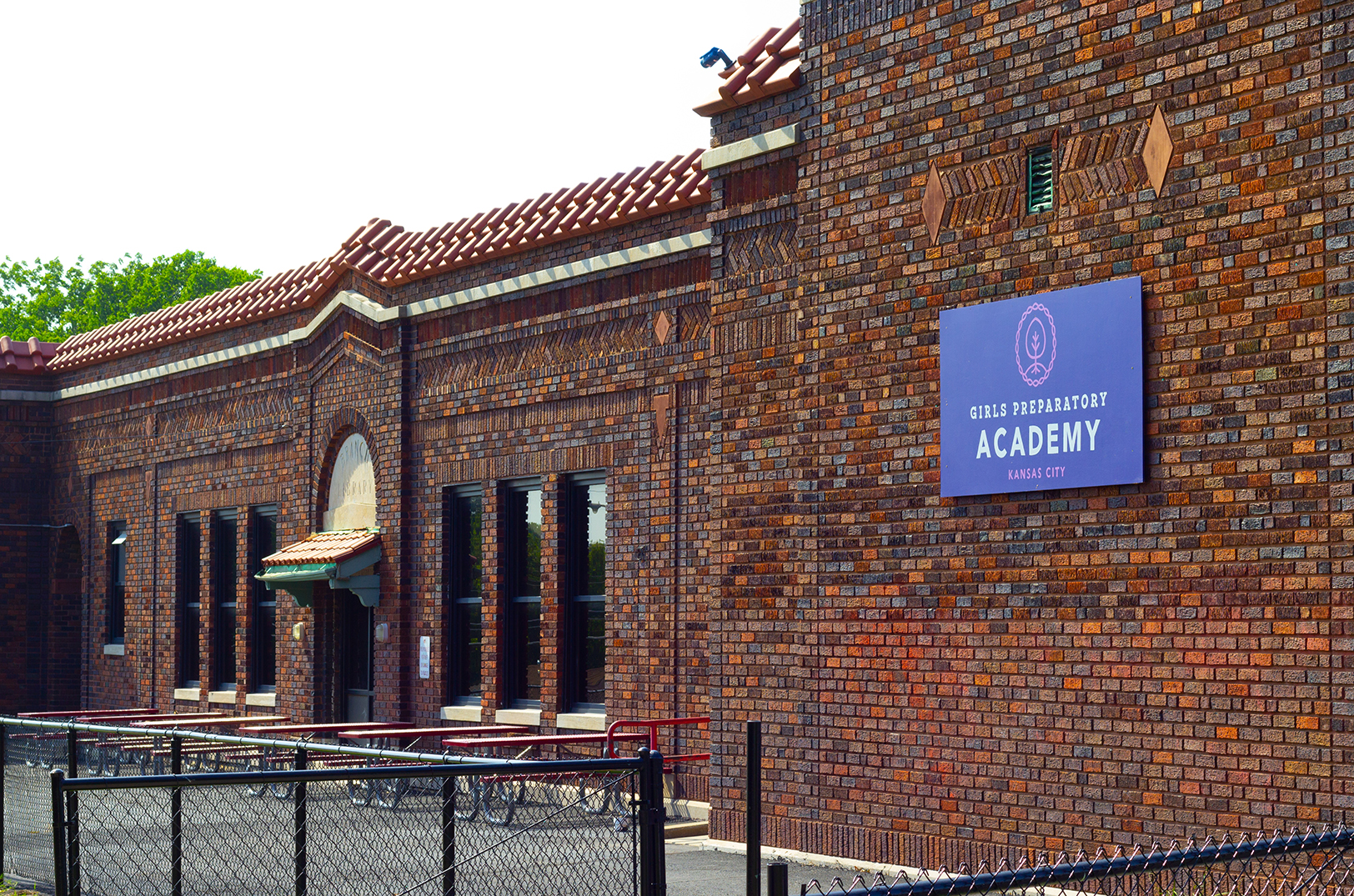
KC Girls Preparatory Academy currently teaches students in fifth and sixth grade. The school is now enrolling seventh grade students for the 2021-2022 school year and plans to add a grade level every school year up until 12th grade.
“To be anti-racist is to first acknowledge history and the stories we tell,” said Haskins, who serves as the founding school leader at KC Girls Preparatory Academy. “For example, within our humanities curriculum, our teacher leads a phenomenal lesson on Western Africa — the culture and all the beautiful parts of it. We learn about that before we learn about enslavement to remind us of who these people were before they were enslaved.”
Typically, history lessons are taught from the perspective of the oppressor, Haskins noted. Since KC Girls Prep first opened in 2018, the goal has been to flip the script and teach from the perspective of women and those who have been overlooked, she added.
Jostna Dash, who teaches sixth grade humanities at KC Girls Prep and is a Teach for America alumna, was drawn to the school because of its unique curriculum and dedication to build up women and people of color, she shared.
“When we’re learning about ancient civilizations, we are focusing on the role of women played in building civilizations,” Dash explained. “… It’s definitely not how I’ve been taught history, so I’ve been learning alongside my students as we go.
“I love that we were getting to do something that hasn’t been done before,” she continued. “Even in my job description it said, ‘be ready for a startup culture.’ And it really is. We are changing things as we go.”

Tara Haskins, founding school leader, KC Girls Preparatory Academy
Teacher Tik Tok
Change has been emphasized more in the past 12 months than ever, Dash said, noting the pandemic forcing schools to integrate online learning. Before the COVID-19, Dash stopped by her fellow teachers’ classrooms to listen and gain insight into how they instruct, she recalled.

Jostna Dash, KC Girls Preparatory Academy
Now she’s turned to Tik Tok.
“[Teachers on Tik Tok] have given me a lot of ideas of games that my students are really interested in,” Dash said.
Social media has also provided Dash to connect with a community that understands the obstacles of teaching during a pandemic, she shared.
“That’s one thing we’re really missing this year — community,” Dash said. “I can’t easily see my students or other teachers in the hallways and have those conversations.”
Being active on social media opens a window of new opportunities, Dash said. On Instagram, Dash found a contest through Act to Change — a national nonprofit that works to address bullying, including in the Asian American and Pacific Islander community — where schools could enter to have an exclusive virtual conversation with Tan France, one of the hosts on Netflix’s “Queer Eye” and an Act to Change Advisory Counsil member.
“[Act to Change] reached out, and they were really compelled by our application and the vision of our school,” Dash said. “It was a really interesting discussion with Tan. They were able to discuss microaggressions, times they have encountered bullying and what they can do.”
Click here to check out KC Girls Preparatory Academy.
KC Girls Preparatory Academy
Dean of culture
Another component setting KC Girls Prep apart: its dean of culture. The role fulfills the duties of a vice principal, while focusing on how to create a safe and welcoming environment for all, Haskins explained. Destiny Flournoy is the school’s current dean of culture.

Tara Haskins, founding school leader, KC Girls Preparatory Academy
“The culture of the school drives everything,” Haskins said. “[We emphasize] a culture of learning, a culture of growth, a culture of celebration. If you don’t have someone who intentionally and strategically thinks about that approach, culture is always the first thing to go.”
When conflict arises at the school, the dean of culture also leads conversations known as restorative justice circles to help foster healthy relationships, Dash noted.
“Tan was very interested in our restorative justice circles,” Dash shared. “… It’s more difficult to do online, but we’re still doing them. Essentially, if something were to happen in the classroom — like two students arguing back and forth — the dean of culture would come and take those two students. Before giving them a consequence, we talk to them together to hear each student’s point of view, and then we find a way to work together.”
The students at KC Girls Prep have the opportunity to share their perspectives in more ways than one, Haskins said. During the interview process for new teachers, prospective teachers lead a lesson for a group of students. Students then debrief with the school’s leadership board to share what went well and if they could learn from the applicant.
For Haskins, it’s important to include the community she serves as much as possible. By doing so, it allows the school to thrive in culture and academics, she added.
“We have to innovate because many systems of education were not structured for our scholars to be free thinkers,” Haskins said. “Many things in education are either-or — like I can either have a strong culture, or I can have strong academics. Innovation is finding the ‘and’ to things, so I ask, ‘How can we have a strong culture and strong academics?’”

This story is possible thanks to support from the Ewing Marion Kauffman Foundation, a private, nonpartisan foundation that works together with communities in education and entrepreneurship to create uncommon solutions and empower people to shape their futures and be successful.
For more information, visit www.kauffman.org and connect at www.twitter.com/kauffmanfdn and www.facebook.com/kauffmanfdn

Featured Business

2021 Startups to Watch
stats here
Related Posts on Startland News

5 reasons your startup isn’t attracting investors
Last week, Techstars managing director John Fein told us that one of the main complaints he hears from Kansas City investors is that there aren’t enough fundable startups. Investors may be right, but it’s not necessarily a lack of good ideas. Today, Kansas City investors are looking for more than the next big idea: they’re…

Events Preview: SMCKC Breakfast, Second Fridays
There are a boatload of entrepreneurial events hosted in Kansas City on a weekly basis. Whether you’re an entrepreneur, investor, supporter or curious Kansas Citian, we’d recommend these upcoming events for you. WEEKLY EVENT PREVIEW SMCKC February Breakfast – Connected City When: February 5 @ 7:30 am – 9:00 am Where: Grand Street Cafe Learn how the…

Unimpeded support for Kansas’ angel tax credits floods Topeka
It appears area entrepreneurs and business leaders are unanimously agreed on at least one thing: Kansas’ Angel Investment Tax Credit program must endure. About a dozen people converged on Kansas Legislature Wednesday to voice unopposed support of the program, which has spurred significant growth in Kansas’ tech and bioscience sectors. The program — as represented…
Google Fiber offering free gigabit to low-income homes
Access to the Internet is almost universally agreed to be a defining sign of progress in third-world countries. Yet millions of citizens across the U.S. still sit on the wrong side of the digital divide. The vast majority of these citizens have one thing in common: they live in low-income households, where cost outweighs the…