

Kauffman Foundation: $1.9T relief plan signed by Biden a ‘significant step,’ but challenges linger beyond bill’s scope
March 11, 2021 | Startland News Staff
Editor’s note: The Ewing Marion Kauffman Foundation is a financial sponsor of Startland News.
One of the nation’s premier advocates for entrepreneurs and small businesses on Thursday lauded the passage and signing of a massive COVID relief bill — which it said signals a step toward closing gaps in access to a more prosperous life.
But the Ewing Marion Kauffman Foundation also cautioned that the American Rescue Plan’s investments — while significant — are limited to 2021, requiring bipartisan follow-up to ensure momentum gained by the relief package isn’t lost.
Read the Kauffman Foundation’s full statement below.
H.R. 1319, the “American Rescue Plan Act of 2021,” provides additional relief to address the continued impact of the COVID-19 pandemic on the economy, public health, state and local governments, individuals, and businesses, according to the White House.
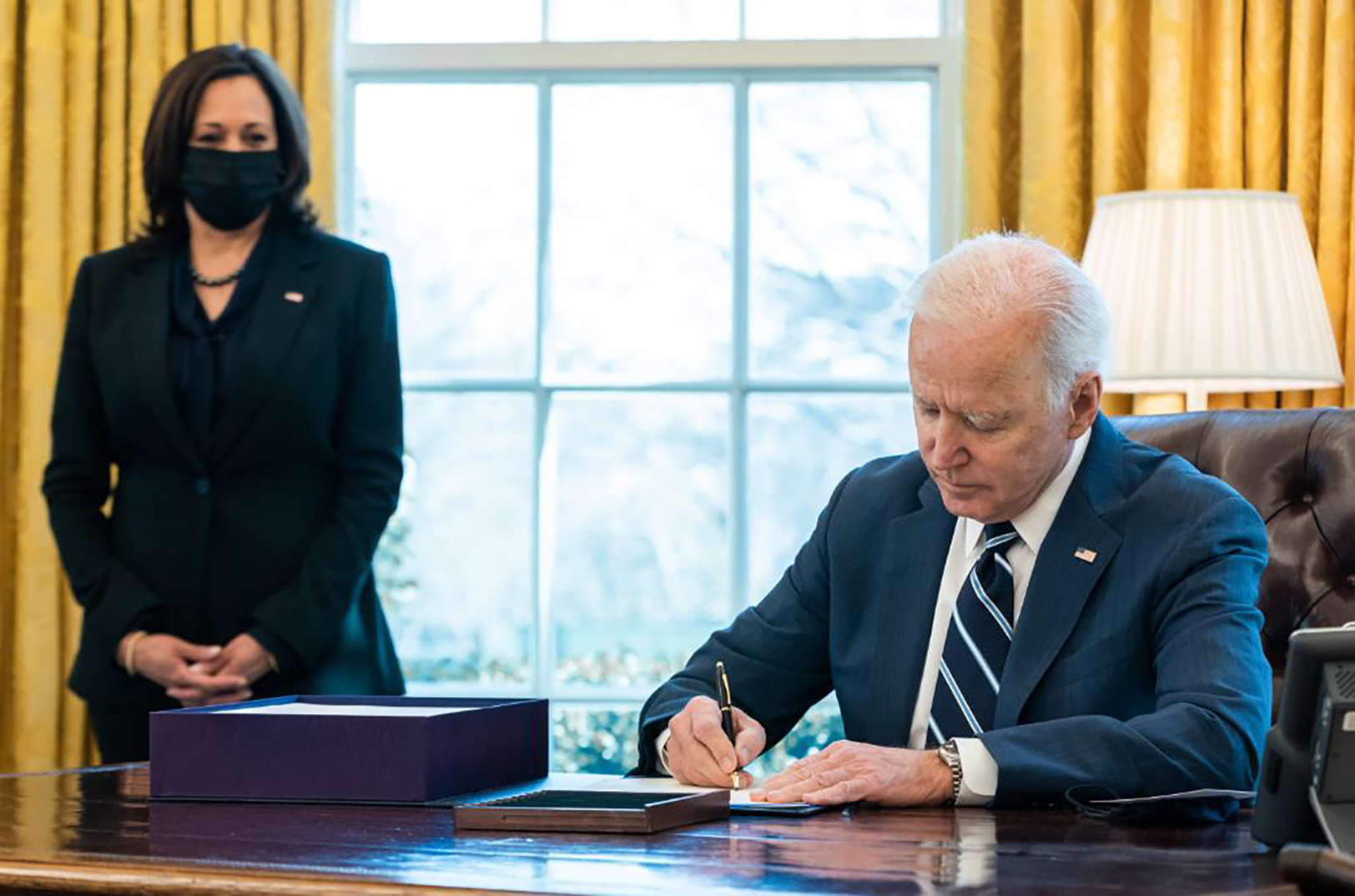
The legislation was signed into law Thursday by President Biden, after being passed along party lines in Congress.
The Ewing Marion Kauffman Foundation, a private, nonpartisan foundation that works together with communities in education and entrepreneurship to create uncommon solutions and empower people to shape their futures and be successful, according to the Kansas City-based organization.
Tune in as President Biden signs the American Rescue Plan. https://t.co/ZfpKjSkA8w
— The White House (@WhiteHouse) March 11, 2021
Democrats hailed the plan as putting “money in people’s pockets, shots in people’s arms, and ensuring that children can go back to school safely.” Republicans largely characterized the bill as a “Blue State Bailout,” criticizing the stimulus as too expensive and unfocused.
Among the chief goals of the American Rescue Plan legislation:
- Send $1,400 direct payments to 85 percent of American households
- Provide funding to reopen schools
- Scale a national vaccination program
- Cut homelessness by helping about 80,000 households get permanent housing
- Give direct payments to families to cover the costs of school meals that 30 million kids are missing
- Create a $10 billion Small Business Opportunity Fund to leverage even more funding, helping small businesses access risk capital
- Make the largest investment in U.S. history in Tribal governments and Native communities
- Include $28 billion in funding to save America’s public transit and protect transit workers from layoff
The Ewing Marion Kauffman Foundation’s full response to the American Rescue Plan:
“Almost exactly one year after the pandemic-caused shutdown began, the Biden Administration signed a $1.9 trillion COVID-19 relief package passed by Congress — one of the largest government economic rescue efforts in our country’s history.
With its focus on decreasing childhood poverty, alongside measures such as funds for housing assistance and public transit support, the legislation is a significant step toward creating a more equitable economy that will lift millions of families out of impoverished conditions. This more inclusive environment will have wide-ranging effects, lowering the barriers to opportunity that suppress far too many. In the long term, this more-just economy will provide fertile ground for people of color who want to start their own business.
Doing so means creating an economy with robust safety nets that not only catch Americans when they fall but give them the confidence to take entrepreneurial risks. A recent report by the Kauffman Foundation on the motherhood wage gap cited that twenty-seven percent of Black entrepreneur mothers reported being sole providers, compared to 19 percent of Hispanic entrepreneur mothers and 23 percent of white entrepreneur mothers. Couple that with the massive job loss women, especially women of color, experienced during COVID make the caregiving provisions embedded in the plan a step to make access to entrepreneurship equitable.
While the American Rescue Plan is a historic package designed to rebuild the American economy and deliver urgent support for new and small business owners, these investments only last through 2021. The COVID-19 pandemic laid bare the vulnerable position too many Americans were in prior to the virus’s spread and exacerbated the underlying and longstanding inequities of the American economy. Now is our opportunity for Republicans and Democrats alike to rebuild better by transforming our economy into a better, more inclusive one, centered on entrepreneurship’s power to drive growth, innovation, and job creation.”
Click here to read more about the Kauffman Foundation’s recent call for more inclusive growth in its America’s New Business Plan.

Featured Business

2021 Startups to Watch
stats here
Related Posts on Startland News
Techweek’s future of transportation: ‘Don’t let anything stop you from starting’
Transportation and mobility technology are good examples of the hidden talents of the Kansas City tech community, Darcy Howe said “We have many more mobility companies in Kansas City than you might think, which is a pleasure,” said Howe, KCRise Fund managing director, moderating Wednesday’s Techweek panel. Discussing cars, trucks, roadways and the future of…
1 Million Cups embarks on huge national expansion effort
The entrepreneurial events series 1 Million Cups — a national program born in Kansas City and grown by the Ewing Marion Kauffman Foundation — has set the ambitious goal to expand to 500 communities by the end of 2018. “We’re looking forward to keeping the magic that we’ve already created with 1 Million Cups on…

4 Techweek takeaways: KC can’t escape ‘cowtown’ (and shouldn’t try)
Kansas City shouldn’t run from its “cowtown” label, Techweek KC presenters said Wednesday. “We can celebrate agriculture, and we can also be hip and metropolitan,” said Kimberly Young, president of the KC Animal Health Corridor. Sitting aloft the rooftop deck at Travois in the Crossroads, a panel of experts gathered an audience interested in learning…
Tips for overcoming experience gap, building a diverse workforce
When Ariel Banks graduated from the University of Missouri at Rolla in 2014 with a chemical engineering degree, she felt qualified and eager to jump into her career. Unfortunately, Banks spent nearly two years without any luck in finding a job. She found herself being asked time and time again, the dreaded question: “What is…