

Right to Start: States getting $10B in stimulus funds to boost entrepreneurs; Here’s how they should invest it
March 31, 2021 | Victor Hwang

Editor’s note: The opinions expressed in this commentary are the author’s alone. Victor Hwang is the founder and CEO of the Right to Start movement. Click here to learn more about Right to Start, a campaign to drive economic recovery and advance economic justice. This commentary originally appeared on Route Fifty and is republished with permission of the author.
Entrepreneurs are the front line of economic recovery in America, since young businesses create almost all job growth. Yet, capital to grow emerging businesses is unevenly distributed. More than 83 percent of businesses don’t access venture capital or traditional banking, and 73 percent of venture capital is concentrated in just three states: California, New York and Massachusetts. That leaves out most of the nation and all but the best-connected entrepreneurs.

Victor Hwang, Right to Start
To address that gap, the recently passed $1.9 trillion federal stimulus package contains $10 billion for the State Small Business Credit Initiative (SSBCI), which will offer states and territories a once-in-a-generation opportunity to transform the capital landscape for entrepreneurs. SSBCI isn’t a new program. It was used from 2010 to 2017 to provide $1.5 billion to states to spur private capital investment. But the new version is about seven times bigger, setting up major investment potential for states.
Previously under SSBCI, for example, Missouri received $27 million. This time, the state could receive more than $110 million. Eric Cromwell, an expert on state venture capital programs, estimates that other states could receive anywhere from a minimum allocation of roughly $55 million to several hundred million dollars, depending on the allocation formula. These amounts have the potential to transform America’s entrepreneurial capital landscape.
But transformation is only possible if states structure the SSBCI capital in the right way. As Cromwell says, “A critical success factor is for states to design programs that meet underlying market conditions and focus on capacity building.” If SSBCI is treated like just a shot of adrenaline — a temporary infusion of money into a few businesses — the moment will be wasted. If it’s used to build long-term capital infrastructure, it could greatly expand the availability of capital for years to come, helping countless businesses grow and create jobs. Therefore, it’s crucial that states start planning now for how to ensure that these funds provide the most impact for their local economies.
Based on my two decades of experience in helping governments create capital systems and support entrepreneurs, here are some design principles for states to adopt to maximize the impact of their incoming SSBCI funds:
Capital should make more capital
Most people think about government-supported business capital as money that goes directly into businesses. But that approach is inadequate if the need is too great — you can’t use a tiny shovel to fill a massive hole.
There is a better way to multiply the availability of business capital, and that’s by creating investment funds charged with the specific goal of creating more investment funds. These vehicles are often called “funds-of-funds” — pools of capital that help make more pools of capital — and every state could have its own. It’s how Israel built the most successful venture capital industry per capita on the planet, through a government-sponsored fund-of-funds called Yozma. It’s how most of Latin America’s venture capital industry was spawned, through a multinational government-sponsored fund-of-funds called the Multilateral Investment Fund. Only a few states created funds-of-funds with their last round of SSBCI money, and most of them put heavy constraints on them. Done well, these funds-of-funds can build entire capital markets to grow a multitude of businesses. In addition, the proceeds from these funds-of-funds can be recycled, so they become “evergreen” institutions.
Create many flavors
Unfortunately, capital for entrepreneurs is usually offered in only two ways: venture capital and banking. Only those who fit specific financial models are served, which amounts to less than 17 percent of entrepreneurs having access to those forms of capital. But businesses come in a wide range of varieties. States should, therefore, use SSBCI to foster a diverse spectrum of capital models to serve entrepreneurs’ needs more effectively. There are many new innovative and rigorous investment models emerging today. SSBCI funds could help boost these models to expand their capacity to invest in more businesses.
Examples of alternative funding models include:
- Revenue-based investing, where businesses pay back investors a percentage of revenues
- Flexible venture capital, which offers hybrid capital options to fit the changing needs of businesses
- Profit-sharing models, which allow more people to participate in a business’s success
- Crowdfunding platforms, which are online fundraising tools
- Nonprofit, evergreen seed funds, which provide continual testing to launch new business ideas
- Fintech lenders, which provide entrepreneurs access to online lenders
- Secondary markets for microloans, which involve the aggregation and sale of small business loans to larger banks to accelerate capital flow
Be the anchor
The lack of an anchor investor is one of the key reasons new funds fail to launch. Being the anchor investor can jumpstart activity. But government funding tends to be highly risk-averse and not proactive at filling persistent market gaps. SSBCI presents a rare opportunity for states to lead the way to catalyze new early-stage fund formation to fill gaps in the capital markets and provide businesses help where it’s needed most. States should avoid placing too many artificial constraints like rigid geographic boundaries.
Professionalize
SSBCI funds in each state should be managed by people who comprehend entrepreneurial capital, like experienced investors and/or entrepreneurs skilled in capitalizing nascent, young and growing businesses. They should know how capital works at the earliest stages of a business and how to provide governance and diligence at professional levels. That’s easier said than done, as governments usually are weak at engaging the entrepreneurial private sector. States should emphasize recruitment of top qualified talent to ensure capital is invested in the best ways to serve entrepreneurs.
The renewal of SSBCI provides a generational opportunity to change how businesses are capitalized in places where businesses face the most gaps. States should get ready for SSBCI and stay ahead of the curve with thoughtful planning and design. Smart program design by states will stimulate young business success, and thus job growth, for many years to come.
Victor Hwang is the founder and CEO of the Right to Start movement.


2021 Startups to Watch
stats here
Related Posts on Startland News

Retaking the ‘entrepreneur’ label: ‘You need to have a good product, but ultimately it needs to be about more’
In “The New Builders,” written by Times of Entrepreneurship founder Elizabeth MacBride and venture capitalist Seth Levine, the authors look at the landscape of entrepreneurship across America. In this excerpt — from Chapter 3: The Definition Of Success — the authors focus on Isaac Collins, a Kansas City entrepreneur who also faces and fights added obstacles…
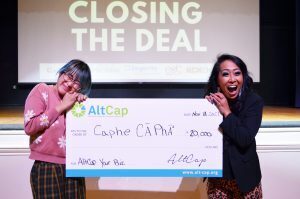
KC’s first Vietnamese coffee shop brews $20K at AltCap Your Biz; other winners include an urban farm, development company and selfie studio
Cafe Cà Phê can now afford to build bathrooms in its anticipated brick-and-mortar coffee location, Jackie Nguyen teased on Instagram after being awarded the grand prize at the 2021 AltCap Your Biz: Pitch Competition. “The $20,000 will go toward helping build that out — getting new appliances, [hiring] new employees because we’ve outgrown our cart.…

Demo day alert: 13 new Comeback KC Ventures fellows set for debut on GEW KC stage
The first crop of Comeback KC Ventures fellows — entrepreneurs offering solutions from healthtech and edtech products to sports evaluations and an animation academy emerging in response to COVID-19 — is expected to highlight more than a dozen companies Thursday during a GEW KC innovation showcase. “The demo day will allow early participants in the…

New in KC: Wichita-grown foodie whips up 4.5M TikTok, Youtube users with passion (and ramen) as her only guides
Editor’s note: New in KC is an ongoing profile series that highlights newly relocated members of the Kansas City startup community, their reasons for a change of scenery, and what they’ve found so far in KC. This series is sponsored by C2FO, a Leawood-based, global financial services company. Click here to read more New in KC profiles. Lisa Nguyen was five…