

KC record label sees stage lights, live music ahead — after year of virtual shows rings flat
March 2, 2021 | Austin Barnes

Local recording artists continue to hold notes of perseverance as the COVID-19 pandemic settles into its second year; one Patrick Sprehe hopes will carry a different tune for Kansas City’s talent-rich music scene.
“The pandemic really dampers our ability to be a sustainable business,” said Sprehe, co-founder of Center Cut Records, describing the era’s impact on his business and the livelihood of musicians who rely on Kansas City’s social scene to back them up.

“The artists we’re working with have been, in general, positive. We’re trying our best to stay motivated, but it is hard. It’s a really tough time for them.”
Sprehe founded the company in 2017 alongside longtime friend James Andrews, a part owner of multimedia publisher Andrews McMeel Universal.

Fritz Hutchison. Photo by Anna Selle.
Shortly after, the duo began working with Calvin Arsenia, a Kansas City performance artist known to transcend genres, and later Fritz Hutchison, an Americana-artist with rock and roll flair. Hutchison was set to release his first album just as the global health crisis reached a crescendo last spring.
“We decided just to go ahead and do it. We had PR campaigns in line, we had our distributor ready for the records,” Sprehe said, noting the release received plenty of national attention and college radio play, but revealed a problem the label continues to battle a year later: the virtually non-existent opportunity to perform on-stage.
“For developing artists they’re going to make their money at shows,” he said, explaining that while virtual performances and streaming are great alternatives for big-name acts, emerging artists don’t benefit from such platforms in the same way.
“If you really want to be scared, [they make around] 0.04 cents per stream. You’d need 100,000 streams to make 40 bucks — or we can sell four CDs and get 40 bucks [at a show.]”
View this post on Instagram
Without live performances, artists like Arsenia and Hutchison have been left with no choice but to sit and wait, booking virtual gigs where they can while trying to stay focused as they develop new music.

The Black Creatures. Photo by Beth Taye.
“Artists have to be careful,” Sprehe said of ways artists should approach increased requests to perform at virtual events in the days of COVID. “Are you giving your music away for free? If you’re just putting it out there and people don’t have to pay for it, are you depending on people giving you tips? That’s a precarious way to sustain yourself.”
Given the time it takes to develop a performance, rehearse, travel, set up, perform, then tear down, finding adequate financial compensation for artists was already a challenge, he said.
“And that’s when they had a guarantee of 100 bucks for an hour set,” Sprehe added. “It was already a tough proposition.”
Such a reality has pushed Sprehe to become vocal about community support for artists, he said.
In December, Center Cut hosted its own virtual event, Save our Stages Kansas City (SOS KC), a benefit to raise awareness, community support, civic support, and funding for the temporarily closed recordBar near downtown and Kansas City’s other independent music venues.
The event brought in $2000, Sprehe said.
“Whether it’s the restaurant next door or the gas station or the Uber driver bringing you to the show, there’s a lot of tourist money that comes in when people want to go to Knuckleheads [or] recordBar,” he explained.
“We’re actively trying to work with the mayor’s office, with our city government, and also with local businesses to understand the value of having venues and the value of having live music. We’ve got to make sure we’ve got structures in place to support these institutions and these artists.”
Check out the full SOS KC benefit concert below then keep reading.
Sprehe is hopeful Kansas Citians (metrowide) will make use of additional resources created by pandemic-bowed organizations such as the Missouri Entertainment Alliance — a coalition of Missouri-based venues and promoters working to sustain the music industry amid the pandemic.
The organization offers a form letter that can be sent to Missouri Gov. Mike Parsons, U.S. Rep. Emanuel Cleaver II, and U.S. Senator Josh Hawley, asking them to allocate emergency relief funding to independent venues and promoters.
Beyond help from lawmakers, Sprehe said he believes local businesses could hold significant influence in getting artists back on track as public spaces begin to loosen COVID restrictions.
“I think of huge corporations like American Century and Cerner. Who in those organizations has that connection to music [and can make] a commitment from the company?” he asked, noting many musicians weren’t eligible for unemployment let alone emergency benefits or relief funds like traditional businesses.
“Center Cut has really been impacted financially and developmentally without the ability to sell our physical products at live performances and we need to do better as a city supporting our venues, artists, labels,” Sprehe said.
“The more people understand that time is of the essence and whatever way they can get involved, whether on a personal level or a group level like with some of the businesses, it gets us all moving and rolling in [the right] direction.”
Click here to connect with Center Cut Records on Instagram or here to follow the label on Facebook.
Bonus track: Center Cut Records’ founding story
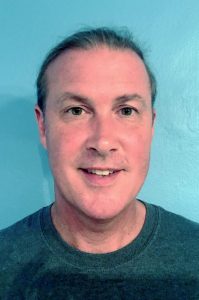
Patrick Sprehe, Center Cut Records
“I’m a Kansas City native. My business partner is too. I moved away for a dozen years and then moved back [from Tokyo] in 2005. It’s exciting for an older guy like myself to see progress in the city and it’s one of the reasons we started the record label.”
“Neither one of us had been in the music industry before. We just see so much potential here — so much growth, so much talent. I’d been a school teacher for 25 years. I taught in the Peace Corps around the world.”
“My business partner, Jim Andrews, was part owner of Andrews McMeel Universal, a huge publishing company here in Kansas City. We were both turning 50 back in 2018 and he just sort of threw out the idea, ‘Have you ever thought about doing something besides teaching?’”
“I love teaching, I love grammar and writing, and I love teenagers — but I always had an interest in music and that’s really how Jim and I know each other, is from going to record stores in high school. He said, ‘Well, let’s start a record label,’ and I said, ‘What the heck does that mean?’ so we started doing some due diligence.”

Featured Business

2021 Startups to Watch
stats here
Related Posts on Startland News

BetaBlox expands to Tulsa, shares 4-year plan
Thanks to a recent fundraise, Kansas City-style innovation is heading south to the Sooner State. After scoring new investment capital, Kansas City-based BetaBlox is expanding its incubator program to Tulsa this summer, bringing with it four years of experience in honing startups. BetaBlox founder Weston Bergmann said his for-equity incubator has partnered with the non-profit…
Weston Bergmann explains BetaBlox and its successful 2016 class
Since launching it in 2012, BetaBlox founder Weston Bergmann has always been impressed by the caliber of firms entering his incubator. But this year, Bergmann said he was blown away by the firms presenting at BetaBlox Demo Day celebration Monday. “It’s kind of cliche to say this class is better than the last, but it’s true,”…

Meet the BetaBlox startups ahead of Demo Day
Kansas City-based accelerator BetaBlox is gearing up for its annual culminating event to highlight startups in its current class. Set for Monday, BetaBlox’s Demo Day offers a stage for its 10 startup firms to pitch their businesses to investors, area residents and fellow entrepreneurs. While also a showcase of its startups, BetaBlox hopes the Demo Day will engage…

Regional Roundup: Chicago aims to be space travel hub
In this week’s roundup of watercooler talk from the region’s startup hubs, we have the dish on one Chicagoan’s plan to make the city a hub for space travel, St. Louis’ booming innovation district and the update on Uber and Lyft’s Texas battle. Check out more in this series here. ChicagoInno: Chicago … a hub…