

Why an award-winning KC firm designed a downtown Royals stadium (sky pool included) for free
February 3, 2021 | Channa Steinmetz
Architecture is more than design — it’s a business, the founder of Pendulum said: the business of balancing what’s possible with what actually works.
When Jonathan O’Neil Cole and his team at Pendulum Studio released concepts in July 2020 for a potential — and long-talked-about — downtown stadium for the Kansas City Royals baseball team, the award-winning architect didn’t necessarily think the designs would ever come to fruition in the real world.
But that wasn’t the point, Cole said.
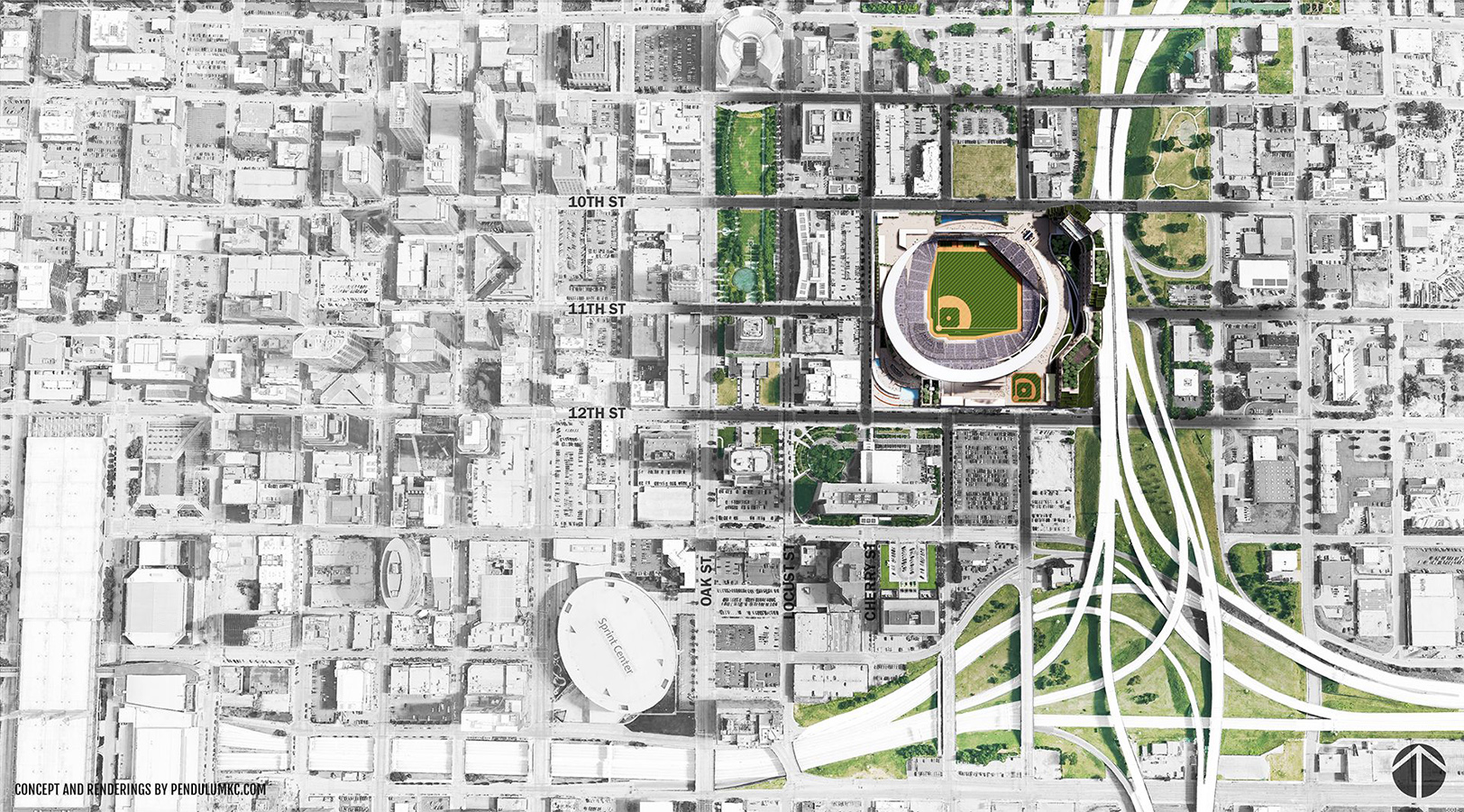
Downtown Royals ballpark design by Pendulum Studio
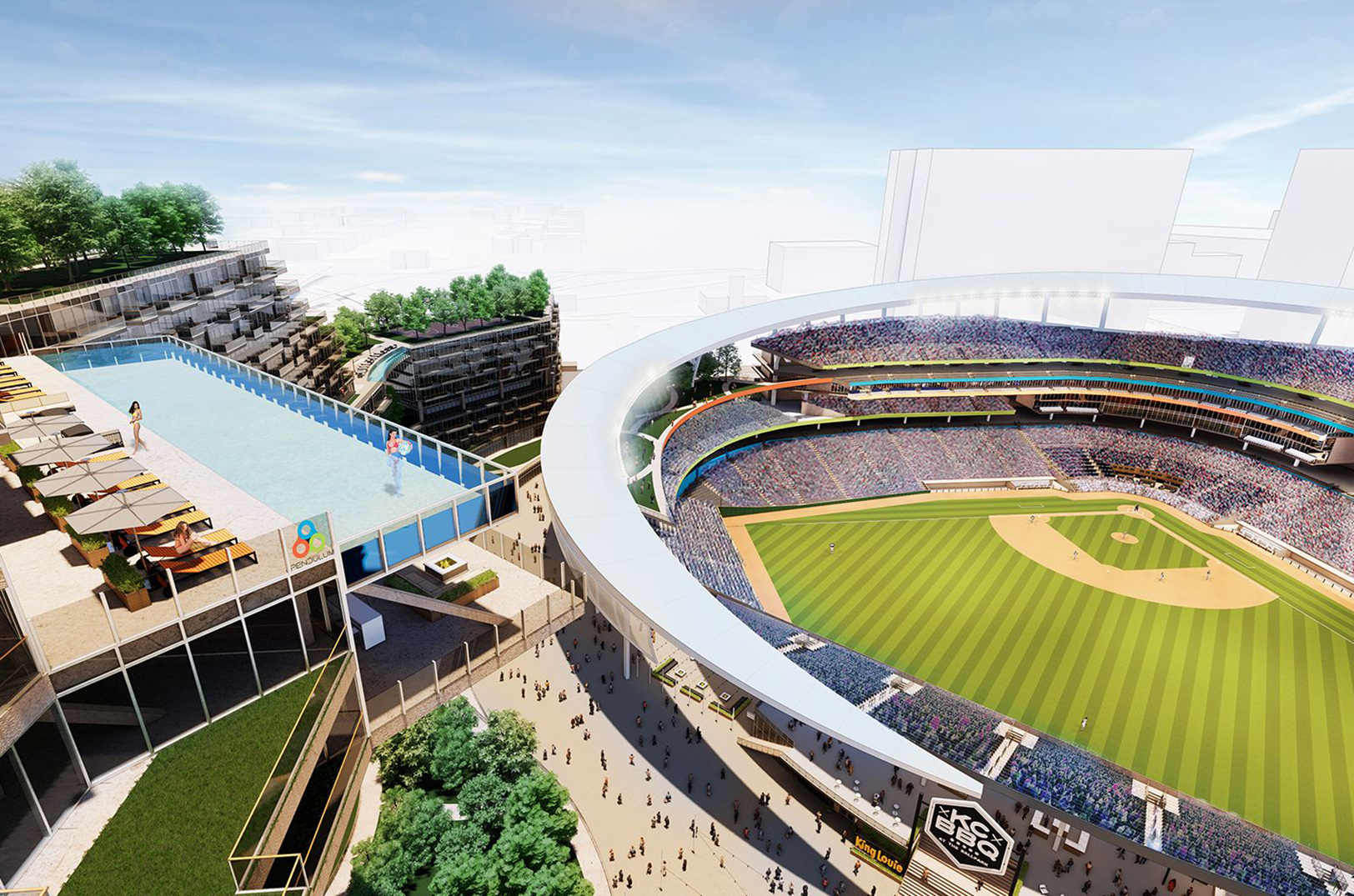
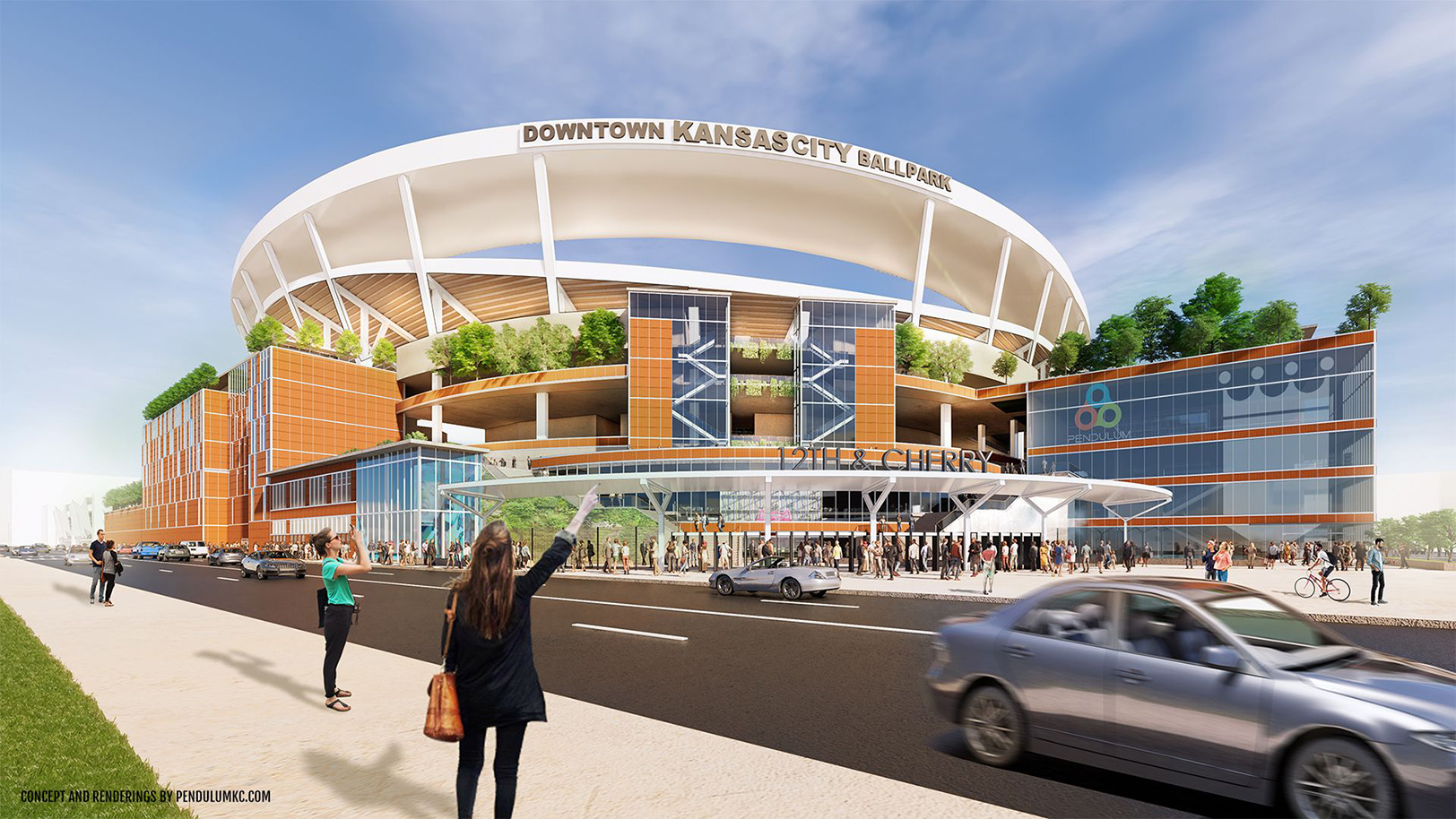
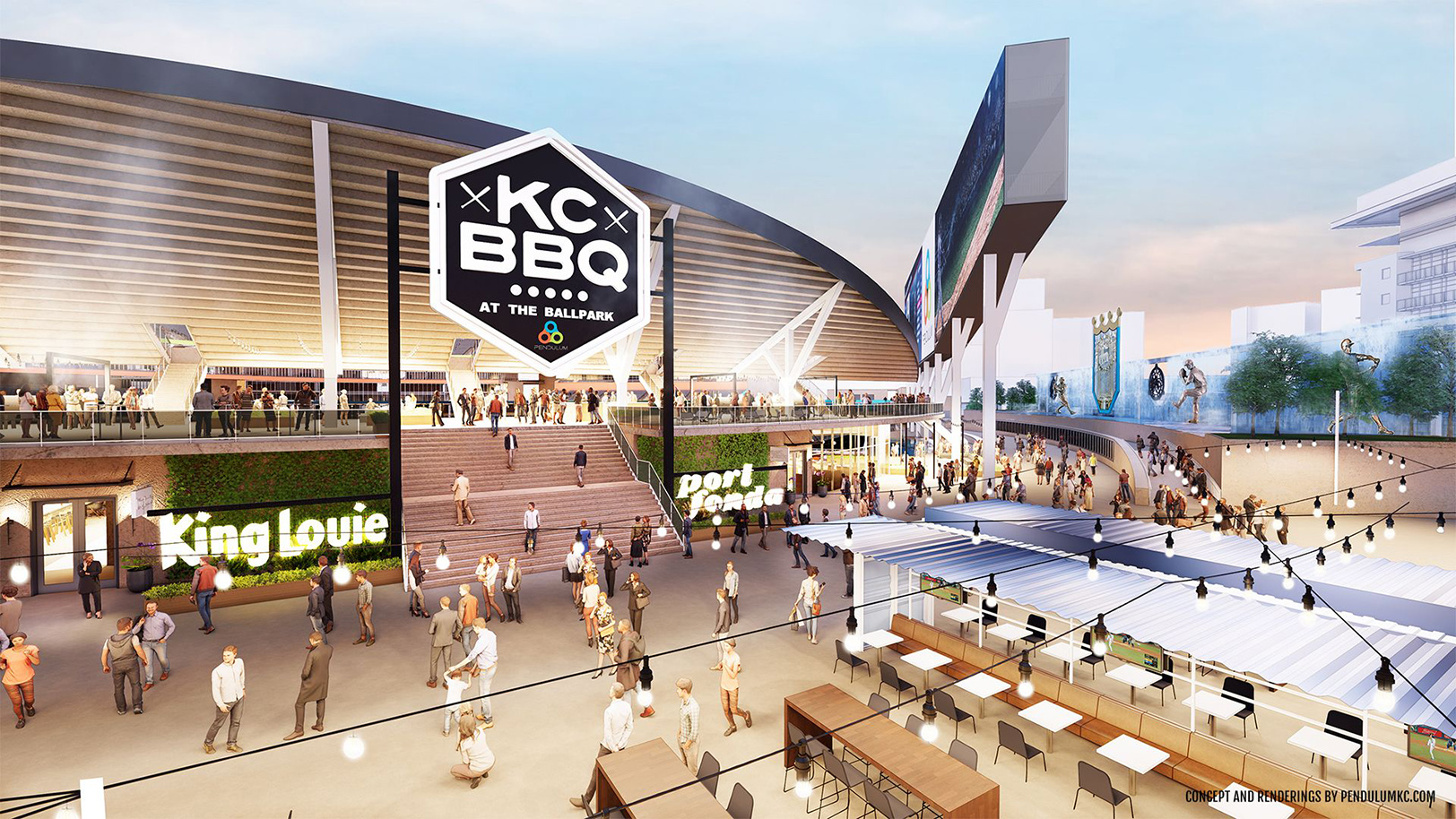
The ballpark concept explored a stadium with such amenities as a sprawling Kansas City barbecue experience; a brewery with homages to Johnson County’s King Louis Lanes; high-end restaurants, lounges and a food hall incorporating a Katz Drug Store theme; a dog park; a sky pool seeming to hover over the field; and wraparound housing with views of the game.
All designed to showcase the unexpected possibilities in sport architecture, Cole said.
Click here to check out the hidden gems in Pendulum’s would-be downtown Royals stadium.
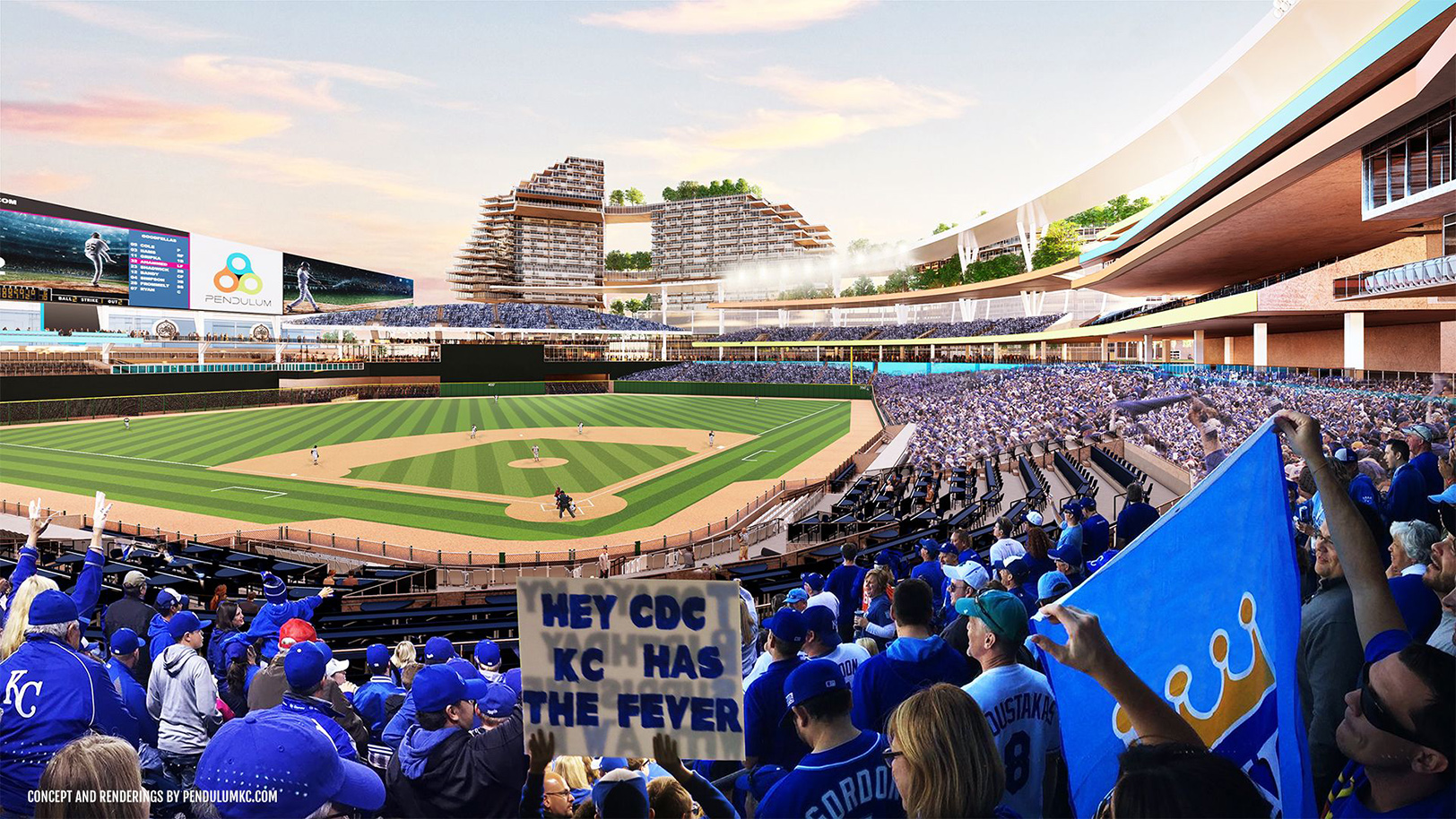
“I think the concept we did for the Royals was amazing,” Cole said. “It took a lot of guts to be vulnerable and put ourselves out there for all of the good and bad to be said about it. But, it did exactly what we wanted to do, which was start a conversation about what could be. We didn’t get paid for that — nobody asked us to do it.”
The passion project — with meaning beyond the obvious public interest and excitement around relocating the hometown team — was one worthy of what Cole called the birthplace of sports architecture.
“For the most part, all of the major sports architecture firms are here in Kansas City or have ties to Kansas City; that’s what really brought me here,” the founding principal at Pendulum Studio and California native said.
Scroll down or keep reading to see a virtual experience exploring Pendulum’s concept for the downtown Royals ballpark.
Stepping to the plate
Starting his career as an architect for HNTB Corporation — “the granddaddy” of all sports architecture firms, according to Cole — he found himself working on the massive Oakland Coliseum renovation project in the mid-1990s after his boss couldn’t be there because of a newborn baby.
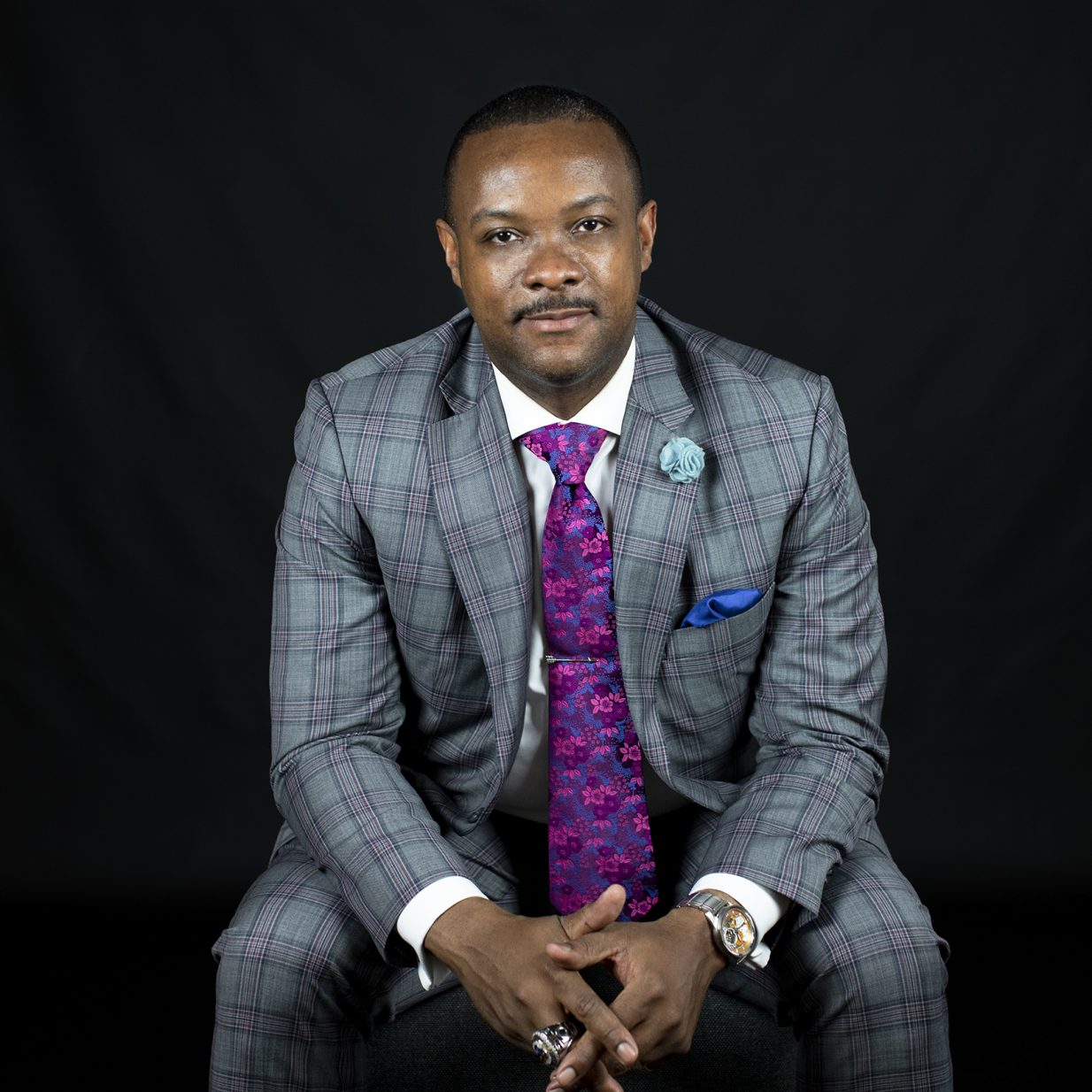
Jonathan O’Neil Cole, Pendulum Studio
“I was young and looking for opportunities, so there was no reason for me not to go,” Cole recalled. “I worked on-site for the Coliseum project for a year, and then we also got the Oakland arena project. Then, I moved to Kansas City.”
Since his big move, Cole also worked for HOK and 360 Architecture Inc. before founding Pendulum in 2007 in the Crossroads Art District. Taking advice from his late-mentor, Hank Stickney, Cole knew he wanted to break away from the traditional model of sports architecture and improve it, he shared.
“Architects start out thinking all about design, but what they miss is that architecture is a business,” Cole noted. “A lot of times architects want to design something that looks cool, but then where that fails is it doesn’t really meet the needs of the operator.
“What [Stickney] taught me was how to look at what I was doing and translate it into a way that people who operate facilities would understand and embrace,” he continued — noting that this approach has positively impacted how he communicates with his clients.
“… Every architect wants to say that they’re creative, innovative and different. But the best compliment I’ve ever received is that, ‘A lot of other firms say these things, but you show us these things.”
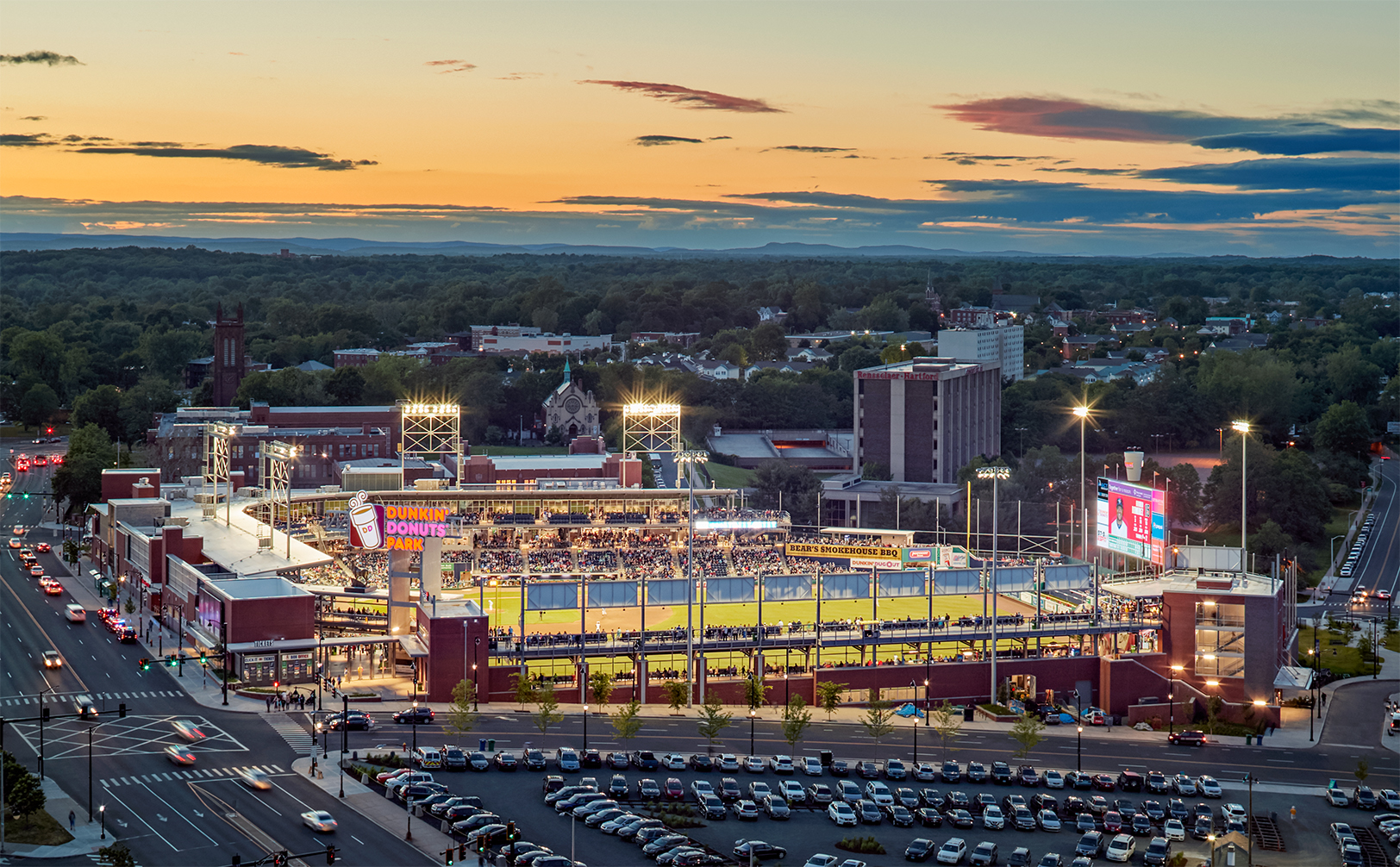
Dunkin Donuts Stadium by Pendulum Studio
A home-run portfolio
Pendulum designs for various types of projects — both sports and non-sports — but the niche where the architecture firm and Cole shine: baseball parks.
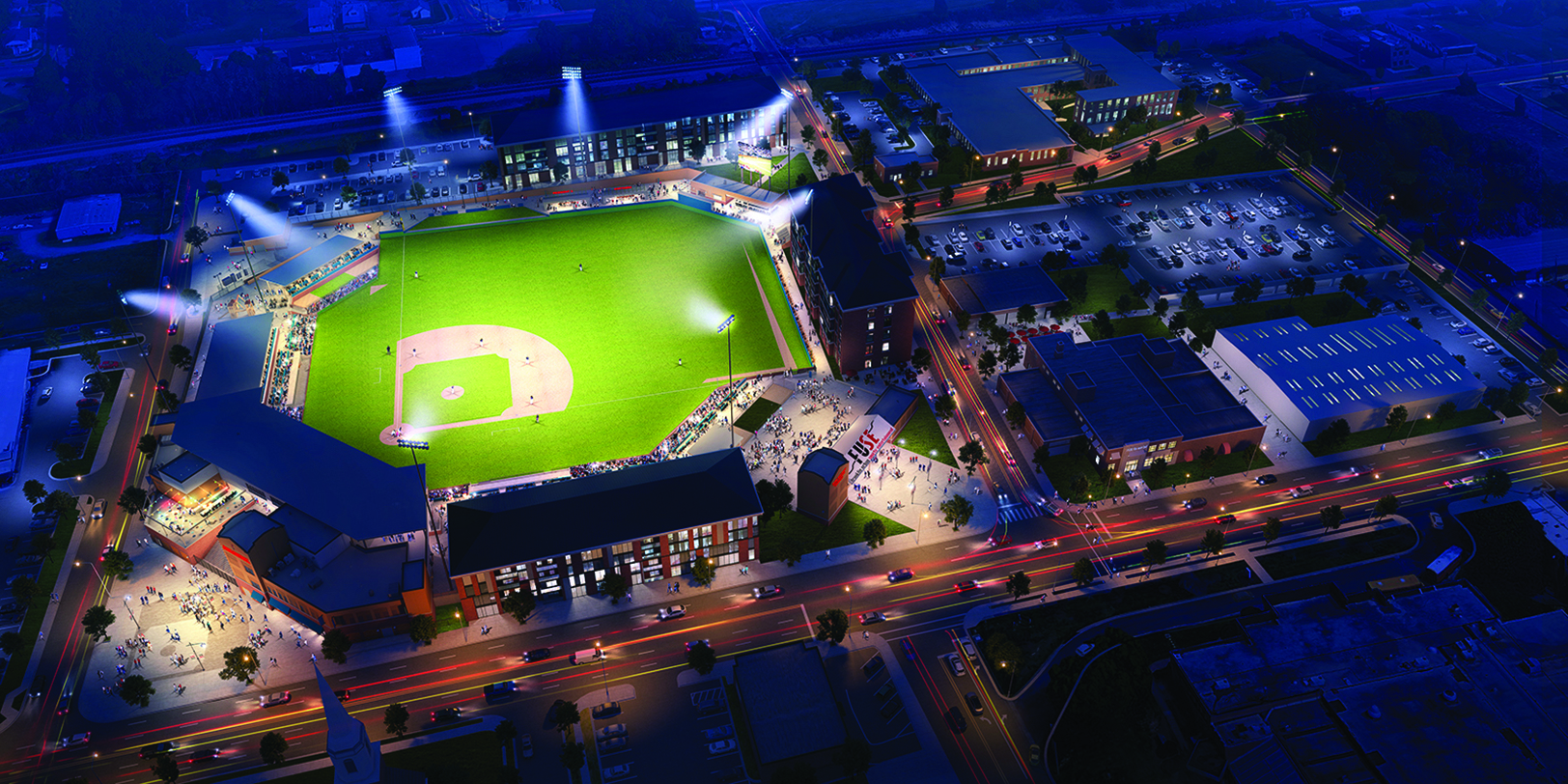
Gastonia FUSE Ballpark by Pendulum Studio
Luther Williams Field, Capital Credit Union Park, Dunkin’ Donuts Park and most recently, the FUSE Multi-Use Complex are among the fields Pendulum designed.
“I’m really excited about what [the FUSE Multi-Use Complex] is going to do for Gastonia, [North Carolina],” Cole said. “Gastonia has this really cool small-town, vintage feel to it with its storefronts and beautiful brickwork. And now they’ve got new culinary [facilities] and a hotel coming, in addition to our multi-sport facility.”
Aside from sports, Pendulum has designed concepts for apartment renovations, restaurant patios and was recently selected to tackle the massive Troost Village Development — which includes renovating four historic buildings and two others, Cole noted.
Click here to read more about Pendulum’s work on the Troost Village Development.
Pendulum’s success also has earned it two international design awards in 2020 with Rethinking the Future, as well the Sports Business Journal 2020 Power Player award for Cole.
“For national folks to think enough of me and enough of my firm to be worthy of that recognition is a big deal. I’m really humbled by that,” Cole shared. “It tells me we’re doing good work, and we’ve got to continue to do great work. And it’s not just me — I feel the whole firm deserves recognition for that.”
Grand slam on tech and culture
All of Pendulum’s projects are rendered into virtual experiences, Cole said, noting the importance of embracing technology to showcase designs like the downtown Royals stadium.

“What I found is: I can see where I want to go with something without having to draw it. But a lot of times with my clients, they can’t see it until we get it built — [they’re] having to take a huge risk,” Cole explained. “By us pushing the virtual and visualization element as part of our design methodology, it serves as a tool to help them see it before it happens.
“We’ve even invested in 3D scanning capabilities that we’re integrating into our projects,” he continued. “Now, you can put the goggles on and walk around these facilities as if you were there.”
Along with technology, Pendulum is innovating toward becoming more of a lifestyle brand versus simply an architectural services provider, Cole said.
“That’s what we’re after — taking influences from music, culture, fashion, design, from all these things and combining them in a curated way that makes people relate to them in a very authentic manner,” he shared. “We want to create energy and spaces that people step into and immediately think, ‘This is cool.’”

This story is possible thanks to support from the Ewing Marion Kauffman Foundation, a private, nonpartisan foundation that works together with communities in education and entrepreneurship to create uncommon solutions and empower people to shape their futures and be successful.
For more information, visit www.kauffman.org and connect at www.twitter.com/kauffmanfdn and www.facebook.com/kauffmanfdn

Featured Business

2021 Startups to Watch
stats here
Related Posts on Startland News

Kansas legislation banning DeepSeek passes to state Senate after swell of support in House
Editor’s note: This article was written for a class at the University of Kansas’ William Allen White School of Journalism and Mass Communications and distributed through the Kansas Press Association. TOPEKA — A bill seeking to ban DeepSeek, a Chinese artificial intelligence chatbot, from state devices has advanced in the Kansas Legislature. HB 2313 passed…

Transportant picked a lane; now the Lenexa bus tech startup wants to conquer even more of the road
From the driver’s seat, Martin Staples is steering Lenexa-based Transportant toward rapid growth with its real-time, tech-driven approach, he said, bringing greater safety, communication, and efficiency to school buses and expanding the startup’s reach beyond its Midwest home region. Fueling Transportant’s plans to leave coast-to-coast tracks — and beyond — will be key, said Staples, who…
Pitch winners step into spotlight as PHKC helps emerging small biz owners shine on stage (Photos)
Jacquinta Nelson stood before a packed crowd at The Porter House KC’s Pitch Night this week, sharing her vision for S.T.E.P. Movement, a community-based step team designed to uplift young girls. Moments later, she was awarded a $4,000 grand prize. The recognition was deeply personal for Nelson, who is dedicated to mentoring youth to be…
What comes after the World Cup? Leaders ponder KC’s next phase (and how to get there)
Editor’s note: The following is the first in a four-part series exploring the verticals and impact of initiatives within the Economic Development Corporation of Kansas City through a paid partnership with EDCKC. EDCKC leader: Tapping Kansas City’s full potential requires coordinated eco devo strategy across region Tracey Lewis has lived and worked in some of…