

Want COVID recovery to work? Send 5 percent of government contracts to new businesses
February 23, 2021 | Victor Hwang
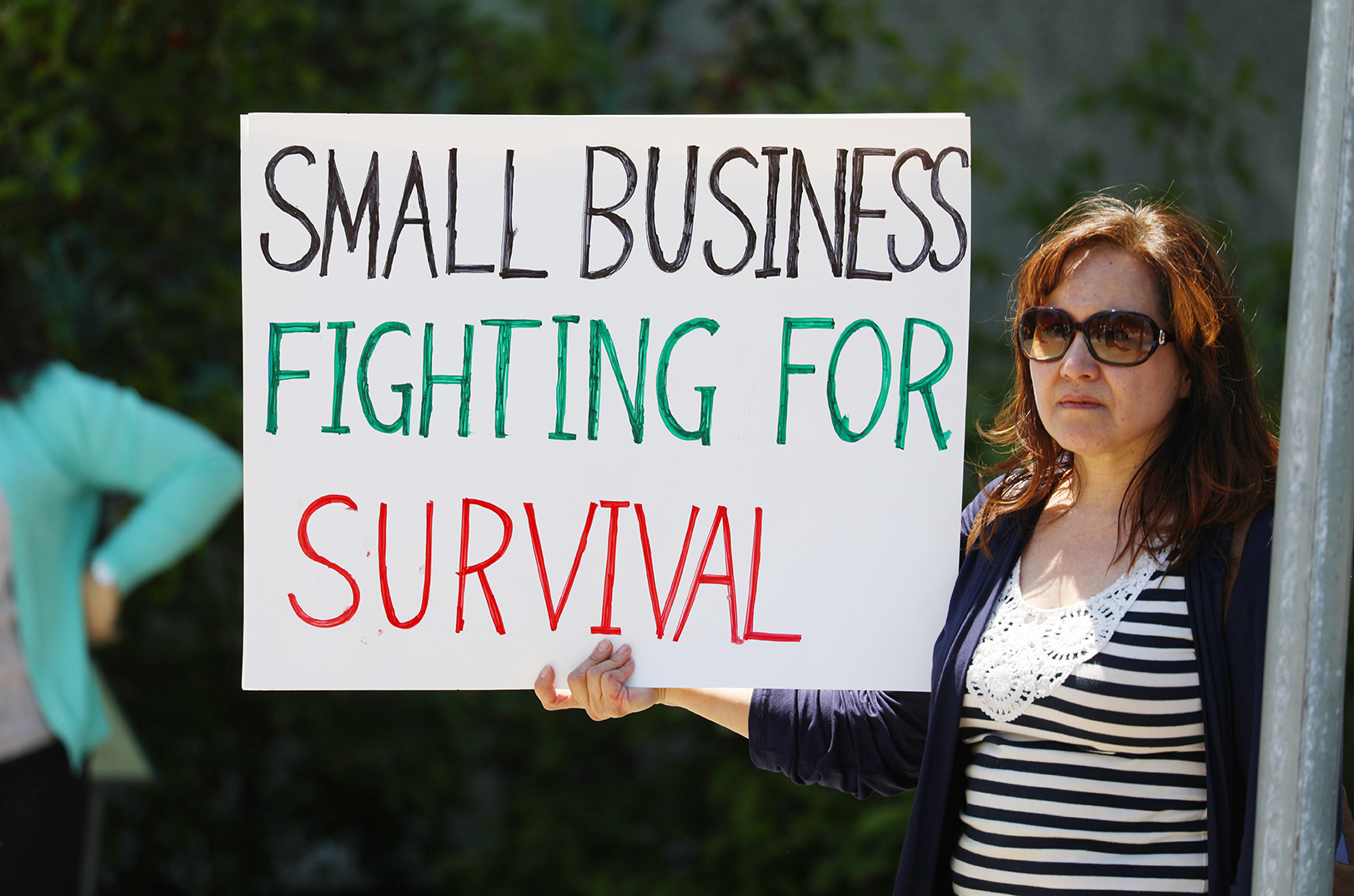
Editor’s note: The opinions expressed in this commentary are the author’s alone. Victor Hwang is the founder and CEO of the Right to Start movement. Click here to learn more about Right to Start, a campaign to drive economic recovery and advance economic justice. This commentary originally appeared on Inc. and is republished with permission of the author.
An estimated 60 percent of business closures because of the pandemic appear to be permanent. Since virtually all job growth comes from new businesses, we need a huge number of new businesses starting and succeeding to drive economic recovery.

Victor Hwang, Right to Start
One solution that often gets overlooked is government contracting. To boost new and small businesses, governments at all levels should dedicate 5 percent of procurement contracts to them. That commitment wouldn’t disrupt established businesses, yet it would provide an economic shot in the arm that communities across the nation so desperately need.
New and small businesses provide more than just jobs. They revitalize America’s downtowns and neighborhoods, provide a sense of momentum and strength, and lift up the incomes and quality of life of entire communities. They are the front line of economic recovery.
Yet government spending typically goes to larger, more established companies. The playing field is tilted toward them. It’s hard for newer businesses to break into the system, navigate the bureaucracy, befriend the right procurement officers, and build enough momentum to win against incumbents. Research suggests that standard government procurement practices hinder new businesses. It’s time to change those practices and leverage government procurement to grow young businesses.
The value of government contracts for new businesses is not simply the infusion of revenue. They generate far greater impact. A single government contract can make the difference in growing a company from startup to scalable business, said Kim Folsom, CEO of Founders First, one of the largest national platforms for growing small businesses led by diverse founders.
“Government contracts can be the breakthrough for sustainability and job creation for micro-small businesses,” she said. “They provide validation and a credential that can be used to attract additional business contracts in both the public and private sectors.”
She cites as an example an IT services company in San Diego with three co-founders — a mother, her grown son, and a family friend. Founders First funded them initially in 2017 and now, thanks to a contract with the San Diego Water Authority, the company has more than tripled in size, to 10 employees.
“One contract with a government entity like that can be both catalytic and additive,” Folsom said. “That one contract opened the door to so much more. It enabled the pursuit of work with other San Diego government entities, water authorities elsewhere, other cities and counties in California and beyond, and private-sector providers too.”

Kim Folsom, Founders First Capital Partners
That’s where the 5 percent commitment can become significant on a large scale, especially if applied across all levels of government — local, state, and federal. It can remove unfair barriers that prevent doors from opening to new businesses.
“Procurement officers typically focus on businesses they know, and use the excuse of ‘executional risk’ to bypass younger companies,” Folsom said. “A 5 percent commitment would provide a mandate for procurement officers to accept new entrants and work to ensure their success rather than their exclusion.”
This 5 percent of government contracts should go to “new entrant” businesses that have never won government contracts before. The focus should be on businesses that haven’t yet reached $3 million in annual revenues, with a special interest in businesses less than five years old, especially in underserved communities. Along with the 5 percent commitment should be a concierge service to help new entrants navigate the procurement process, and a “fast track” process for certification. Large corporations and quasi-government entities, such as hospitals, universities, and utilities with massive procurement systems, should also adopt 5 percent practices, which would inject fresh innovation into their businesses.
The benefits to American communities would be enormous. Not only would such an effort breathe revenues directly into new businesses, it would also generate secondary effects, lifting other businesses, suppliers, and employees in their communities. A wide range of industries could be impacted — from professional and administrative services to construction and merchandise of all types, including business supplies and foods.
Committing 5 percent of government contracts to new businesses is part of a broader initiative called “5% to Start,” advanced by the nonprofit I founded, Right to Start. The other components of that initiative include commitments of 5 percent of workforce development funds and 5 percent of economic development funds to young businesses.
Steering such a modest percentage of government funding to entrepreneurial businesses would be, as Folsom says, “both catalytic and additive.” It would open up government procurement to new entrants, enable them to grow their businesses, and revitalize their communities. And it would be revenue-neutral for governments — not requiring additional spending, but just shifting current spending from established companies to emerging ones.
The “5% to Start” initiative would be a win-win-win for America. Why not use the levers government already holds to lift new and small businesses and drive our economic recovery?
Victor Hwang is the founder and CEO of the Right to Start movement.

Featured Business

2021 Startups to Watch
stats here
Related Posts on Startland News

Sandy Kemper: How to solve the $16 trillion small business liquidity trap
Editor’s note: The opinions expressed in this commentary are the authors’ alone. Sandy Kemper is founder and CEO of C2FO. This open letter was originally published on LinkedIn and targeted to governments and central banks of the world. C2FO and the Kemper Family Foundation are financial supporters of Startland News and its parent organization, STARTLAND. Earlier payment…

ESHIP Communities: Gabe Muñoz helping entrepreneurs navigate cultural barriers amid COVID-19
Editor’s note: This story is sponsored and was produced by Forward Cities, a non-financial partner of Startland News and a national nonprofit that is managing the implementation of the ESHIP Communities program as a grantee of the Ewing Marion Kauffman Foundation. Any opinions expressed in this commentary are those of the author. Gabe Muñoz is…

Stimulus bill update: Additional SBA relief open to businesses impacted by COVID-19
Editor’s note: The opinions expressed in this commentary are the authors’ alone. Jessica Zeratsky and Kyle Gilster are partners at Husch Blackwell. This op-ed is sponsored by the Husch Blackwell law firm, which has offices in Kansas City and across the nation, and intended to provide additional insight into the just-signed federal stimulus bill in response…

Firsthand from a founder: Applying for a SBA disaster loan? Come prepared with startup financials
Editor’s note: The opinions expressed in this commentary are the author’s alone. Serial entrepreneur Bo Lais is the founder of Lula, co-founder of the KC Collective founder network, and a current fellow in Pipeline Entrepreneurs. This op-ed is part of Startland News’ ongoing coverage of the impact of Coronavirus (COVID-19) on Kansas City’s entrepreneur community,…