

2021 Startups to Watch: Daupler brings ‘profound change,’ equity to citizen-government interplay
January 13, 2021 | Tommy Felts
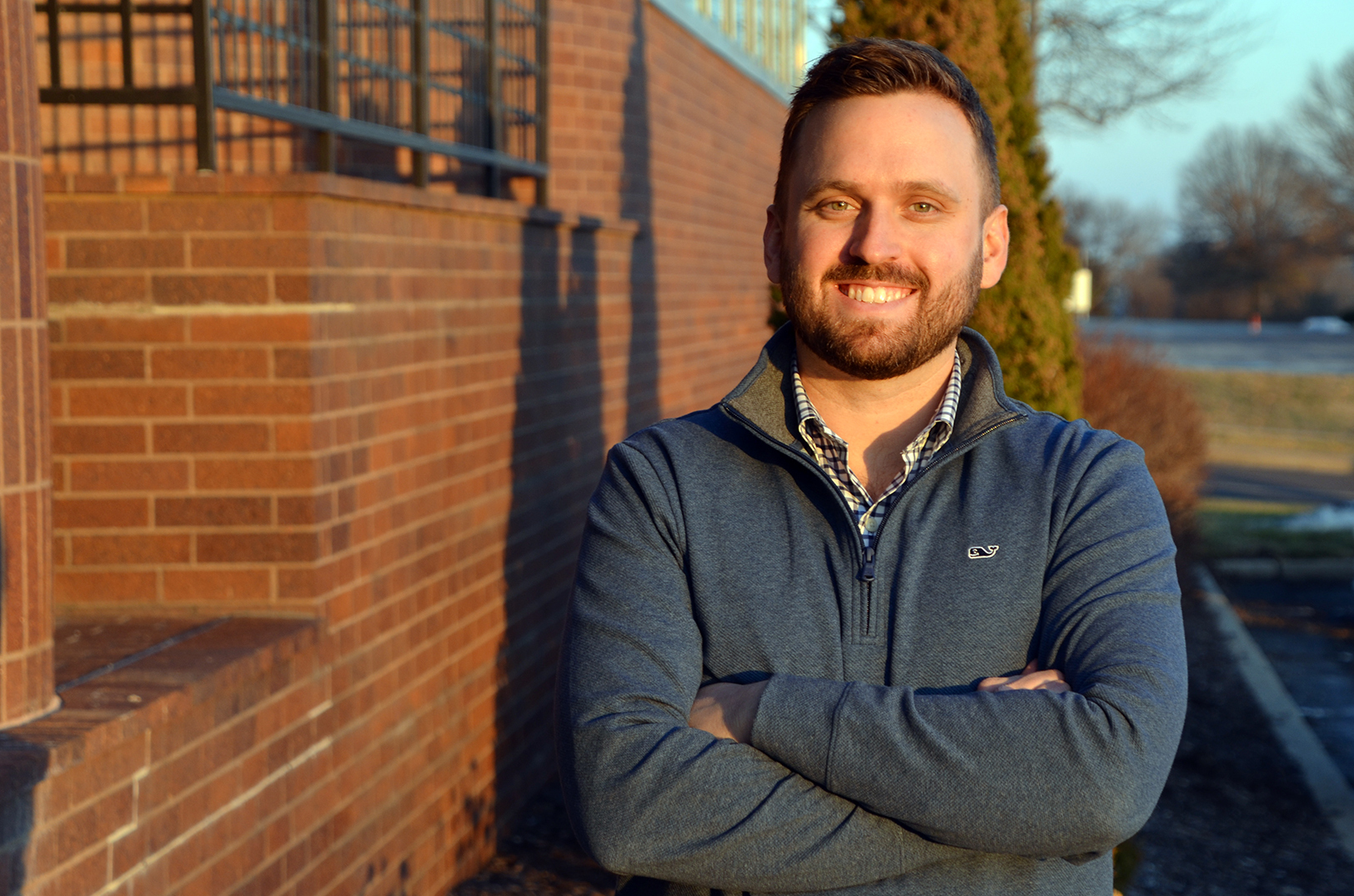
Editor’s note: Startland News selected 10 Kansas City firms to spotlight for its annual Startups to Watch list. The following is one of 2021’s companies. Click here to view the full, ranked list of Startups to Watch — presented by sponsors Husch Blackwell and the Ewing Marion Kauffman Foundation.
When a homeowner or renter discovers a sewage backup, the last thing they want is to navigate a complex maze of help pages and forms on a government website in a desperate attempt to ring alarm bells, said John Bertrand.

Elevator pitch: Daupler simplifies the way people communicate with local government and utilities. We provide software and AI to triage issues, dispatch staff, document response data, and engage citizens throughout the process. Our systems completely transform the way these entities respond to issues.
• Founders: John Bertrand, Ryan Rosenbaum
• Founding year: 2017
• Amount raised to date: $1.7M
• Noteworthy investors: KCRise Fund, Techstars Kansas City
• Programs completed: Techstars 2018
• Current employee count: 25
“Using a text message to report an issue is a profound change. It’s way more efficient than trying to find your way through some city’s website to let them know what the heck is going on,” said Bertrand, co-founder of Daupler, describing a new text messaging function developed by the GovTech startup to more efficiently communicate symptoms of wide range problems, especially related to water and sewer issues.
“It goes directly to our AI tool, which can look at the information, classify and figure out what to do next,” he continued. “A chat bot can ask more qualifying questions: ‘It sounds like you’re having a sewage backup; can you give me a little more information? Is it odorous? Do you see toilet paper?’”
Daupler is intended to replace complicated reporting structures for cities that require an intricate understanding of the way local government works, Bertrand said, explaining the pitfalls of even seemingly basic website drop-down menus that often are full of technical terms and departmental jargon.
“People in government don’t necessarily understand how everything works, so expecting citizens to navigate through that is too big of an ask,” he said. “Simplifying the intake of information is at the core of what we do. And it’s also about taking out as much of the human judgment as possible when someone is describing the symptoms of a problem.”
“In that regard, the text message function really ties in with our mission. It’s all about meeting people where they already are, rather than putting the expectation and burden on them.”
Though the text functionality is a new feature, the startup already has deployed its platform in more than 100 cities across 22 states, Bertrand said, noting a heavy presence in California, Texas and Florida.
Daupler is on track to hit 250 cities in 2021, he added.
Click here to read about how demand for Daupler spiked amid COVID-19 as more GovTech customers worked from home.
“We’re serving millions of people throughout the country right now,” he said. “And it has a serious impact, when you consider that the average response times for a lot of these places might be four to six hours — and then they put our system in and they’re responding in less than an hour. That’s a real impact on someone when they might have sewage backing up into their basement.”
And because the automated system removes a significant human element from the equation, it improves social equity across service areas — especially evident when more affluent areas have historically seen quicker responses from government, Bertrand said.
“For our system, there’s no bias. It’s handling every single issue in the exact same way, dispatching out and expediting the response every single time, regardless of the location of the issue. So it really levels the playing field,” he said. “It also helps cities identify where they might have more infrastructure failures using AI — natural processing and some geolocation and spatial analysis.”
Those features are a “painkiller right out of the gate” for metro and nearby communities like Johnson County, Wyandotte County, Wichita, Ottawa, Louisburg, and Springfield that already are using Daupler’s platform, he said.
The GovTech startup isn’t yet operating in its hometown.
“KCMO would be a big potential customer for us,” Bertrand said, noting greater efficiency and communication across municipalities when serving all the cities in a particular area. “I think we could provide a ton of value to them because they have a unique opportunity to improve their processes with Daupler. They can bridge that gap between city and citizen, but they can also improve social equity considerably.”
Having begun 2020 with five employees and reaching 15 by year’s end, growth has required building and hiring staff who care about the Daupler mission and understand what they’re working toward, he said.
“We’ve brought really great talent on board already. It’s just about repeating that process,” Bertrand said, noting the startup has two past Student Entrepreneur of the Year winners from the University of Missouri-Kansas City on its team. “Luckily Kansas City has a huge pool so we’re not looking outside the metro and saying, ‘Hey we need to find and recruit people from the Bay or from the coast.’ We have the folks we need right here in town.”


The Kansas City Startups Watch in 2021 list is made possible by presenting sponsors Husch Blackwell, a value-driven law firm with offices in Kansas City, and the Ewing Marion Kauffman Foundation, though independently produced by Startland News.
1) TripleBlind
2) LaborChart
3) Bar K
4) Ronawk
5) SureShow
6) Daupler
7) PMI Rate Pro
8) Scissors & Scotch
9) Replica
10) The Market Base

Startups to Watch is now in its sixth year, thanks to ongoing support from the Ewing Marion Kauffman Foundation, a private, nonpartisan foundation that works together with communities in education and entrepreneurship to create uncommon solutions and empower people to shape their futures and be successful.
For more information, visit www.kauffman.org and connect at www.twitter.com/kauffmanfdn and www.facebook.com/kauffmanfdn

Featured Business

2021 Startups to Watch
stats here
Related Posts on Startland News

We Create KC report: Startup investment soared to $540M in 2017
A startling statistic for those who think capital merely flies over the Midwest: Kansas City saw a 69 percent increase in startup investment from 2016 to 2017, according to KCSourceLink’s We Create KC report. All told, early-stage businesses classified by KCSourceLink as startups — typically defined as those with 20 or fewer employees — nabbed…

Hack Midwest offers coders freedom through 24-hour app creation competition
Technologists are often surprised by what they’re able to accomplish when they work together in a competitive format, Mike Gelphman said. That’s part of the reason Hack Midwest is returning this summer with the objective to inspire more techies to embrace their imagination, said Gelphman, founder of the competition, as well as KCITP, an area…

KCultivator Q&A: John Coler champions making a quick impact, packs of dolphins
Editor’s note: KCultivators is a lighthearted profile series to highlight people who are meaningfully enriching Kansas City’s entrepreneurial ecosystem. Today Startland takes a closer look at startup ecosystem champion John Coler. Check out our features on Made in KC’s Tyler Enders, Hispanic business builder Pedro Zamora, ‘fashionpreneur’ Jordan Williams, Plexpod founder Gerald Smith, innovation coach Diana…

Backed by $4M round, Hilary’s Eat Well expanding organic food line, hiring 10-15 workers
Hilary’s Eat Well is growing its plant-based food line, company leaders said. The move to diversify the company’s offerings — as well as to more efficiently produce larger quantities of its free-from (dairy- and gluten-free) products — comes as the Lawrence-based operation moves its storage to an off-site facility, freeing up manufacturing space, said Lydia…