

No more band-aid solutions or pats on the back: How one firm connects companies, people with disabilities
December 4, 2020 | Channa Steinmetz
Editor’s note: This article is underwritten by Plexpod — a progressive coworking platform offering next generation workspace for entrepreneurs, startups, and growth-stage companies of all sizes — but was independently produced by Startland News.

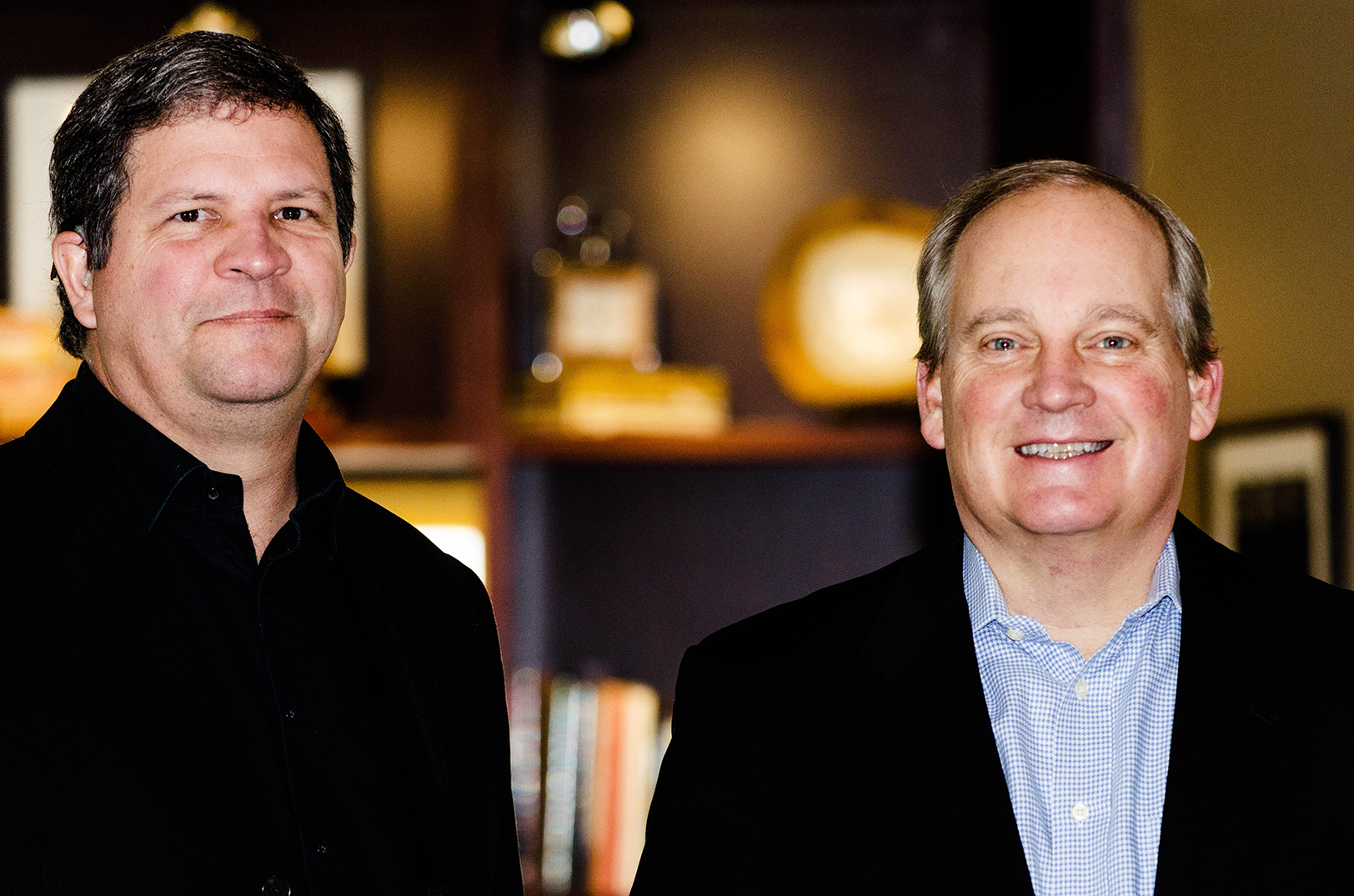
What might seem like an obvious truth to some employers — that people with disabilities need extra help, becoming a drag on productivity — simply isn’t the case for most individuals in the underrepresented talent pool, said Jim Atwater.

Born with severe hearing loss, Atwater was in the top 5-10 percent of applicants for medical school when he was told, “Doctors won’t repeat themselves for you,” he said.
As his hearing worsened to full deafness by age 28, Atwater became keenly aware that qualified individuals with disabilities are repeatedly overlooked in the professional world, he said. In an effort to build a bridge between underserved populations and businesses, Atwater later founded InReturn Strategies — an information service platform that connects inclusion to company profitability.
“One thing that we want companies to ask is, ‘Does my company see and know how to engage underserved populations as contributing members of my company’s success?’” Atwater said. “If you don’t see these people in that way — if you see them as a charity — you’re automatically going to be doing the wrong thing.”
Click here to learn more about InReturn Strategies.
Founded in 2013, the Leawood-based company created a “Business-to-Social” economic model. This model explores how businesses can connect with social sector organizations for underserved populations in a way that’s profitable.
“When private industry tries to engage social sectors or access providers, it’s very difficult to understand where to start,” said Scott Brouillette, who serves as the CEO of InReturn Strategies. “So what we’ve done is we have aggregated about 4,500 of those access providers, and that takes away the need for one employee to go out and try to create one-to-one relationships.”
With one in four people — or 25 percent of the U.S. population — having a disability that impacts major life activities, the duo noted that this is a major untapped market. InReturn Strategies also focuses on inclusion for veterans, opportunity youth, refugees and formerly incarcerated individuals.
Apple case study
An example of this business strategy can be seen with InReturn Strategies’ client, the Apple Country Club Plaza store, Atwater and Brouillette detailed.
About 400 Apple retail store managers were sent to the corporate offices for two weeks of Inclusion Awareness training — costing the company expenses on travel, hotel and food.
The managers were then tasked with going back to their local communities and cultivating relationships with underserved and disabled populations. Through this method, all of the responsibility is put into the one individual.
Through InReturn Strategies, Apple was able to host a group of children from the KC Down Syndrome Guild. Before the session, the store manager worked with the KC Down Syndrome Chapter to provide social and contact information for those coming to the store. With the proper education and experience, Apple was able to identify several individuals with the capabilities to fill current jobs in their store.
Such in-person experiences and interactions are crucial in truly connecting with underserved populations, Atwater noted.
“This interaction is so important because Apple’s first step of their job process is a phone interview,” Atwater explained. “An individual with Down-Syndrome is never going to get past that. So, we’ve got to be able to create awareness through real-time activities where people can be successful.”

Scott Brouillette, InReturn Strategies
Scenarios in which time and money go into the wrong resources apply to numerous companies, added Brouillette, who previously retired as a partner in a CPA advisory firm. During his time at the business, Brouillette recalled the company donating to a dozen charitable organizations every year, but never connecting with the individuals.
“It’s a noble cause to support those organizations — but afterwards we would pat ourselves on the back, walk away and never see those populations,” Brouillette said. “We certainly didn’t understand or engage those populations in our activities.”
“… With the Apple example, companies are throwing a dart at a population and saying, ‘I hope this one sticks!’” he explained. “Instead, we need to recognize that we don’t know these populations, their challenges, their skill sets. So, we need to rely on the advocates [such as social sectors or access providers] to educate companies and present their candidates for job opportunities.”
‘Dignity, not equality’
Through InReturn Strategies, Atwater discovered that several companies would host disability forums through their human resources departments. Those sessions would discuss the appeal of hiring people with disabilities but would fail to discuss how these populations could actively solve company goals, he said.

Jim Atwater, InReturn Strategies
“[InReturn Strategies] completely redefines how companies talk about diversity and inclusion relative to underserved populations,” Atwater noted. “That is why our model is so unique and scalable for the future. There are 6 million open jobs in the world, but [companies] keep scraping the same barrel of talent. We can help them connect to untapped talent.”
When talking about diversity and inclusion within companies, Atwater prefers to avoid the term “equality,” which he finds too idealistic, he said — adding that people also deserve to be communicated with in the ways that are best for them, which will look different among various populations.
“Everybody can be treated with dignity,” Atwater said. “If you’re a company that knows how to do that, then you’re going to attract more people who can support your goals and make your company more successful.”


2020 Startups to Watch
stats here
Related Posts on Startland News

‘The people demand mustard’: This stained glass artist dipped into corn dogs (and hungry shoppers ate it up)
Startland News’ Startup Road Trip series explores innovative and uncommon ideas finding success in rural America and Midwestern startup hubs outside the Kansas City metro. LAWRENCE — Selling holiday shoppers on stained glass corn dogs was unexpectedly easy, said Darleen Schillaci; adding mustard and keeping up with buyers’ appetite, however, proved the meatiest challenge. The…

Skip shopping and shipping: Your guide to last-minute, KC-made gifts you can still get in stores
Forget naughty and nice: one Kansas City-pieced business has a puzzling present for each person on Santa’s “weird and mellow” list. Locals can still find them on KC-area store shelves — while they last. Birdie — a sister company to Stefanie and Tim Ekeren’s popular Kansas City Puzzle Company — packs each eye-catching box with…

One issue cuts across all political lines: How it could be the antidote to a divided America
Entrepreneurship is a way to unify the United States at a time with great political division, said Victor Hwang. “It’s an issue that cuts across party lines,” explained the founder and CEO of Right to Start. “And it’s something Americans really care about.” Hwang, previously an executive at the Ewing Marion Kauffman Foundation, recently published…

Small biz makers worry Trump tariffs could be ‘recipe for recession’; Economists, farmers share concerns about trade war
An enthusiastic smile spreads across Katie Mabry Van Dieren’s face as three small groups of new customers flow into her Brookside Plaza shop — a space filled as high as the Shop Local KC owner can reach with colorful, off-beat, and functional goods and gifts from Kansas City makers. “We smelled something wonderful from outside…