

Budding family business: Serial cannabis entrepreneur pioneers microwave drying tech with his father
December 8, 2020 | Channa Steinmetz
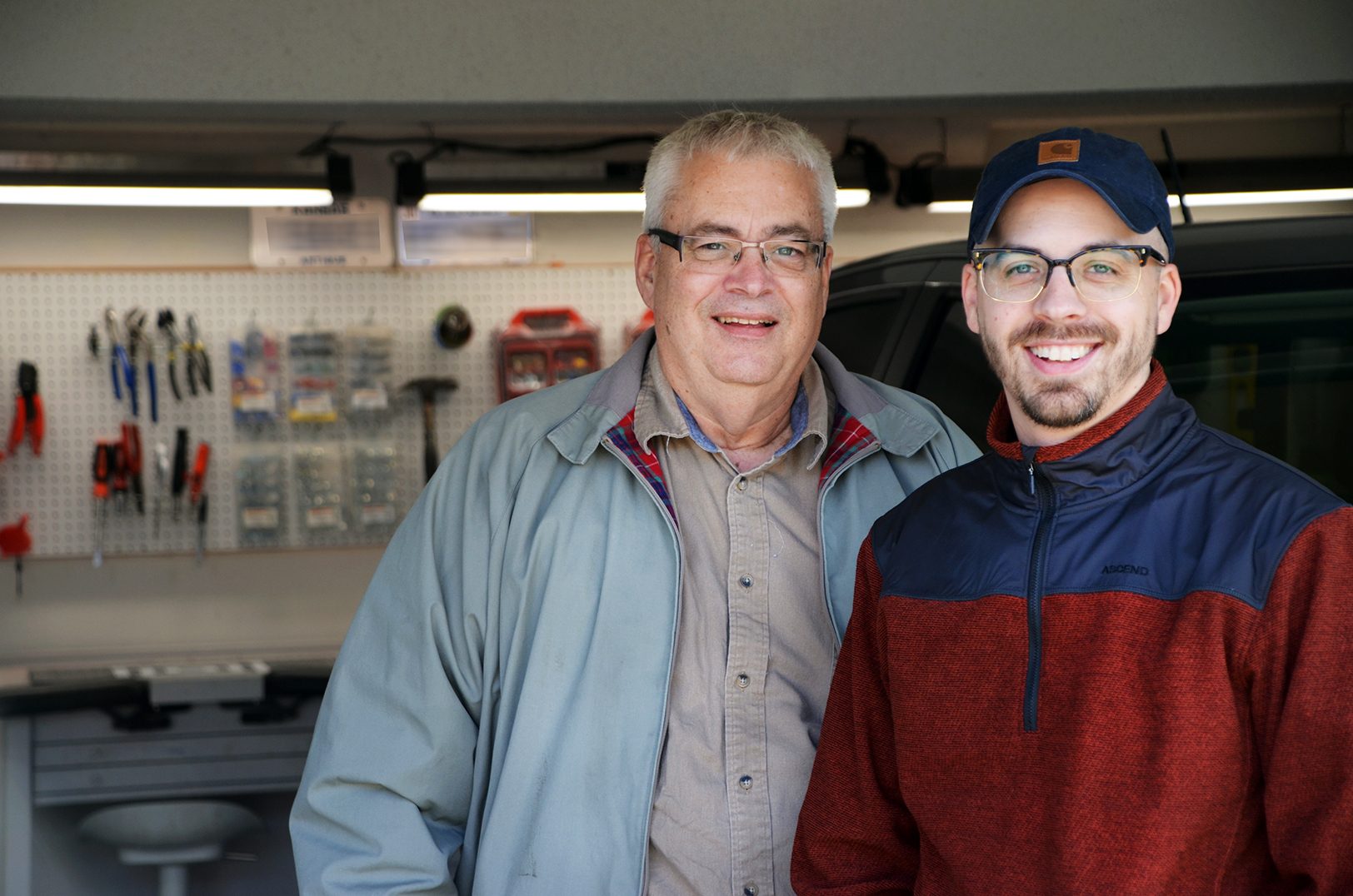
In Michael Wilson’s childhood, he recalled, the founder of multiple cannabis-related startups got into fights at school — then suspended — resulting in numerous car rides with his father as the elder Wilson ventured on sales trips.
“From age 7 or 8, I had an education on how to do business, interact with people and relate to customers,” Wilson said. “That bond between me and him drove who I became as a person and who I became in business.”
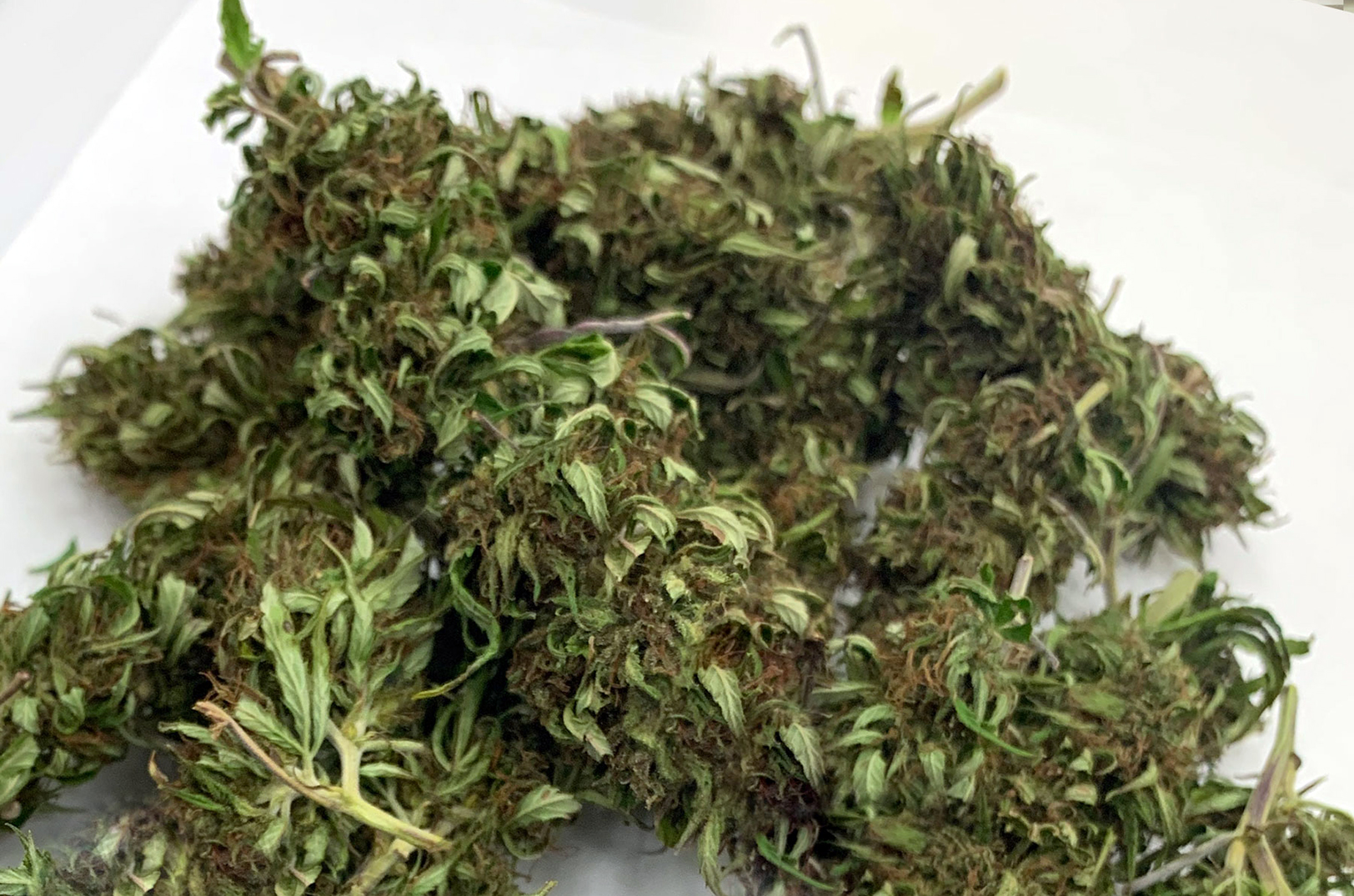
Microwaved-dried industrial hemp
So when the serial cannabis entrepreneur began exploring solutions to a drying problem within his industry — without properly drying and preserving the cannabis plant, it can grow mold and bacteria and become worthless — Wilson turned to a tech expert he knew well.
His father, Rob.
A more-than-35-year veteran of the microwave industry and a co-patent holder on the microwave technology Microwave Assisted Thermal Sterilization (MATS), Rob had a natural curiosity about cannabis when his son first entered the industry, Wilson recalled.
Click here to learn more about United American Hemp, Michael Wilson’s initial foray into cannabis as a business venture. United American Hemp was one of Startland News’ Kansas City Startups to Watch in 2020.
“He was asking all the right questions, and that allowed this idea [of using microwaves] to spark and brew over time,” Wilson said. “As father and son, there’s this infinite curiosity and complete confidence in one another to pursue knowledge and develop expertise. It fortunately worked out that we could do that together in a new, budding industry.”
Together, they formed A-10, a cannabis research and design firm in partnership with AMTEK microwave systems to deliver a state-of-the-art cannabis drying system.
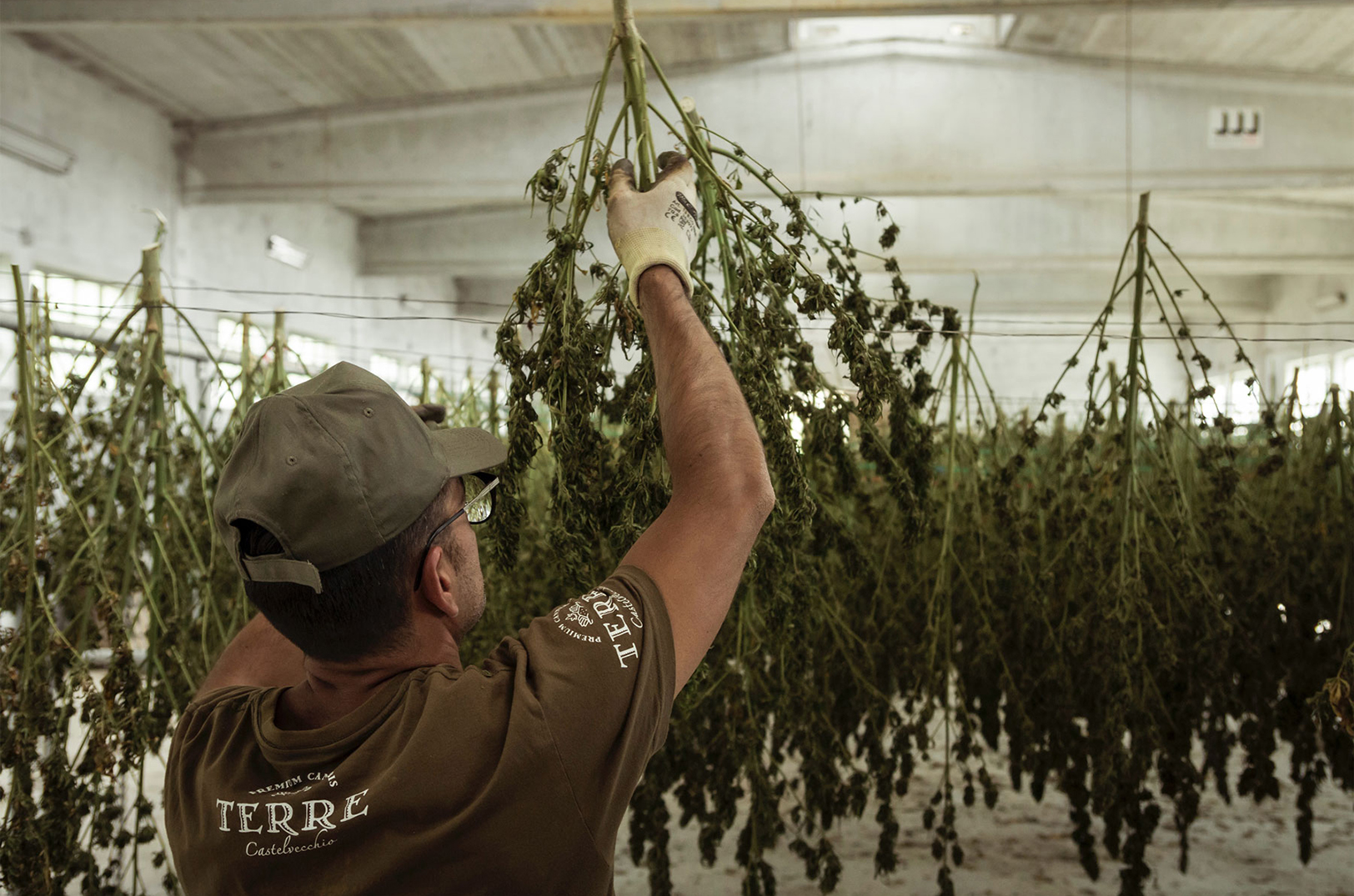
Traditional hang-drying process
“A-10’s first product that we’ve helped innovate and bring to the market is microwave technology,” said Wilson. “Through designing and engineering, our goal is to accelerate the future of cannabis.”
Click here to learn more about A-10.
“The traditional way [to dry cannabis] is you would hang dry the product like you would tobacco,” Wilson said. “Air drying allows the water to evaporate, but that can take two and a half weeks. A lot can happen in two and a half weeks — a series of products run rancid, bugs get in, it could get stolen.”
The other option for farmers is to use a propane or butane system, which can add harmful residues and destroy the quality of the product, Wilson noted.
A-10 offers a safer and more efficient drying system, the duo said.
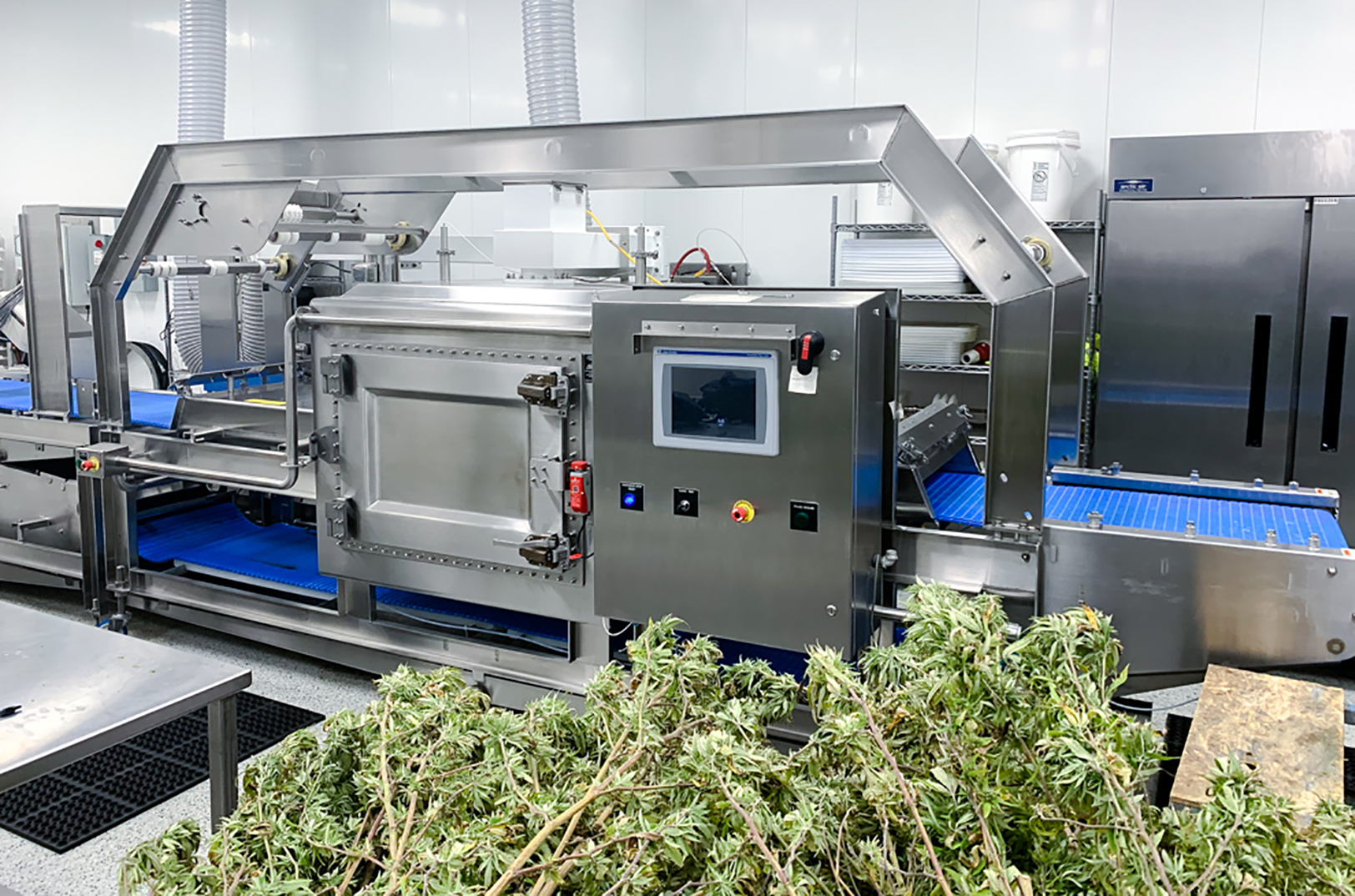
A-10 microwave drying process
Industry and environmental impacts
Through A-10’s past year of research and its most recent lab results provided by Steep Hill, Wilson found that cannabinoid content increased about 11 percent in the AMTEK microwave systems, whereas terpenes decreased by 13 percent.

A-10 microwave drying process
The cannabinoid content is important because too high of a percentage can cause the product to cross the legal limit, Wilson noted. As for terpenes, farmers want to keep the percentage high because of their significant medicinal benefit, he added.
“So what that research means is that microwave technology is more efficient, better for the product and damages less of the product versus a conventional drying system,” Wilson said, noting that this is not comparing microwave technology to air drying.
Although nothing will ever replace the quality of a slow, air-dried product, Wilson said, not all products are meant to be craft goods.
In his example, industrial hemp wood and hempcrete use hemp — another term for cannabis that contains 0.3 percent or less THC content by dry weight — but find no value in the stock and stem of the plant. If thousands of pounds of the plant can be dried per hour using microwave technology, that means a major breakthrough in the industrial hemp market.
Advanced commercial farming techniques within the hemp industry will have a positive impact on the environment as well, added Rob, a partner in the business.
“Hemp fiber can be processed into several different products — and as a fiber, it’s stronger than cotton, it’s stronger than wood,” he said.
“Farmers can grow three crops of hemp a year, which would help [combat] deforestation,” Rob continued, explaining that the switch to hemp could save billions of dollars and natural resources. “… It takes 20 years to grow a tree and it takes 120-something days to grow a hemp plant.”
‘A wild ride’
A-10 and AMTEK’s next step is to work through a list of interested customers and start their builds — all of which are custom-made and take 90 to 120 days, Wilson said. The drying systems are most optimized for large-scale cultivators who own 100-plus acres, and the technology can cost anywhere between $50,000 to a few million dollars.
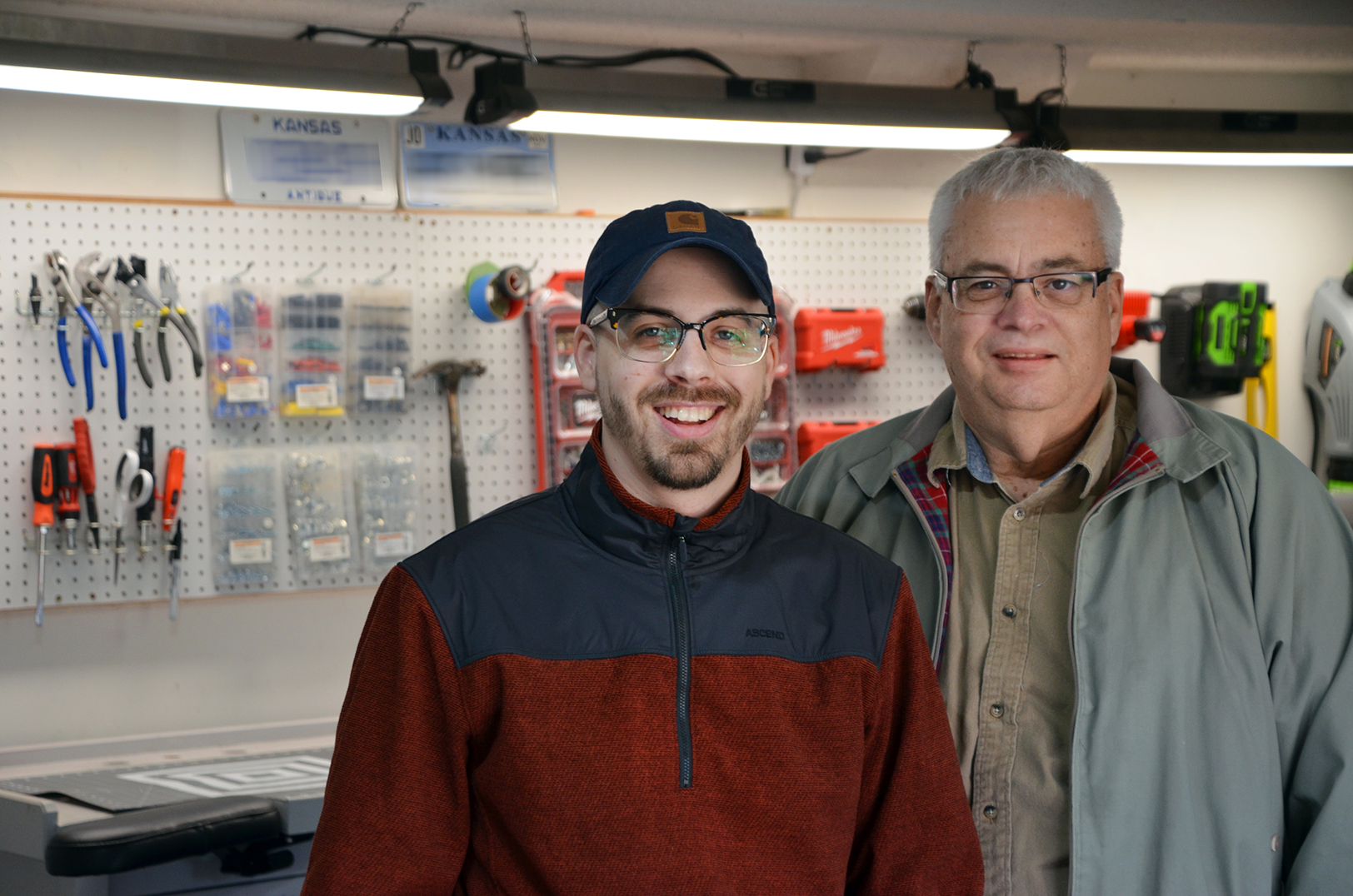
Michael Wilson and Rob Wilson, A-10
It’s exciting to see the venture with his father materialize, he said, and there’s more to come within the cannabis industry.
“That’s what excites me as an entrepreneur,” said Wilson, who also founded the hemp-based brand True State. “Hemp has given us an immensely great ability to pursue entrepreneurship. It’s been a wild ride, but what’s the fun in it if you’re not going to have a wild ride?”
Rob lets his son stay in the driver’s seat for those rides today, handing the day-to-day tasks of the business — and is proud to watch him do so, he said.
“It’s satisfying to work with your son,” Rob said. “He used to go all around the world with me doing microwave applications. Seeing him take an interest in this now that he’s older, it’s very satisfying.”

Featured Business

2020 Startups to Watch
stats here
Related Posts on Startland News

Last to know, first to go: ‘Out of touch’ ballpark plan leaves Crossroads small biz owners feeling betrayed
Unlike many of her Crossroads neighbors — hoping to draw in crowds of football fans still riding high from Kansas City’s Super Bowl win — Jill Cockson’s business wasn’t open during Wednesday’s Chiefs victory parade. Candidly, jersey-clad sports enthusiasts aren’t really within her typical customer profile, the James Beard-nominated owner of Chartreuse Saloon said, and…

Royals want Crossroads ballpark open by 2028, calling up ‘generational’ impact on newly linked arts district, downtown
A late-to-the-game East Crossroads site is expected to take shape as the new home of the Kansas City Royals if voters approve the extension of a stadium sales tax that would help support the $2 billion downtown ballpark project. Ending months of speculation, majority owner John Sherman and team officials announced on Tuesday the ball…
KC apparel brand commandeers Chiefs’ ‘Nobody Likes Us’ spirit for latest wave of designs
Back in 2016 — when the Chiefs were still rebuilding from a franchise-worst season — Joe Brynds set sail with Commandeer Brand, aiming to carve a niche in the apparel industry by infusing pride and the rebellious spirit of counter-culture. “When I started Commandeer, I wanted to create something that was unique to Kansas City,”…
Why one entrepreneur is Swiftly rolling up the warehouse doors for thirsty Chiefs parade-goers
Wednesday’s Chiefs victory parade will be the city’s third in four years, but for East Crossroads-based Wild Way Coffee, the 2024 rolling downtown-to-midtown event hits different, said Christine Clutton. The brand’s iconic mobile coffee camper — stationed in the Wild Way warehouse at 708 E. 19th St. for the winter — will once again open…