

From the Big Apple to the Heartland: A fresh set of eyes sees why KC is poised for growth
November 16, 2020 | Tristan Mace

Editor’s note: The opinions expressed in this commentary are the author’s alone. Tristan Mace is an advisor to early-stage ventures, investment funds, and Fortune 500 companies, an occasional guest professor at The University of Texas, former corporate venture capitalist for Merck and AXA and a serial tech entrepreneur.
Click here to read more about his background and recent arrival in Kansas City.
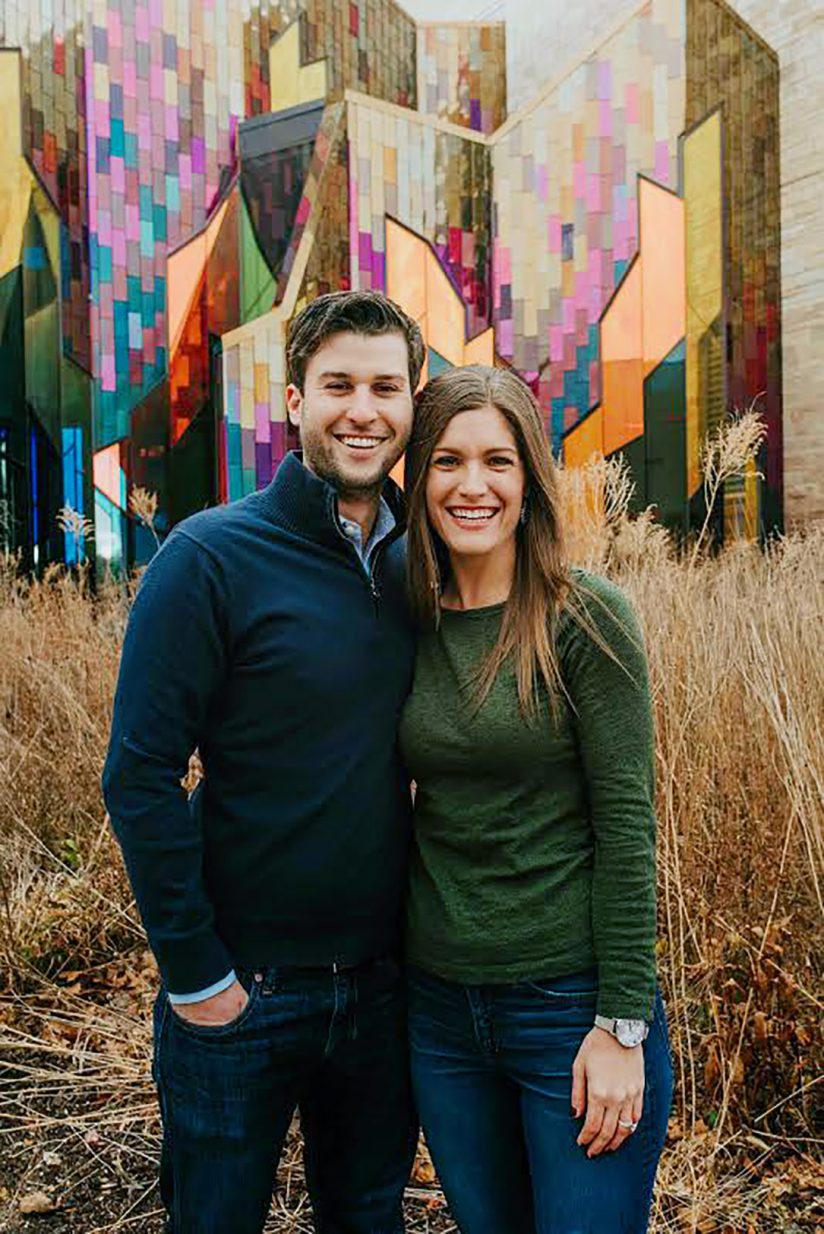
Tristan and Jordan Mace
After living in New York City for the past 10 years, my wife and I recently moved back to her hometown, Kansas City, a place we intend to call home for several decades. Although we moved years earlier than we’d originally planned — 2020 wasn’t what anyone expected — it was an easy decision, given our love for this city.
While in the Northeast, I was a serial tech entrepreneur, a venture capitalist, and most recently an advisor to startups, venture capital firms, and Fortune 500 companies. Over the years, I’ve also occasionally taught entrepreneurship and innovation at my alma mater, The University of Texas at Austin. It’s where I witnessed the city’s tremendous growth from the “Keep Austin Weird” small-city vibe to becoming a leader in technology with new entrants like Google, Apple, and Tesla.
As I begin to root myself in the KC community and seek to learn from and contribute however possible, there are a few things that I hope to find and help nurture here in the heartland.
The Three T’s of Economic Development: Technology, Talent, and Tolerance
Richard Florida, a leading urban studies theorist and Distinguished Fellow at New York University’s Schack Institute of Real Estate, has studied thousands of global cities including their rise and fall over generations. In his book, “The Rise of the Creative Class,” Florida cites three critical identifiers as representative markers of an innovative and growing city:
- Technology — New innovation and advancements in technology drive cities forward, but it takes time. The key for entrepreneurs is to solve immediate, real-world problems for people and organizations. As emerging technologies such as AI/ML, IoT, and blockchain become more ubiquitous over the next decade, antiquated and repetitive industrial processes will transform around the world and within the heart of our city and region. These advancements can also benefit major local enterprises and employers like H&R Block, Evergy, Cerner, T-Mobile, and others.
- Talent — Every location has its unique advantages. Austin capitalizes on research and talent from a major university in the state’s capital, and financial services and media companies thrive in New York City. Similarly, Kansas City prospers from agriculture, animal health, energy, and manufacturing. As the pandemic changes the world, our city can embrace new talent leaving the coasts along with the rise of the permanent remote worker. Seasoned executives and hungry entrepreneurs around this city should see a rich talent pool teeming with opportunity.
- Tolerance — Diversity is more than just a nice-to-have — it’s a requirement. New York City thrives as a cultural melting pot and contributes to a better society because of it. If you walk into a room and find that most people look the same, think the same, and have the same background, it’s time for you to actively welcome new people to take a seat at your table. Innovation and growth are fueled by those that challenge the status quo, and diversity of race, gender, experience, sexual orientation, and more are imperative to building a powerhouse city.
My Four C’s: Capital Accessibility, Capital Efficiency, Capital Recycling, and Corporate Support
In addition to Florida’s 3Ts, I’ve found that there are four C’s that also indicate a city may be poised to soon rival Silicon Valley as recently seen by New York City and Austin.
- Capital Accessibility — Early-stage ventures must have access to capital at reasonable terms. Bootstrapping to profitability or to the next stage of a venture’s lifecycle can positively challenge entrepreneurs to efficiently find a sustainable business model. However, limited capital may also prevent some entrepreneurs with high-capital visions from succeeding. A network of incubators, accelerators, angel investors, and early-stage institutional investors provides a critical bridge from a venture’s earliest days to reaching true product/market fit ready for growth capital.
- Capital Efficiency — Let’s face it. Capital in leading tech locations like the Bay Area and New York City doesn’t go far. As software engineers straight out of university easily command $125,000+ salaries and giants like Google and Facebook vie for them, the best and brightest talent costs a premium in high cost-of-living cities. A $5 million Series A investment in a KC company can simply go much further than the same $5 million check in New York City — and that’s a great thing for our companies and investors.
- Capital Recycling — BacklotCars just had an incredible exit within five years of its founding. Beyond rewarding its founders and early employees with well-earned compensation, these successes return many multiples of invested capital for local venture capital firms like KCRise Fund and Royal Street Ventures. Reinvesting and spending these returns here in Kansas City perpetuate additional value creation and economic growth, just as seen from EyeVerify/Zoloz.
- Corporate Support — Major corporations in the city must share a collective vision for the future and support the local innovation ecosystem. Beyond being major employers of local talent, these enterprises provide intellectual and social capital, serve as possible acquirers to startups, and oftentimes function as limited partners in investment funds.
If Kansas City continues to strive for the 3Ts and 4Cs of an innovative city, we will all benefit immensely. We should continue to celebrate the acquisitions of startups like BacklotCars, EyeVerify/Zoloz, Zego, and others as every exit creates a virtuous cycle of newly-available capital for the next entrepreneur. And after each exit, we should all get back to work to put more points on the board for Kansas City.
I’m excited to learn from and work alongside Kansas Citians in these efforts to build startups, create financial and intellectual value for investors and corporations, and bring additional capital and talent from the coasts here to Main Street.
The warm welcome that I’ve received amid a difficult year for so many is one that I’ll remember for years to come. And to future people who decide to move to KC, I hope I can be the first to welcome you to this wonderful city. There truly is no place like home.
Tristan Mace is an advisor to early-stage ventures, investment funds, and Fortune 500 companies, an occasional guest professor at The University of Texas, former corporate venture capitalist for Merck and AXA and a serial tech entrepreneur. Connect with him on LinkedIn or at parkermace.com

Featured Business

2020 Startups to Watch
stats here
Related Posts on Startland News

KCRise Fund-backed startup secures $20M Series C, fueling its commitment to KC
A Texas-based caregiver support platform’s latest funding round is expected accelerate the company’s growth and expand its support solutions, said CEO Michael Walsh, noting the startup continues to deepen ties to Kansas City. Cariloop today announced the close of its Series C funding round, raising $20 million. The investment was led by ABS Capital with…
Dude Perfect flips from YouTube to IRL with $100M investment from Kansas firm
WICHITA, Kansas — With more than 16 billion views on their YouTube channel, 60 million subscribers, and major brand deals already established, the team behind the family-friendly sports and entertainment group Dude Perfect is poised for even greater impact with fans, said Jason Illian. Highmount Capital today announced a strategic partnership with Dude Perfect —…
Curated to the core: How a chaplain-turned-entrepreneur is elevating streetwear to boost KC nonprofits
In a world of loud statement tees, sometimes the most impactful messages are quietly sewn into the tag, said Makenzy Jean, whose Kansas City-based apparel company partners with local nonprofits on brand-merging designs that give back to their community causes. “Streetwear is from the streets,” said Jean, founder of Associated Humanity and a former chaplain.…

After east side restaurant closes, KC Cajun drives back to its food truck roots, cooking up a new market
Esra England is hitting the streets again, he shared. The head chef and founder of KC Cajun recently closed his fixed location on the east side, and is returning to the food truck and catering strategy that gave him his start. “It was a good learning experience,” England explained. “But with the overhead of trying…