

From Aussie garage to unicorn: How SafetyCulture continues its climb in an ever-changing environment
November 13, 2020 | Channa Steinmetz
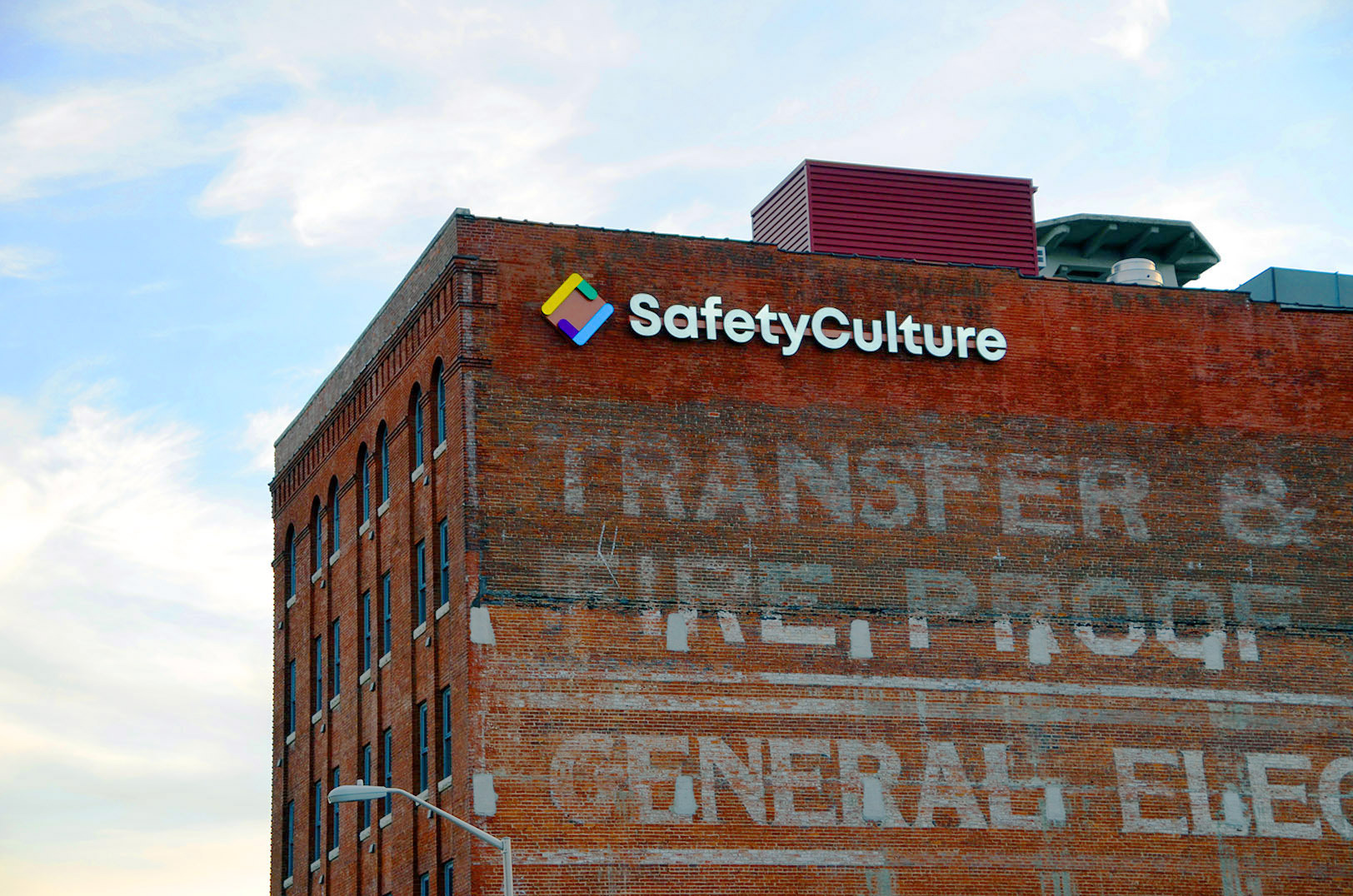
Starting from humble beginnings, SafetyCulture earned its membership in the Australian unicorn club this year with a $1.3 billion valuation, said Nick Topping.
“Our CEO and founder Luke Anear actually founded the company [in 2004] out of his garage in Townsville, Australia,” said Topping, who leads the marketing and business development teams in the Americas for SafetyCulture. The company has had a growing presence in Kansas City since first arriving in 2016.

Founder: Luke Anear
Founding year: 2004
Amount raised to date: 149.4 Million
Noteworthy investors: Blackbird Ventures, Tiger Global Management, Index Ventures, Scott Farquhar (Atlassian co-founder)
Current employee count: 62 in Kansas City; 415 internationally
Elevator pitch: SafetyCulture is a workplace safety and quality platform that uses their application, iAuditor, to collect consistent data, standardize operations, send reports, identify failed areas and get problems resolved through checklist software.
The software startup — which focuses on workplace safety and quality — has been successful in growing its ability to adapt to needs in an expanding market, Topping noted.
Throughout the COVID-19 pandemic, SafetyCulture has taken steps to offer relevant and new material for its clients and beyond.
“We started digitizing government and CDC guidelines from around the world into checklists, so that people could access those easily,” Topping explained. “We developed a COVID hub where people could do safety checks just for COVID.”
Such COVID resources are offered through SafetyCulture’s flagship product, iAuditor — an application that simplifies the auditing process by allowing workers to effectively manage safety and quality from a mobile device.
Safety is priceless, Topping said, noting SafetyCulture offers a free version of iAuditor. The paid service, which offers deeper insight, is available to schools at no cost.
“We actually made [iAuditor] free to all schools nationwide,” Topping said, “which has been a really cool initiative to see schools using it to do safety checks and help students get back to school safely.”
SafetyCulture’s resources cross nearly all businesses and organizations, he said.
“You typically think of a checklist for safety quality in high-risk industries like construction, mining or manufacturing,” Topping noted. “But with the pandemic, there’s high risk everywhere — from going into an elevator to a coffee shop.”
“So we’ve seen a shift in various businesses looking at quality assessments,” he continued. “Clients can use our product as a competitive advantage to win back customers and also help keep employees safe.”
Listening to the client
To keep up with relevant COVID-based materials, SafetyCulture has continued to hire, specifically within their Customer Success Team who works closely with customers to identify needs and optimize effectiveness.
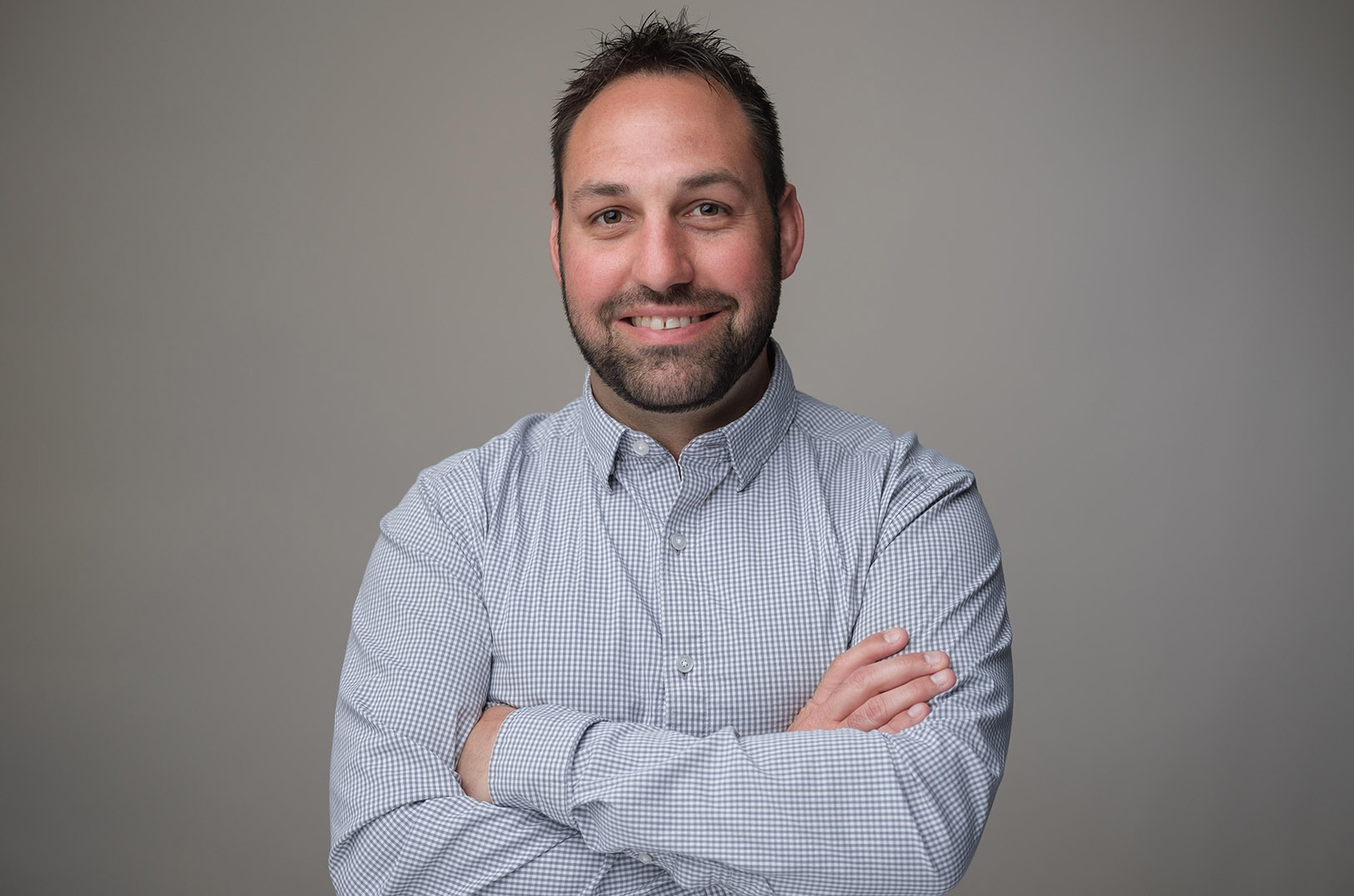
Nick Topping, SafetyCulture
“There’s also been no furloughs or layoffs within the company,” Topping added.
SafetyCulture made its first acquisition in September with EdApp — a global training company. Topping sees the company continuing to grow through customer feedback and acquisitions that make sense, he said.
“We got feedback from customers that inspections and checks go hand-in-hand with training,” Topping said of SafetyCulture decision to acquire EdApp. “So we have a mobile training tool that allows [companies] to do quick training from a distance.”
Click here to read about SafetyCulture’s acquisition of a “micro-learning” application.
From surviving to thriving
To help organizations prepare for success in the post-pandemic world, SafetyCulture is playing host Nov. 18 to a virtual summit, “From Surviving to Thriving.”
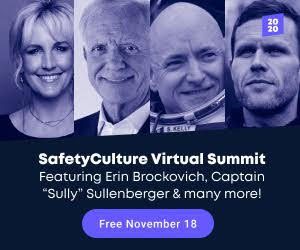
The summit is expected to cover how businesses can capitalize on recent shifts through adaptability and innovation, as well as insights from the leadership of SafetyCulture, Topping noted.
“We have some really great speakers,” Topping shared. “There’s Captain Sully who’s the pilot behind the ‘Miracle on the Hudson,’ Capt. Scott Kelly, who’s a NASA astronaut who dealt with adapting in space, John McAvoy who went from behind iron bars to becoming an Iron Man, and so many inspiring others.
“All these people were ordinary people who did extraordinary things because they adapted and changed; that is really the theme of the event,” he continued.
Click here to register for SafetyCulture’s free virtual event, 9 a.m. to 1:30 p.m. Nov. 18 on Zoom.

Featured Business

2020 Startups to Watch
stats here
Related Posts on Startland News

Events Preview: Conquer for Good, TEDxUMKC
There are a plethora of entrepreneurial events hosted in Kansas City on a weekly basis. Whether you’re an entrepreneur, investor, supporter, or curious community member — we recommend these upcoming events for you. Are you hosting a relevant community event? Feel free to add it to the FWD/KC calendar for increased exposure. Once your event…

Jaguar Land Rover invests in artificial intelligence startup Mycroft
Mycroft has received a significant boost in horsepower. Only a few weeks after entering 500 Startups, Mycroft has landed a strategic partnership with Jaguar Land Rover. The Kansas City-based artificial intelligence startup is among the first startups to enter the Portland-based Jaguar Land Rover Tech Incubator, which will provide Mycroft with a $110,000 investment and…
KC-based OYO Fitness closes a historically successful Kickstarter
To say that OYO Fitness has a successful Kickstarter campaign would be an understatement. The Kansas City-based fitness firm folded up and then crushed its recent crowdfunding effort, which raised a stunning $659,000 for its collapsible and compact exercise device. OYO’s DoubleFlex Black campaign — which snagged pre-orders from 4,200 backers — was the second…
Survivor, innovator Kim Gandy rewards patients for sticking to treatments
In her 20 years working as a transplantation clinician, Kim Gandy found it baffling that a seemingly simple problem had such a difficult time finding a solution. Transplant patients consistently struggled to adhere to their health regimens, resulting not only in significant costs for care providers but also death. “We were literally losing patients,” Gandy…